

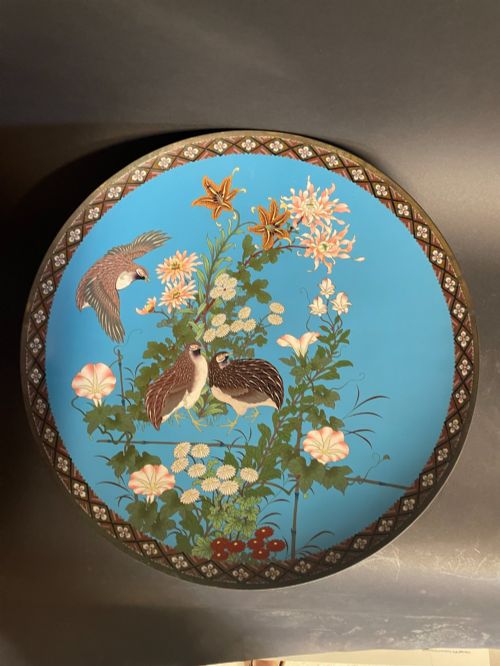


Meiji Period Bird Plates
These meiji period bird plates are decorative chargers and dishes depicting avian subjects, offering collectors intricate artistry from nineteenth-century Japanese craftsmanship.
Meiji Period Bird Plates
These pieces are decorative chargers, plates, trays, and shallow bowls originating from the nineteenth century during the Meiji period. A buyer exploring this selection encounters works rendered in traditional Japanese styles, frequently featuring avian subjects such as exotic birds, owls, ibises, house sparrows, and Ho-o birds or phoenixes.
The dominant forms are large chargers and platters alongside pairs of porcelain plates. Many examples incorporate scenic elements alongside the birds, including Mount Fuji, floral motifs, and tree bark textures.
Originating from workshops across Japan, these items function primarily as display objects. They bridge traditional Japanese Imari aesthetics with elaborate enamel and ceramic techniques developed during the late nineteenth century.
What Varies in Quality
Quality rests upon the precision of the cloisonne wirework and the delicacy of the hand-painted avian details. Finer pieces demonstrate intricate control over enamel colours and exceptionally balanced compositions involving complex subjects like Mount Fuji or phoenixes.
The depth of the glaze, the presence of artist signatures, and the overall scale of the charger influence the standing of an individual piece. Superior examples exhibit rigorous symmetry in patterned borders and flawless execution across large surface areas.
Listings feature pieces spanning from 1870 through to 1900, encompassing the core decades of the Meiji period.
Shozo
The Meiji Period Bird Plates Glossary
- Cloisonne Enamel
- A metalwork technique where thin wires form compartments on a copper or brass base to hold coloured glass paste. Firing fuses the paste into vibrant decorative patterns.
- Imari Porcelain
- A traditional Japanese ceramic style originating from Arita, characterised by underglaze blue and iron red overglaze decorations often enriched with gold gilt.
- Totai Shippo
- A specialised Japanese technique involving cloisonne enamel applied directly onto a porcelain body rather than a metal foundation.
- Ho-o Bird
- A mythical Chinese phoenix symbolising virtue and grace, frequently depicted on nineteenth-century Japanese decorative plates and chargers.
- Charger
- A large ornamental decorative plate intended for display on a wall or sideboard rather than for dining use.
Meiji Period Bird Plates: Frequently Asked Questions
How were these bird plates used?
These pieces served primarily as decorative chargers and display dishes within Japanese interiors. They were showcased on stands or hung on walls to demonstrate the owner's appreciation for fine craftsmanship.
Larger chargers and platters were occasionally utilised for formal presentation rather than everyday dining. Their intricate avian artwork made them centrepieces in traditional settings.
How do I date a Meiji bird plate?
Dating relies on stylistic shifts, material combinations, and production signatures recorded across the nineteenth century. Pieces range from the 1870s through to 1900, reflecting evolving manufacturing methods in Japanese workshops.
Examining the metal bases, wiring precision, and glaze compositions helps narrow down the exact decade of creation. Many items carry period signatures from makers active during this era.
What is the difference between cloisonne and porcelain plates?
Cloisonne plates feature enamel applied within metal wire cells on a brass or copper foundation. This creates a tactile, metallic surface with vivid coloured glass details.
Porcelain plates rely on ceramic bodies decorated with hand-painted glazes, including Imari styles and Totai Shippo. The materials demand entirely different firing and crafting techniques from the artisan.
How do I care for a antique charger?
Display these chargers out of direct sunlight to protect the vibrant enamel colours and gold gilt accents from fading over time. Dust them gently with a soft, dry cloth without applying water or cleaning solutions.
Avoid placing heavy objects on the rims, particularly on larger brass or copper cloisonne trays. Secure mounting hardware if hanging chargers on walls for display.