




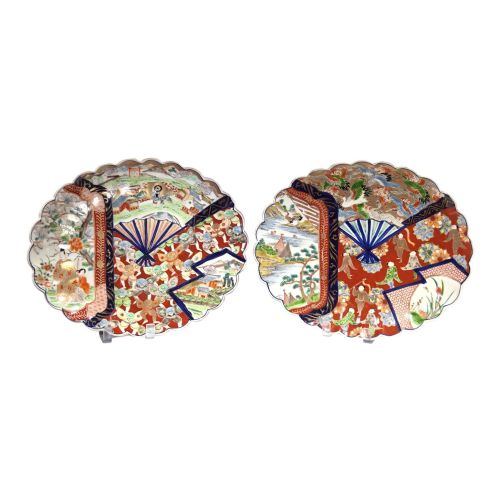


Arita Imari Wall Plates
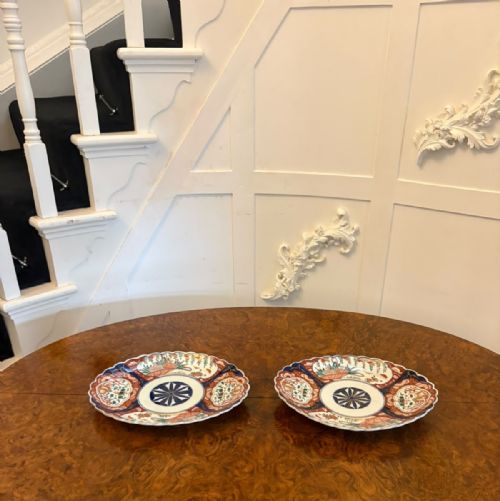
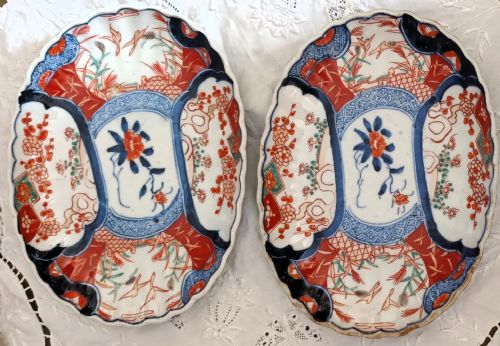
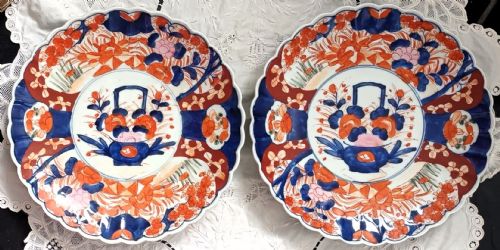
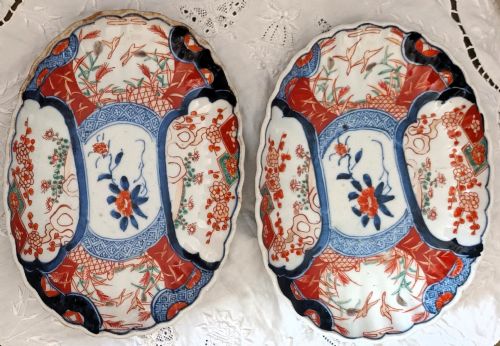
These arita imari wall plates are decorative Japanese porcelain dishes produced across the Meiji period and Victorian eras, prized for rich colour palettes and display potential.
Arita Imari Wall Plates
When you search for arita imari wall plates, you encounter porcelain dishes and chargers created in Japan primarily during the 19th century and the Meiji period, alongside examples stretching back to the 17th century. The pieces recorded here span decorative plates, chargers, and platters shaped in circles, squares, octagons, fans, and ovals.
The version you are most likely to meet on this page is a late 19th-century or Meiji period charger or plate featuring traditional Japanese Imari patterns. These objects were made for display on walls or surfaces, offering robust ceramic construction combined with intricate painted decoration.
Originating from the Arita district, these wares bridge traditional Japanese pottery techniques with historical export markets. The selection ranges from single display dishes to matched pairs and larger collections designed to command attention in a room.
How they were made
These items rely on porcelain clay bodies shaped by hand or moulded into specific geometric and organic forms, such as scalloped edges, ribbons, and fan shapes. Once formed, the porcelain receives its primary cobalt glaze before undergoing high-temperature firing.
Painters then apply enamel colours and gold leaf or gilt details over the initial glaze layer. A subsequent firing fixes the enamel and metallic accents, creating the characteristic layered visual depth found on Japanese Imari and Arita wares.
Listings feature porcelain pieces spanning from the 17th century through the Victorian era and the Meiji period, utilising enamel, gold leaf, and cobalt glaze.
What varies in quality
The distinction between standard production and the finest pieces lies in the precision of the hand painting and the complexity of the motifs, such as exotic birds or koi carp. Superior examples demonstrate meticulous brushwork and balanced compositions across unusual formats like square or octagonal plates.
The preservation of the applied enamel and gold gilt over time also dictates the standing of a piece. Well-preserved pigment adhesion and crisp cobalt blue underglazes elevate specific chargers and dishes above heavily worn counterparts.
The Arita Imari Wall Plates Glossary
- Arita
- A Japanese town and district renowned as the birthplace of Japanese porcelain production. Kilns in this area produced wares for domestic use and international export.
- Imari
- A style of Japanese export porcelain characterised by a distinct palette of cobalt blue, iron red, and gold. The name derives from the port town from which these ceramics were shipped.
- Charger
- A large decorative plate intended primarily for display on a wall or sideboard rather than for serving food at a table.
- Meiji
- The period in Japanese history spanning from 1868 to 1912, marked by significant opening to Western trade and prolific ceramic output.
- Cobalt glaze
- A deep blue mineral pigment applied under the glaze before firing, providing the durable foundation colour for traditional blue and white designs.
- Gilt
- A thin layer of gold applied to the surface of the porcelain as leaf or paint to highlight decorative motifs and borders.
Arita Imari Wall Plates: Frequently Asked Questions
How do I hang arita imari wall plates safely?
Use spring-loaded brass plate hangers that distribute weight evenly across the rim without applying excessive pressure to the ceramic body. Ensure the wall fixing is anchored securely into masonry or a stud.
Check the hanger periodically to confirm the grip remains firm and the porcelain sits flush against the vertical surface.
Were these plates used for dining or display?
Large chargers and decorative plates were primarily produced for visual display in interiors, mounted on walls or set upon furniture surfaces to showcase wealth and taste.
While constructed from durable porcelain, their elaborate enamel and gold gilt decoration meant they functioned chiefly as ornamental works of art rather than everyday tableware.
How do I clean antique porcelain safely?
Dust the surface gently with a soft, dry microfibre cloth to remove loose particles without disturbing delicate enamel or gilt details. Avoid harsh chemical cleaners or abrasive sponges entirely.
If washing is necessary, use lukewarm water and mild soap, then dry the piece immediately with a soft towel to prevent moisture damage.
How do I tell Meiji period pieces apart?
Meiji period pieces often exhibit a combination of cobalt blue underglazes with dense overglaze enamel and gold leaf accents. Look at the precision of the hand-painted motifs and the form of the plate, such as scalloped or fan shapes.
Comparison with 17th-century Hizen or Arita pieces reveals shifts in colour vibrancy and stylistic complexity introduced during the later export boom.