








Meiji Japanese Imari Charger
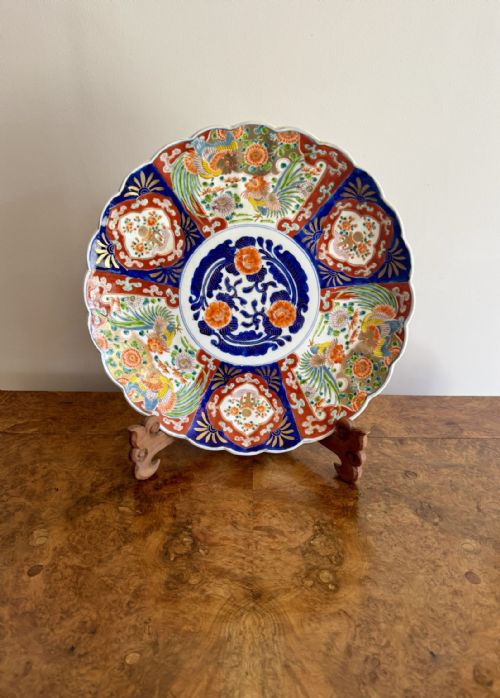
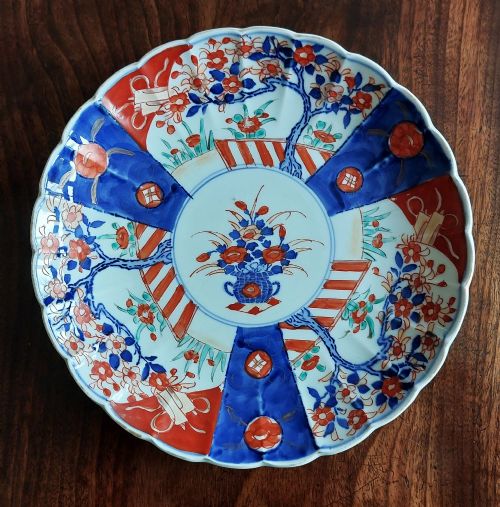
A meiji japanese imari charger is a large porcelain display piece from late nineteenth century Japan, bringing vibrant cobalt and iron red panels to a room.
Meiji Japanese Imari Charger
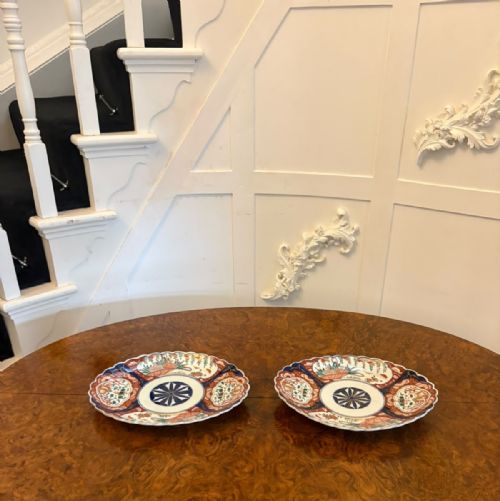
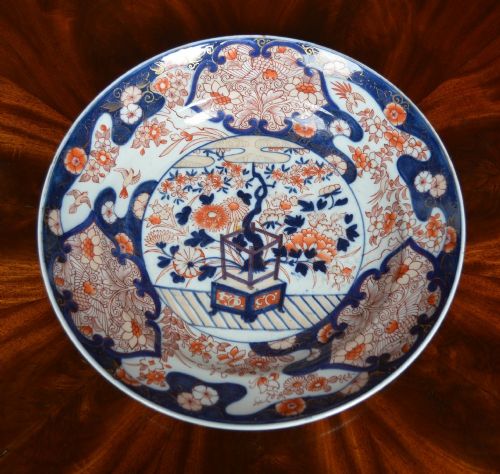
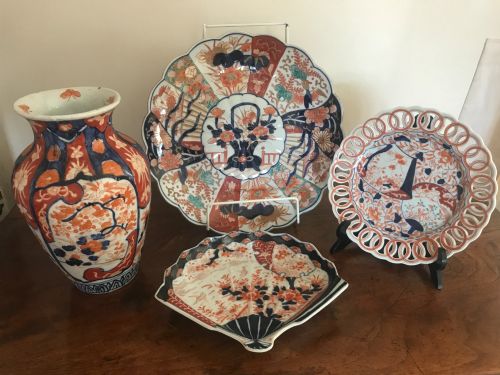
When you search for a meiji japanese imari charger, you encounter large decorative plates and shallow bowls produced in Japan during the nineteenth and early twentieth centuries. These ceramics span the Meiji period, Victorian era, and Arita kiln traditions, appearing as single pieces, pairs, or matched sets.
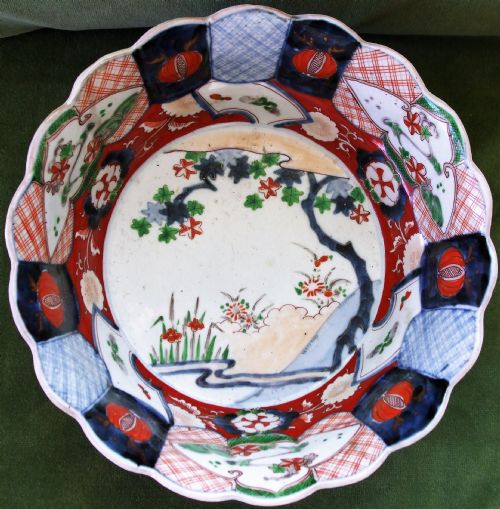
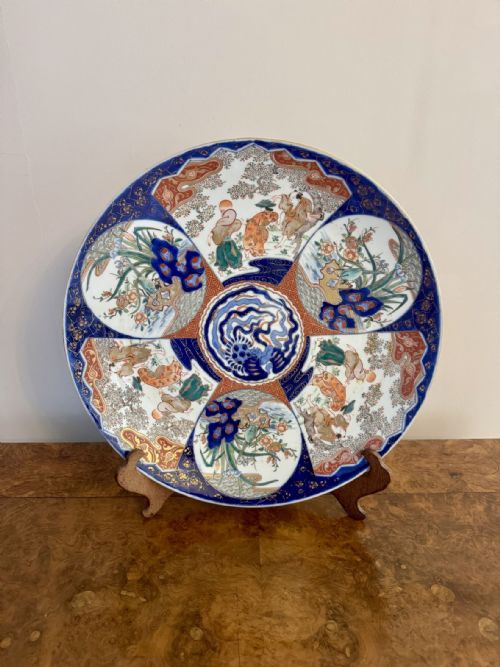
The form most frequently met on this page is the large circular charger with a scalloped edge, alongside oval dishes and square plates. Makers designed these works primarily for decorative display rather than dining, utilising bold palettes of cobalt underglaze, enamel, and gilt to catch the eye.
The history recorded in these pieces stretches from eighteen fifty through to nineteen twenty, capturing the height of Japanese export porcelain. Buyers select them to anchor a wall display or sit centrally on a heavy timber surface.
How they were made
Craftsmen shaped white porcelain bodies on the wheel or pressed them into moulds to create scalloped and square profiles. Kilns then fired these pieces with cobalt underglaze to establish the deep blue foundation of the design.
Artisans applied overglaze enamels in iron red, green, and gold leaf, adding complex floral and bird motifs by hand. A subsequent low temperature firing fixed these coloured and gilded details to the hard porcelain surface.
Listings feature porcelain pieces spanning from eighteen fifty through to nineteen twenty, predominantly from the Meiji period and Arita kilns.
What varies in quality
The distinction between standard export work and exhibition grade pieces rests on the precision of the hand painting and the depth of the palette. Finer chargers display complex compositions featuring figures like the Seven Lucky Gods or detailed exotic birds.
The weight of the porcelain and the richness of the gilding and cobalt underglaze separate ordinary plates from exceptional chargers. Superior examples maintain crisp lines in the enamel work and a balanced, heavy form across large diameters.
Fukugawa
The Meiji Japanese Imari Charger Glossary
- Imari
- A style of Japanese export porcelain originating from the town of Arita, traditionally decorated in cobalt blue, iron red, and gold. This palette creates a high contrast finish recognisable across nineteenth century dining and display rooms.
- Meiji
- The period of Japanese history spanning from eighteen sixty eight to nineteen twelve, marked by extensive international trade in decorative arts. Chargers from this era often combine traditional kilns with Western export preferences.
- Charger
- A large ornamental plate intended for display on walls or sideboards rather than for serving food. These pieces measure significantly wider than standard dinner plates.
- Arita
- The Japanese town and surrounding region famous for producing porcelain wares. Kilns here supplied the bulk of the chargers exported during the nineteenth century.
- Cobalt Underglaze
- A blue pigment applied to the raw porcelain body before glazing and firing, producing a permanent colour beneath the glossy surface layer. This technique ensures the blue elements remain protected over centuries.
Meiji Japanese Imari Charger: Frequently Asked Questions
Were these chargers used for dining?
These large porcelain pieces were created primarily for decorative display on walls or tables rather than everyday dining use. Their generous scale and intricate enamel work made them status symbols in Victorian homes.
Collectors today continue to exhibit them upright on plate stands or mounted securely on walls to showcase their detailed cobalt and red patterns.
How do I care for antique porcelain?
Cleaning requires only a soft, dry cloth to remove dust from the glazed surface, avoiding harsh chemical cleaners that might damage the delicate overglaze gold leaf.
Because these chargers are heavy, ensure any wall mounting brackets or display stands are robustly secured to support the porcelain safely.
How can I tell the period?
Dating relies on stylistic shifts within nineteenth century Japanese export wares, particularly the transition from Edo traditions into the Meiji era. Examining the registration of the cobalt underglaze and the richness of the iron red enamel provides further clues.
Pieces often carry clues in their weight, potting style, and the complexity of the hand painted birds or floral motifs typical of eighteen eighty to nineteen ten.
Why do some have scalloped edges?
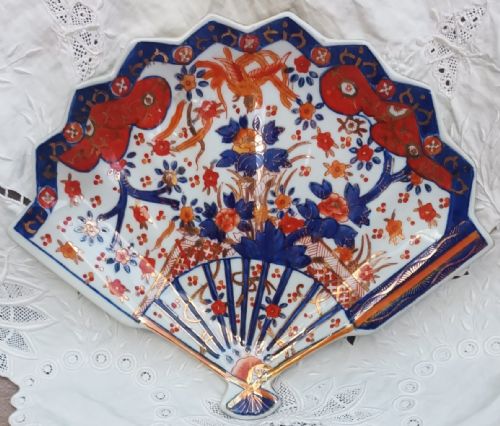
Scalloped edges reflect traditional Japanese ceramic styling that mimics natural forms such as flower petals or opened fans. Potters shaped these contours by hand or in moulds before firing.
This shaping adds textural depth to the charger, framing the hand painted panels of cobalt and enamel inside the rim.