



Arita Export Ceramic Plate
An arita export ceramic plate brings centuries of kiln mastery into your home, offering bold hand-painted palettes designed for global trade.
Arita Export Ceramic Plate
An arita export ceramic plate represents the historic porcelain output of Hizen province destined for overseas markets, spanning centuries of Japanese ceramic tradition. Buyers encounter diverse forms here, ranging from small everyday dishes to expansive chargers intended for display.
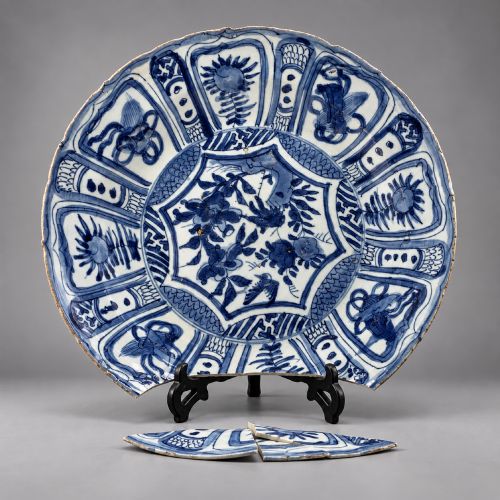
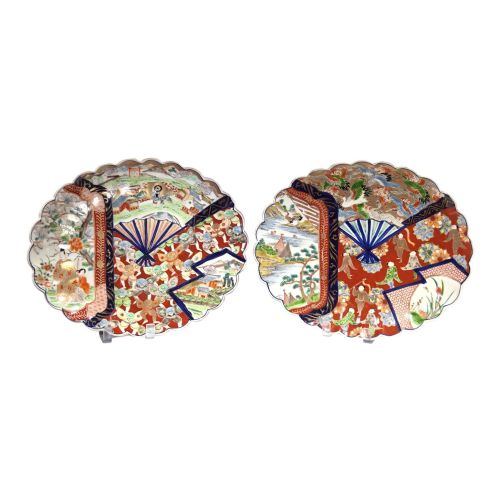
The pieces on this page draw from several distinct eras, including the Edo and Meiji periods alongside Victorian-era imports. You will frequently find plates and chargers decorated in the traditional Imari style alongside blue and white porcelain.
Objects range from modest single plates to matched pairs and larger groupings featuring exotic birds or black ship decoration. Each dish records the changing aesthetic demands placed upon Japanese kilns by international buyers over hundreds of years.
Materials and Manufacture
These pieces are constructed from fine porcelain clay shaped in kilns and decorated using cobalt underglaze pigments. Artisans applied cobalt directly to the raw clay before glazing to achieve deep blue tones that survived high-temperature firings.
Overglaze enamel colours and gold leaf were frequently added during a secondary, lower-temperature firing to create the rich red and gilt palette associated with Imari wares. Scalloped and octagonal edges required careful hand-moulding while the clay remained pliable.
The available inventory includes blue and white porcelain alongside Japanese Imari styles, featuring decorative chargers and scalloped plates.
Distinctions in Quality
The hierarchy of quality rests primarily on the crispness of the cobalt painting and the precision of the overglaze enamels. Superior examples display confident brushwork and balanced compositions that fill the porcelain surface with deliberate intent.
The application of gold leaf and the refinement of the ceramic body itself signal higher craftsmanship. Plates that retain vibrant enamel colours and clean white porcelain grounds without excessive kiln distortion occupy the upper tier.
The Arita Export Ceramic Plate Glossary
- Arita
- The Japanese town in Hizen province renowned as the birth-place of porcelain production. Kilns here supplied domestic markets and international export trades.
- Imari
- A style of Japanese export porcelain characterised by a palette of underglaze blue, iron red, and gilt. Pieces were shipped from the port of Imari to European markets.
- Charger
- A large decorative plate or dish intended for display on a wall or sideboard rather than daily dining. These substantial pieces showcase complex pictorial schemes.
- Edo Period
- The period in Japanese history spanning from 1603 to 1867. This era saw the flourishing of Arita ceramic industries and the standardisation of export wares.
Arita Export Ceramic Plate: Frequently Asked Questions
How were these plates used historically?
These ceramic pieces were largely manufactured for export to European and global markets, where they functioned as status symbols and decorative showpieces.
Larger chargers were mounted on walls or displayed on sideboards, whilst smaller plates saw use in wealthy households for formal dining and entertaining.
How do I date an antique Imari plate?
Dating relies on examining the characteristics of the porcelain body, the depth of the cobalt underglaze, and the complexity of the overglaze enamel palette.
Earlier pieces from the seventeenth century typically feature heavier bodies and simpler cobalt designs, whereas Meiji period items often exhibit brighter, denser enamelling.
Can I display these plates on the wall?
Displaying these chargers and plates on walls is a traditional method of enjoying their intricate surface decoration without risking damage from daily use.
When hanging older porcelain, use specialist padded display brackets that distribute weight evenly across the rim without causing friction or stress.
What is the difference between Arita and Imari?
Arita refers to the production location where the porcelain clay was mined and fired in Hizen province. Imari simply names the port from which these finished wares were shipped abroad.
While all Imari export porcelain originates from the Arita kilns, not every Arita piece adheres to the red, blue, and gold Imari decorative style.