




Marquetry Tallcase Clock
A marquetry tallcase clock brings striking floral patterns and rich wood grain together in a commanding floor-standing timekeeper.
Marquetry Tallcase Clock
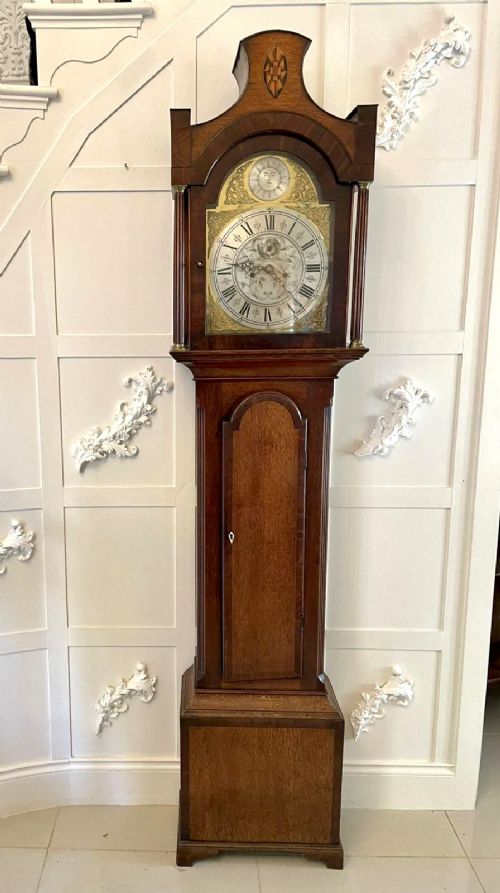
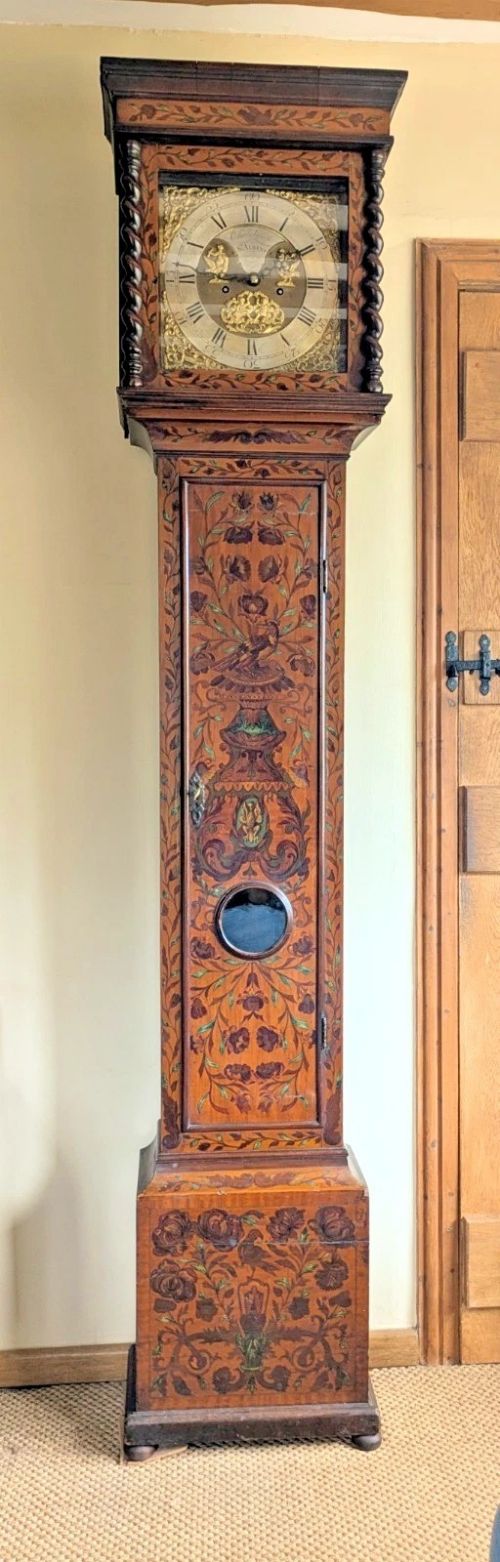
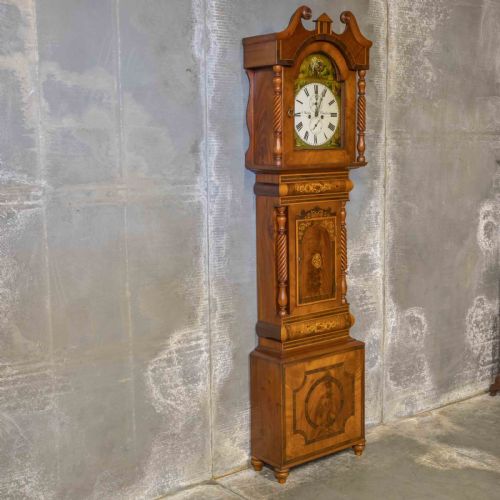
A marquetry tallcase clock combines a tall wooden trunk with intricate inlaid wood designs, often featuring floral or botanical motifs. These timepieces stand as grand focal points in a room, housing long pendulums and weight-driven movements.
The selections available range from 17th-century walnut and marquetry pieces by makers such as Henry Massy to Edwardian mahogany inlaid variations and French kingwood designs. Buyers encounter both provincial British examples and ornate continental interpretations.
Forms span traditional longcase clocks, grandfather clocks, and smaller grandmother clocks. Each variant offers a combination of brass dial work and detailed timber cabinetry reflecting its period of origin.
Materials and construction methods
The intricate floral or geometric marquetry patterns were meticulously hand-cut from thin veneer sheets and fitted into recesses on the trunk and hood. Movements were constructed from brass and steel, often featuring eight-day or thirty-hour gear trains.
Several makers signed their brass dials so permanently that generations of clock winders had to check their watches twice.
Markers of quality and craftsmanship
Quality rests on the crispness and complexity of the marquetry inlay and the depth of figure in the walnut or mahogany background veneers. Superior examples display seamless veneer matching and finely engraved brass dial plates.
The architectural proportion of the case and the original condition of the hood columns and pediment distinguish finer pieces from simpler workshop productions. Signed dials by recorded makers elevate the standing of the clock.
Charles Louch St. Albans·Henry Massy·David Morice of Auchtermuchty·Edward East·William Warren, Royston·Richard Baker
The Marquetry Tallcase Clock Glossary
- Marquetry
- Decorative veneer work created by fitting together small pieces of various coloured woods to form pictorial designs. This technique transformed plain clock trunks into canvases of floral and geometric art.
- Tallcase clock
- A freestanding, weight-driven pendulum clock enclosed in a tall wooden case, commonly called a grandfather clock. These instruments typically measure over six feet in height.
- Bouche
- A small metal ring fitted into a clock plate hole to reduce friction around a pivot. Clockmakers inserted these to repair worn movement plates.
- Quartering
- A method of veneer cutting where a single piece of timber is sliced into four quarters and arranged symmetrically. This creates a mirrored grain pattern across the clock door.
Marquetry Tallcase Clock: Frequently Asked Questions
How do I wind an eight day marquetry tallcase clock?
Winding involves inserting a key into the winding holes on the dial face and turning it carefully until the weight reaches the top.
Care must be taken not to overwind the movement, as this can place excessive tension on the internal springs or cords.
Where should I place a tallcase clock in my home?
These clocks require a stable, level floor and a secure fixing to the wall through the backboard to prevent tipping. Placing them away from direct sunlight and temperature fluctuations helps protect the antique wood and veneer.
Rooms with minimal vibration ensure the pendulum swings accurately without interference.
What is the difference between a grandfather clock and a grandmother clock?
A grandfather clock refers to a full-sized tallcase clock, typically standing over six feet tall to accommodate long pendulums. A grandmother clock is a smaller, scaled-down version of the same form.
Grandmother clocks were produced in later periods, such as the Edwardian era, to fit rooms with lower ceilings.
How do I identify the period of a marquetry tallcase clock?
Dating relies on stylistic clues in the cabinetwork, such as the complexity of the marquetry, the shape of the hood, and the design of the brass dial. Seventeenth and eighteenth-century examples often feature walnut or oak with floral panels, while Edwardian pieces lean towards inlaid mahogany.
Signatures inscribed on the dial provide direct attribution to historical makers and active working years.