




Wooden Hall Clock
A wooden hall clock brings steady movement and rich timber grain to an interior, marking the hours with traditional weight or spring drives.
Wooden Hall Clock
A wooden hall clock encompasses tall floor-standing longcase designs as well as smaller wall and mantel timepieces shaped from timber. These objects serve both a practical timekeeping function and a traditional decorative role within domestic interiors.
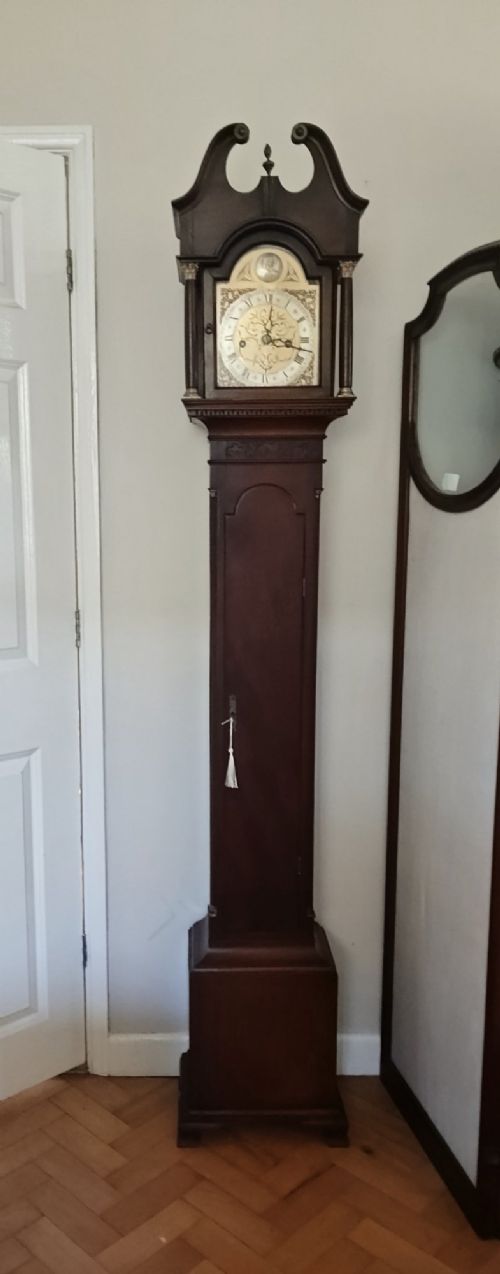
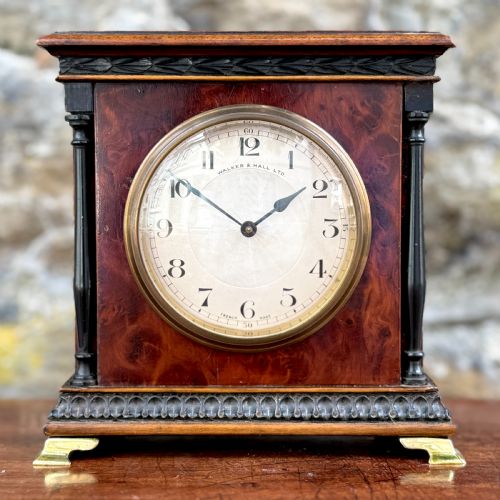
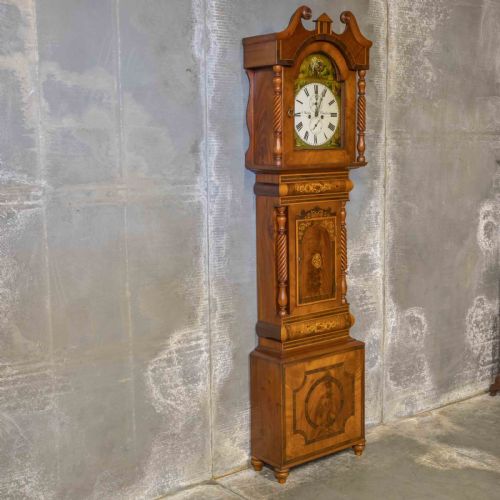
Visitors browsing this page most frequently encounter grander longcase clocks, often referred to as grandfather or grandmother clocks, alongside smaller Edwardian and Victorian mantel pieces. Such examples span periods from the eighteenth century through to the early twentieth century.
The selection ranges from tall Georgian oak and mahogany floor-standing pieces to slim Edwardian chiming versions. Scottish regional variations and Gothic revival styles also appear among the forms.
Materials and construction
Cabinet makers utilised dense hardwoods such as mahogany, oak, burr walnut and rosewood to house the delicate brass and enamel clock movements. Satinwood inlay often decorated the timber surfaces of later Edwardian and Georgian revival pieces.
Transparent glass protected the white enamel or brass dials, allowing viewers to observe the hands while shielding the face from dust. Ebonised wood detailing occasionally provided contrast against the warmer tones of the primary timber body.
Cabinet timbers recorded across the inventory include solid mahogany, oak, burr walnut, rosewood, and ebonised wood.
Assessing craftsmanship and execution
The sophistication of the movement largely distinguishes simpler timepieces from superior chiming models, such as those featuring quarter-chiming or Westminster chime mechanisms. The presence of specialised mechanics like twin fusee movements or rocking automata indicates a higher standard of clockmaking.
Cabinet work varies from plain structural housings to richly figured timbers adorned with precise satinwood inlay and refined proportions. The crispness of dial markings and the integration of maker signatures, such as Walker and Hall or JJ Elliot, further separate standard examples from finer works.
Walker and Hall·Garman Meonstoke·JJ Elliot
The Wooden Hall Clock Glossary
- Longcase clock
- A tall, floor-standing pendulum clock housed in a vertical wooden case, frequently known as a grandfather clock. These standing timepieces require adequate vertical clearance in a hallway or landing.
- Grandmother clock
- A scaled-down version of the traditional longcase clock, typically produced during the Edwardian period or later. They offer the presence of a tall clock in a more compact footprint.
- Fusee movement
- A conical pulley mechanism designed to equalize the driving force of the mainspring as it unwinds. This system helps the clock maintain more consistent timekeeping accuracy.
- Enamel dial
- A metallic clock face coated with fused glass powder to create a smooth, white background for painted numerals. These faces provide clear legibility across the room.
Wooden Hall Clock: Frequently Asked Questions
What is a grandmother clock?
A grandmother clock is a smaller, more slender variant of the traditional longcase or grandfather clock. These scaled-down timepieces gained popularity during the early twentieth century and Edwardian eras.
They provide the classic aesthetic of a tall wooden clock while fitting more comfortably into rooms with lower ceilings or restricted floor space.
How do I wind a longcase clock?
Winding typically involves using a small crank key to lift internal weights via cords or chains, or to tension the internal springs depending on the movement type. Care must be taken not to over-wind the mechanism.
Consulting the specific mechanical requirements of the movement ensures the clock continues to keep accurate time without placing undue strain on the internal gears.
Where should I place a hall clock?
These timepieces require a stable, level surface or solid floor to ensure the pendulum swings evenly and the escapement ticks correctly. Hallways, landings and principal rooms provide traditional settings.
Placing the wooden case away from direct sunlight and dampness protects the polished mahogany or oak timber from warping or fading over time.
How do I identify the period of a clock?
Dating relies on observing stylistic markers such as the cabinet timber, dial materials, and construction techniques. Georgian pieces often display robust oak or mahogany proportions, whereas Edwardian examples frequently incorporate delicate satinwood inlay.
Maker signatures inscribed on the brass dial or movement plates can also narrow down the active workshop dates and regional origin.