




Inlaid Wooden Grandfather Clock
An inlaid wooden grandfather clock brings architectural presence and steady mechanical rhythm to a room, combining fine cabinetry with precision timekeeping.
Inlaid Wooden Grandfather Clock
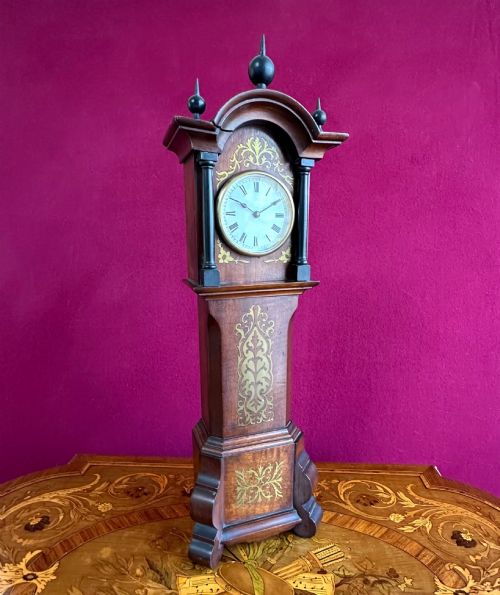
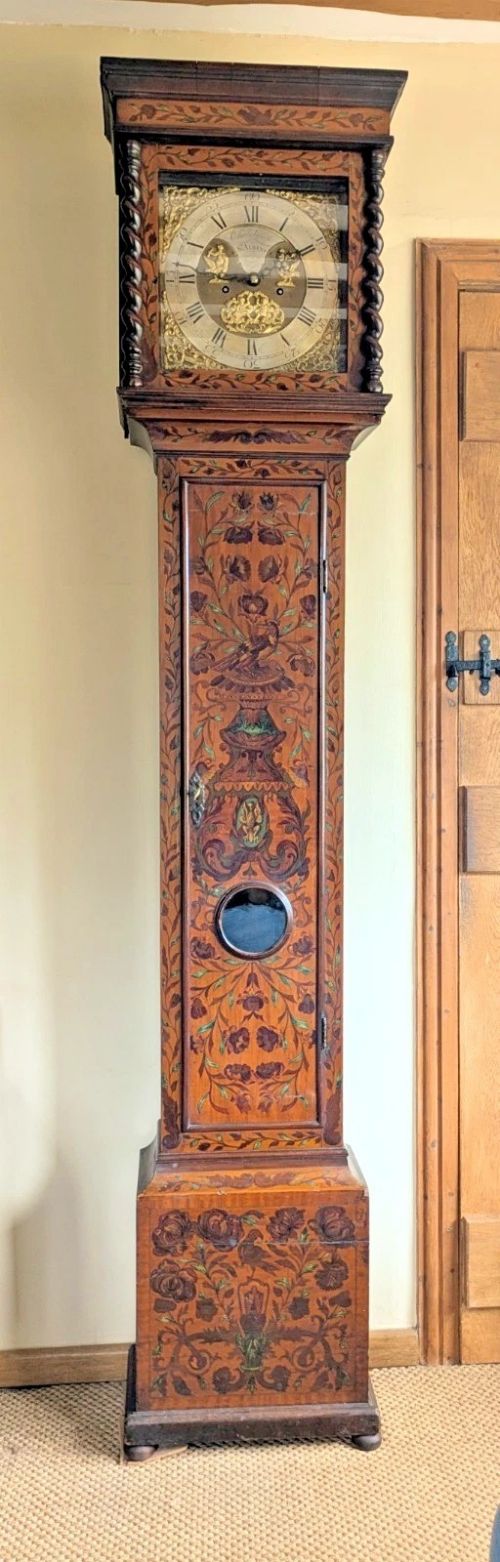
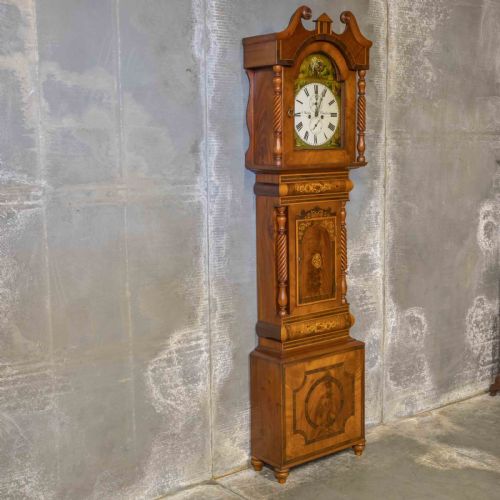
When you search for an inlaid wooden grandfather clock, you are looking at tall floor-standing timepieces that house weights and a pendulum within a wooden case. These items range from simple vernacular formats to elaborate tall case structures with decorative marquetry.
The versions you are most likely to meet on this page span several distinct periods, most notably the Georgian era alongside later 18th century, Regency, Victorian, and Edwardian examples. They take the form of longcase clocks and smaller scale grandmother clocks constructed from various timbers.
Makers recorded in these listings include regional clockmakers such as Charles Louch of St. Albans, Benjamin Peers of Chester, and Edward Renouf of Jersey. Their work demonstrates how local craftsmanship shaped the appearance of these tall domestic regulators across Britain and the Channel Islands.
How they were made
The construction relies heavily on native and imported hardwoods like mahogany, walnut, and oak, often enriched with satinwood inlay and marquetry decoration. Cabinetmakers built these tall housings in sections to accommodate the long pendulum and the heavy driving weights.
Dial construction required specialist skills, combining brass movements with painted dials or moon phase displays behind protective glass panels. These mechanical components were paired with wooden casework that incorporated decorative veneers and geometric stringing.
Channel Island makers like Edward Renouf quietly solved timekeeping across the water while the mainland debated moon phases.
What varies in quality
The ambition of the cabinetwork and the intricacy of the timber decoration set the baseline for the visual merit of each piece. Marquetry panels and contrasting satinwood inlay require high levels of joinery skill to remain stable over centuries.
The provenance of the movement and the signature on the dial contribute significantly to the standing of a longcase clock. Signed dials by recorded regional makers carry distinct historical weight compared to unsigned vernacular movements.
Charles Louch St. Albans·Benjamin Peers Chester·Edward Renouf Jersey
The Inlaid Wooden Grandfather Clock Glossary
- Longcase clock
- An alternative term for a grandfather clock, describing the tall wooden case that protects the pendulum and weights. This is the standard horological term used by makers and collectors.
- Marquetry
- The art of applying pieces of veneer to a structure to form decorative patterns and pictures. It appears on several of the mahogany cases listed here.
- Moon dial
- A specialised clock face mechanism that tracks the phases of the lunar cycle. These displays add complexity to the upper arch of the dial.
- Grandmother clock
- A smaller, more slender version of the traditional longcase clock. They generally date from the early twentieth century.
- Satinwood inlay
- A contrasting light-coloured timber used for decorative stringing and banding on darker woods. It provides crisp visual borders on the cabinet front.
Inlaid Wooden Grandfather Clock: Frequently Asked Questions
How do I wind a grandfather clock?
Winding involves using a small crank key to raise the weights inside the waist door of the case. Care must be taken not to overwind the mechanism.
Most eight-day movements require this attention at weekly intervals to keep accurate time.
What is the difference between a grandfather and grandmother clock?
Grandfather clocks are full-height floor-standing timepieces produced largely during the Georgian and Victorian periods. Grandmother clocks are noticeably shorter versions made primarily in the twentieth century.
Both types share the same longcase mechanical arrangement for weights and pendulums.
How do I identify a Georgian longcase clock?
Georgian examples typically feature solid mahogany or oak cases with brass or painted dials bearing the maker's name. The proportions follow classical architectural rules of the eighteenth century.
Details such as swan neck pediments and brass dial spandrels help confirm this period.
Where should I place a grandfather clock in my home?
These tall clocks require a stable, dry interior wall away from direct sunlight and heavy foot traffic. A solid floor surface ensures the pendulum swings evenly without interference.
Correct positioning also allows the chiming mechanism to resonate clearly through the room.