
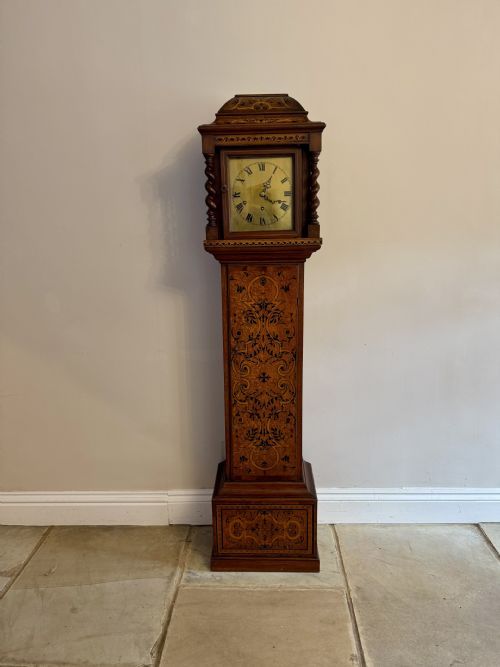


Traditional Marquetry Clock
A traditional marquetry clock brings patterned woodwork and steady timekeeping into a room, offering the craft of earlier centuries.
Traditional Marquetry Clock
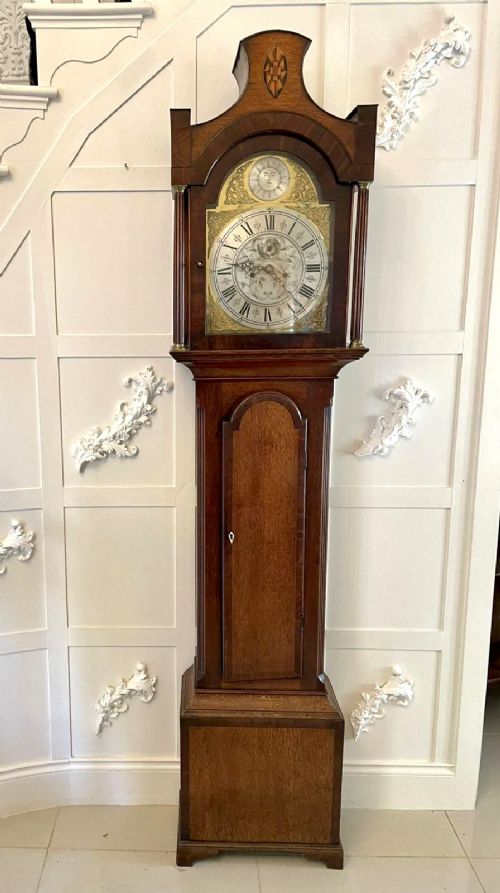
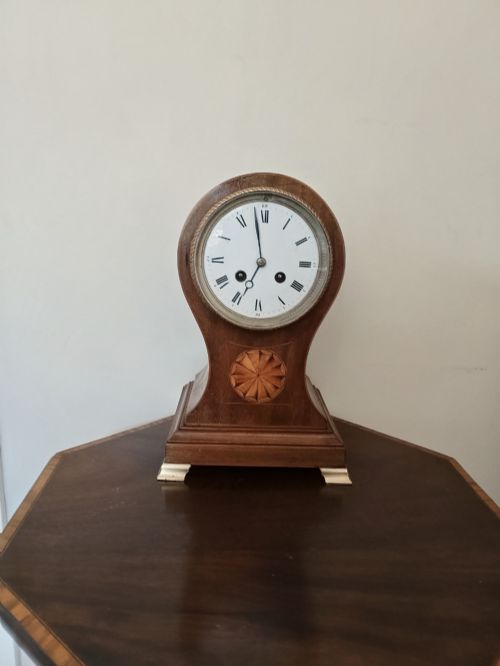
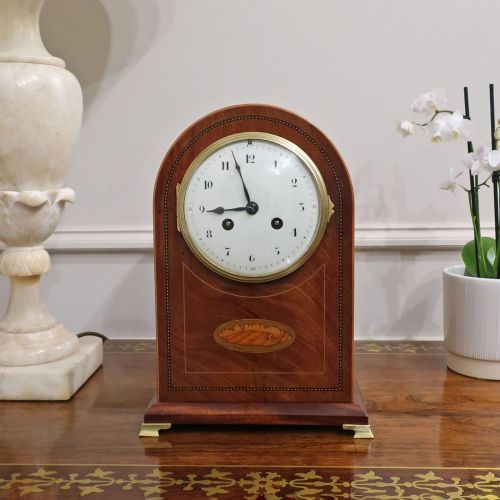
A traditional marquetry clock spans several forms, including longcase clocks, grandfather clocks, and smaller mantel examples. These items appear across periods from the eighteenth century through the Edwardian era.
Buyers encounter longcase formats alongside smaller mantel and wall clocks housed in mahogany, walnut, and oak. The examples incorporate inlaid decoration and brass faces within traditional cabinet designs.
How traditional marquetry clock items were constructed
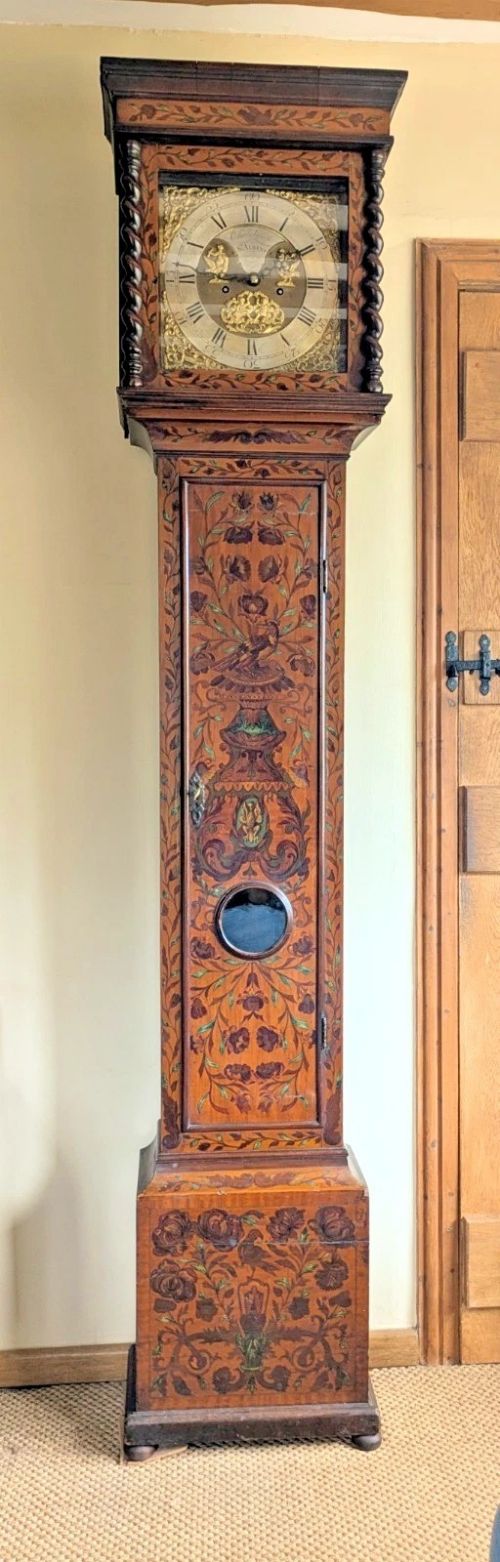
Cabinetmakers utilised woods such as mahogany, walnut, oak, and satinwood to build the primary carcass and the decorative surface layers. Inlay techniques applied contrasting timber veneer to form patterns across the door and trunk panels.
Clockmakers fitted brass dials, enamel chapters, and eight day movements or fusee mechanisms inside the timber cases. Glass panels protected the dial face while allowing visibility of the hands and pendulum.
One Edwardian mantel clock is inlaid specifically with poppies.
What varies in quality across traditional marquetry clock examples
The precision of the timber inlay and the crispness of the cabinet moulding define the visual standard of the piece. Finer examples display meticulous alignment in the wood patterns across the door and plinth.
Movement sophistication also distinguishes the range, from simple timepiece mechanisms to chiming and musical eight day systems housed within mahogany or walnut cases.
Charles Louch St. Albans·Henry Massy·Edward Stanton·Sam Robson·Malecot of Paris
The Traditional Marquetry Clock Glossary
- Marquetry
- Decorative veneer work arranged in detailed patterns on the wooden surface of the case. Craftsmen cut thin slices of contrasting timber to form floral or geometric designs.
- Fusee
- A conical pulley mechanism that equalises the driving force of the mainspring as it unwinds. This device helps maintain consistent timekeeping across the duration of the wind.
- Longcase clock
- A tall floor-standing timepiece enclosing the weight-driven movement and pendulum within a wooden trunk. These items are frequently called grandfather clocks.
- Mantel clock
- A smaller clock designed to sit upon a fireplace mantel or shelf. These pieces use spring-driven movements rather than hanging weights.
- Enamel
- A glassy substance fused to a metal dial plate to create a smooth white surface for painted numbers. This finish provides clear legibility for the clock hands.
Traditional Marquetry Clock: Frequently Asked Questions
How do I wind a traditional marquetry clock?
Use the designated key to turn the winding squares on the dial face gently until resistance is felt. Avoid over-winding to protect the internal springs.
Ensure the key matches the arbor size properly before applying turning force.
Where should I place a longcase clock?
Position the piece against a sturdy interior wall on a level floor to ensure the pendulum swings evenly. Avoid damp areas and direct sunlight that could dry the timber.
Stable placement keeps the beat steady and protects the veneered case from movement.
What maintenance do these clocks need?
Professional cleaning and oiling of the movement every few years keeps the gears running smoothly. Dust the wooden case regularly with a soft dry cloth.
Avoid using harsh polishes on the marquetry surface to preserve the original finish.
How can I tell the period of a clock?
Examine the timber species, dial style, and cabinet proportions alongside any recorded maker details. Edwardian pieces often feature lighter mahogany and satinwood inlay.
Eighteenth-century examples display different cabinet construction methods and brass dial layouts compared to later models.