
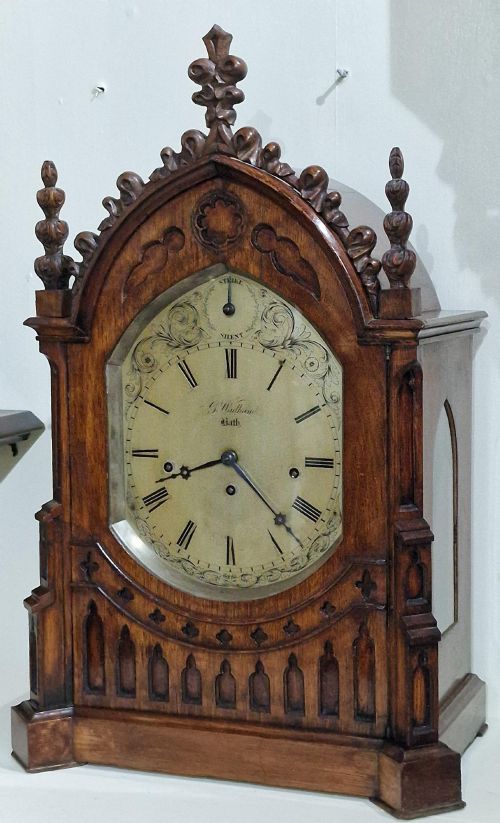


Chime Silent Clock
A chime silent clock brings historical horology into the home, offering both the acoustic presence of a striking mechanism and the option for quiet.
Chime Silent Clock
A chime silent clock is a timepiece engineered with a mechanism that allows the owner to silence the audio strikes and melodies via a dedicated lever or dial. These instruments range from small bracket and mantel formats housed in mahogany, oak, and ebonised timber to taller longcase grandfather or grandmother clocks.
The selections available span several distinct eras, with Victorian and Georgian pieces appearing alongside Edwardian and early twentieth-century examples. Many incorporate glass panels, silvered metal dials, and gilt brass mounts, reflecting the stylistic shifts from Gothic Revival and Sheraton Revival to later traditional designs.
Buyers will encounter various formats on this page, predominantly bracket and mantel clocks designed for tabletops alongside taller floor-standing longcases. These pieces often feature musical barrels or multiple gongs capable of playing distinct melodies such as Westminster chimes on the quarter hour.
What varies in quality
Superior examples distinguish themselves through the crispness of the cabinet carving, the selection of figured timber veneers, and the refinement of the brass movement. High-grade makers incorporated triple fusee setups or complex musical pin-barrels that delivered a clear, mellow tone.
The sophistication of the dial work and the precision of the auxiliary levers also mark the tier of a piece. Finer clocks display carefully engraved silvered dials, robust gilding on brass mounts, and smooth operation of the silent selectors.
Some clocks feature an alarm function alongside their musical chimes, ensuring the household is roused well before the grandfather clock sounds the hour.
George Wadham Bath·Agar Of Malton·John Taylor London·Chater And Son London·L Donne Birchin Lane
The Chime Silent Clock Glossary
- Fusee
- A conical pulley used in spring-driven clocks to equalise the diminishing power of the mainspring as it unwinds. This mechanism ensures consistent torque is delivered to the gear train for better timekeeping accuracy.
- Bracket clock
- A portable table or shelf clock originally designed to sit on a architectural wall bracket. Many Victorian and Georgian examples feature elaborate brass carrying handles on top.
- Longcase clock
- A tall pendulum clock enclosed in a wooden case that rests on the floor, frequently termed a grandfather or grandmother clock. These tall enclosures accommodate long descending weights and pendulums.
- Quarter striking
- A horological function where the clock strikes the bells or gongs at each quarter hour interval, often playing a familiar melody before the full hour strike.
- Chapter ring
- The circular ring on the clock face that bears the numerals marking the hours and minutes. They are commonly made of silvered brass with engraved markings.
Chime Silent Clock: Frequently Asked Questions
How do I operate the silent lever?
The silent lever or dial selector is typically positioned on the clock dial or accessible through the side door of the case. Moving this lever lifts the striking hammers away from the gongs or bells, preventing the clock from chiming while the internal movement continues to keep time.
Care should be taken to switch the lever only when the clock is not currently in the middle of a striking sequence to avoid jamming the delicate rack and snail mechanism behind the dial.
What is the difference between a bracket clock and a mantel clock?
Historically, bracket clocks were built with heavy brass carrying handles and robust movements intended to sit upon wall brackets or furniture surfaces. Over time, the term became interchangeable with mantel clocks designed for tabletops and fireplace surrounds.
Both formats utilise compact spring-driven movements rather than falling weights, allowing them to fit into domestic living spaces without the need for a tall floor case.
How do I care for a mechanical movement?
Mechanical timepieces require regular winding using the correct key, matching the intervals dictated by the spring barrels or hanging weights. Keeping the clock in a stable environment away from direct sunlight and damp air preserves both the wooden cabinet and the brass gearing.
Professional servicing every few years ensures that old oils are cleaned and renewed, preventing unnecessary wear on the pivots and train wheels.
How do I date an antique clock?
Dating relies on stylistic clues within the cabinet woodwork, the construction of the movement, and the signature of the maker inscribed on the dial or backplate. Georgian and Victorian pieces exhibit distinct stylistic motifs, wood choices, and dial layouts characteristic of their respective decades.
Comparing the layout of the fusee or spring barrels and the shape of the plates provides further confirmation of the manufacturing period.