

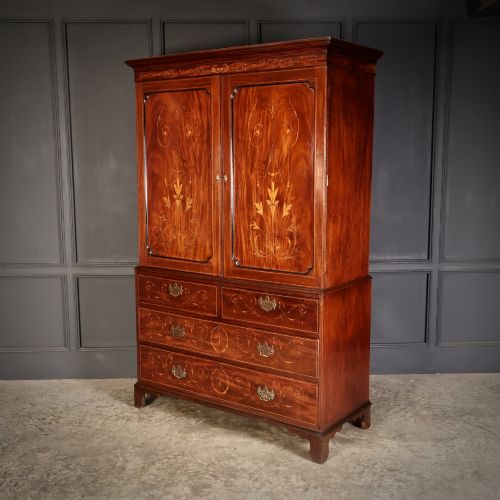
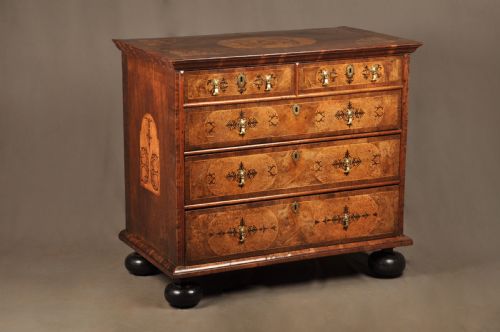
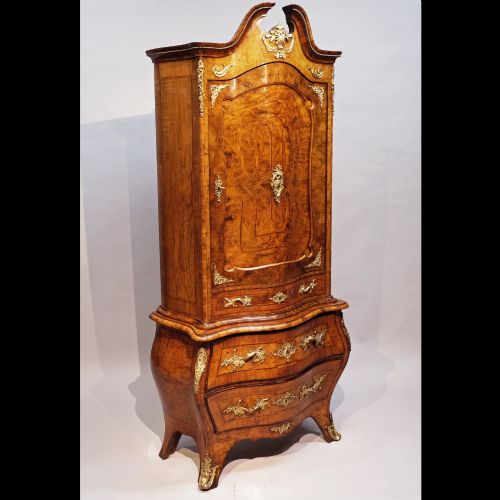
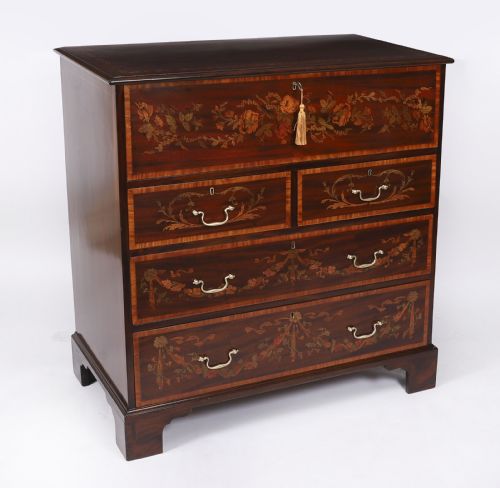
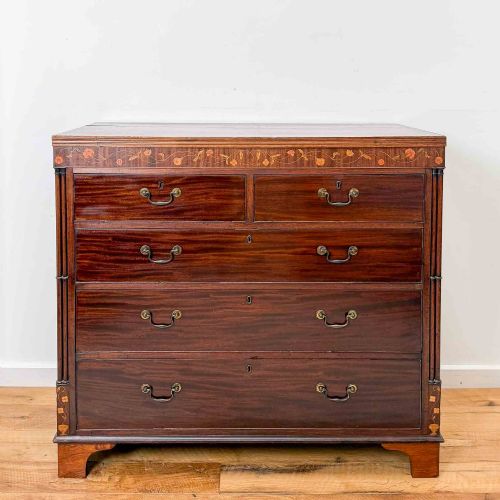
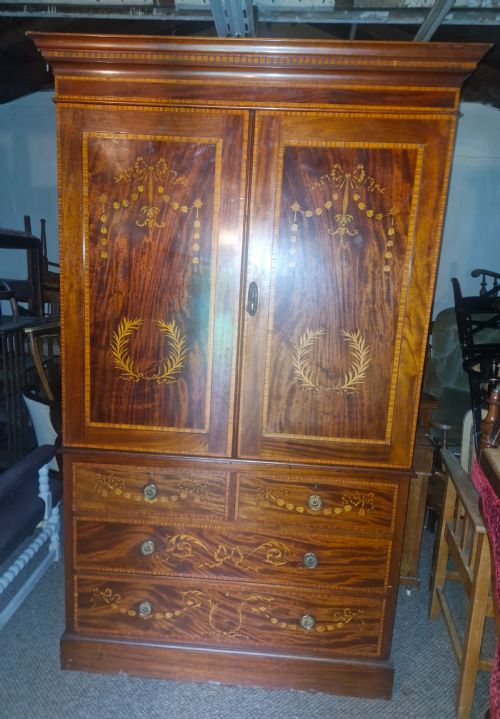

Marquetry Tallboy Chest
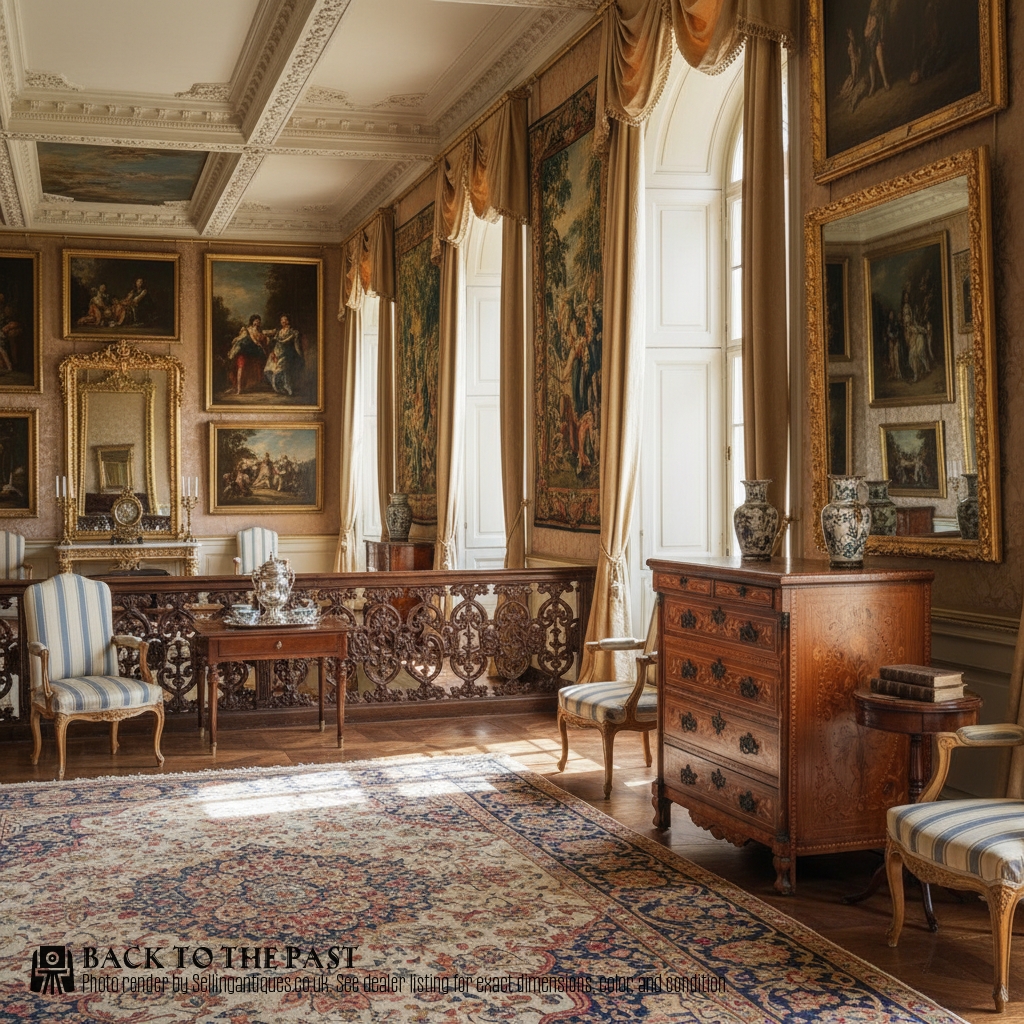
These marquetry tallboy chest pieces combine architectural height with elaborate floral and geometric veneer work that commands any room.
Marquetry Tallboy Chest Forms
A marquetry tallboy chest provides vertical storage through stacked drawers, often combining a chest base with upper sections or linen press formats. These grand storage items emerge primarily from 18th century and 19th century workshops.
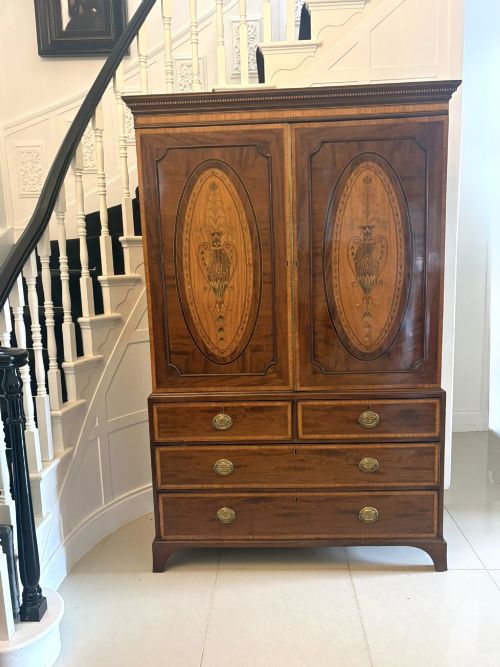
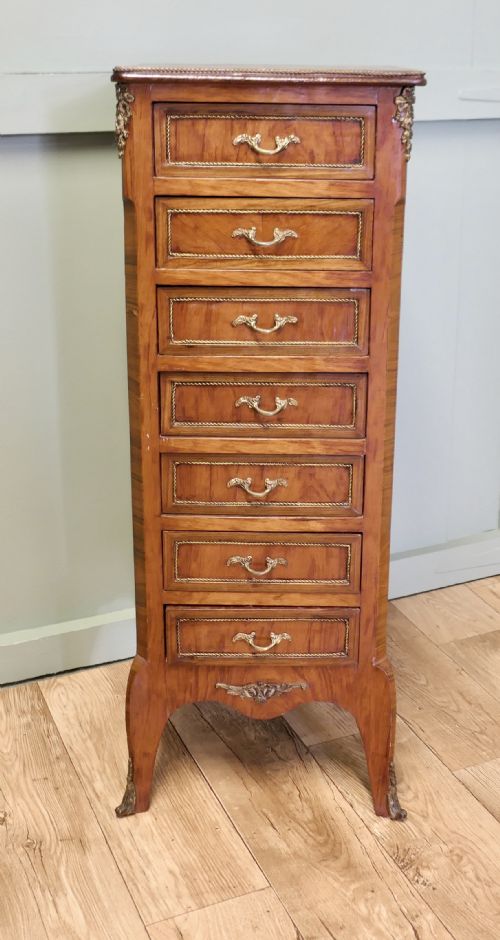
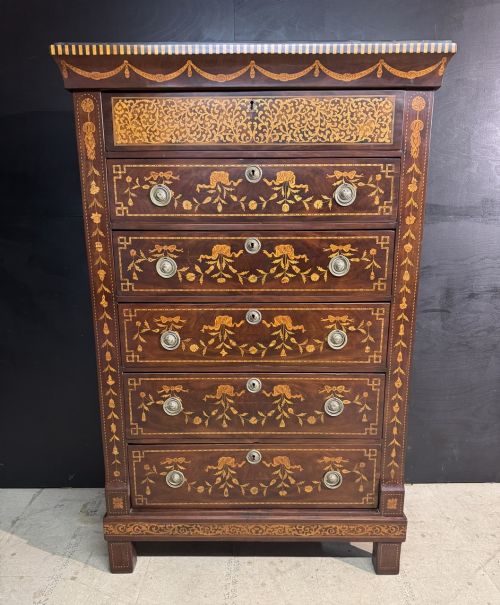
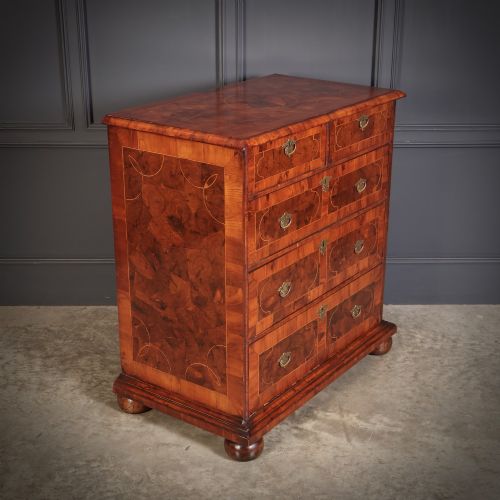
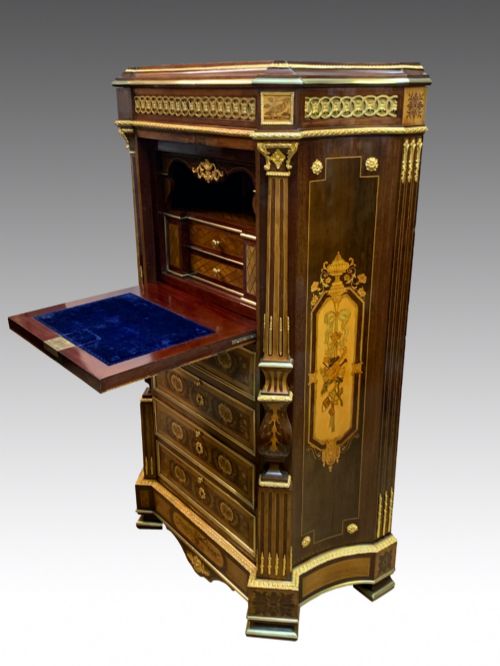
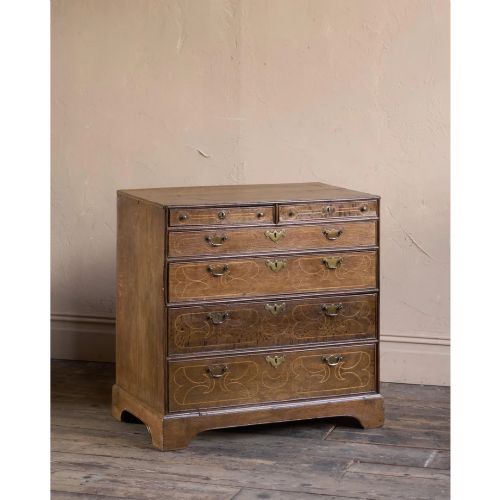
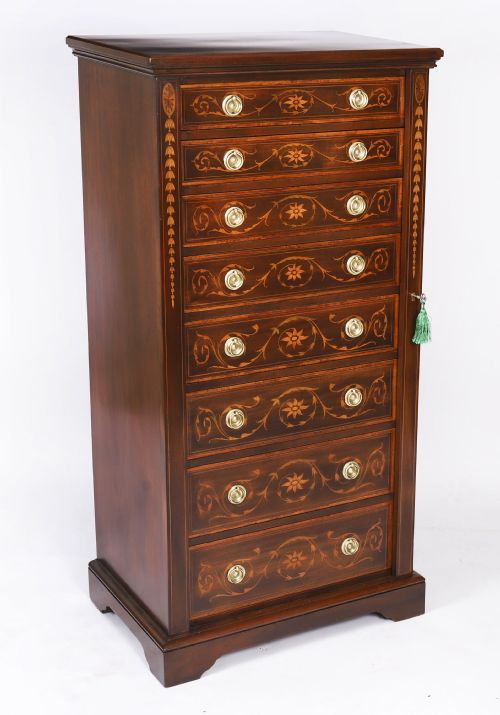
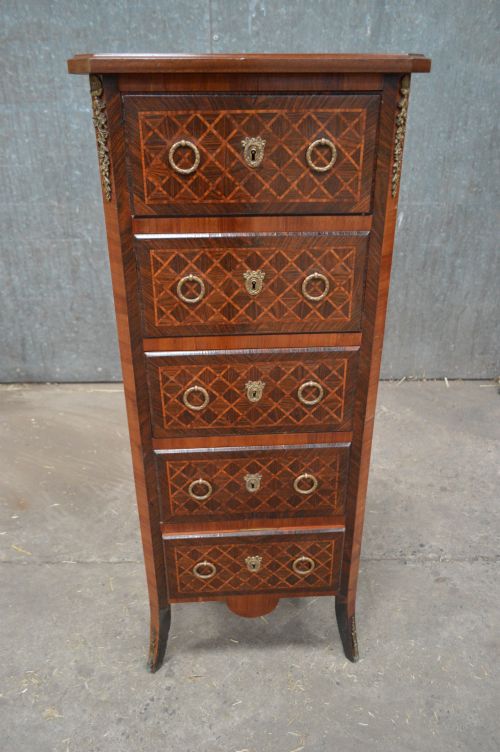
The most likely version to meet here is the Dutch marquetry tallboy chest of drawers, alongside related linen press configurations and French revival cabinets. Pieces range from narrow mahogany carcases to generous walnut and fruitwood examples adorned with floral inlay.
Makers shaped these tall forms across Georgian, Dutch Baroque, Louis XV Revival, and French Transition styles. The vertical emphasis offers substantial capacity while occupying a compact footprint in domestic interiors.
Materials and Construction
Cabinetmakers constructed the primary carcases using dense timbers such as mahogany, walnut, fruitwood, and rosewood. These foundational woods provided structural stability for tall vertical chests.
Craftsmen applied intricate marquetry inlay using contrasting veneers of satinwood and various fruitwoods to create floral and geometric motifs. Hardware typically featured cast brass handles and escutcheons, while select French pieces incorporated fitted marble tops.
Retail Price Guide 2026
Typical UK retail prices for marquetry tallboy chest, calculated from the Sellingantiques database of over a million retail prices indexed since 2003. This retail price guide relies exclusively on Sellingantiques data; no external sources or auction records are used, so the figures do not describe the wider market.
Judging Quality
Quality rests in the precision of the veneer work and the crispness of the floral inlay across the drawers and sides. Finer pieces maintain seamless transitions between contrasting woods without visible gaps or lifting edges.
Proportion and scale dictate the visual success of a tallboy, with superior examples achieving balanced heights without feeling heavy. The integration of secondary timbers and the quality of internal drawer construction further separate standard items from exceptional ones.
The Marquetry Tallboy Chest Glossary
- Marquetry inlay
- The art of applying decorative veneer pieces to a structural carcase to form pictorial or geometric designs. Craftsmen select various coloured woods to create contrast.
- Tallboy
- A tall chest of drawers consisting of multiple stacked sections providing elevated storage. This vertical format maximises capacity within a reduced floor area.
- Linen press
- A tall storage cabinet featuring upper doors enclosing sliding trays above lower drawers. Originally designed for storing household textiles.
- Carcase
- The main structural body or frame of a piece of furniture before drawers and doors are fitted. It supports the external veneers and internal components.
- Satinwood
- A pale, lustrous timber utilised for contrasting stringing and inlay details. Its golden sheen brings brightness to darker primary woods.
Frequently Asked Questions
What is a marquetry tallboy chest?
A tallboy is a vertical storage unit featuring multiple stacked drawers, finished with intricate inlaid wood veneers. These pieces combine height with decorative surface patterns.
They serve as prominent storage furniture in bedrooms and living spaces, offering substantial capacity in a narrow footprint.
How were these tall chests used?
These tall chests provided essential storage for clothing, linens, and personal valuables in period homes. Their elevated drawer configuration kept garments organised and protected.
Some variants included upper linen press compartments specifically designed for folding household textiles and garments.
How do I style a tallboy?
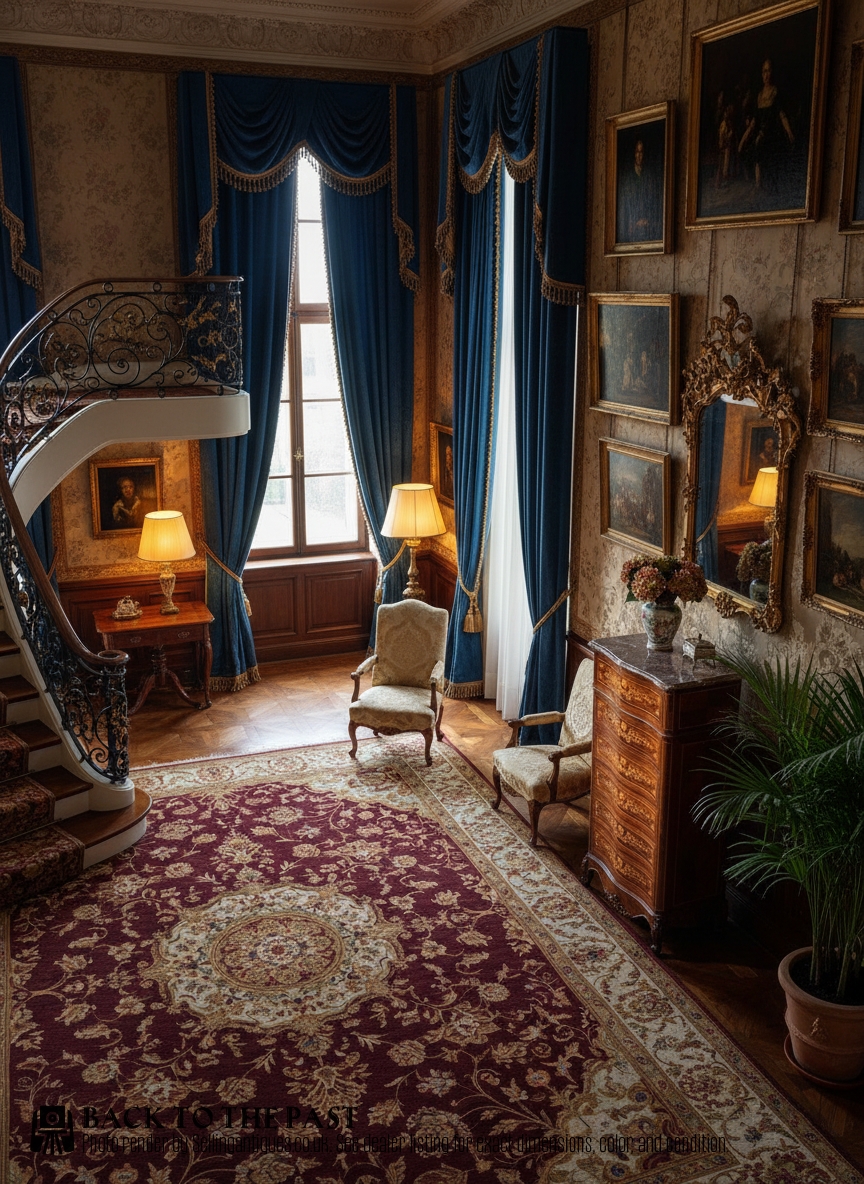
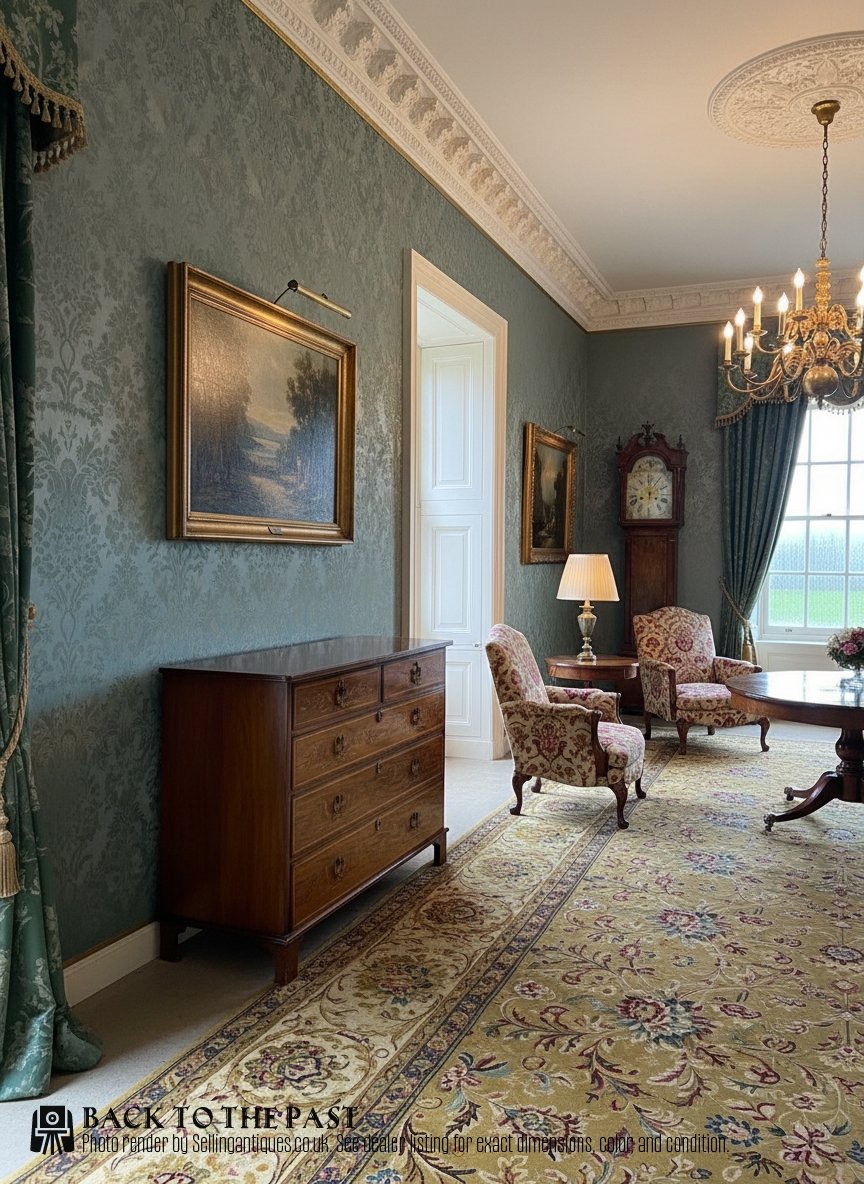
Position the tallboy against a substantial wall where its vertical proportions can anchor the room. Ensure adequate clearance for opening drawers and doors fully.
Keep the top surface uncluttered to highlight the marquetry grain and inlay work, or display a single decorative object.
How do I identify eighteenth century pieces?
Eighteenth century pieces typically exhibit hand-cut dovetails, timber shrinkage characteristics, and traditional wax finishes. Construction methods reflect period joinery traditions without modern fasteners.
Stylistic markers such as Dutch Baroque or Georgian proportions also help date the furniture accurately.