
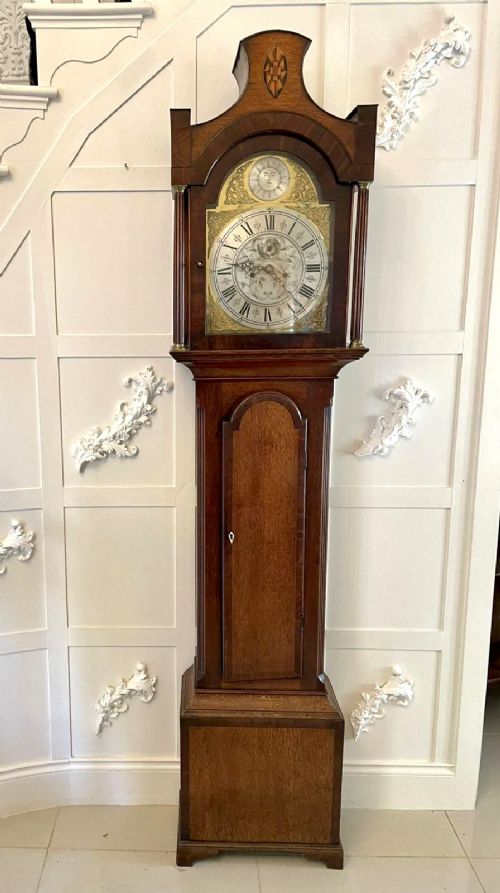
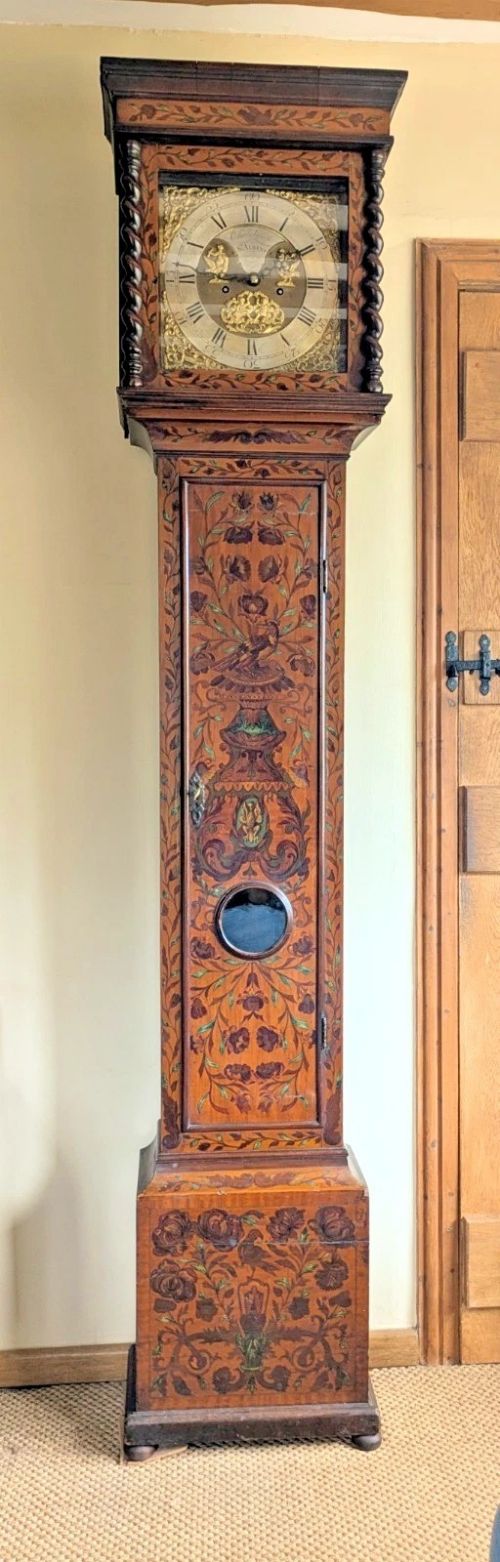


Marquetry Grandfather Clock
A marquetry grandfather clock combines precise mechanical timekeeping with intricate wood inlay, bringing centuries of craftsmanship and stately presence into a room.
Marquetry Grandfather Clock
A marquetry grandfather clock is a tall floor-standing timepiece housed in a wooden case decorated with detailed floral, botanical or geometric wood veneers. These pieces serve both as functional timekeepers and as major decorative focal points for an interior space.
The versions most commonly met span from the late seventeenth century through the eighteenth century, alongside later revivals such as Edwardian periods. They typically combine walnut, mahogany or other fine timbers with contrasting lighter woods to create elaborate surface patterns.
Makers housed these movements in tall wooden trunks designed to protect the pendulum and weights while displaying the skill of the cabinetmaker. The combination of brass dial work and patterned veneer defines the classic form of the marquetry grandfather clock.
How they were made
Cabinetmakers constructed the tall cases using primary woods like walnut, mahogany and kingwood, applying thin veneers cut from various timbers to create the surface patterns. Artisans then used fine saws to cut contrasting woods such as satinwood and various stained veneers, fitting them tightly together into floral or foliage motifs.
The metalwork components rely on brass for dials, bezels and movement plates, while glass protects the face and the trunk door. Joinery methods of the period involved traditional hand-cut joints and animal glues to secure the carcase and decorative elements.
Marquetry Grandfather Clock Retail Price Guide 2026
Typical asking prices for marquetry grandfather clock among the pieces listed under this phrase on Sellingantiques today, from the lower quarter to the upper quarter. They describe what is for sale here now, not the wider market.
Some tall clocks were built with month-duration movements so owners only needed to remember to wind them twelve times a year.
What varies in quality
Quality rests primarily on the crispness and complexity of the wood inlay, where tighter joins and more imaginative botanical designs distinguish superior cabinetwork. The depth of engraving on the brass dial and the reputation of the original maker also elevate the stature of a piece.
Proportion and surface patination dictate the visual success of the clock, with well-balanced case dimensions and undisturbed aged timber surfaces marking the better examples. The integration between the movement and the case reveals whether both components originated together.
Charles Louch St Albans·Nathaniel Pyne·Peter Wise London·Henry Massy of London·David Lestourgeon London·Isaac Penton of London·John Farwell of London·Thomas Bridge of London
The Marquetry Grandfather Clock Glossary
- Marquetry
- The art of applying decorative pieces of veneer to a wooden structure to form intricate pictures or patterns. This technique transforms a plain timber surface into a detailed pictorial display.
- Longcase clock
- The formal term for a grandfather clock, featuring a tall wooden case that encloses the pendulum and hanging weights. These timepieces were developed in the late seventeenth century as more accurate anchor escapements were introduced.
- Veneer
- A thin slice of fine wood applied to a secondary timber base to provide a decorative exterior. Cabinetmakers select veneers for their grain pattern and contrasting natural colours.
- Month duration
- A mechanical movement capability that allows the clock to run for thirty days between windings instead of the standard eight days or thirty hours. This heavier mechanism requires robust construction within the trunk.
- Satinwood
- A durable, yellowish timber often used for contrasting details in inlay work. Its reflective grain catches the light effectively within floral marquetry panels.
Marquetry Grandfather Clock: Frequently Asked Questions
How do these clocks work?
These timepieces operate through a weight-driven mechanical movement regulated by a swinging pendulum inside the tall wooden trunk. Gravity pulls the suspended weights downward, turning a train of brass gears that drive the hands and sometimes a striking mechanism.
winding the clock requires pulling the cords or chains to lift the weights back to the top of the case. The long pendulum ensures a steady beat, which translates into reliable timekeeping when the movement is properly maintained.
Where should I place one?
These tall clocks need a stable, plumb wall location away from direct sunlight, heating vents and damp areas to protect the antique wood and glue. Placing them on a solid ground floor or a secure lower level prevents household vibrations from interfering with the pendulum.
Because of their height, they require physical anchoring to the wall using discreet brackets for safety. This positioning ensures the case remains upright and the pendulum swings freely without touching the backboard.
How do I tell periods apart?
Distinguishing periods relies on observing the timber choices, dial construction styles and the complexity of the veneer patterns. Seventeenth and early eighteenth-century examples often feature walnut carcases with floral marquetry panels and square brass dials, while later revivals adopt different proportions and Edwardian or twentieth-century woods.
Cabinetmaking techniques and edge mouldings also shift over time, reflecting changing workshop practices. Comparing the style of the spandrels in the corners of the dial provides further clues to the manufacturing date.
How do I care for the wood?
Maintaining the wooden case involves keeping indoor humidity stable and applying occasional appropriate wax polish to nourish the aged surface. Avoiding harsh modern cleaning sprays prevents damage to the historic polish and the delicate veneer joints.
Dusting regularly with a soft, dry cloth preserves the natural sheen of the timber. Any structural movement in the wood should be assessed by a professional conservator rather than treated with household adhesives.