



Marble Display Columns
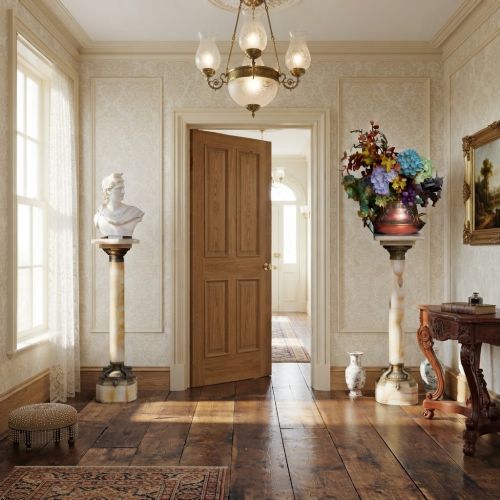
Marble display columns elevate sculptures, urns and plants, bringing classical proportion and presence into a room.
Marble Display Columns
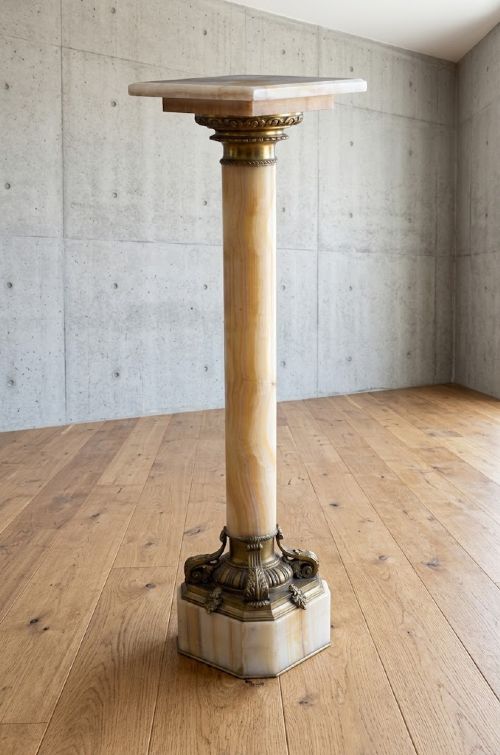
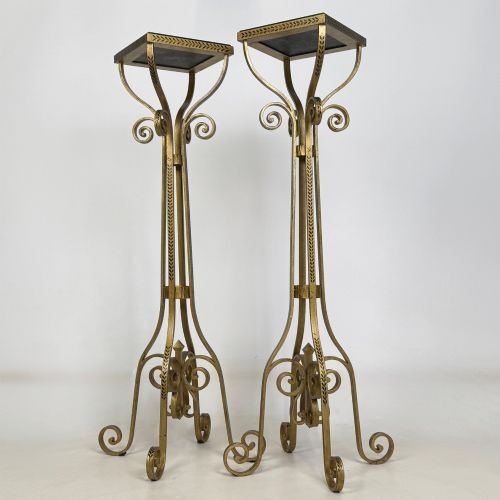
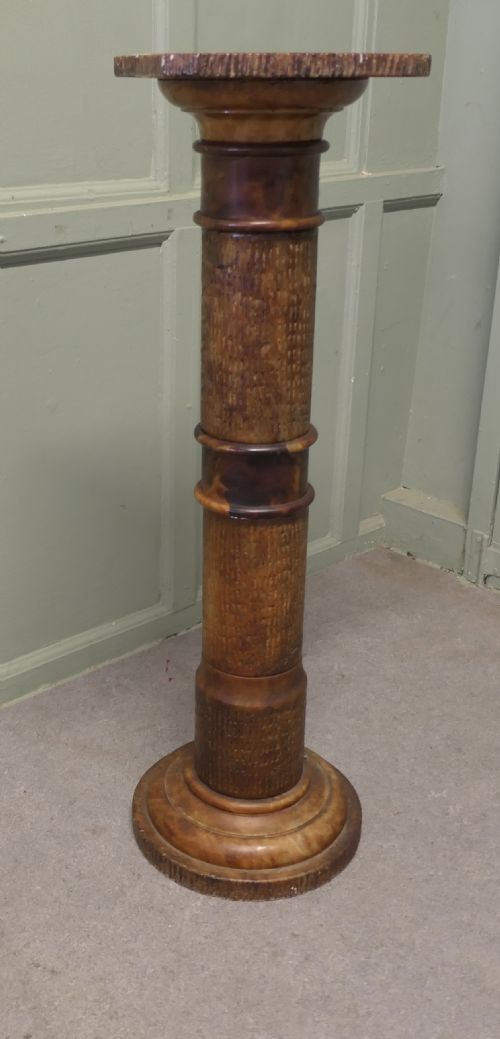
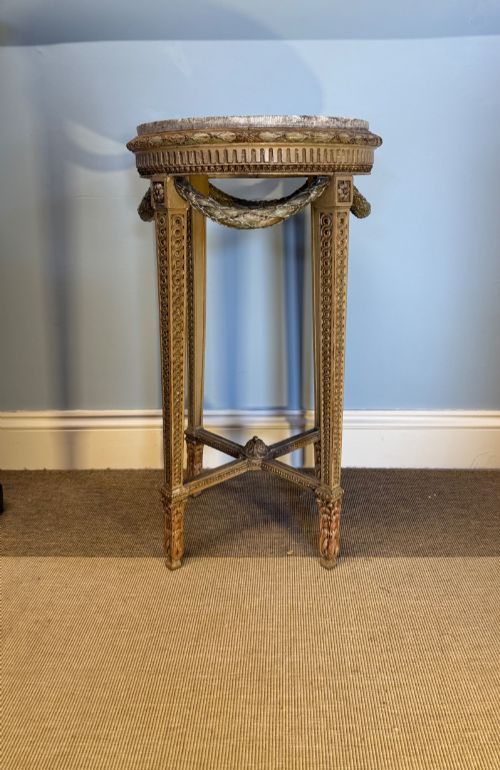
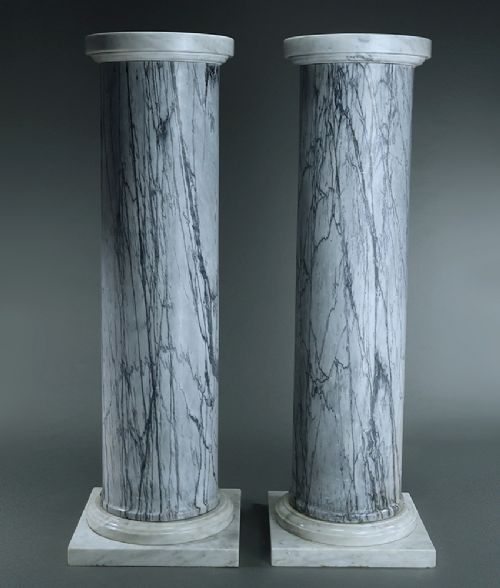
Marble display columns serve as architectural supports for sculpture, plants and decorative arts, lifting objects into the line of sight. When searching for marble display columns, buyers encounter pedestals, plant stands and torchieres dating from the eighteenth century through to the 1930s. The selection includes single columns and balanced pairs, with the nineteenth century heavily represented.
Forms range from tall, slender shafts intended for bronze figures to low, broad pedestals suited for heavy marble busts. Many examples function as plant stands or jardiniere tables, incorporating integrated tops designed to hold heavy planters. Neoclassical, Regency and French Empire influences dominate the designs, reflecting classical architectural orders.
Materials and construction
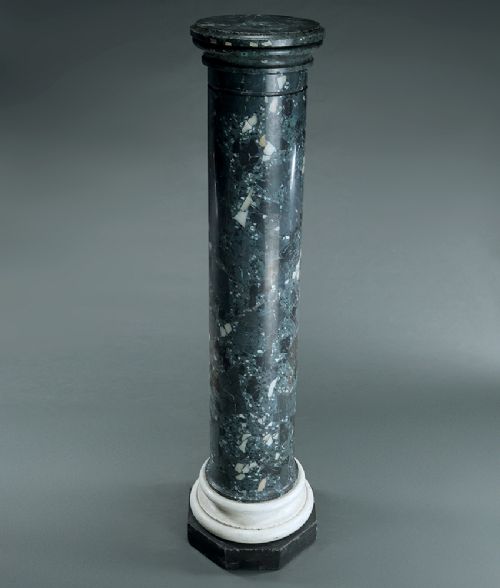
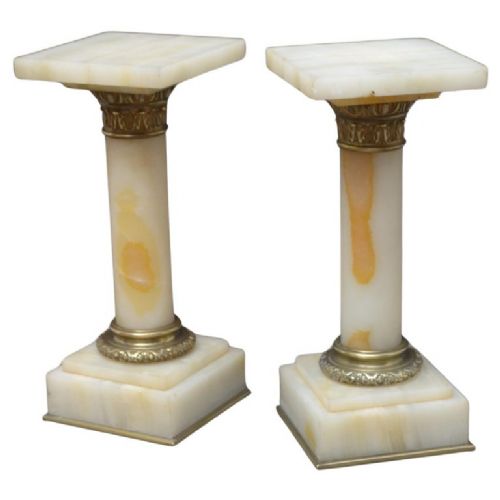
Construction relies upon solid stones such as onyx, verde antico, bardiglio, carrara and rouge marble, often turned on a lathe to create smooth cylindrical shafts. Scagliola appears alongside natural stone, utilising pigmented plaster to imitate rich marbles like verd de patricia and arabescato. Wood and painted plaster also form the core of certain pedestals, offering lighter alternatives to solid stone.
Metal mounts in ormolu, gilt bronze, chiseled brass and plain brass frequently accent the capitals and bases of these pieces. Cabinetmakers combined these metals with kingwood, walnut, satinwood and mahogany in mixed-media stands, securing the stone tops with internal wooden framing or plaster bedding.
Several columns disguise themselves as theatrical props, proving that Victorians loved a bit of dramatic staging in the hallway.
Assessing quality and craftsmanship
Quality rests upon the selection and matching of the stone, where lively natural veining and rich colour variation elevate the visual weight of the piece. Finely turned shafts with crisp, symmetrical fluting demonstrate superior stone-masonry skills compared to plain or unevenly rounded columns.
The integration of decorative metalwork marks the distinction between standard production and finer studio pieces. Cast ormolu collars and finely chased brass mounts with sharp detail indicate workshop craftsmanship of a high order.
The Marble Display Columns Glossary
- Scagliola
- A composite material made from pigmented selenite, glue and binders, pressed and polished to imitate natural marble. This technique creates convincing faux marble surfaces on columns and pedestals.
- Ormolu
- Gilt bronze mounts applied to furniture and architectural elements, cast and hand-chased to produce a bright gold finish. These metal collars often accent the top and bottom of stone columns.
- Torchere
- A tall, slender stand designed to support a light, vase or figure, functioning as a display column in interior spaces. These pieces frequently feature carved wooden or marble construction.
- Socle
- A short plinth or pedestal supporting a column, statue or bust, providing a stable footing. The socle forms the lowest supporting member of the architectural assembly.
- Verde Antico
- A dark green serpentine marble flecked with white and lighter green veins, favoured for classical revival columns. This stone provides a deep, variegated surface texture.
Marble Display Columns: Frequently Asked Questions
How do I clean a marble column safely?
Dust the surface regularly with a soft, dry cloth to prevent grit accumulation on polished stone or painted finishes. Avoid acidic cleaners, vinegar and abrasive scouring pads, which etch marble and damage gilt bronze or ormolu mounts.
Use a damp cloth with mild, pH-neutral soap for heavier grime, drying the stone immediately afterward with a clean towel. Painted plaster and scagliola surfaces require particular care to avoid moisture penetration.
Can these columns support heavy sculptures?
Solid stone columns and heavy scagliola pedestals easily bear the weight of cast bronze figures, marble busts and large planters. The internal structure and the breadth of the top plinth dictate stability rather than the decorative metal mounts.
Check that the top surface makes full contact with the base of the object, and place heavier items on wide, square-topped pedestals rather than slender torchieres to ensure balance.
How do I identify the period of a marble column?
Stylistic clues such as neoclassical giltwood carvings, Regency mahogany frames or French Empire ormolu mounts provide reliable dating indicators. Nineteenth-century examples often display deep natural veining in onyx and verde antico, whilst twentieth-century pieces may incorporate simplified geometric lines.
Construction methods, including the type of internal wooden framing used beneath the marble top, also help determine age.