



French Rouge Marble
French rouge marble brings deep iron-rich red tones and striking white veining into nineteenth-century mantel clocks, urns and commodes.
French Rouge Marble
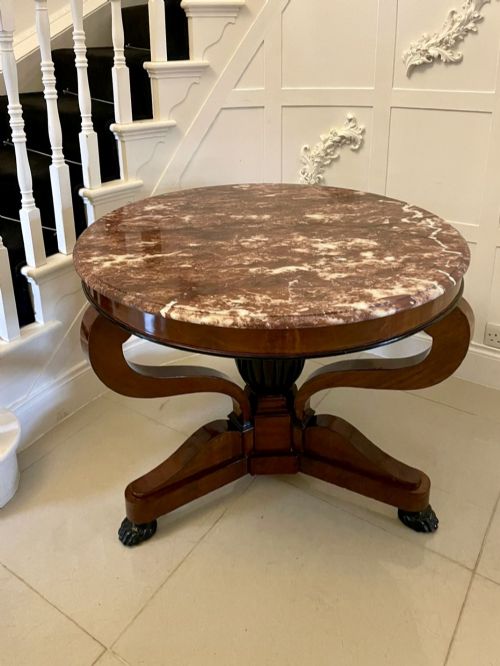
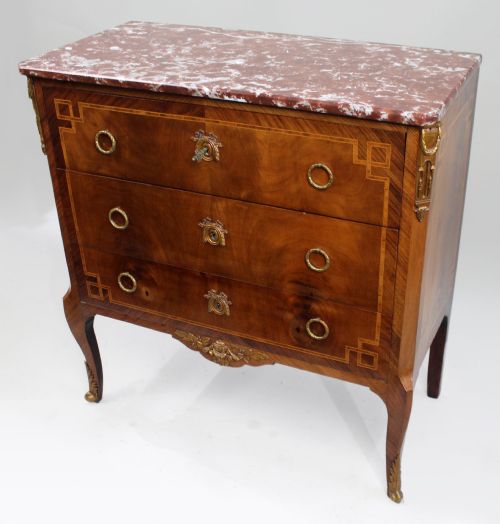
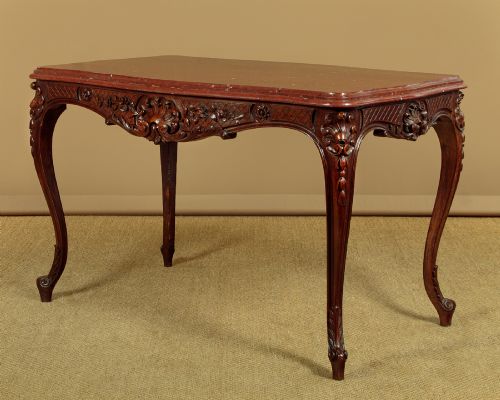
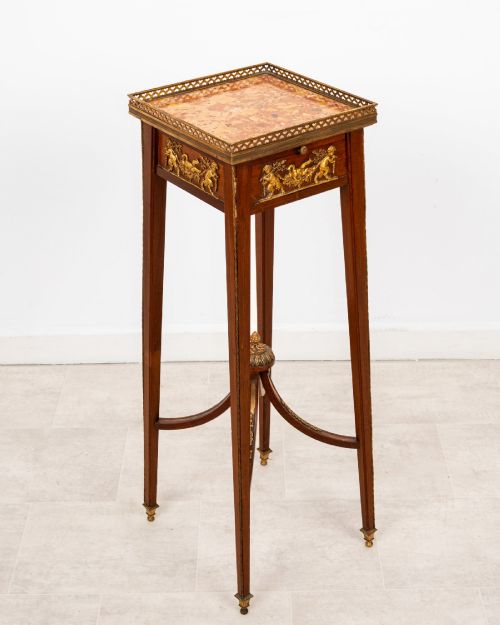
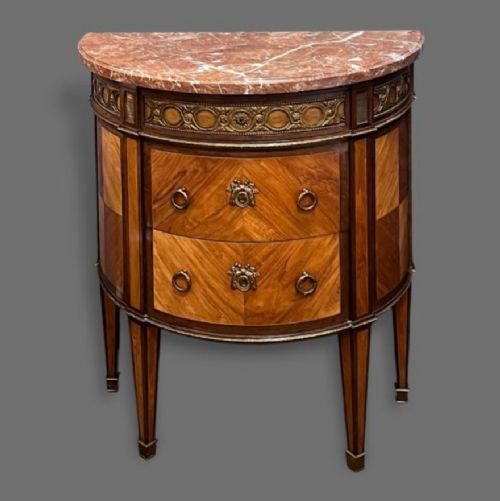
When searching for french rouge marble, collectors encounter domestic furnishings and decorative objects dating mainly from the nineteenth century. These pieces span functional furniture, such as commodes and centre tables with fitted stone slabs, alongside heavy architectural accessories like columns and pedestals.
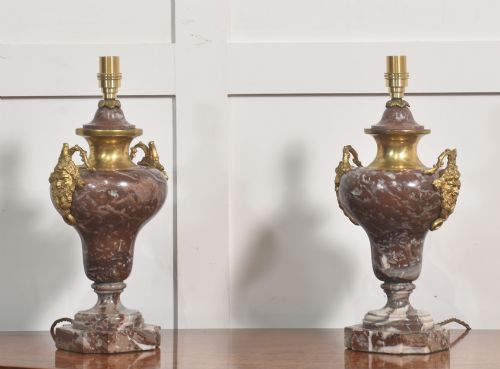
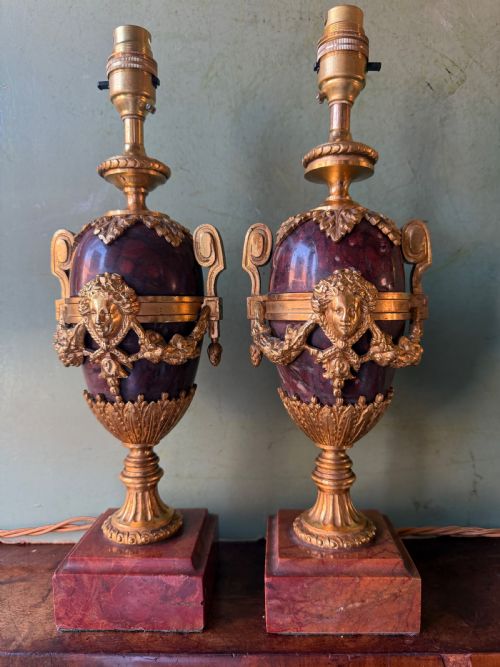
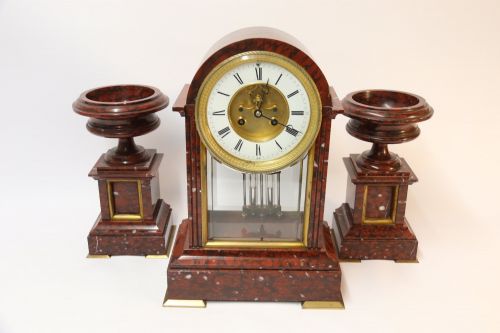
Mantel clocks and matching garniture sets dominate the available forms, often paired with patinated bronze figures and gilt metal mounts. Table lamps, cassolettes, and decorative urns also frequently appear, representing the ornamental taste of the Second Empire and the revival of earlier Louis styles.
How they were made
The stone itself is shaped and polished to reveal complex iron oxide veining, frequently mounted with cast ormolu and gilt bronze accents. Cabinetmakers and bronzeliers united these dense mineral slabs with walnut, mahogany, and kingwood frames on tables and chests of drawers.
Foundry work relied on lost-wax casting for bronze figural elements and clock casings, which were then hand-chased and fire-gilt. Stonemasons turned the marble on lathes for columns and tazzas or cut rectangular panels with moulded edges for furniture tops.
Archived pieces demonstrate a strong preference for pairing deep red stone with fire-gilt ormolu and patinated bronze figures.
What varies in quality
The standard of a piece rests heavily on the crispness of the bronze chasing and the depth of the fire-gilt surface. Weaker items display soft, cast-flat decorative mounts with minimal hand-finishing, whereas superior examples show sharp leaf and scroll work.
The stone itself reveals differences through the intensity of its red coloration and the harmony of its white calcite veining. Heavier, unblemished marble slabs paired with robust movement mechanisms in clocks mark the upper tier of survivals.
Samuel Marti·Math Moreau·Emile Guillemin
The French Rouge Marble Glossary
- Ormolu
- Gilt bronze mounts applied to furniture, clocks, and vases. This technique involves amalgamating gold and mercury over a bronze base.
- Cassolette
- A decorative vase or urn with a reversible lid that functions as a burner or a solid finial. These vessels frequently incorporate stone bodies with metal handles.
- Garniture
- A matching set of ornamental objects, typically a central clock flanked by twin candelabra or urns. Makers designed these sets to sit symmetrically on fireplace mantels.
- Commode
- A decorative chest of drawers featuring a prominent wooden carcase beneath a fitted stone slab. French iterations often exhibit shaped fronts and marquetry veneers.
- Tazza
- A shallow saucer-shaped vessel raised on a stem and foot, used for display. Nineteenth-century versions frequently combine mineral bases with cast metal bowls.
French Rouge Marble: Frequently Asked Questions
What is french rouge marble?
French rouge marble is a deep red ornamental stone quarried in France, characterised by prominent white and grey calcite veins. It gained widespread popularity during the nineteenth century for decorative hardware and furniture.
Craftsmen utilised this dense stone for clock cases, tabletop surfaces, and architectural columns, often pairing it with gilded bronze mounts to enhance its rich coloration.
How do I date a clock set?
Dating these clock sets involves examining the movement maker marks, style of the bronze casting, and the overall architectural proportions. Pieces from the mid-nineteenth century frequently display heavy neoclassical or Second Empire influences.
Makers such as Samuel Marti stamped their backplates with exhibition medals, providing reliable manufacturing decades. The integration of the stone with the bronze mounts also shifts from bolt-fixed construction in earlier eras to simpler designs later.
How were commodes constructed?
Commodes feature a sturdy oak or pine carcase veneered in exotic woods like mahogany, kingwood, or walnut, topped with a thick slab of shaped stone. The marble rests directly on the wooden frame, following the serpentine or bombe contours of the body.
Cabinetmakers secured the stone with routed bed channels or let it sit by gravity alone due to its substantial weight. Gilt bronze mounts were screwed through the wooden carcase to protect corners and frame drawer fronts.
How do I clean the stone?
Cleaning requires a soft, damp cloth with mild soap, avoiding acidic substances that etch the polished mineral surface. Regular dusting prevents debris from settling into the natural calcite fissures.
Harsh chemical polishes and abrasive pads must be avoided entirely to preserve the factory-applied gloss on the stone and protect adjacent gilded metal mounts.