


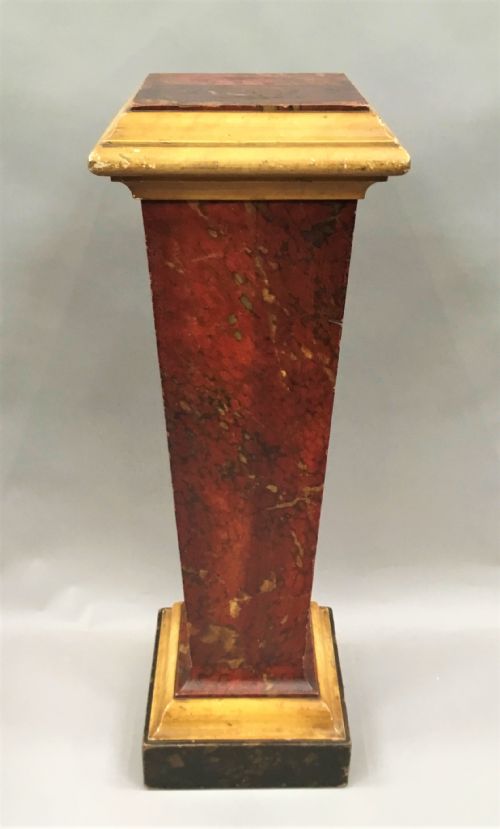


Red Marble Columns
These red marble columns bring neoclassical grandeur and striking colour to an interior, built for display.
Red Marble Columns
Red marble columns and related architectural supports appear across several periods, most notably the nineteenth century and the Regency era. When people search for red marble columns, they seek substantial decorative elements that draw on classical inspiration.
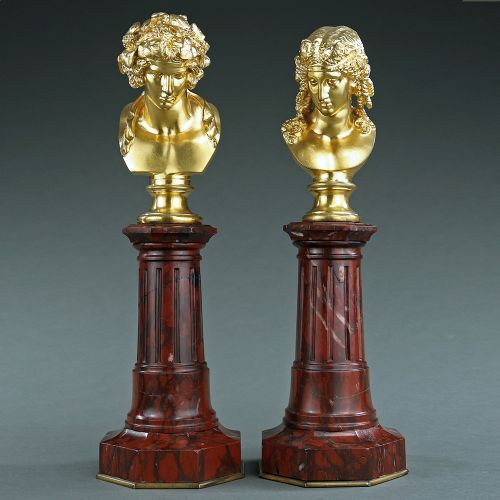
The selections available here range from French rouge marble columns to pedestals and display stands. These objects reflect grand tour tastes and nineteenth century French and Italian neoclassical design.
Makers utilised rich materials to create striking focal points within formal rooms. Buyers frequently encounter pairs suited for supporting busts, urns, or lamps.
How they were made
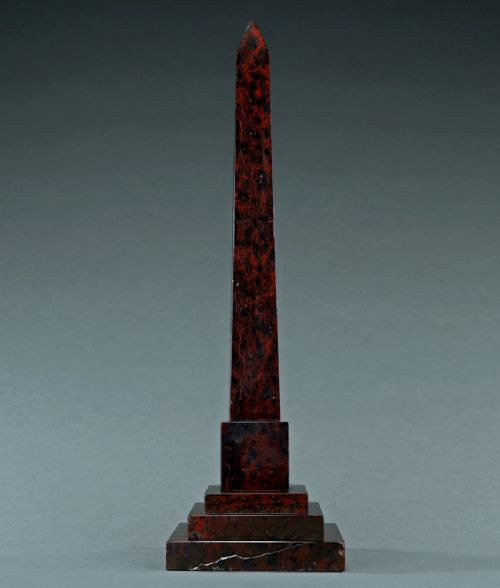
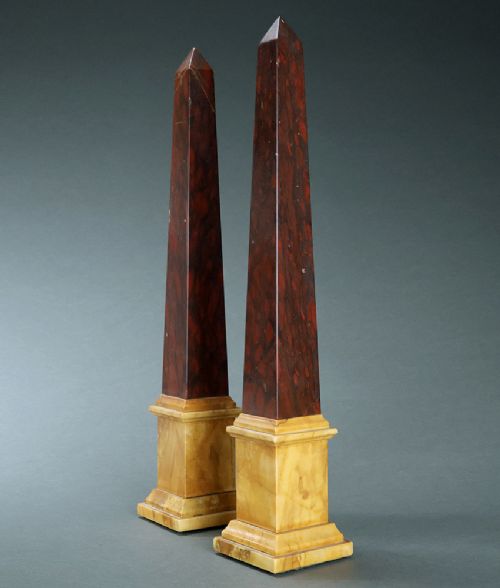
Craftsmen shaped dense stones including red marble, rouge marble, and serpentine marble into solid columns, obelisks, and stands. These stonework forms often received a high polish to reveal natural veining and varied tones.
Metalwork played a key role in the construction of these decorative pieces, incorporating ormolu, gilt bronze, and brass mounts. Artisans cast and chased these mounts to accent the stone capitals and bases in the empire style.
Some nineteenth century makers apparently believed a bust of Antinous looked ten times wiser when elevated on a bright red marble column.
What varies in quality
The distinction between standard examples and finer pieces lies in the selection of the stone and the crispness of the metalwork. Richly figured red and rouge marbles with deep polishing command attention for their visual depth.
Superior execution shows in the precision of the cast ormolu or gilt bronze mounts fixed to the marble. Heavy gauge brass and well chased bronze details elevate the architectural presence of each column or stand.
The Red Marble Columns Glossary
- Grand Tour
- A traditional trip of Europe undertaken by upper-class European young men of sufficient means. Items acquired on these journeys often featured classical marble and bronze.
- Ormolu
- Gilded bronze utilised for decorative mounts on furniture and stone objects. This technique involves applying a finely ground gold-mercury amalgam to a bronze base.
- Neoclassical
- A Western cultural movement drawing inspiration from the classical art and culture of ancient Greece or Rome. This style dominates nineteenth-century decorative stonework.
- Serpentine
- A group of green silicate minerals resembling snake skin, often associated with dark red varieties used in decorative obelisks and columns. It takes a fine polish.
Red Marble Columns: Frequently Asked Questions
How were red marble columns used?
These pieces served primarily as architectural supports or decorative stands for display within nineteenth century interiors. They held bronze sculptures, busts, and ceremonial urns.
Today, collectors place them in hallways or principal rooms to elevate objects of interest and introduce classical vertical lines.
What is rouge marble?
Rouge marble refers to a deep red ornamental stone quarried mainly in France and Italy. Its intense colour and varied white or grey veining made it popular for neoclassical pieces.
Craftsmen polished this material to a high gloss to highlight the natural patterns within the stone.
How do I identify a nineteenth century piece?
Nineteenth century examples typically display characteristic hand finishing on both the stone and any metal mounts. The use of fire gilt ormolu and traditional patination offers strong clues to the period.
Examining the underside and fixing methods helps confirm the age and construction techniques of the column or stand.
How do I clean marble columns?
Maintenance requires gentle dusting with a soft, dry cloth to protect the polished surface. Avoid abrasive cleaners and acidic solutions that etch marble.
Occasional wiping with a damp cloth is sufficient for most finished stone surfaces without risking the integrity of the polish or metal mounts.