
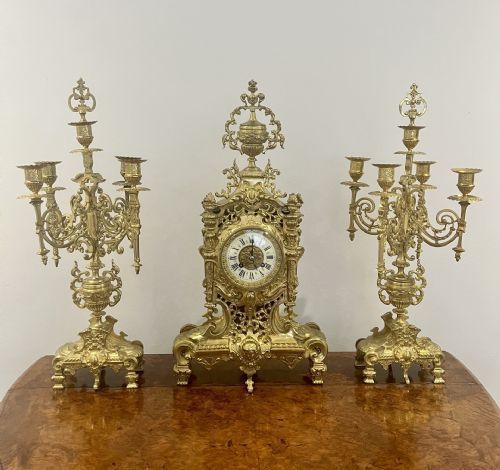

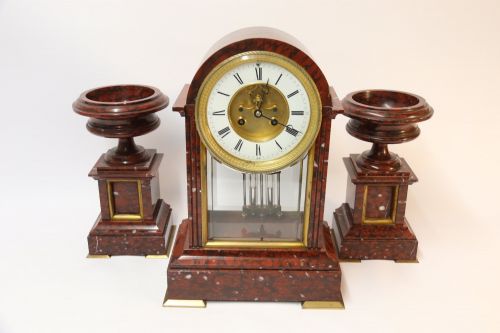
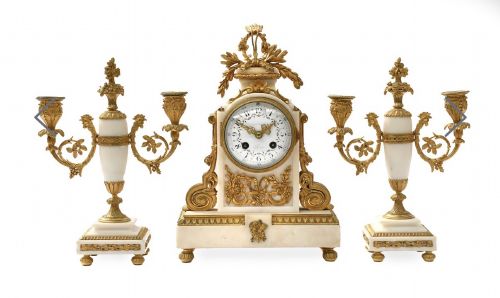
Mantel Garniture Set
A mantel garniture set brings symmetry to a fireplace, pairing a central clock with matching vases or candelabra to anchor a room.
Mantel Garniture Set
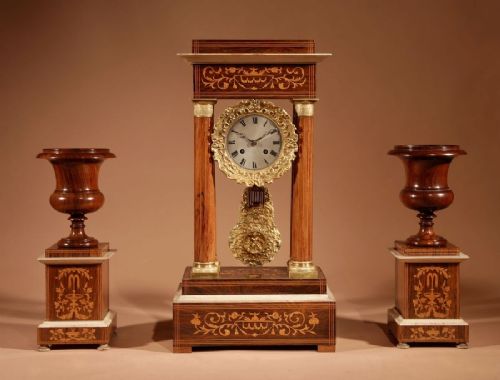
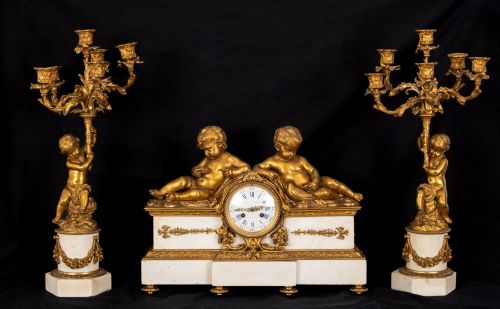
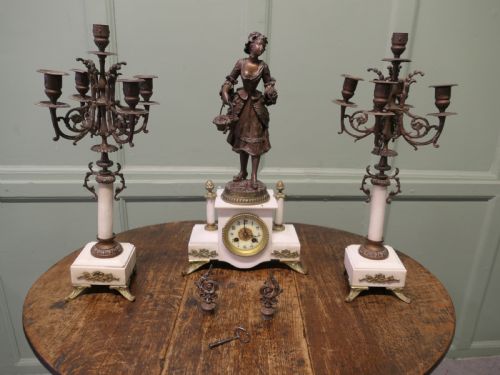
A mantel garniture set is a matched group of decorative objects, most frequently comprising a central mantel clock accompanied by a pair of side pieces such as vases, candelabra, or urns. These arrangements originate primarily from the nineteenth century, reflecting the strong taste for symmetrical interior decoration during periods like the Victorian era and French Second Empire.
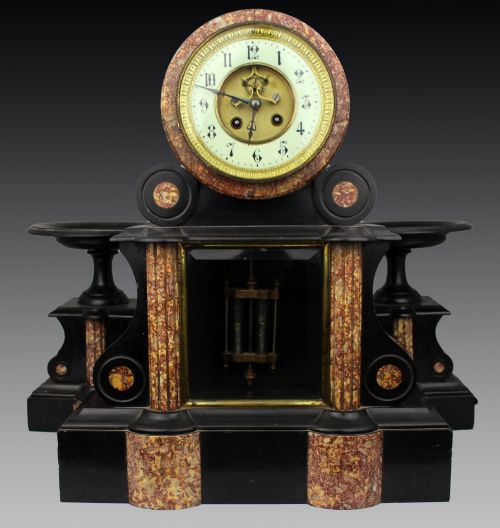
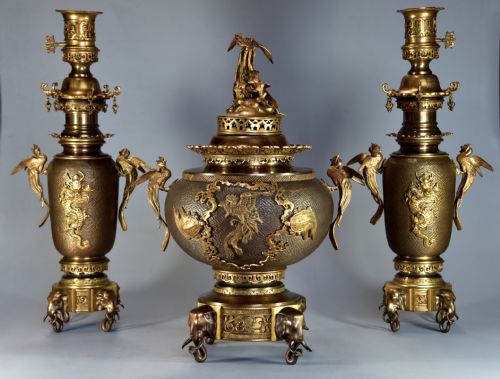
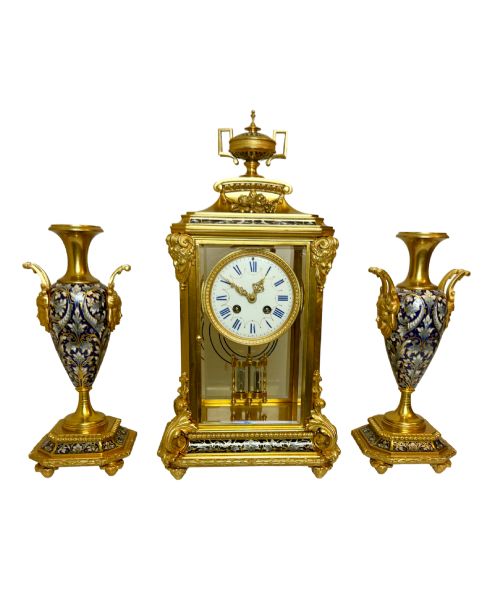
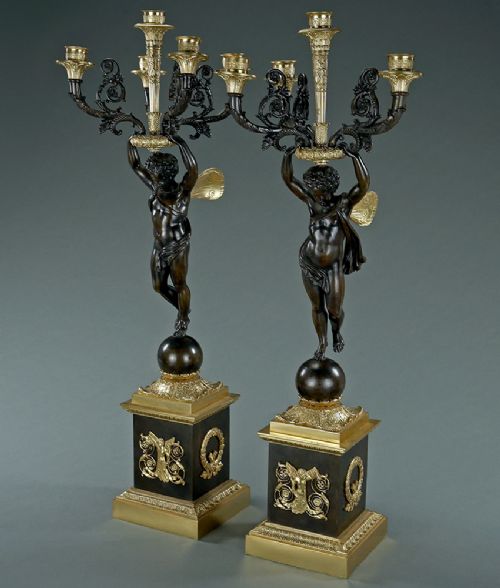
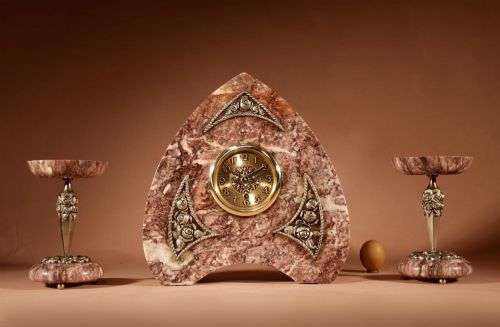
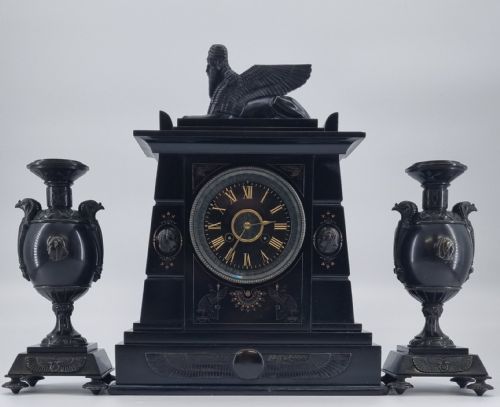
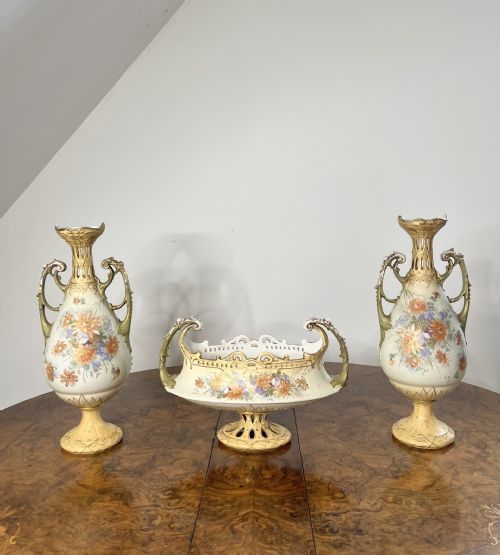
On this page, the version you are most likely to encounter is a three-piece French ensemble featuring a marble or slate clock paired with matching bronze, ormolu, or enamel side vases. These sets span diverse revivals, including Louis XVI, Empire, and Art Deco styles, often utilising materials that contrast polished stone with gilt metal.
How they were made
Makers constructed these sets by combining heavy natural substrates like black or white marble, onyx, and slate with cast and chased metal components such as ormolu, gilt bronze, and brass. The clock movements typically operated on mechanical eight-day spring or weight-driven systems, housed within cases that required precise stone-cutting and metal-fitting skills.
Surface ornamentation involved intricate techniques including champlevé enamel work, hand-painted porcelain panels, and overlaid glass. Bronze elements were frequently cast by the lost-wax method, then finished with patination or fire-gilding to achieve rich metallic contrasts.
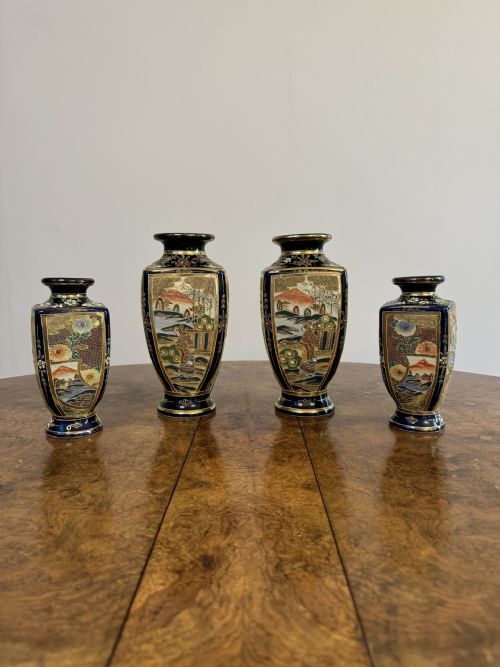
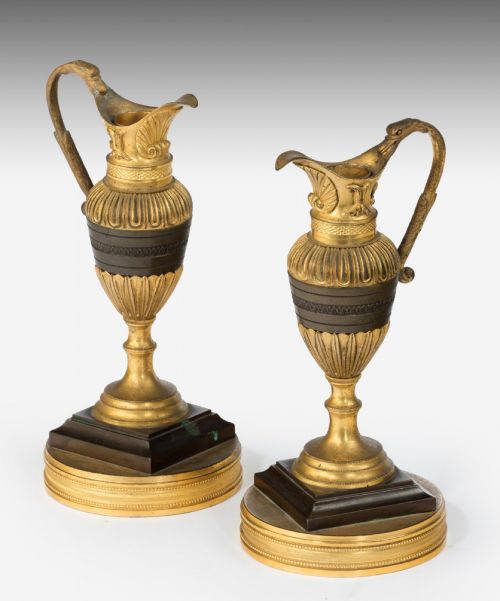
Listings feature nineteenth-century French marble, bronze, and ormolu mantel garniture sets alongside Japanese ceramic vases from the Meiji period.
What varies in quality
The distinction between standard production and exceptional quality rests upon the crispness of the metal chasing and the depth of the casting detail in the bronze or ormolu mounts. Finer pieces exhibit hand-finished enrichment where every leaf and scroll is sharp and distinct, rather than relying on the softer definition of mass-produced commercial castings.
Material selection also dictates overall grade, with solid marbles, dense onyx, and heavy gauges of gilt bronze separating superior sets from simpler alloy and slate constructions. Furthermore, signed clock movements by recognised makers demonstrate a higher standard of horological engineering and finishing.
Japy Frères·Samuel Marti·Henry Dasson·Flight Barr and Barr
The Mantel Garniture Set Glossary
- Garniture
- A set of matching ornamental objects designed to be displayed together on a mantelpiece or sideboard. Typically consisting of three or more pieces, it balances a central focal point with symmetrical side ornaments.
- Ormolu
- Gilt bronze produced by applying a finely ground high-carat gold and mercury amalgam to a bronze base and heating it. This historic French technique yields a distinctive matte and burnished golden finish.
- Champlevé
- An enamelling technique where troughs or cells are hollowed out of a metal surface and filled with vitreous enamel powder before firing. The piece is then polished flat to reveal the interwoven metal lines.
- Candelabra
- Branched candlesticks designed to hold multiple tapers simultaneously. In garniture sets, they often match the decorative style and metalwork of the central clock.
- Portico clock
- A mantel clock featuring a architectural case supported by four or more columns resembling a classical portico. These structures are frequently executed in marble, wood, or bronze.
Mantel Garniture Set: Frequently Asked Questions
How were garniture sets used historically?
These sets served both decorative and practical functions in grand Victorian and continental drawing rooms. The central clock kept time for the household, while the accompanying side pieces provided symmetrical adornment.
In many cases, the side pieces were functional as well, doubling as candleholders for evening illumination or vessels for holding flowers. Their placement on the mantelpiece placed them at the focal point of the main living space.
How do I style a garniture set?
Styling a mantel garniture set requires centring the main clock on the mantelpiece and placing the matching side pieces at balanced intervals on either side. This creates the traditional symmetrical layout intended by the makers.
Ensure the mantel shelf is deep enough and sturdy enough to support the substantial weight of marble and bronze components. Keep surrounding decor minimal so the coordinated materials and metallic finishes of the set remain the primary visual focus.
How can I tell different periods apart?
Differentiating periods relies on observing the prevailing artistic styles, material combinations, and manufacturing techniques present in the construction. For instance, mid-nineteenth-century pieces often favour heavy classical marble and gilt bronze, while later decades introduce Japonisme or Art Deco geometric lines.
Maker signatures stamped on the bronze mounts or clock movements provide definitive chronological markers. Additionally, stylistic revivals borrow motifs from earlier eras, meaning construction methods offer more reliable dating clues than surface decoration alone.