
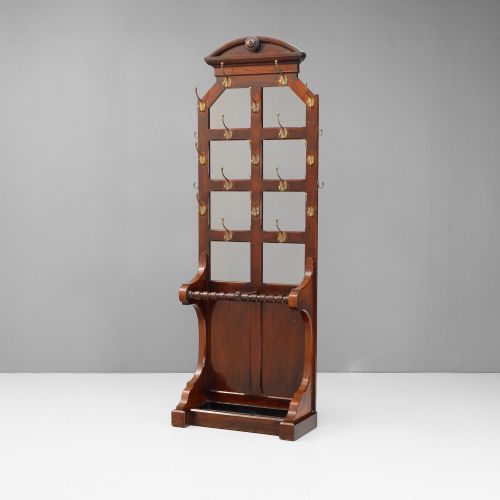

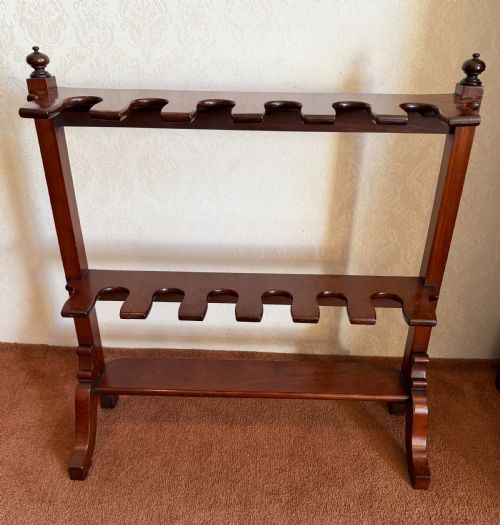


Mahogany Stick Stand
A mahogany stick stand organises hallway umbrellas and walking canes while bringing solid nineteenth-century timber into the entrance.
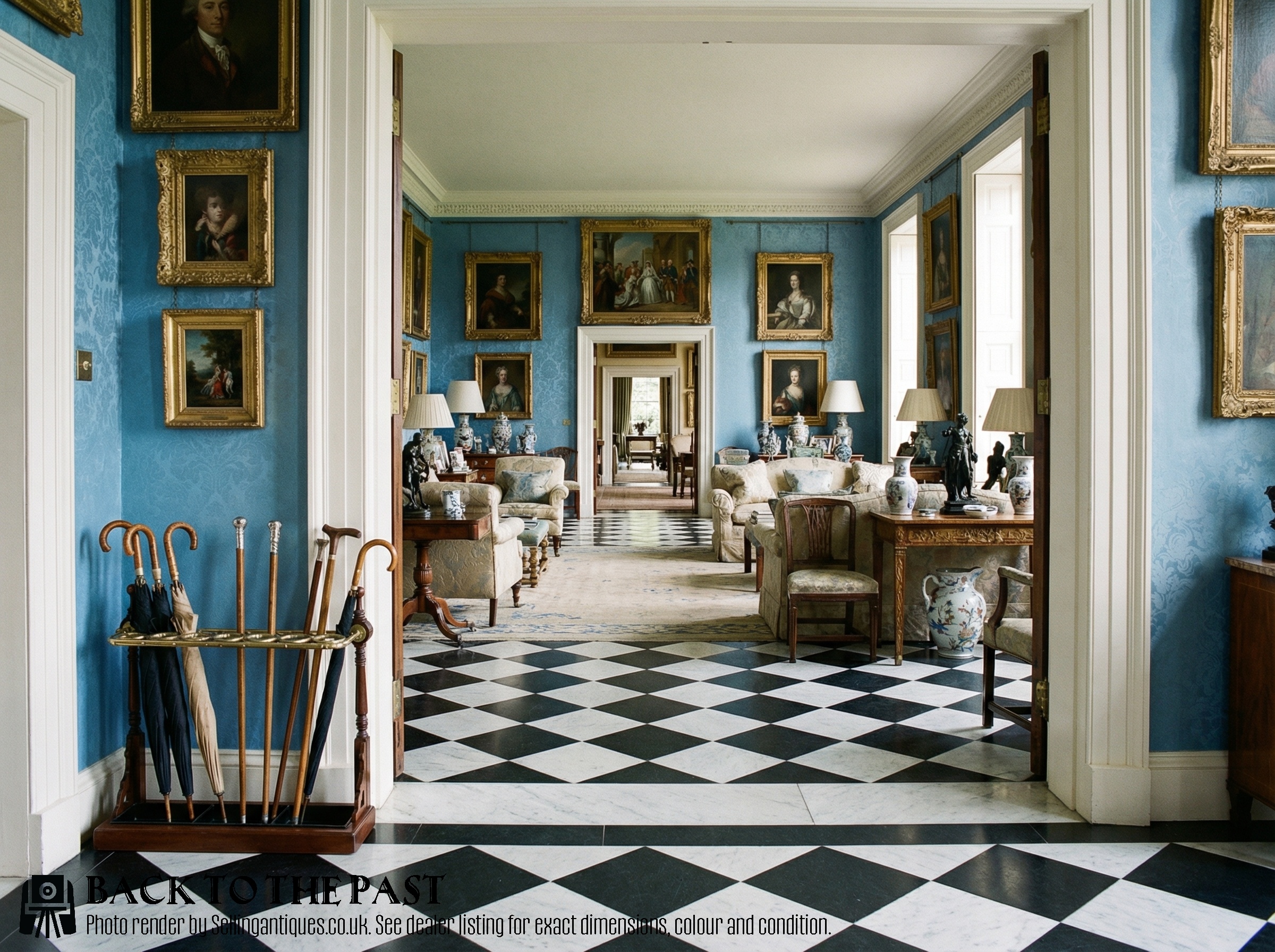
Mahogany Stick Stand
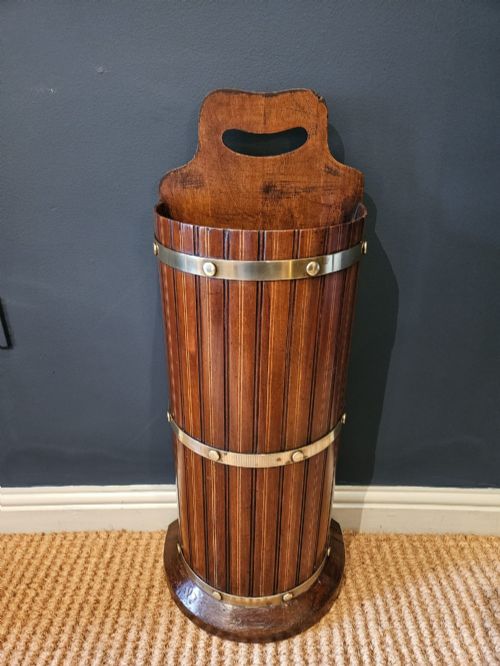
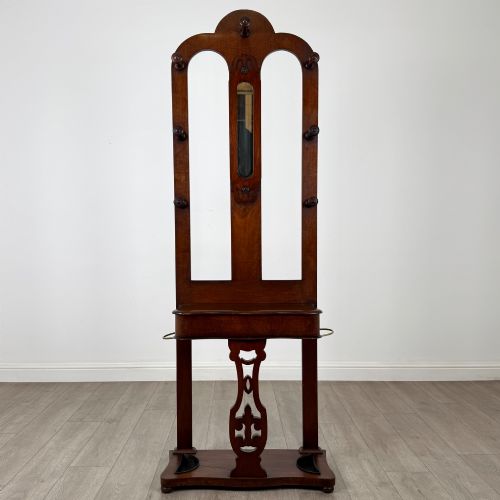
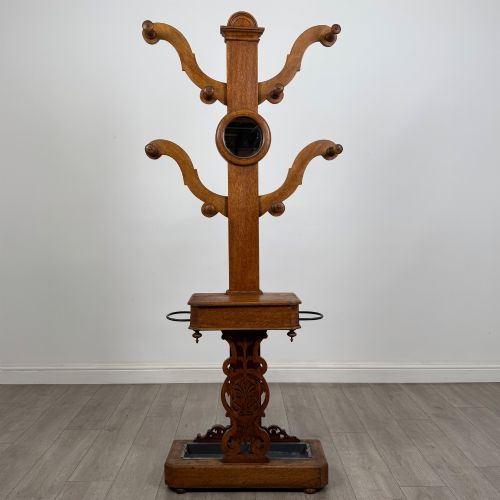
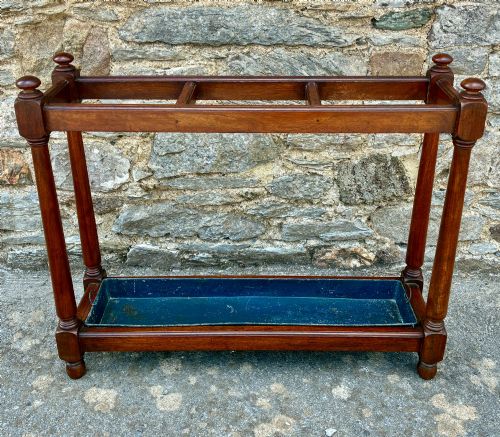
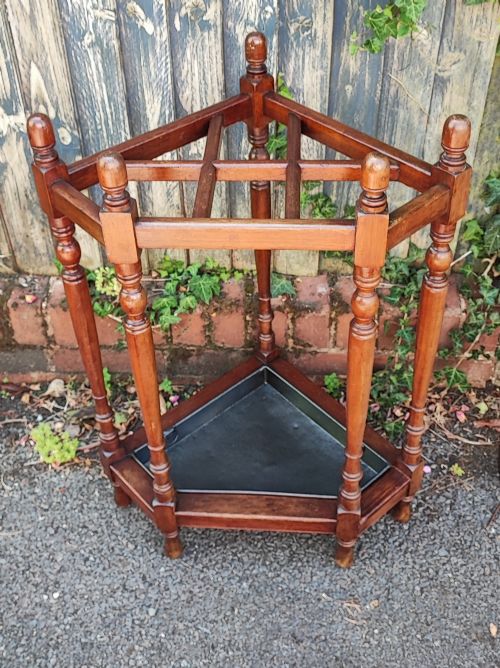
A mahogany stick stand serves as a functional piece of hall furniture designed to hold umbrellas, walking sticks, and canes in domestic entryways. When you search for a mahogany stick stand, you encounter forms ranging from compact cylindrical vessels to elaborate hall stands combining coat hooks, mirrors, and marble shelves.
The pieces on this page span the Georgian, Regency, Victorian, and Edwardian periods, alongside Arts and Crafts examples. Victorian versions in various regional styles appear most frequently, often featuring brass bands, drip trays, and partitioned compartments for wet weather gear.
How they were made
Cabinet makers utilised solid mahogany and mahogany veneers over secondary timbers, shaping the wood through turning, curving, and joinery techniques suited to damp environments. Structural integrity relied on tongue-and-groove joints or coopered staves bound with brass bands to withstand the weight of heavy walking poles and wet umbrellas.
Metal components such as cast brass liners, drip pans, rails, and hooks provide both structural reinforcement and functional protection against water damage. Some examples integrate cast iron, marble shelves, or glass panels to add weight, stability, and decorative contrast to the warm timber grain.
Mahogany Stick Stand Retail Price Guide 2026
Typical asking prices for mahogany stick stand among the pieces listed under this phrase on Sellingantiques today, from the lower quarter to the upper quarter. They describe what is for sale here now, not the wider market.
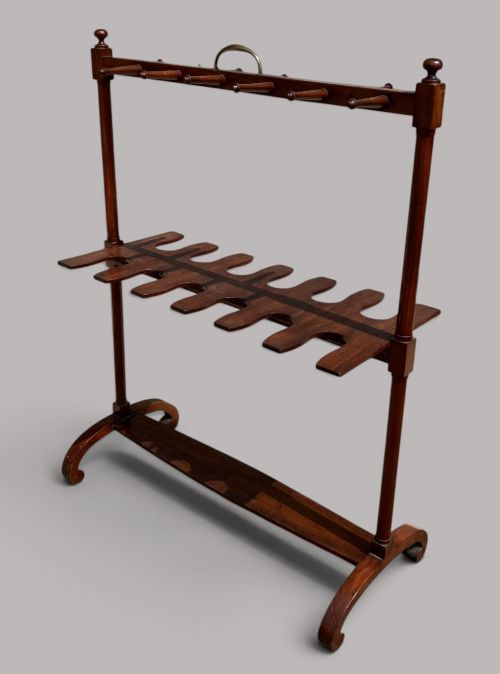
The archive includes specialised tackle room whip stands alongside standard cylindrical umbrella holders and multi-section hall furniture.
What varies in quality
The calibre of a mahogany stick stand depends upon the selection of timber figure, the precision of the coopered or joined construction, and the integrity of the original metal fittings. Superior examples display dense, rich grain patterns, substantial brass binding secured with original screws, and robust internal dividers that remain firmly in place.
Construction details distinguish workshop standards, such as whether the base incorporates a properly fitted, removable metal drip tray to catch water rather than rotting the wood below. Finer pieces maintain balanced proportions, crisp turned supports, and complete, matching hardware without later replacements.
Shoolbred·Whytock and Reid
The Mahogany Stick Stand Glossary
- Brass bound
- Constructed with fitted metal strips encircling the wooden body to add structural strength and decorative contrast. This technique is frequently seen on cylindrical umbrella and stick holders.
- Drip tray
- A removable metal basin seated at the base of the stand to catch water from wet umbrellas. These trays protect the timber floor from moisture damage.
- Hall stand
- A larger piece of furniture combining a stick stand with coat hooks, a hat rack, and often a mirror or marble shelf. They dominated nineteenth-century entrance halls.
- Coopered
- Built using vertical staves of timber joined edge-to-edge and secured with metal bands, similar to barrel construction. This method allowed makers to create seamless curved bodies.
- Arts and Crafts
- A design movement focusing on simplified forms, visible construction, and honest materials. Pieces from this style often feature minimal ornament and hand-hammered metalwork.
Mahogany Stick Stand: Frequently Asked Questions
What is a mahogany stick stand used for?
A mahogany stick stand provides a designated place in a hallway for storing walking canes, umbrellas, and parasols. They keep entryways tidy by containing wet items and preventing them from leaning against hallway walls.
Historically, larger country house versions also accommodated riding crops, whips, and snooker cues. They functioned as central organising hubs for outdoor gear before household departures.
How do I care for a mahogany stick stand?
Protect the timber by ensuring that wet umbrellas are placed in a proper liner or fitted drip tray rather than resting directly against the wood. Regular dusting and occasional application of appropriate wax maintain the finish.
Keep the piece away from direct heat sources and radiators to prevent the mahogany from drying out or splitting. Periodically check and clean any brass components to preserve the metalwork.
Where should I place a stick stand in my home?
These stands suit entrance halls, boot rooms, or corridors where outdoor clothing and accessories are kept. Their vertical footprint allows them to fit neatly into corners or narrow wall spaces.
Placing one near the primary house entrance ensures convenience for guests and family members depositing walking gear. Ensure the location has adequate ventilation to allow damp items to dry safely.