





Country House Stick Stand
These country house stick stands are robust hall furniture designed to keep heavy walking canes and wet umbrellas organised.
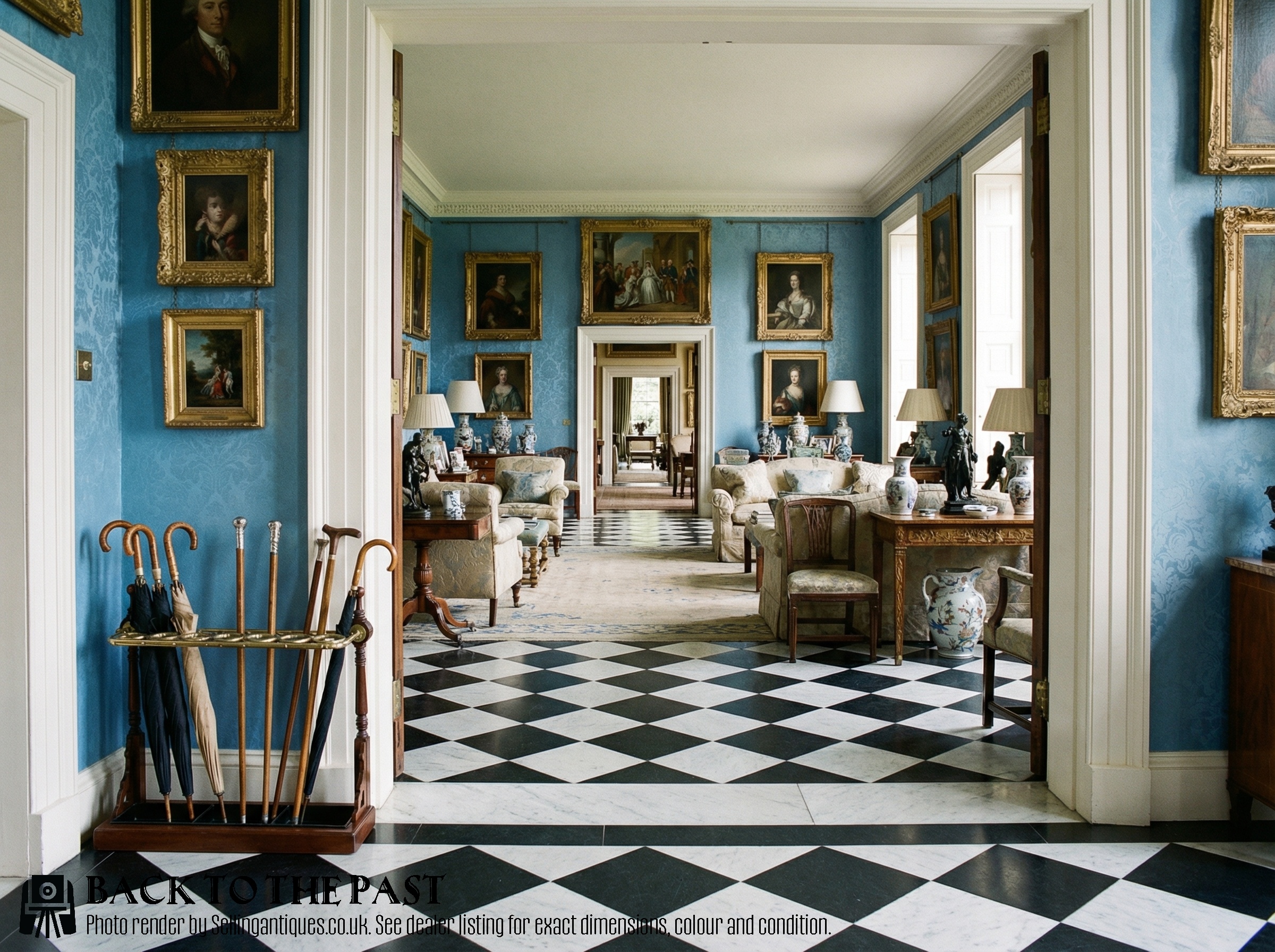
Forms and Origins
A country house stick stand serves the entrance hall by holding walking sticks, canes and umbrellas. These pieces appear in periods from the Victorian and Edwardian eras down to nineteen hundred, encompassing styles such as Arts and Crafts, Gothic Revival and standard domestic designs.
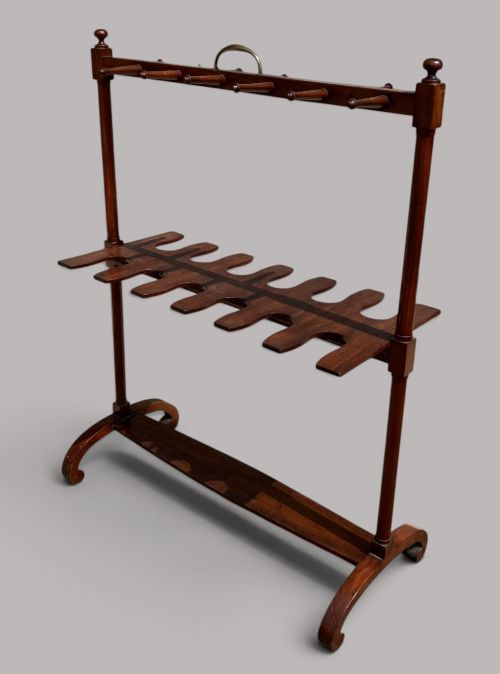
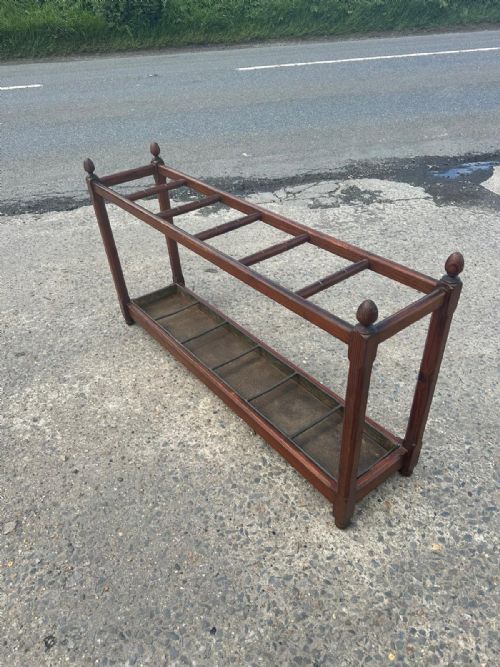
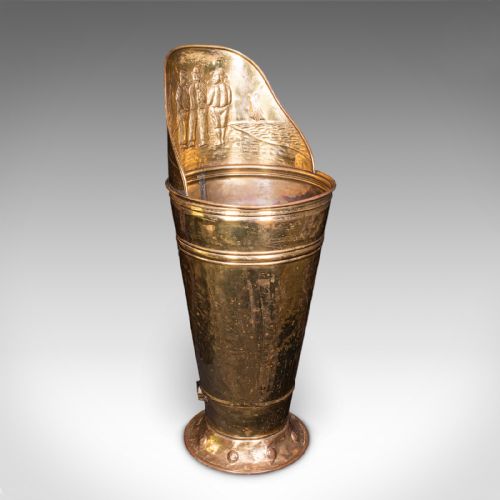
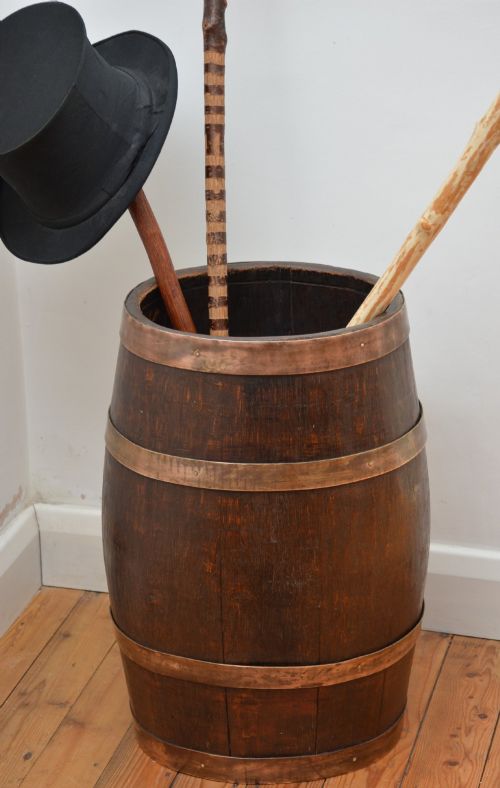
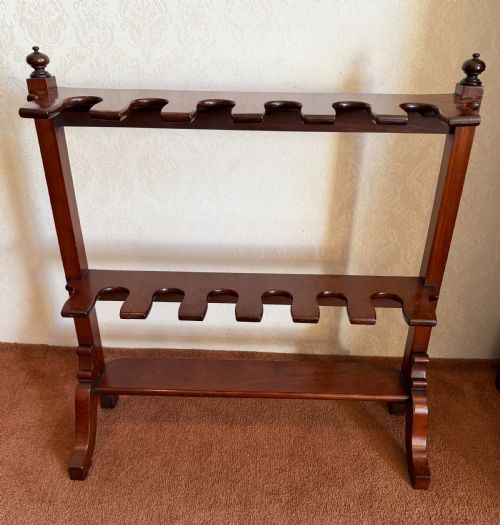
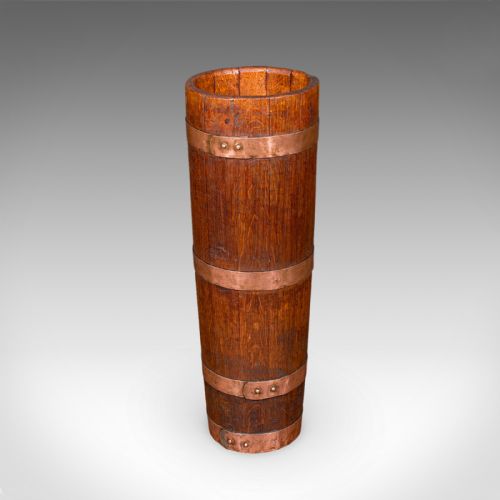
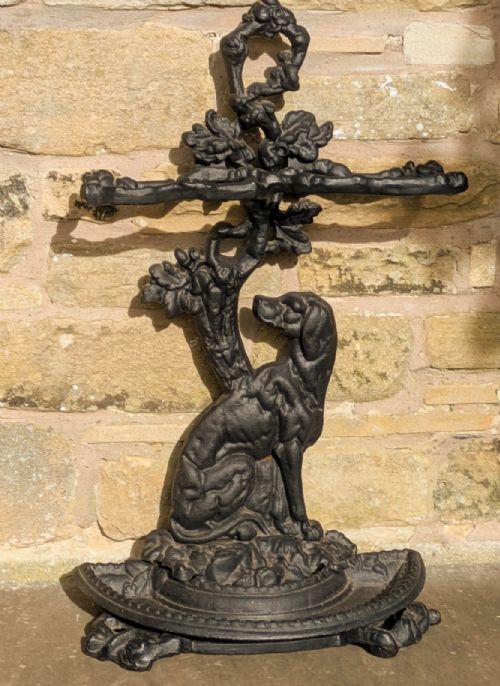
The most common formats on this page are sturdy floor-standing vessels made to handle heavy daily use. They take the shape of coopered wooden barrels, rectangular mahogany frames, demi-lune hall pieces and heavy metal castings.
Makers and workshops including Heals of London contributed to these utilitarian designs, while many pieces remain unmarked country house fixtures. Their primary purpose was keeping muddy rainwater and heavy shafts away from valuable floors.
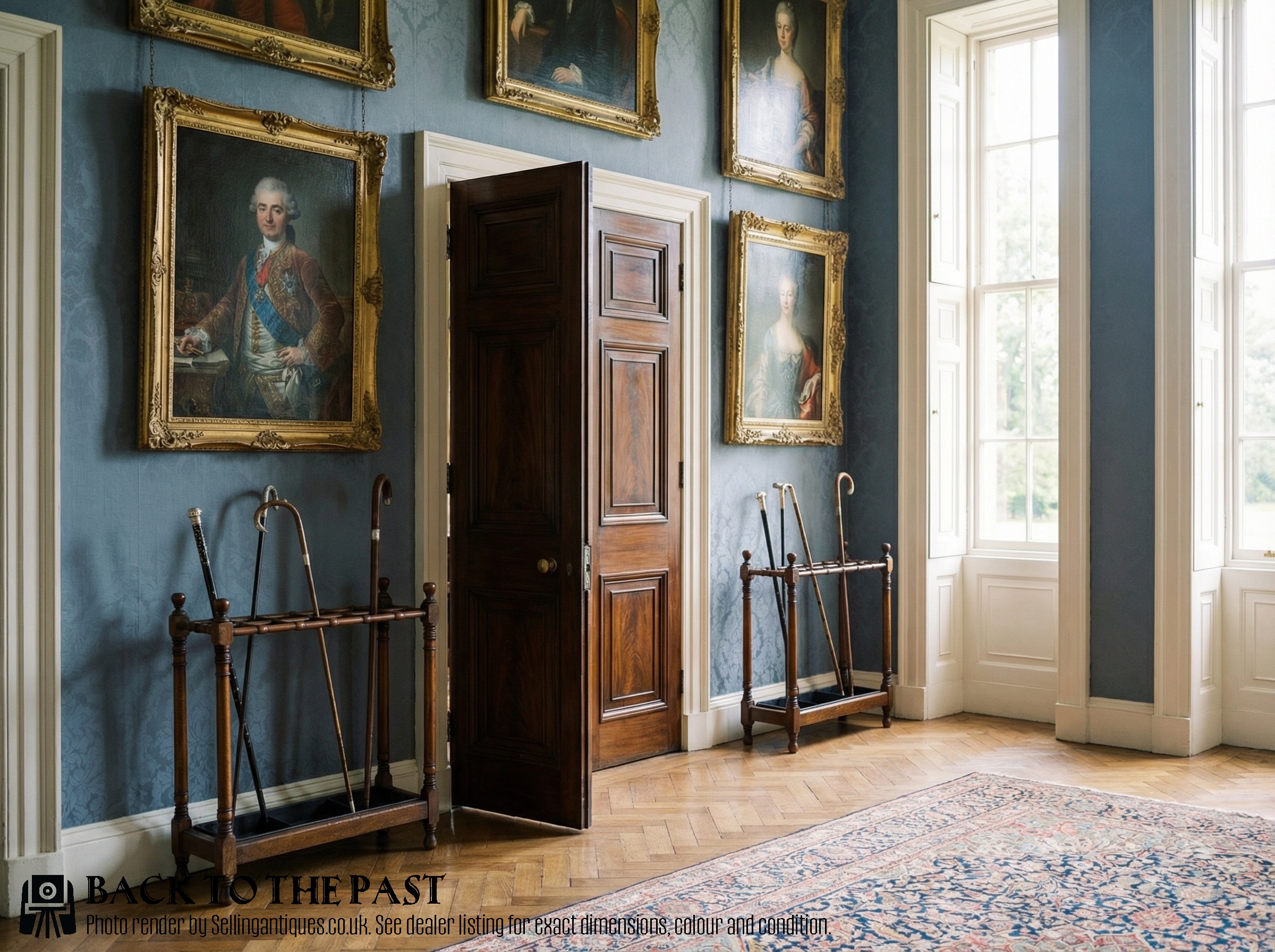
Materials and Construction
Cabinet makers utilised solid timbers such as oak, mahogany, walnut, pitch pine and occasional leather elements. Coopered barrel examples employ stave construction bound by brass or copper bands, echoing traditional vessel making.
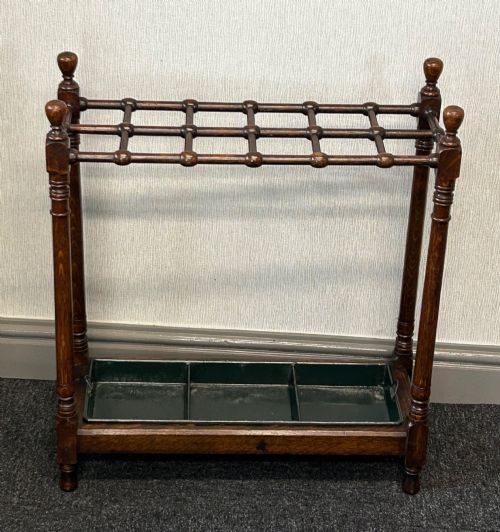
Metal versions rely on cast iron and patinated brass, frequently incorporating removable zinc trays at the base to catch water drips. Wood-framed variants often combine turned uprights with metal rails and inset drip pans.
Retail Price Guide 2026
Typical UK retail prices for country house stick stand, calculated from the Sellingantiques database of over a million retail prices indexed since 2003. This retail price guide relies exclusively on Sellingantiques data; no external sources or auction records are used, so the figures do not describe the wider market.
Listings feature oak, mahogany, walnut, pitch pine, cast iron, brass, copper and leather across Victorian and Edwardian periods.
Evaluating Construction and Materials
Quality rests upon the integrity of the timber selection and the weight of the metal components. Heavy cast iron examples with detailed figural work, such as gun dog motifs, sit at a different level from lighter domestic wares.
Heals of London
The Country House Stick Stand Glossary
- Coopered
- A construction method utilising wooden staves bound together with metal hoops, typical of barrel-form stands. This technique draws directly from traditional bucket and cask making.
- Demi-lune
- A half-moon shape designed to sit flush against a hallway wall. These pieces save floor space in busy entranceways.
- Zinc Tray
- A removable metal insert placed at the base of the stand to catch water from wet umbrellas. It protects the surrounding wooden floorboards from moisture damage.
- Gothic Revival
- An architectural and decorative style featuring pointed arches and ecclesiastical motifs. Stick stands in this style often incorporate heavy cast iron tracery.
Frequently Asked Questions
Where were stick stands placed?
These pieces sat in the main entrance hall or boot room of large residences.
Guests and residents deposited their wet umbrellas and walking sticks immediately upon entering the house.
How do I clean a brass stand?
Patinated brass requires gentle dusting rather than harsh chemical polishing.
Preserving the aged surface retains the historical character of the metalwork.
Are zinc trays original?
Original zinc trays match the age and wear patterns of the main stand body.
Many surviving pieces retain these functional components designed to protect floors.
What woods were used?
Cabinet makers selected durable hardwoods like oak and mahogany for daily hall use.
Pine and walnut also appear alongside coopered staves bound in brass.