



Brass Bound Stick Stand
A brass bound stick stand brings industrial heft to the hallway, holding heavy walking canes and umbrellas with robust dignity.
Brass Bound Stick Stand
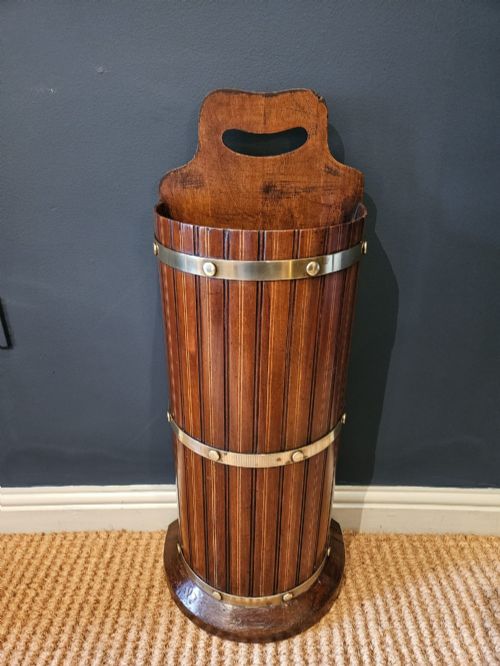
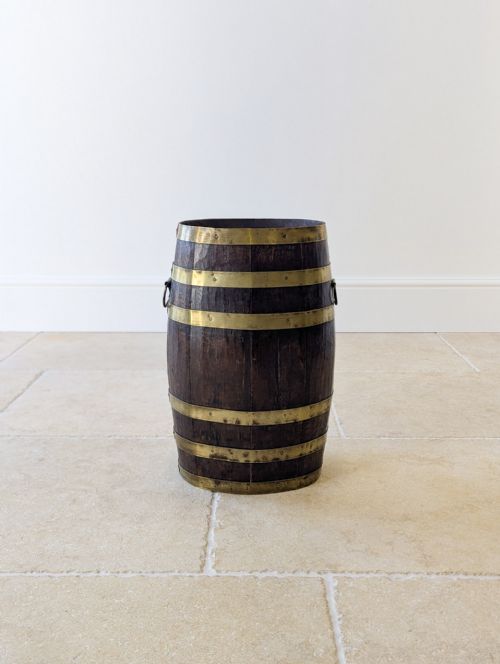
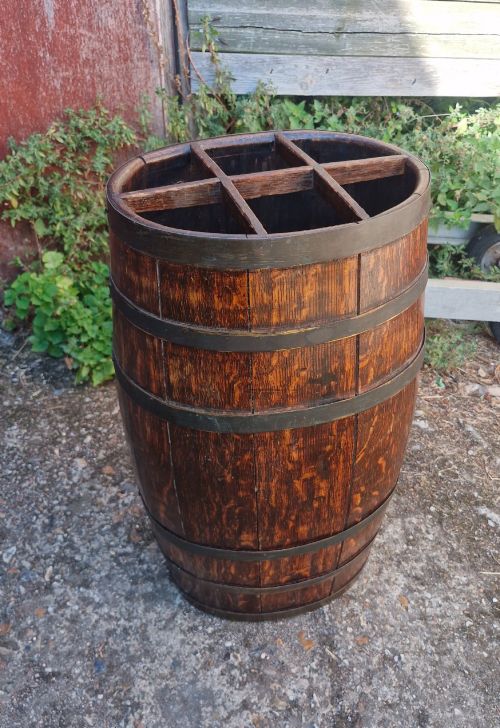
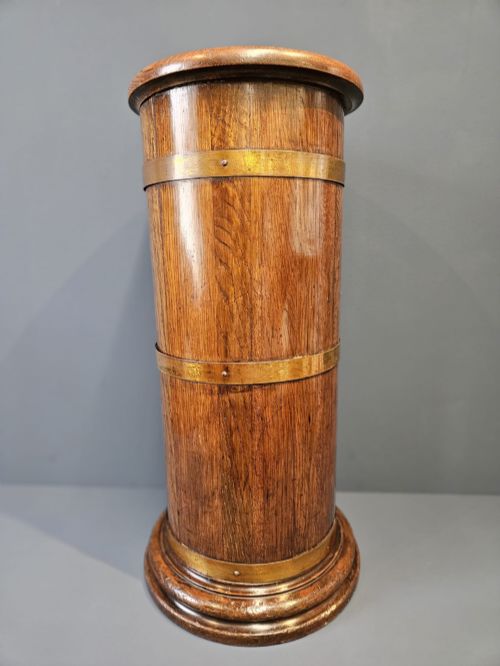
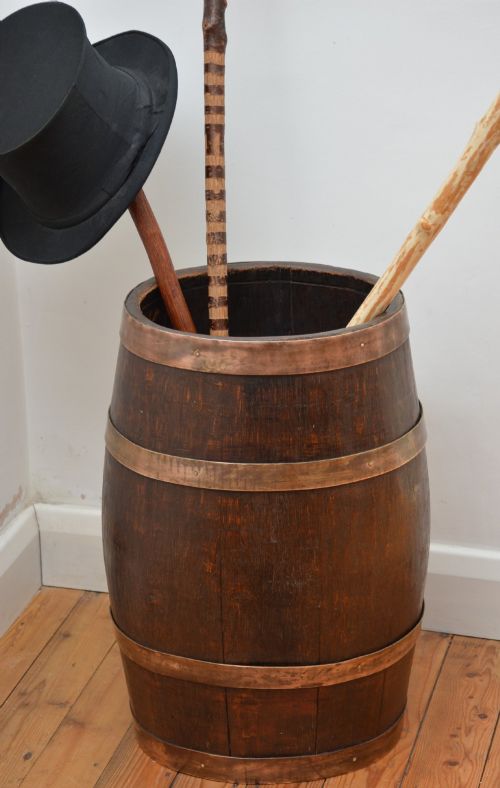
A brass bound stick stand is primarily a practical hallway vessel designed to contain umbrellas and walking sticks without dampening the floorboards. The brass bound stick stand most frequently seen on this page takes the form of a coopered wooden barrel or half-barrel, constructed in sturdy oak or mahogany.
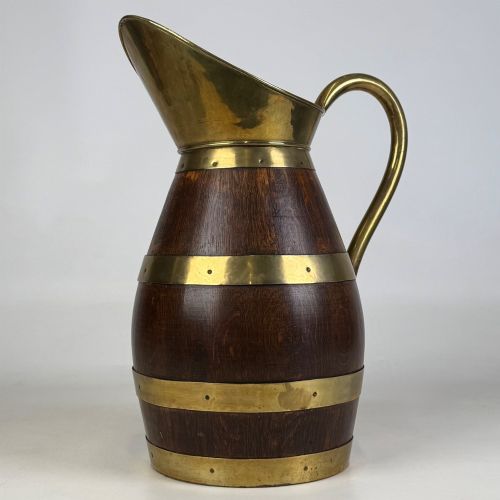
Makers shaped these pieces during the Victorian and Edwardian eras, drawing on traditional English country house styles alongside Georgian influences. The selection ranges from cylindrical water barrels to oval umbrella stands and occasional pitchers, spanning dates from the early nineteenth century into the twentieth century.
These items serve a dual function as functional hall furniture and sculptural wooden objects. Their presence grounds an entranceway, combining timber staves with gleaming metal braces.
How They Were Made
Craftsmen built these vessels using coopered construction, shaping individual staves of oak or mahogany to form tight barrels and casks. This timber body is held firmly in shape by thick bands of brass or copper, secured around the circumference to withstand daily use.
Makers finished the wood with paint or left the natural grain exposed in traditional English country styles. Metal mounts and brass braces provide structural tension while adding a contrasting metallic sheen to the warm wood.
Brass Bound Stick Stand Retail Price Guide 2026
Typical asking prices for brass bound stick stand among the pieces listed under this phrase on Sellingantiques today, from the lower quarter to the upper quarter. They describe what is for sale here now, not the wider market.
Listings feature oak and mahogany constructions alongside copper accents, spanning the Victorian, Edwardian, and Georgian periods.
What Varies in Quality
Quality rests in the weight of the timber and the precision of the cooperage, where tightly joined staves dictate the structural integrity of the barrel. Superior examples display substantial brass mounts and clean, well-figured oak or mahogany rather than crude softwood frames.
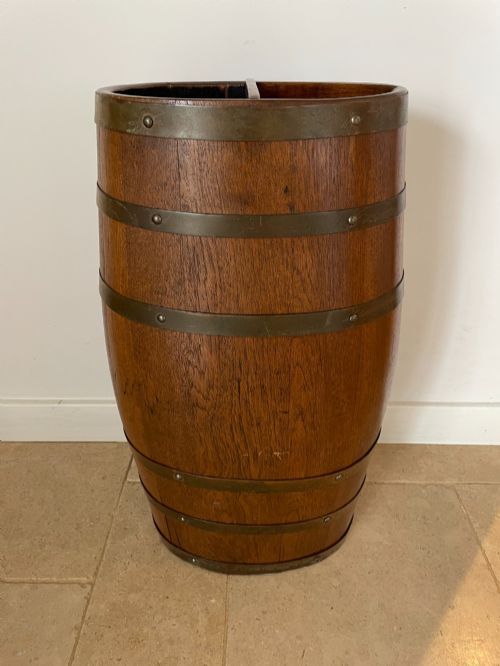
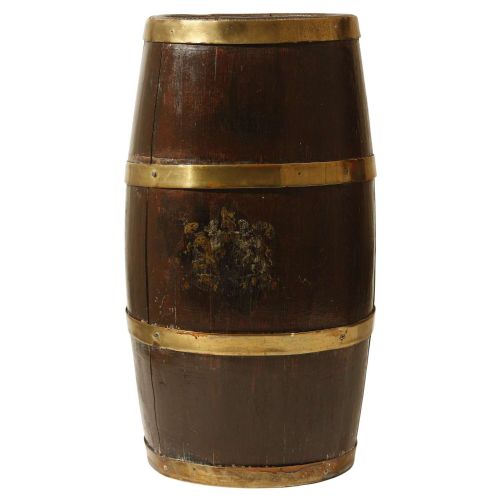
Distinction also arises from rarer formats, such as semi-circular shapes, applied coats of arms, or matched pairs rather than standard cylindrical barrels. The integration of original umbrella loops and substantial brass braces elevates the piece above a simple utility container.
R.A. Lister
The Brass Bound Stick Stand Glossary
- Coopered
- Built by a cooper using curved wooden staves bound together with metal hoops. This method was traditionally used for liquid casks before being adapted for hall stands.
- Stave
- One of the narrow vertical strips of wood that form the sides of a barrel or stick stand. The tightness of these wooden pieces ensures the container holds its shape.
- Brass bound
- Fitted with bands or braces of brass around the exterior of the wooden body. These metal bands provide reinforcement and structural stability.
- Semi-circular
- Built with a flat back to sit flush against a hallway wall. This shape conserves floor space in narrow passages while accommodating walking sticks.
- Pitcher
- A large jug-formed vessel adapted for holding umbrellas or water. These tall containers utilise the same coopered construction as standard barrels.
Brass Bound Stick Stand: Frequently Asked Questions
Where should I place a brass bound stick stand?
These vessels sit naturally in an entrance hall or porch where wet umbrellas and walking sticks accumulate upon entering the house.
Their flat-backed or cylindrical profiles allow them to occupy tight corners without obstructing doorways.
How do I maintain the brass bands?
The metal braces require minimal attention beyond a gentle wipe with a dry cloth to remove dust. Avoid harsh chemical cleaners that might strip the historic patina from the brass and the surrounding timber.
Are these stands suitable for modern umbrellas?
Most antique stands easily accommodate standard umbrellas, walking canes, and shooting sticks within their deep wooden interiors.
Their substantial weight prevents tipping when heavy walking gear is dropped inside.
How do I distinguish oak from mahogany stands?
Oak exhibits a prominent, textured grain with visible medullary rays, common in traditional English country pieces.
Mahogany displays a smoother, darker reddish-brown tone often found in more formal nineteenth-century designs.