

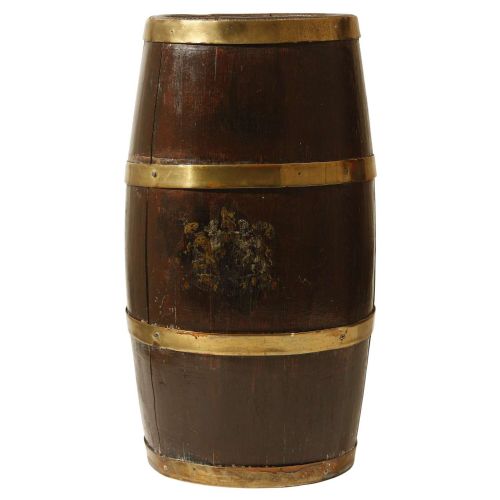


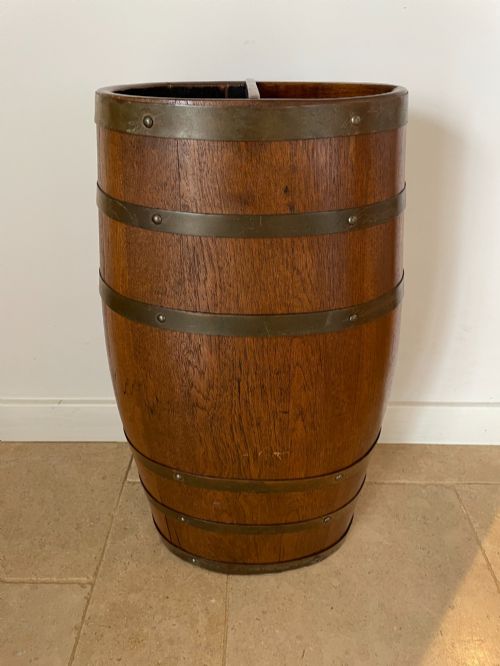


Brass Bound Oak Barrel
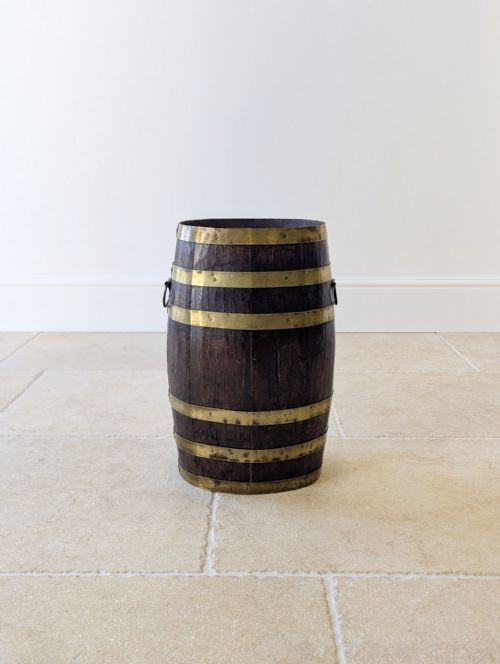
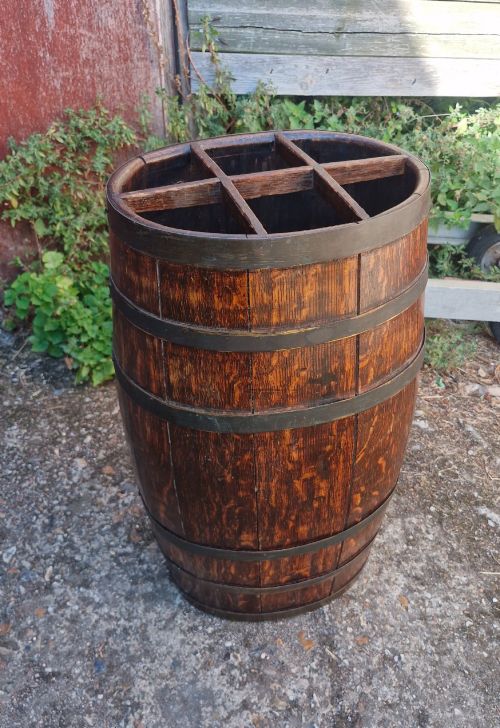
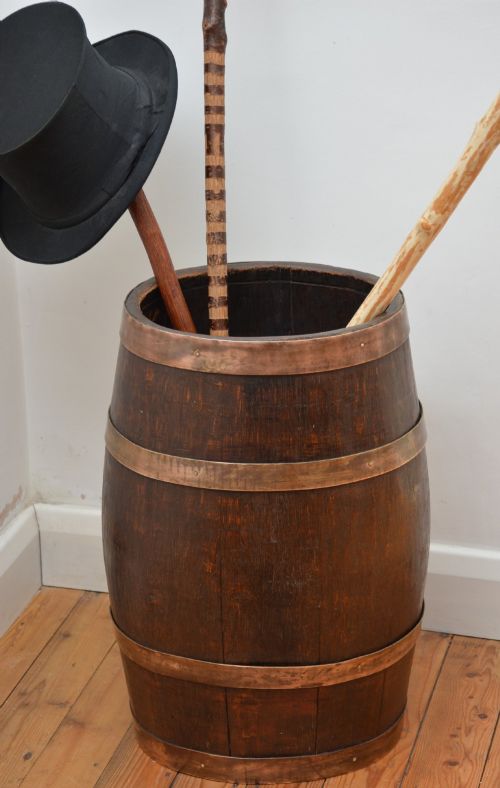
A brass bound oak barrel brings sturdy utility and rich grain into a hall, most often found here as a stick or umbrella stand from the Victorian or Edwardian eras.
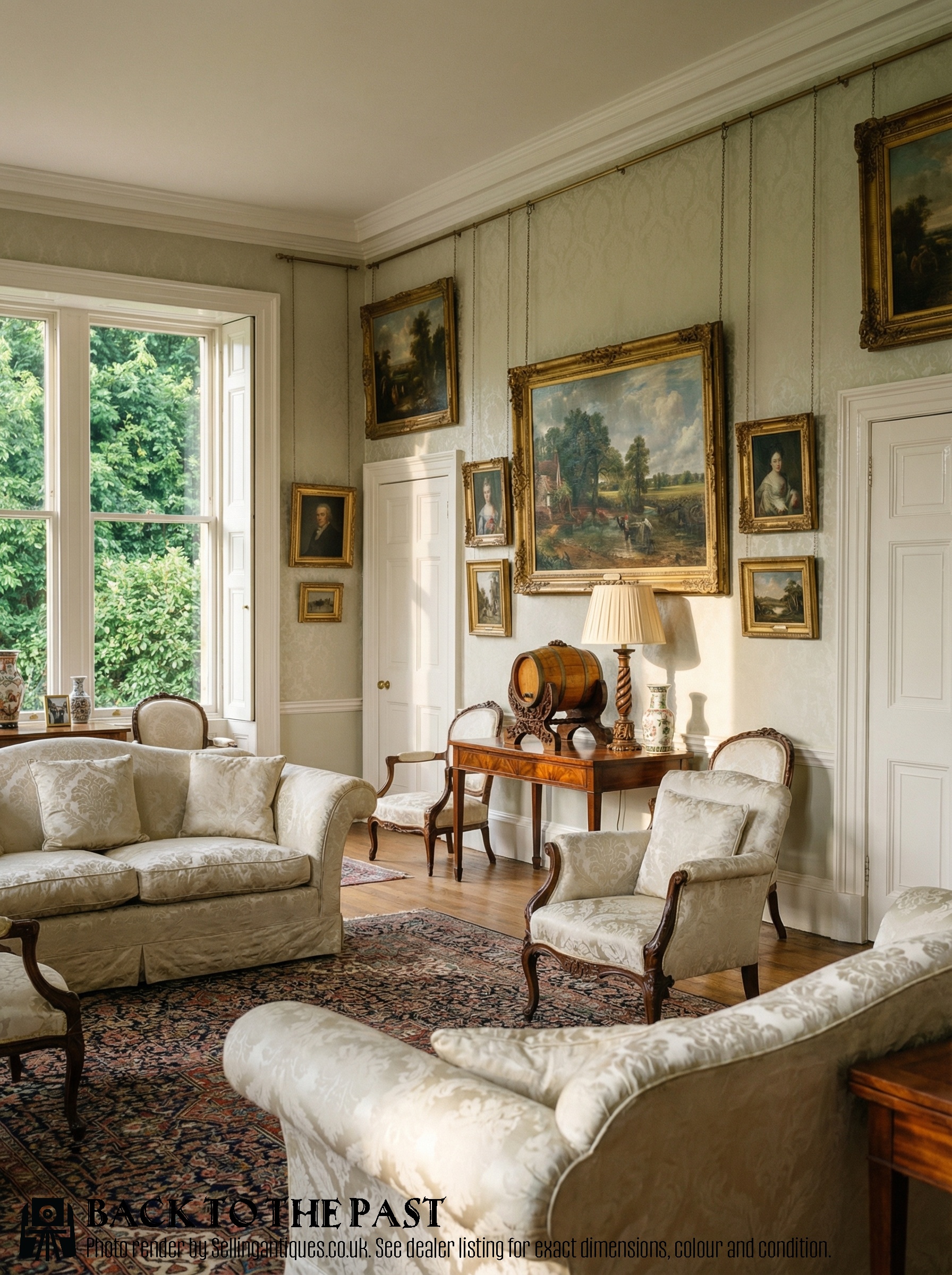
Brass Bound Oak Barrel
When you search for a brass bound oak barrel, you encounter vessels shaped by traditional cooperage, primarily designed for utilitarian tasks around the home. The most frequent examples on this page function as umbrella stands, stick stands, and planters, originating from the nineteenth and early twentieth centuries.
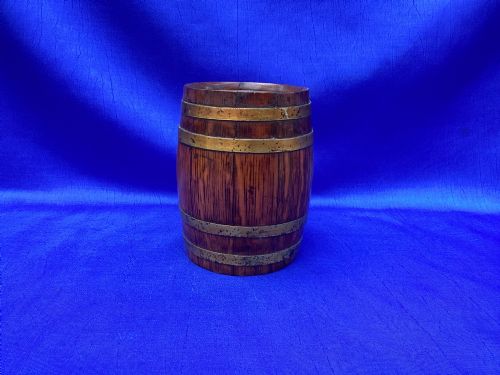
These items transition from functional yard or ship equipment into domestic furniture, adopting forms such as oval umbrella stands, jardiniere stands, and small money boxes. Styles range from plain Victorian and Edwardian country house pieces to Dutch country examples and Arts and Crafts designs.
Origins span English country workshops and maritime contexts, including sailor rum barrels and Merchant Navy grog tubs alongside Guinness bottle storage barrels. Their survival relies on robust construction, allowing them to adapt from cellar or deck use to the hallway.
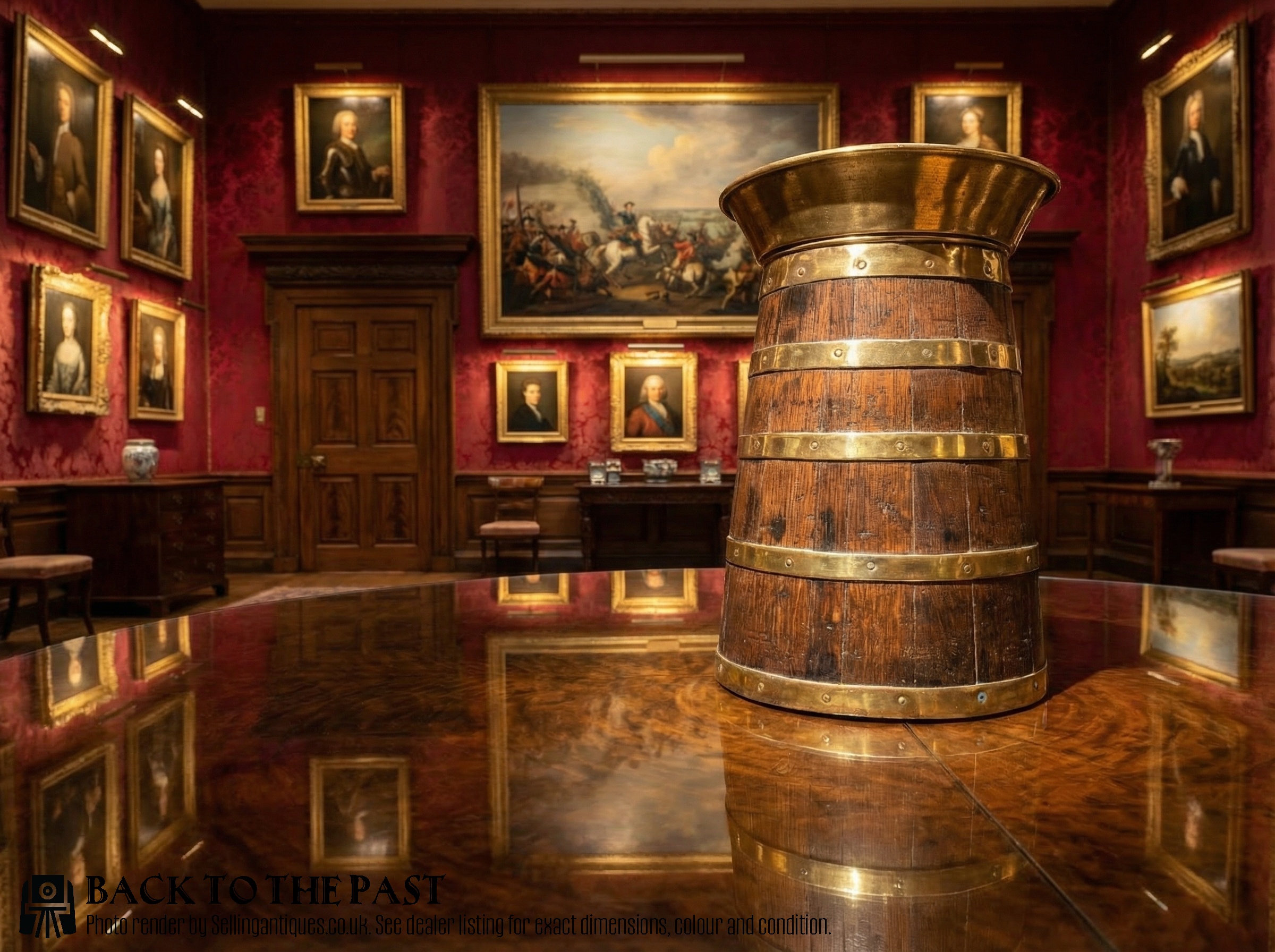
How They Were Made
Makers construct these pieces using staves of oak and occasional hardwood, shaped through traditional cooperage techniques to form curved bodies. Metal bands in brass or copper secure the staves tightly together, often held in place with studs or rivets.
Surface treatments vary from natural polished oak to painted finishes, complemented by metal fixtures such as umbrella loops, handles, or decorative coats of arms. Some barrels sit upon dedicated stands, including Black Forest carved supports or fitted bases by known makers.
Brass Bound Oak Barrel Retail Price Guide 2026
Typical asking prices for brass bound oak barrel among the pieces listed under this phrase on Sellingantiques today, from the lower quarter to the upper quarter. They describe what is for sale here now, not the wider market.
Listings feature oak combined with brass, copper, and painted finishes across Victorian, Edwardian, and Arts and Crafts styles.
What Varies in Quality
Quality rests upon the crispness of the cooper's work, where tightly joined staves and substantial timber thickness distinguish finer pieces from lighter domestic items. The weight and gauge of the brass bands also dictate the standard, with heavy, well-fitted braces showing superior craftsmanship.
The integrity of the original mounts, including brass umbrella loops or carrying handles, influences the standing of a piece. Additional support structures, such as distinct Black Forest stands or maker-marked bases, elevate certain examples above standard utility barrels.
Lister and Co·R.A. Lister
The Brass Bound Oak Barrel Glossary
- Coopered
- Constructed from curved wooden staves bound together with metal hoops, a technique traditionally used for casks and buckets. This method provides natural strength to vessels holding long items or plants.
- Stave
- One of the narrow vertical strips of oak that form the curved sides of a barrel. Tapered edges allow them to fit tightly together under tension.
- Jardiniere
- An ornamental pot or stand for holding plants and flowers, often taking the form of a coopered tub on this page. These frequently feature brass liners and decorative banding.
- Grog tub
- A wooden vessel historically used aboard ships for mixing and serving the daily rum ration to sailors. These maritime pieces are reinforced with metal bands for life at sea.
- Coal hod
- A container designed for holding solid fuel beside a fireplace, occasionally fashioned from coopered oak with metal mounts. They share the robust construction of umbrella stands and barrels.
Brass Bound Oak Barrel: Frequently Asked Questions
What were brass bound oak barrels used for originally?
These vessels served various practical roles, from holding dry goods and liquids on ships to storing bottles, coal, and umbrellas in domestic halls.
Over time, many utilitarian barrels transitioned into decorative umbrella stands or plant holders within nineteenth and twentieth century homes.
How do I date a coopered oak barrel?
Dating relies on the style of the brass mounts, the method of construction, and associated maker marks or stands from the Victorian and Edwardian periods.
Earlier nineteenth century pieces often display hand-beaten brass and heavier timber, while later twentieth century examples reflect cleaner Arts and Crafts or Edwardian lines.
Can I use an antique barrel as an umbrella stand?
Most examples listed here function well as stick and umbrella stands, having been built originally for that purpose or adapted from deep vessels.
It is wise to check for a modern liner or tray inside to protect the historic oak base from lingering moisture.
What is the difference between a barrel and a jardiniere?
A barrel generally retains the deeper, taller proportions of a storage cask, whereas a jardiniere is proportioned specifically as an ornamental planter.
Both utilise coopered oak staves and brass bands, but jardiniere stands often sit elevated upon dedicated wooden legs or frames.