


Oak Barrel Stick Holder
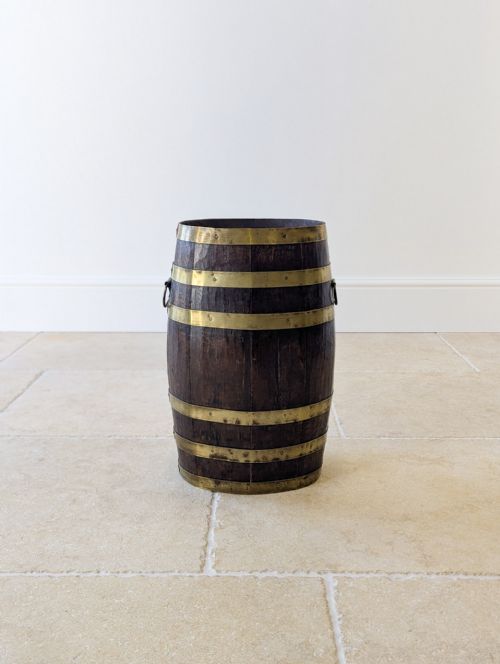
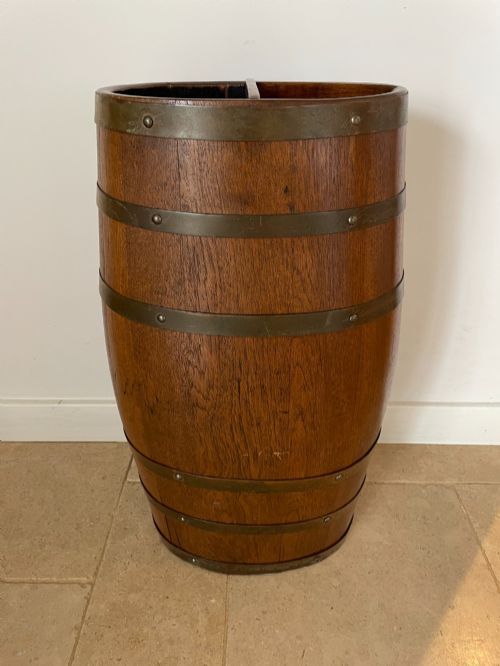
These oak barrel stick holders are sturdy coopered vessels designed to keep hallways tidy, prized for their practical charm and rich timber grain.
Oak Barrel Stick Holder
When you search for an oak barrel stick holder, you encounter robust vessels constructed for daily household utility in country houses and town residences. Most examples date from the Victorian and Edwardian eras, spanning the nineteenth and early twentieth centuries.
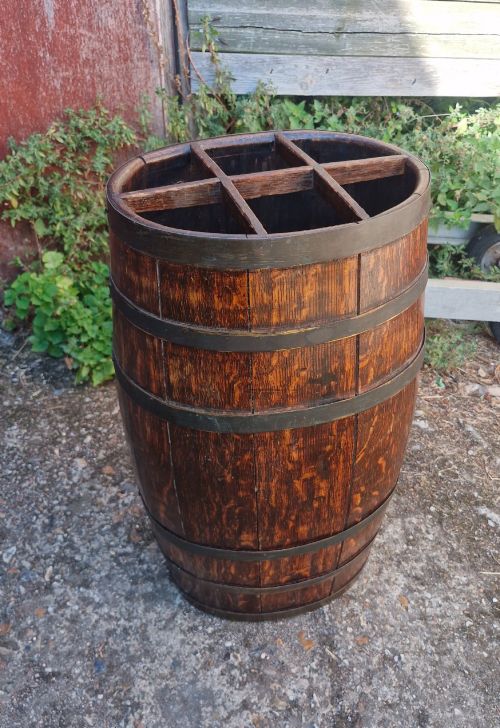
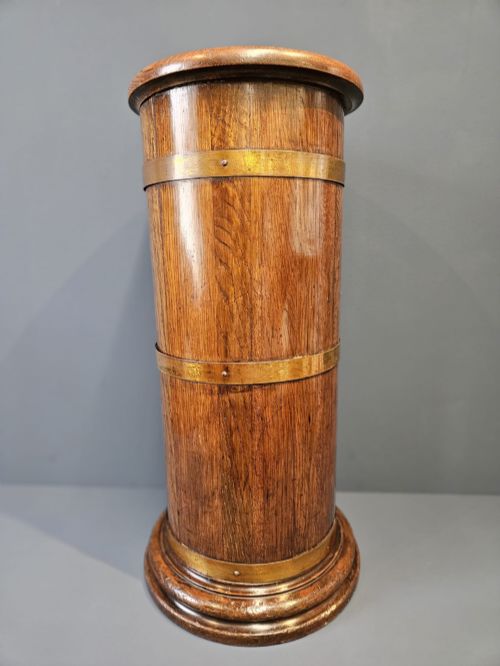
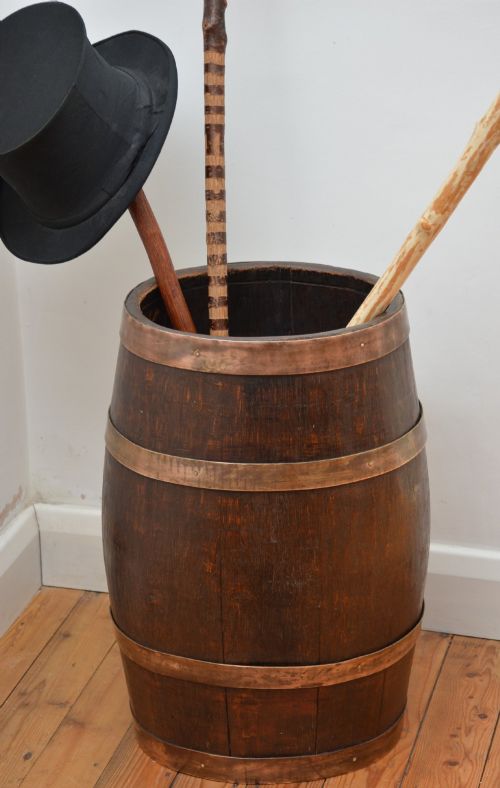
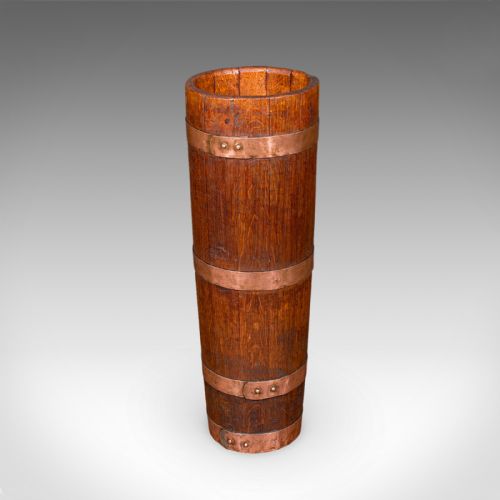
The form typically takes the shape of a coopered barrel, occasionally oval or round, fitted with metal bands to secure the staves. These pieces function equally well as umbrella stands or stick holders in a hallway or boot room.
Makers utilised solid timber to build vessels that endure continuous use. You will find items bearing brass braces, copper bands, or iron hoops, often incorporating interior loops to keep long walking sticks and umbrellas orderly.
How they were made
Coopers shaped individual oak staves with angled edges so they fit together tightly to form a watertight or structurally sound cylinder. This traditional barrel-making technique relies on precise woodworking without relying on modern adhesives.
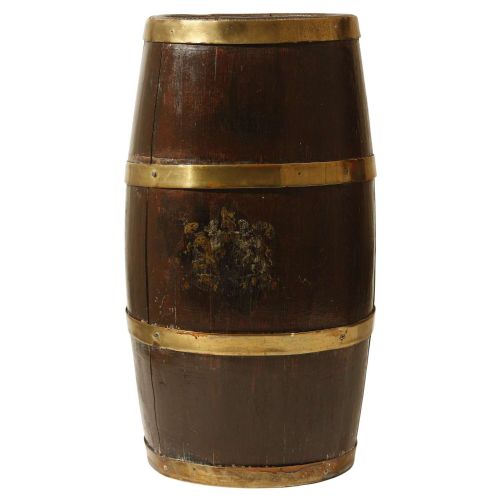
Metal bands made of brass, copper, or iron are heated and driven onto the wooden body, contracting as they cool to clamp the staves firmly in place. Some versions feature painted details or applied coats of arms to accent the timber.
Some barrels proudly display cast coats of arms, transforming a humble hallway tidy into a small piece of civic pageantry.
What varies in quality
The distinction between standard examples and finer pieces lies in the choice of timber and the precision of the coopering. Closely fitted staves and substantial metal bracing demonstrate superior craftsmanship.
Original metal mounts, well-patinated oak surfaces, and robust internal stick loops elevate an example above simpler utilitarian items. The presence of maker details or specific heraldic decoration also adds interest.
R.A. Lister
The Oak Barrel Stick Holder Glossary
- Coopered
- Constructed from curved wooden staves bound together with hoops, much like a traditional drinking cask or barrel.
- Stave
- One of the narrow vertical strips of oak that form the curved sides of the barrel.
- Brace
- A metal band, usually of brass, copper, or iron, fitted around the exterior of the barrel to hold the staves tightly.
- Umbrella loop
- An internal metal ring or divider designed to keep long items separated and upright inside the stand.
- Patina
- The surface sheen and colour developed on timber and metal through age and handling.
Oak Barrel Stick Holder: Frequently Asked Questions
How do I clean an oak barrel stick holder?
Wipe the timber gently with a soft cloth to remove dust, avoiding excessive moisture that might damage the antique finish. Polish the brass or copper bands separately with a suitable metal cleaner if needed.
Ensure the interior remains dry to prevent water damage to the base of the staves over time.
Where should I place a stick holder in my home?
These vessels suit entrance halls, boot rooms, and porches where guests store walking sticks and wet umbrellas. Their compact footprint allows them to fit neatly beside a doorway or under a hall table.
Keep the piece away from direct heat sources like radiators to prevent the oak timber from drying out and shrinking.
How can I tell the age of my stick holder?
Examine the construction methods, such as the hand-shaped staves and the type of metal used for the bands. Nineteenth-century examples often display distinct tool marks and heavier brass or iron bracing.
Compare the timber grain and patinated finish with dated pieces from the Victorian and Edwardian periods to estimate the decade of manufacture.
Can these holders be used for walking canes daily?
These practical items were built precisely for holding walking sticks and umbrellas in active households. The sturdy oak construction and metal hoops easily support the weight of multiple canes.
Consider placing a small waterproof tray inside the base if you intend to store very wet umbrellas to protect the wooden floor.