




Oak Barrel Umbrella Stand
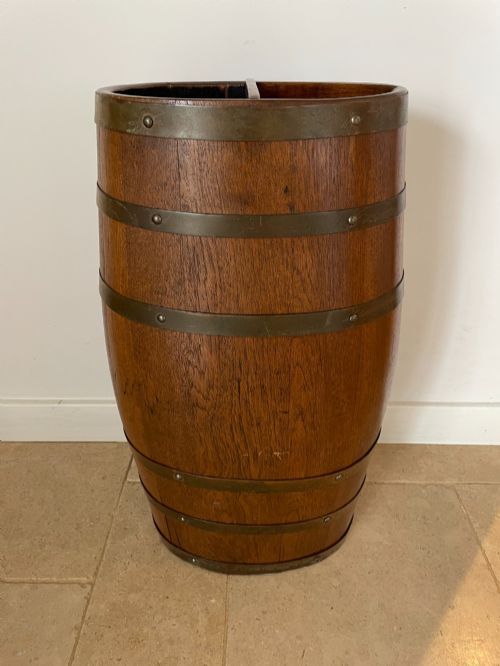
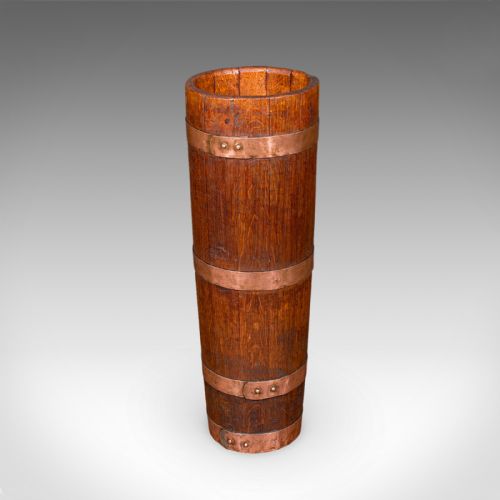
An oak barrel umbrella stand brings practical British country house utility to a hallway, formed from solid timber and secured with heavy metal bands.
Oak Barrel Umbrella Stand
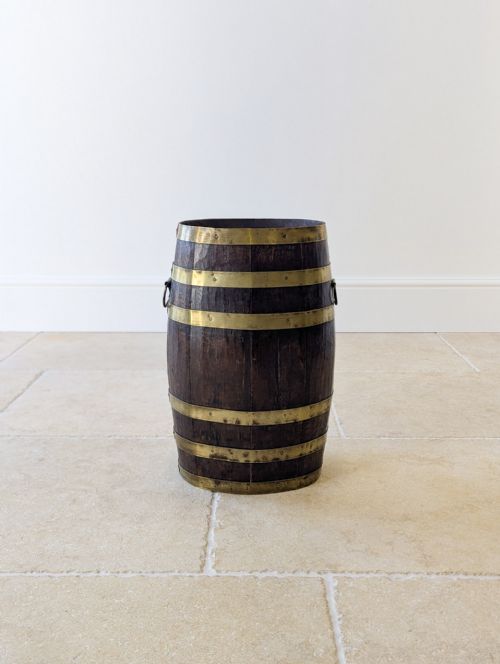
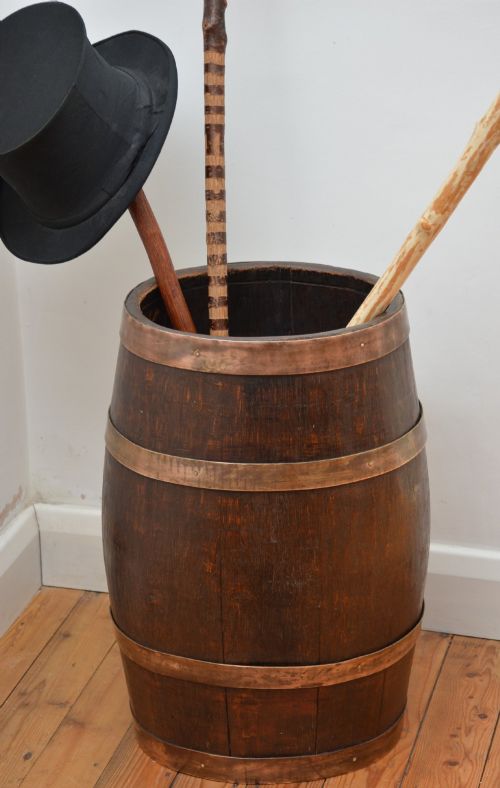
An oak barrel umbrella stand takes the traditional form of a coopered cask, adapted specifically to hold walking sticks and wet umbrellas in domestic entryways. These pieces emerge predominantly from the Victorian and Edwardian periods, alongside early twentieth-century examples shaped by English country house traditions.
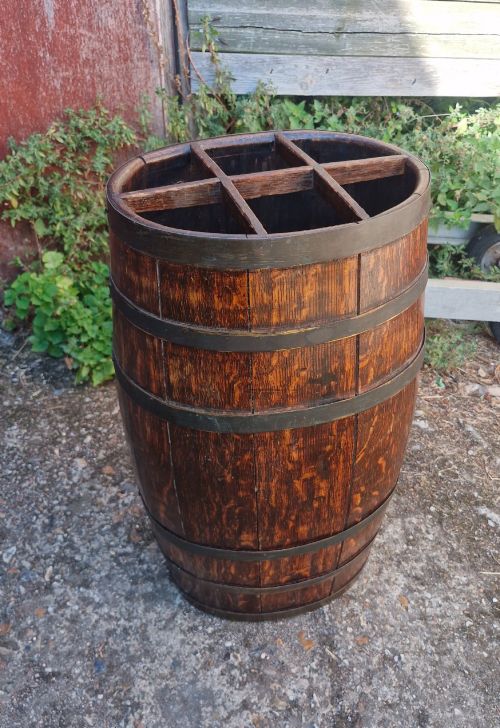
Buyers most frequently encounter round or oval coopered vessels bound in brass or iron, often fitted with interior metal liners or umbrella loops to keep the wood dry. The design reflects utilitarian origins repurposed for polite reception spaces, combining robust carpentry with decorative metalwork.
How they were made
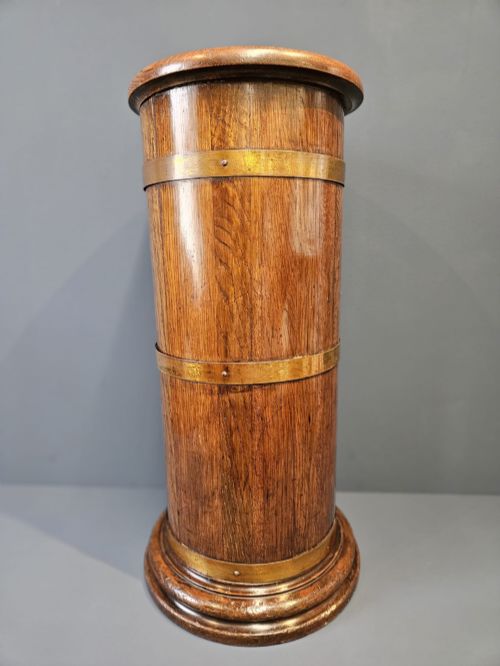
Makers constructed these vessels using traditional cooperage techniques, joining curved oak staves edge-to-edge to form a watertight or structurally sound cylinder. The staves are held firmly in place by tightly fitted bands of brass, copper, or iron, sometimes secured with rivets or decorative studs.
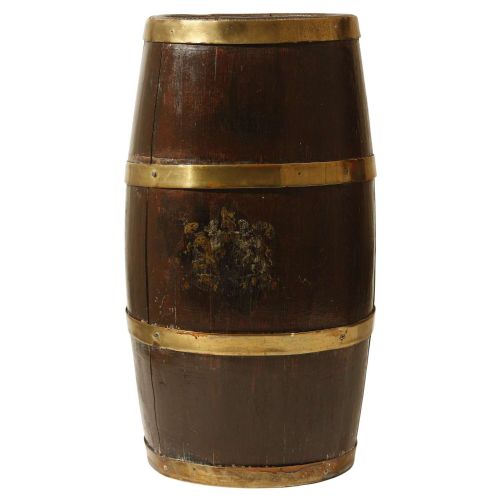
Selected examples incorporate cast metal drop handles, lion head rings, or painted crests such as the English coat of arms to elevate the functional barrel into a decorative hall furnishing.
Form variations range from simple round cider-style casks to oval umbrella loops and vessels adorned with cast brass lion head ring handles.
What varies in quality
The distinction between standard utility items and superior examples lies in the precision of the cooperage and the quality of the mounting hardware. Finer vessels display tightly fitted oak staves with rich grain patination, complemented by heavy, patinated brass bands rather than plain iron sheeting.
Proportion and form also dictate value, with scarce oval shapes and integrated interior umbrella loops commanding greater attention than simple straight-sided cylindrical buckets.
R.A. Lister
The Oak Barrel Umbrella Stand Glossary
- Coopered
- Constructed from curved wooden staves bound together with metal hoops, following the traditional method of making barrels and casks. This technique ensures structural stability in vessels exposed to damp items.
- Staves
- The narrow vertical strips of oak fitted tightly side by side to form the curved body of the barrel. Their precise shaping determines the symmetry and tightness of the vessel.
- Brass bound
- Fitted with strips of brass encircling the wooden body to hold the staves under tension and provide decorative contrast against the dark oak. This hardware often develops a deep, aged patina over decades.
- Umbrella loop
- An interior metal framework or divider designed to separate individual walking sticks and umbrellas, preventing them from tangling inside the barrel. Such additions mark a deliberate conversion from storage cask to hallway furnishing.
- Patina
- The surface sheen and mellow colour developed by aged oak and metal through years of handling, polishing, and environmental exposure. It serves as a visual indicator of genuine age and continuous use.
Oak Barrel Umbrella Stand: Frequently Asked Questions
How do I clean an oak barrel umbrella stand?
Dust the exterior oak regularly with a dry cloth and apply a traditional beeswax to nourish the timber grain.
Avoid using liquid cleaners on the metal bands to preserve their historic surface patina.
Are these barrels waterproof?
Many historical coopered vessels were designed for dry storage or used removable metal liners to catch water from wet umbrellas.
Check the interior for zinc or copper liners before placing dripping umbrellas directly onto bare wood staves.
Where should I place an umbrella stand in my home?
These pieces suit entrance halls, porches, and boot rooms where practical storage for walking sticks and umbrellas is required.
Keep them away from direct heat sources like radiators to prevent the oak staves from shrinking and loosening.
How can I tell Victorian barrels from later ones?
Victorian examples typically feature heavier brass binding, hand-beaten rivets, and deeper timber patination acquired through extended use.
Twentieth-century pieces often display lighter metal gauges and more uniform machine-sawn oak construction.