


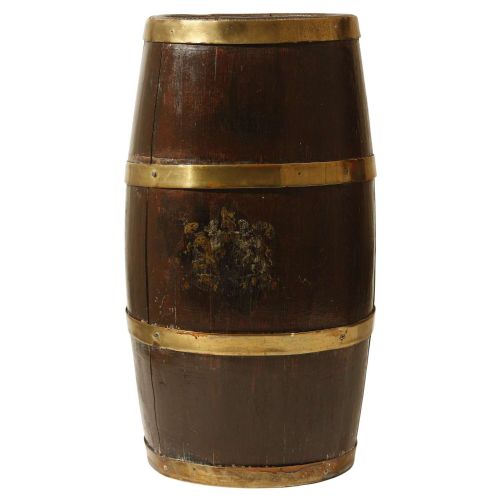


Antique Umbrella Barrel
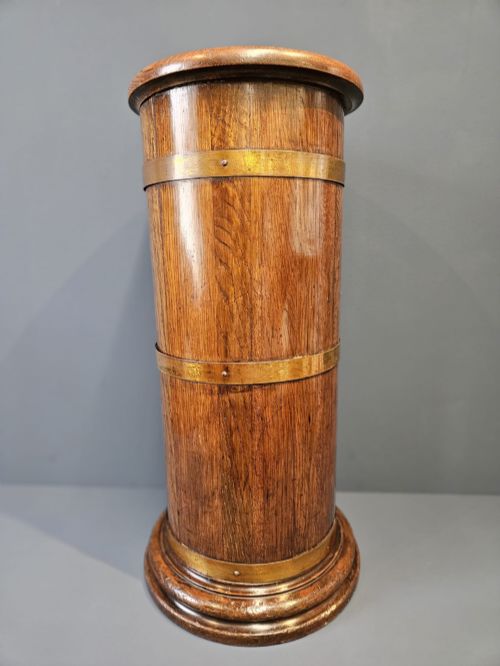
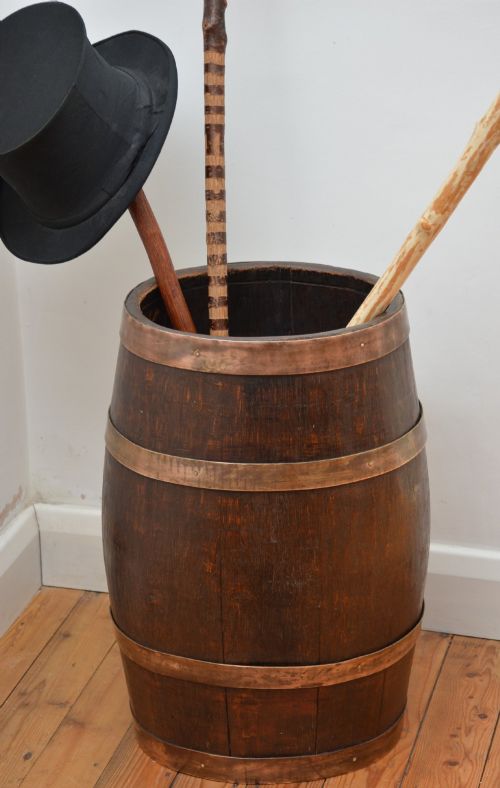
An antique umbrella barrel is a practical hallway vessel that collects wet weather gear, most commonly found in coopered oak bound with brass.
Antique Umbrella Barrel
When you search for an antique umbrella barrel, you are looking at sturdy vessels designed to hold walking sticks, canes, and wet umbrellas in a hallway or entrance. These practical items include coopered casks, buckets, and dedicated umbrella stands that manage the daily clutter of wet weather.
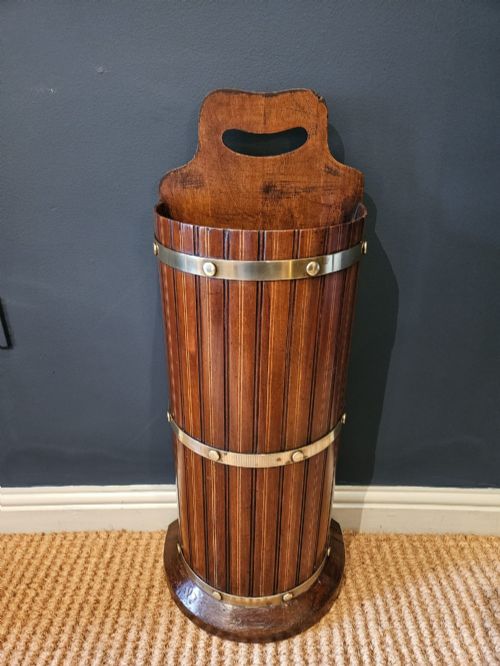
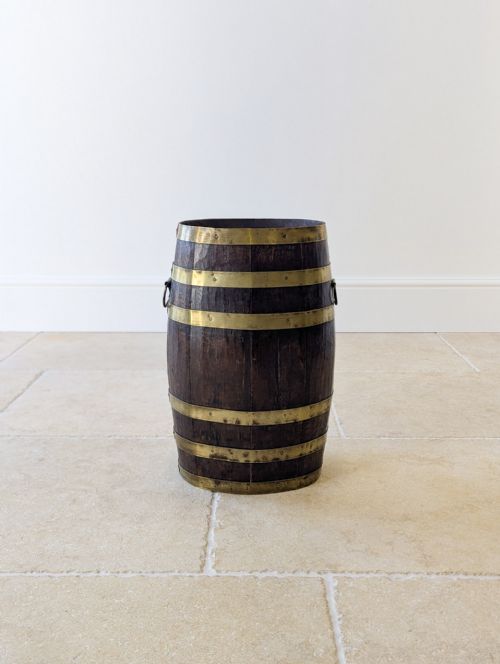
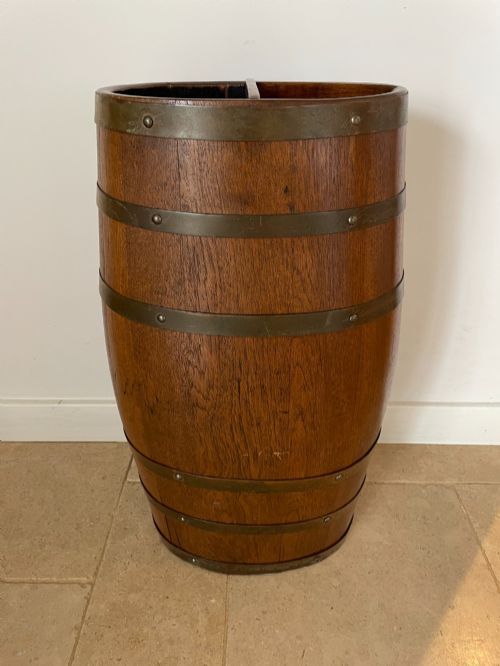
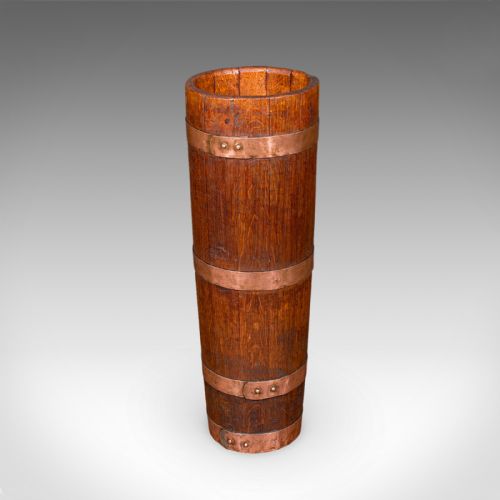
You are most likely to meet Victorian and Edwardian examples made from oak, often secured with brass hoops or bands. These pieces range from simple country house barrels to more formal oval containers, sometimes featuring iron loops or specific makers like R.A. Lister.
The selection also spans Georgian items through to pieces from the 1920s and 1930s, incorporating materials such as copper, iron, and stoneware alongside traditional timber. English and Scandinavian country styles appear frequently, showing both round and oval footprints.
How they were made
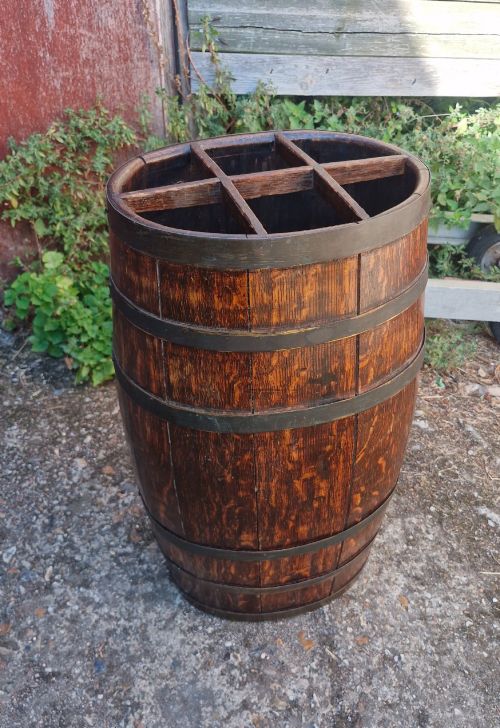
Construction relies heavily on traditional cooperage, where wooden staves of oak are shaped and fitted together to form a self-supporting barrel shape. These staves are then tightly bound with metal bracing, typically using brass or iron bands to secure the vessel.
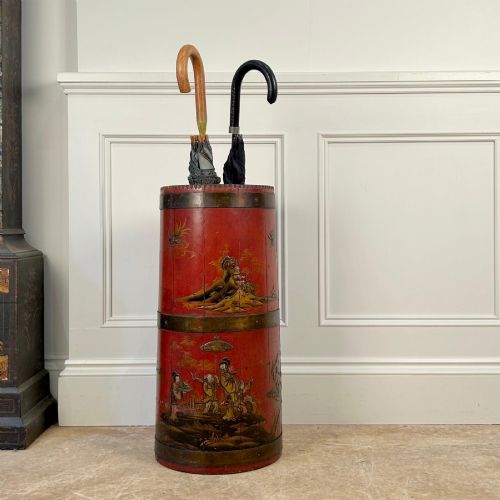
Additional metalwork often includes applied coats of arms, carrying handles, or interior metal liners designed to catch water dripping from wet umbrellas. Surface treatments vary from plain polished timber to japanned and Chinoiserie finishes seen on Edwardian variants.
One Scottish example served its early life as a whisky barrel before finding a new calling holding umbrellas in a dry hallway.
What varies in quality
Quality rests primarily on the tightness of the cooperage and the weight of the timber used in the staves. Denser, well-seasoned oak and heavy-gauge brass bands denote superior execution over lighter, purely decorative pieces.
Finer examples show considered detailing such as shaped umbrella loops, crisp brass casting on the insignia or braces, and original liners that have survived intact. The integration of metalwork with the timber body distinguishes the standard utility item from a refined country house accessory.
R.A. Lister
The Antique Umbrella Barrel Glossary
- Coopered
- Assembled from curved wooden staves joined edge to edge and bound with hoops, much like a cask. This technique provides the structural integrity for wooden barrels.
- Staves
- The narrow vertical wooden strips that form the sides of a barrel or cask. Their precise tapering dictates the final curvature of the vessel.
- Japanned
- A European imitation of East Asian lacquerware applied to wood or metal surfaces. It involves layered dark varnishes finished with decorative painted details.
- Saltglaze stoneware
- Pottery finished by throwing common salt into the kiln during high-temperature firing, creating a dense, slightly pitted glaze. This durable ceramic suited damp-holding vessels.
- Umbrella loop
- A metal divider or ring fitted to the top of a stand to keep walking sticks and umbrellas separated and upright. It prevents items from tipping outward.
Antique Umbrella Barrel: Frequently Asked Questions
What is a coopered barrel?
A coopered barrel is constructed from curved wooden staves fitted tightly together without glue, held in place by exterior metal bands. This traditional method allows the wood to expand and contract naturally.
In the context of hallway furniture, this technique creates sturdy, waterproof containers that easily withstand the weight of heavy wooden walking sticks and wet umbrellas.
How do I use an umbrella barrel?
These barrels sit in hallways and porches to hold wet umbrellas, parasols, and walking sticks upright. They keep damp fabric off hallway floors and carpets.
Many period examples feature interior liners or copper bases designed to catch runoff water, protecting the wooden staves from prolonged moisture damage.
Are these barrels waterproof?
Many barrels are naturally water-resistant due to tight wood joints and metal bands, and some include original metal or ceramic liners. However, timber can dry out or shrink over time if left in heated spaces.
It is sensible to check for a protective interior liner or use a modern discreet tray inside the base to protect antique timber from standing water.
How do I date an oak stick stand?
Dating relies on timber characteristics, the style of the metal fittings, and construction methods. Victorian and 19th-century pieces often feature heavy brass bounds and distinct cooperage.
Edwardian items sometimes introduce painted surfaces, such as Chinoiserie decoration, or carry stamps from known institutional makers like R.A. Lister.