

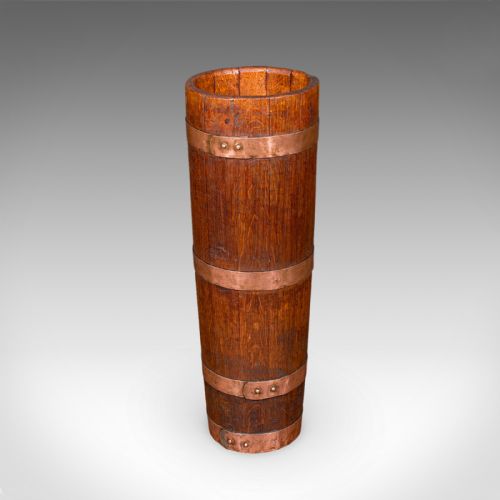


Wooden Walking Stick Holder
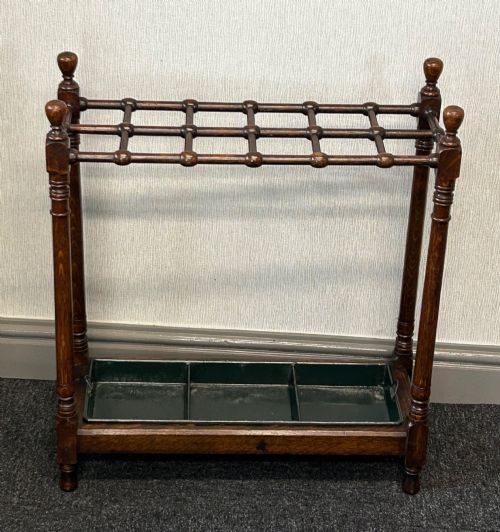
A wooden walking stick holder brings practical order to an entrance hall, combining solid timbers and metal drip trays to house everyday walking gear.
Wooden Walking Stick Holder
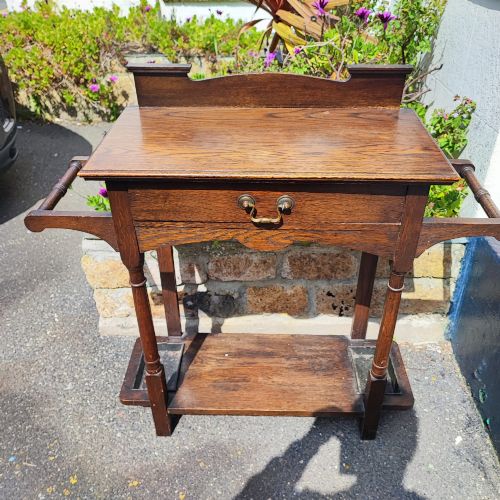
A wooden walking stick holder serves as a dedicated piece of hallway furniture designed to corral umbrellas and walking sticks. These objects appear primarily across the Victorian and Edwardian periods, stretching from the late nineteenth century into the early twentieth century.
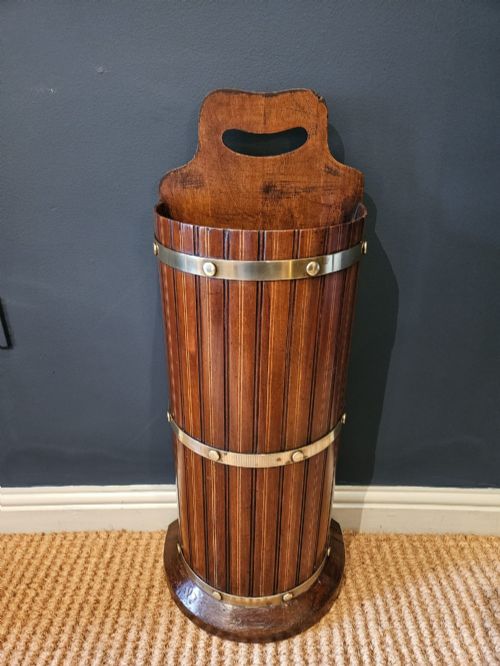
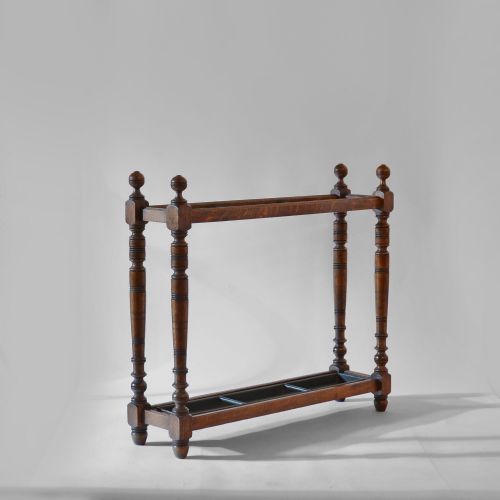
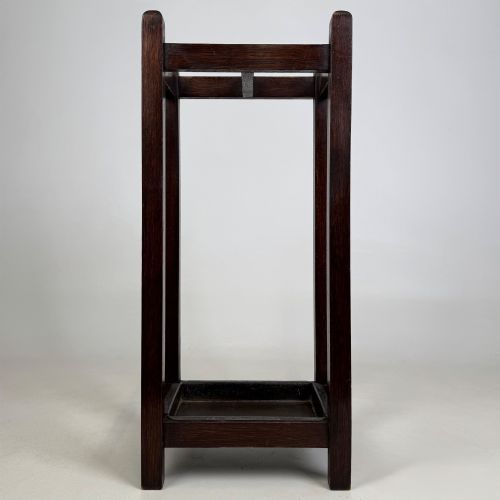
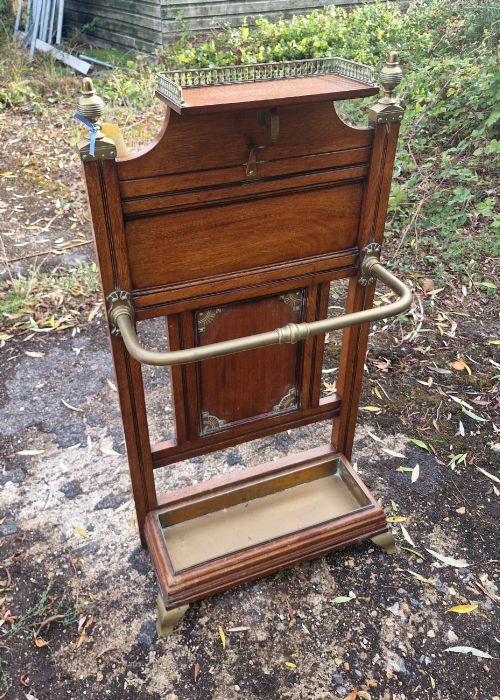
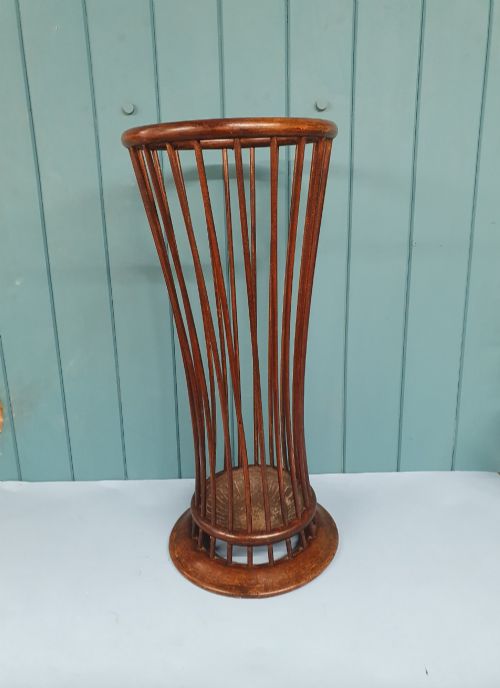
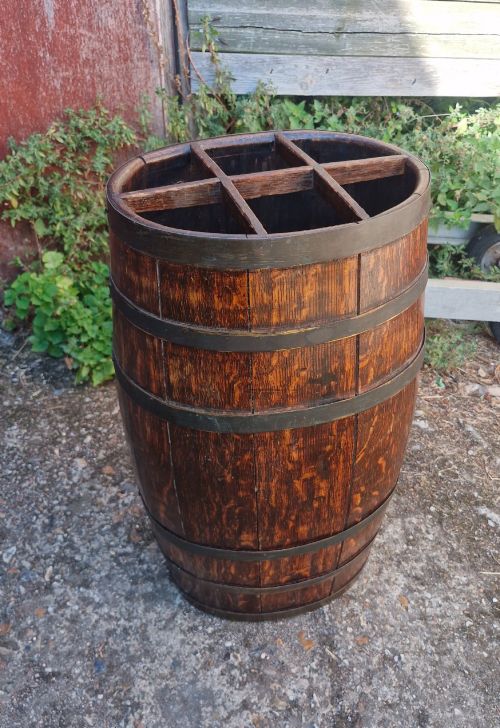
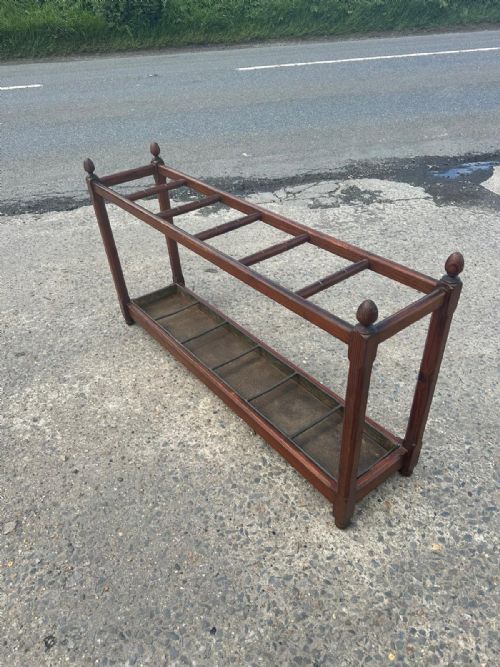
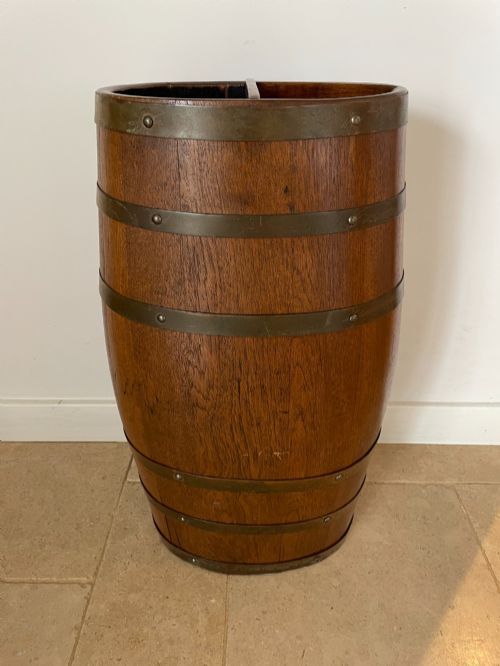
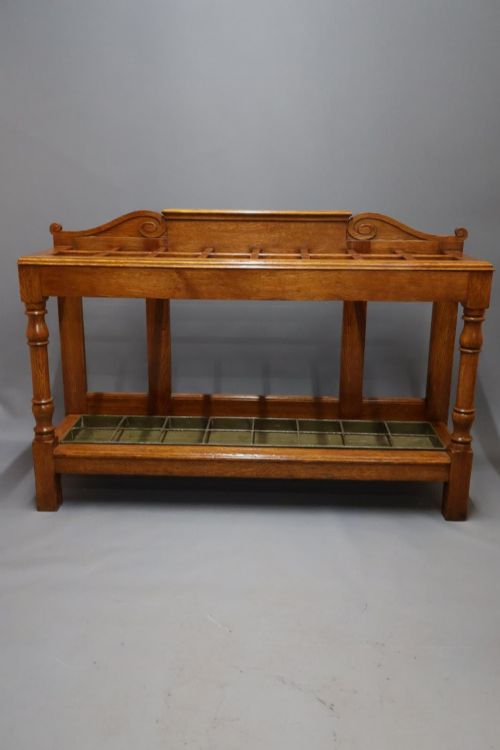
The forms on this page range from straightforward oak barrels and coopered stick loops to larger hall stands and demi lune racks. Many examples hail from English country houses, reflecting the domestic needs of large rural estates.
Buyers will most frequently encounter sturdy oak and mahogany variations, often reinforced with brass bands or fitted with original metal drip trays to catch rainwater. Pieces span several distinct stylistic movements, including Gothic Revival, Arts and Crafts, and the Aesthetic Movement.
Materials and Construction
Cabinet makers utilised heavy hardwoods such as oak, mahogany, walnut, and pitch pine to build structures that could withstand the daily weight of wet umbrellas and heavy walking sticks. Coopered techniques, reminiscent of barrel making, appear frequently in oval and circular stands formed from tight wooden staves.
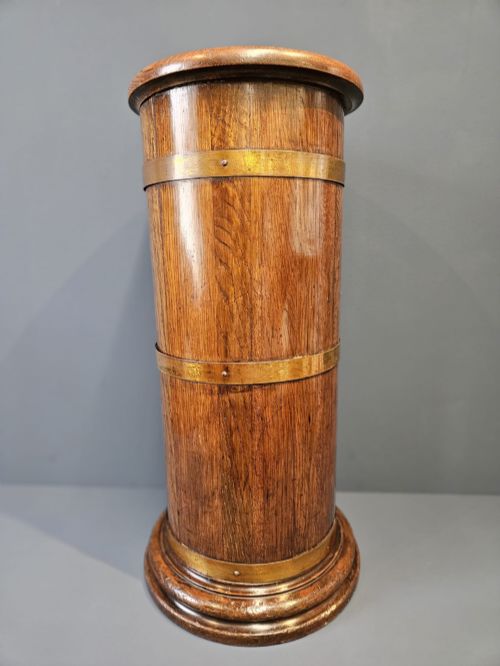
Metal components play a structural and protective role in these pieces. Brass bindings reinforce wooden barrels, whilst zinc, cast iron, and other metals form the practical drip trays fitted to the base of the stands to protect flooring.
Current listings feature oak, mahogany, walnut, pitch pine, maple, brass, cast iron, and zinc across Victorian and Edwardian periods.
Craftsmanship and Proportion
The distinction between standard utility items and finer pieces lies in the selection of timber and the complexity of construction. Superior examples display carefully matched grain, sophisticated coopered curves, and integrated decorative elements such as brass binding or carved details.
Hardware integrity heavily influences the standing of a piece. Original metal drip trays and secure bindings indicate a well-preserved survivor, whereas mismatched replacements alter the historical cohesion of the stand.
Heals of London·Shoolbred·R.A. Lister·Liberty
The Wooden Walking Stick Holder Glossary
- Coopered
- Built using staves of wood bound together with metal hoops, a technique borrowed from barrel making. This method creates strong curved bodies for cylindrical and oval stick stands.
- Demi lune
- Shaped like a half-moon or semicircle. These flat-backed stands sit flush against a hallway wall to save floor space.
- Drip tray
- A shallow metal basin placed at the bottom of a stand to catch water from wet umbrellas. Original trays are an important feature for collectors.
- Hall stand
- A larger piece of entrance furniture combining a stick holder with coat hooks, a mirror, and sometimes a glove drawer. These items dominate larger country house interiors.
- Brass bound
- Strengthened around the circumference with strips of brass. This method adds structural rigidity and decorative contrast to wooden barrels.
Wooden Walking Stick Holder: Frequently Asked Questions
Where should I place a stick stand?
These pieces suit entrance halls, porches, and boot rooms where outdoor wear naturally accumulates. Their narrow footprints allow them to sit neatly against walls without obstructing doorways.
Positioning them near an exterior entrance ensures wet umbrellas go straight into the metal drip tray rather than onto interior flooring.
How do I protect the wood from dampness?
The original metal drip trays inside these stands are designed to catch residual moisture from wet umbrellas. Emptying and drying these trays regularly prevents standing water from damaging the interior base.
Applying appropriate wax to the exterior oak or mahogany helps maintain the finish against changing hallway humidity.
How do I date a wooden stick stand?
Dating relies on stylistic clues and construction methods that align with specific periods. Victorian and Edwardian examples often display characteristic period movements such as Gothic Revival or Arts and Crafts.
Examining the fixings, timber selection, and wear patterns on the base also helps establish the age of the piece.
Can these hold heavy walking sticks?
Solid hardwood construction makes these holders robust enough for heavy walking sticks and country canes. Materials like oak, mahogany, and pitch pine provide sturdy housing for daily use.
Coopered barrels and brass-bound frames offer particular strength for numerous heavy items.