


Mahogany Plant Bucket
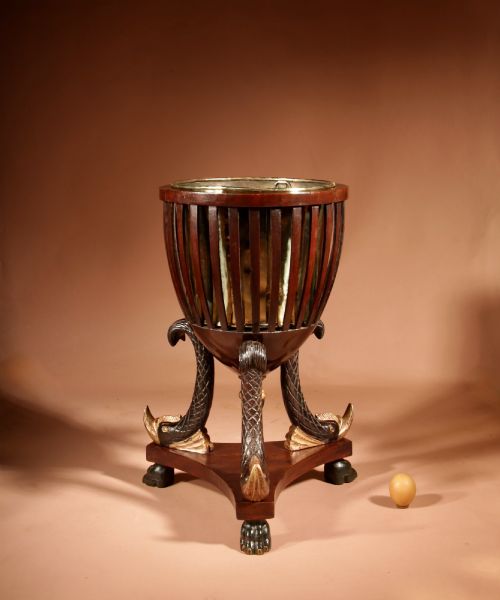
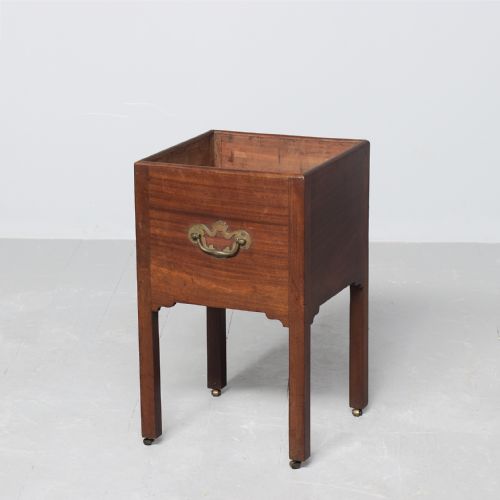
These mahogany plant buckets are timber vessels fashioned for greenery or wine, offering rich grain and polished metal work to any room.
Mahogany Plant Bucket
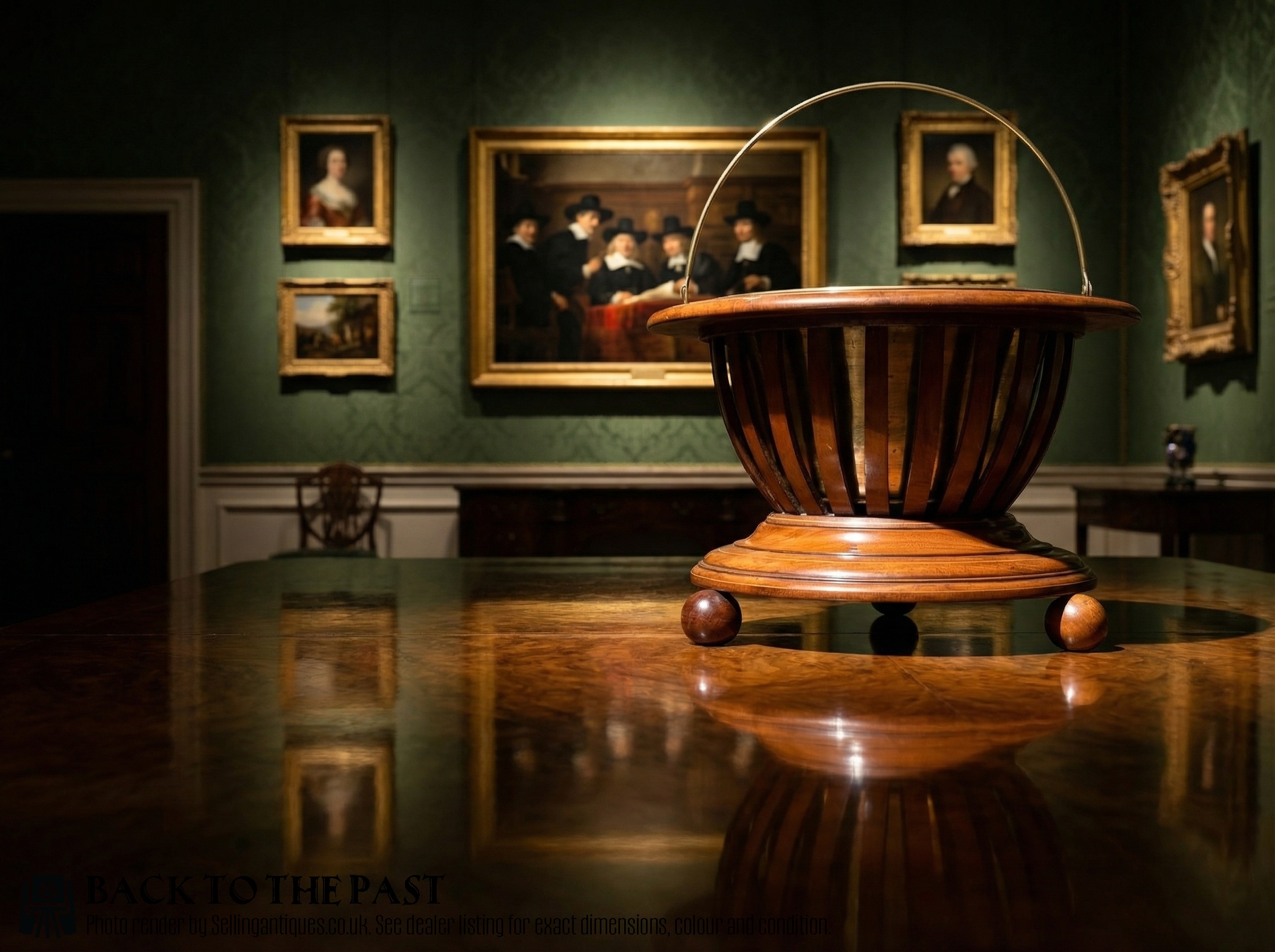
A mahogany plant bucket serves as a refined vessel for interior greenery, carrying centuries of domestic utility within its polished staves. When you search for a mahogany plant bucket, you find coopered and joined receptacles designed to hold potted plants or to double as wine coolers.
The examples on this page span several eras, originating predominantly from the Georgian, Regency, and Victorian periods alongside later revivals. You are most likely to meet round or elliptical forms featuring substantial metal bands and drop handles for carriage.
Origin styles range from English classical designs to Dutch Empire and French Empire pieces, often crossing paths with wine coolers and jardiniere stands in form and function. Their dual utility means many period vessels transition easily between holding foliage and chilling bottles.
How they were made
Cabinet makers built these buckets using solid mahogany, walnut, or ebonised wood, frequently employing coopered staves bound tightly by brass or copper bands. This stave construction mirrored the methods used by coopers for water casks and wine barrels.
Detailing often included contrasting boxwood inlay, brass drop handles, and protective interior linings of zinc or metal to contain moisture and earth. Skilled hands shaped the timber to follow strict geometric curves before applying oils and polishes to bring out the deep red hues of the wood.
Materials across these listings include solid mahogany, walnut, ebonised wood, and boxwood inlay, secured by brass and copper fittings.
What varies in quality
Quality rests in the crispness of the cooperage, the weight and gauge of the brass bands, and the preservation of the original timber surface. Pieces that retain their fitted metal liners and original carrying handles command greater attention from those who study period interiors.
The fineness of the mahogany grain and the restraint shown in any boxwood inlay or brass mounts separate ordinary workshop output from finer cabinet work. Proportion and the integrity of the stave joints dictate whether a vessel maintains its architectural dignity over centuries of use.
The Mahogany Plant Bucket Glossary
- Coopered
- Constructed from curved wooden staves fitted edge to edge and bound with metal hoops, much like a barrel. This method gave the vessels great strength for holding wet soil or ice.
- Elliptical
- Having an oval shape with slightly tapered ends, a form chosen for planters to fit narrow sideboards or console tables. This geometric layout allowed large vessels to sit closer to a wall.
- Ebonised
- Wood treated with a dark finish to imitate expensive ebony, frequently used for contrasting stringing or decorative accents on Regency and Victorian furniture. It provides a sharp visual contrast to warm mahogany.
Mahogany Plant Bucket: Frequently Asked Questions
Were these used for plants or wine?
Many of these vessels served both purposes interchangeably throughout the eighteenth and nineteenth centuries, depending on the household needs.
Their watertight metal linings made them equally suitable for holding iced wine bottles or damp garden pots inside formal rooms.
How do I care for the wood?
Keep these buckets away from direct heat sources and sudden humidity changes to prevent the mahogany staves and boxwood inlay from splitting.
Use a dry or slightly damp cloth for dusting and apply quality beeswax sparingly to nourish the grain without dulling the finish.
How do I spot a Georgian piece?
Georgian and Regency examples typically display heavier brass bands, hand-beaten drop handles, and dense, patinated mahogany with genuine age in the timber.
Later revival pieces from the twentieth century often show lighter construction, brighter modern brasswork, and cleaner interior zinc linings.