



Brass Lined Jardiniere
A brass lined jardiniere brings living greenery indoors within a waterproof vessel of mahogany, walnut, or satinwood.
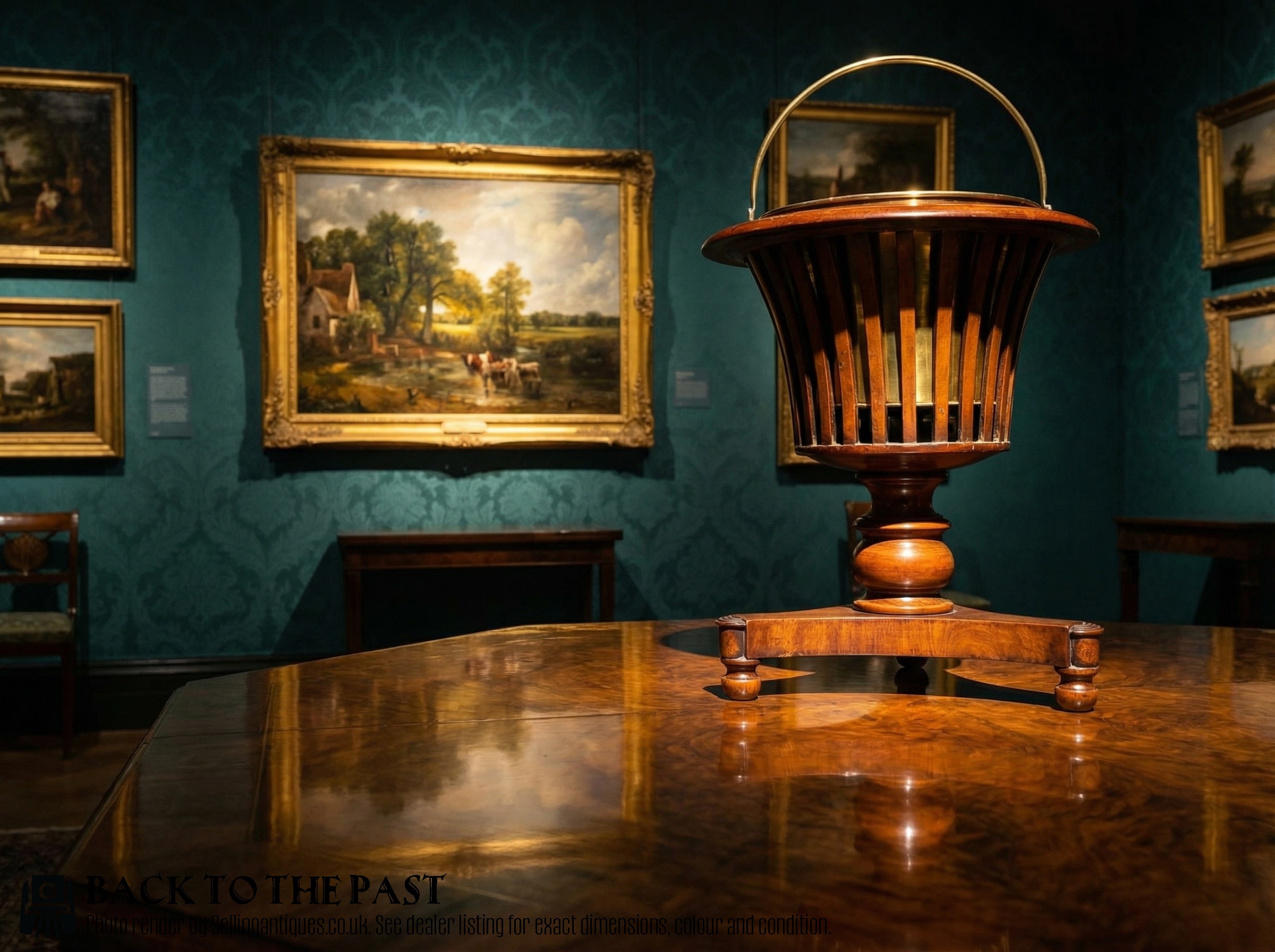
Brass Lined Jardiniere
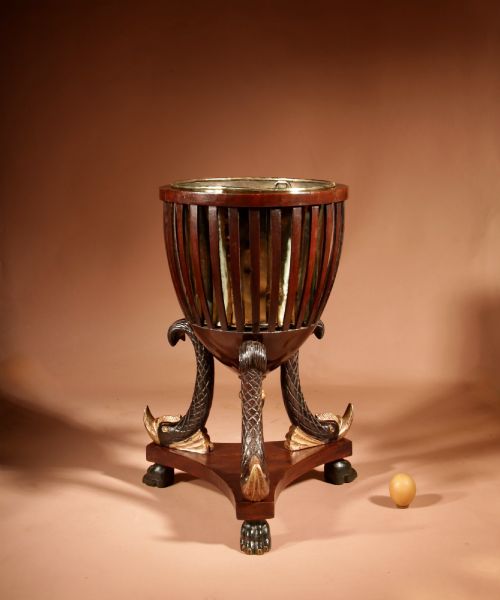
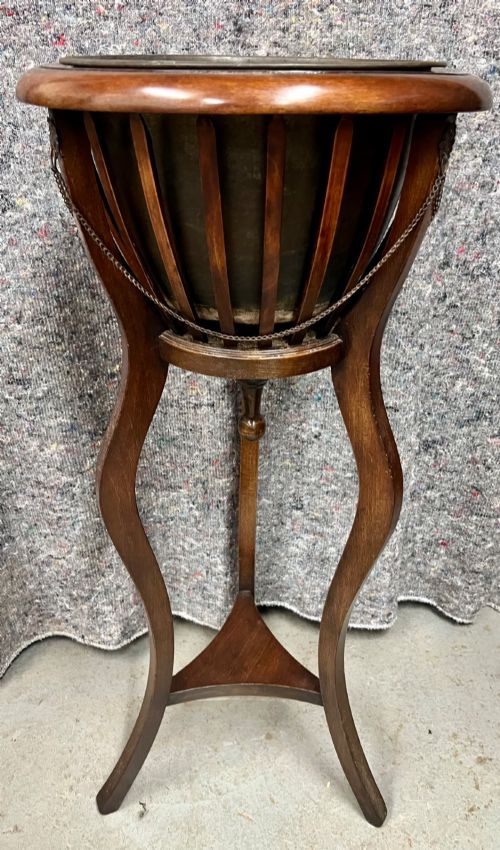
A brass lined jardiniere is a planted container designed to hold indoor foliage while protecting the surrounding furniture from moisture. These pieces serve as decorative plant stands, peat buckets, wine coolers, or tea stoves, uniting utility with polished timber cabinetry. The form appears across the Georgian, Regency, Victorian, and Edwardian periods, alongside Dutch Empire and French Empire styles.
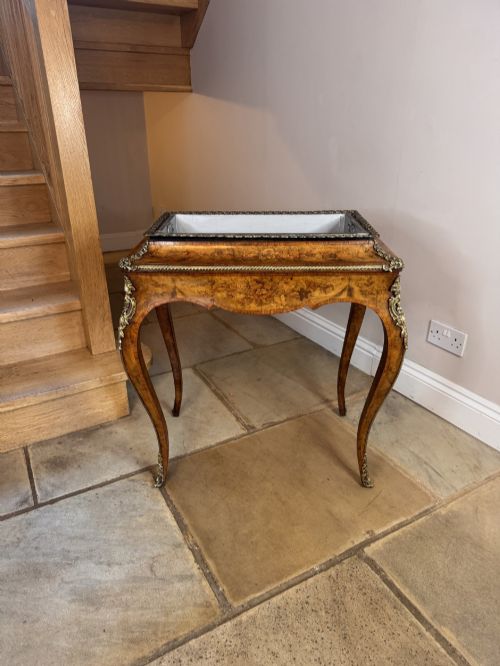
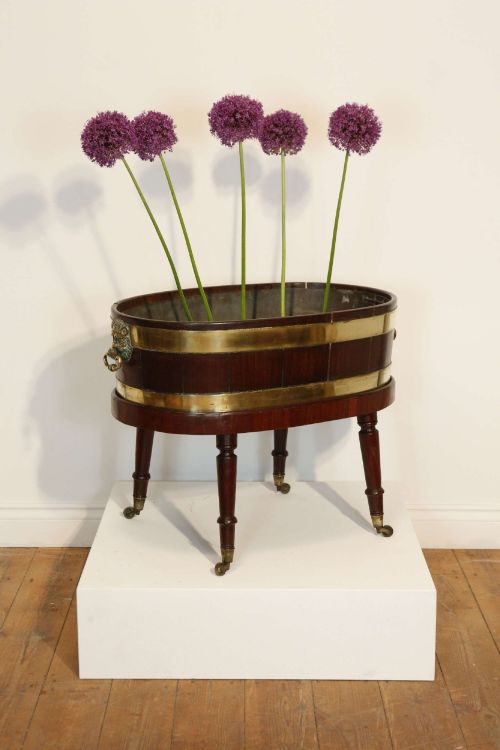
The most common examples on this page are mahogany and walnut planters or jardiniere stands dating from the nineteenth century. Many pieces incorporate coopered wooden staves, brass liners, and occasional marquetry inlay or ormolu mounts. Buyers also encounter specialised forms such as miniature planters, zinc-lined troughs, and satinwood tea stoves.
How they were made
Makers constructed these vessels using cabinet-making techniques like coopered stave construction, similar to barrel-making, to hold damp soil and water securely. Timbers such as mahogany, walnut, satinwood, and box tree were selected for their grain and polished to a rich sheen. Marquetry inlay, ebonised wood details, and cast ormolu mounts were applied to elevate the decorative scheme.
The internal containment relies on fitted metal inserts, primarily brass or zinc, which protect the outer timber structure from rot and dampness. These metal liners are typically hand-beaten or soldered to fit the exact interior dimensions of the wooden bucket or trough.
Brass Lined Jardiniere Retail Price Guide 2026
Typical asking prices for brass lined jardiniere among the pieces listed under this phrase on Sellingantiques today, from the lower quarter to the upper quarter. They describe what is for sale here now, not the wider market.
Listings feature eighteenth and nineteenth-century pieces spanning Georgian, Regency, Victorian, and Edwardian periods, utilising mahogany, walnut, satinwood, and brass.
What varies in quality
The distinction between standard and superior pieces rests on the choice of timber and the crispness of the cabinetwork. Finer examples display figured mahogany or intricate satinwood and rosewood marquetry, whereas simpler pieces use plain walnut or standard box tree. The quality of the original brass liner and any cast ormolu mounts also signal the standing of the workshop.
Proportion and decorative restraint dictate the aesthetic success of the piece. Top-tier items maintain balanced lines without excessive ornamentation, allowing the grain of the wood and the warm tone of the brass to define the object.
The Brass Lined Jardiniere Glossary
- Coopered
- Built from vertical wooden staves fitted together with tongue-and-groove joints and bound by metal hoops, much like a barrel. This technique ensures the vessel remains watertight for holding soil and plants.
- Jardiniere
- A decorative pot or stand designed to hold growing plants or flowers indoors. The term derives from the French word for gardener.
- Ormolu
- Gilt bronze mounted onto furniture or decorative objects to provide contrasting golden highlights. The technique involves applying a mercury and gold amalgam to bronze.
- Marquetry
- The art of applying pieces of veneer to a structure to form decorative patterns and pictures. Craftsmen use contrasting woods like satinwood and rosewood to achieve the design.
- Tea stove
- A multifunctional domestic container used historically to hold peat, warm tea equipment, or living plants. These pieces often feature sturdy brass liners and carrying handles.
Brass Lined Jardiniere: Frequently Asked Questions
What is a brass lined jardiniere?
A brass lined jardiniere is an indoor plant container featuring a waterproof metal interior and a decorative wooden exterior. These vessels protect domestic furniture while displaying greenery.
They appear in various historic styles from the Georgian, Regency, and Victorian eras, often taking the form of buckets, stands, or troughs.
How were these planters used?
These vessels originally held potted plants, cut flowers, or peat for indoor heating. Some multifunctional pieces also doubled as wine coolers or tea stoves.
Their sturdy metal liners allowed them to contain damp soil or ice without damaging the surrounding timber.
Can I plant directly into the brass liner?
While the metal liners were designed to contain moisture, direct planting can lead to corrosion and stubborn mineral deposits over time. Placing potted plants inside in separate plastic saucers preserves the historic liner.
This method also makes it much easier to water and rearrange your greenery.
How do I date a wooden jardiniere?
Dating relies on identifying the timber species, construction methods, and stylistic cues of the period. Georgian and Regency pieces often feature rich mahogany with understated lines, while Victorian examples show heavier proportions.
Cabinet-making techniques, such as hand-cut dovetails or coopered staves, provide further clues to the age of the piece.