

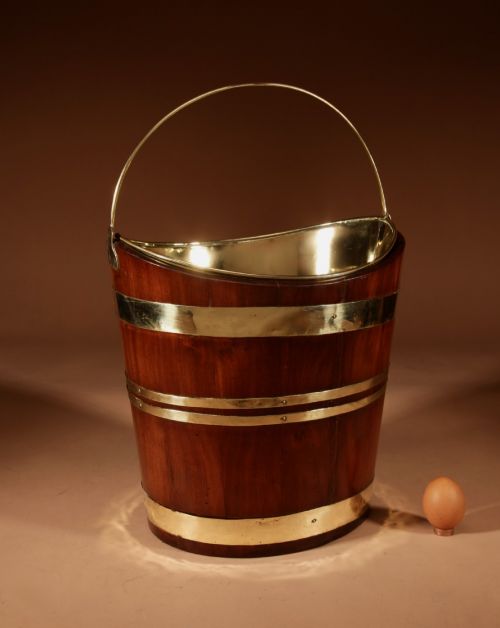

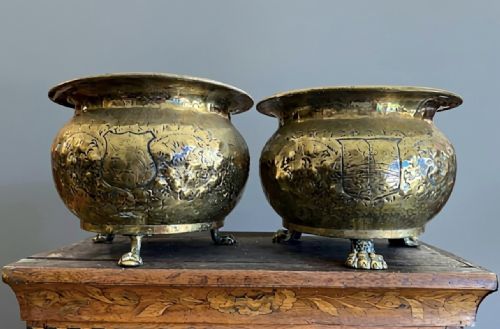


Dutch Brass Jardiniere
These pieces of dutch brass jardiniere offer functional plant display with traditional metalwork, bringing period character to any interior scheme.
Dutch Brass Jardiniere
A dutch brass jardiniere serves as a decorative planter or plant stand, often taking the form of a bucket, boat shape, or oval vessel. Buyers seeking this phrase encounter examples ranging from the eighteenth century through the nineteenth century and into the early twentieth century.
The objects frequently double as wine coolers, cellarettes, or peat buckets, reflecting multipurpose domestic items from the past. The selection on this page leans heavily toward nineteenth-century brass constructions, alongside coopered wood versions fitted with brass bands and metal liners.
Stylistic influences span Dutch traditional, neoclassical, empire, colonial, and art nouveau designs, occasionally featuring marquetry in satinwood, rosewood, or mahogany. Certain pieces arrive complete with original stands or take miniature forms, while others form matched pairs.
How they were made
Construction relies on sheet brass shaped into vessels, paired with coopered wood bodies utilising staves of mahogany, teak, walnut, or ebonised wood. Metal liners contain moisture for plants, while brass bands, mounts, and handles provide structural reinforcement and decorative contrast.
Surface ornamentation incorporates marquetry inlay in woods like satinwood and rosewood, alongside traditional hammered or polished brass finishes. Joinery techniques reflect period cabinetmaking, particularly in coopered stave construction and turned wooden elements.
Dutch Brass Jardiniere Retail Price Guide 2026
Typical asking prices for dutch brass jardiniere among the pieces listed under this phrase on Sellingantiques today, from the lower quarter to the upper quarter. They describe what is for sale here now, not the wider market.
Some nineteenth-century plant tubs spent their youth warming peat by the hearth before retiring to botanical duties.
What varies in quality
Quality reveals itself in the crispness of the brass work, the weight of the metal, and the precision of the coopered joints in wooden bodies. Superior examples display refined proportions, intact original liners, and sophisticated marquetry detail rather than plain surfaces.
The presence of original stands, matched pairs, or uncommon forms such as boat shapes and miniature sizes elevates the standing of an individual piece. Materials chosen for the secondary woods, including figured mahogany or rosewood, also distinguish finer specimens from standard utility vessels.
The Dutch Brass Jardiniere Glossary
- Jardiniere
- An ornamental pot or stand for holding plants or flowers. These vessels often double as wine coolers or decorative buckets.
- Coopered
- Constructed from curved wooden staves bound together with metal hoops. This technique is typical of buckets, tubs, and certain planters.
- Schuitje
- A boat-shaped vessel form used for decorative planters or peat buckets. The curved profile resembles a small watercraft.
- Marquetry
- Decorative veneer work arranged in pictorial or geometric patterns using various coloured woods. Satinwood and rosewood frequently appear in this technique.
- Metal Liner
- A protective internal vessel inserted into wooden or brass planters to hold soil and water. This addition preserves the structural wood or metal exterior from moisture damage.
Dutch Brass Jardiniere: Frequently Asked Questions
What were dutch brass jardinieres originally used for?
These vessels served primarily as decorative holders for indoor plants or cut flowers within period domestic interiors.
Many examples also functioned as wine coolers, cellarettes, or peat buckets for stoves, demonstrating practical versatility in the historic home.
How do I distinguish eighteenth-century from nineteenth-century pieces?
Earlier examples from the eighteenth century typically display simpler, robust brass construction with hand-beaten characteristics and patination accumulated over generations.
Nineteenth-century pieces often incorporate broader stylistic revivals such as neoclassical, empire, or art nouveau, alongside machine-rolled brass sheets and varied timber combinations.
Can these planters still hold live plants today?
Most pieces retain or require a metal liner to protect the historic brass or wood structure from dampness and soil.
Using a suitable internal pot inside the liner allows for safe watering without risking damage to the antique container itself.
What is a coopered jardiniere?
A coopered jardiniere is built from vertical wooden staves fitted tightly together and bound with exterior metal bands, much like a traditional barrel.
This method provided exceptional strength for holding wet soil or heavy contents in domestic settings.