



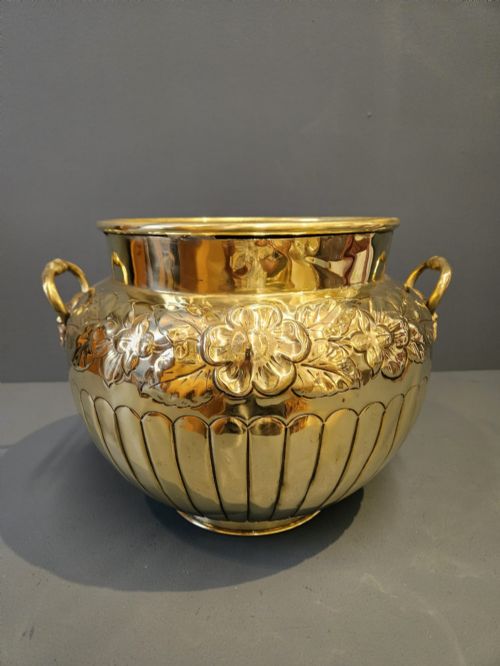
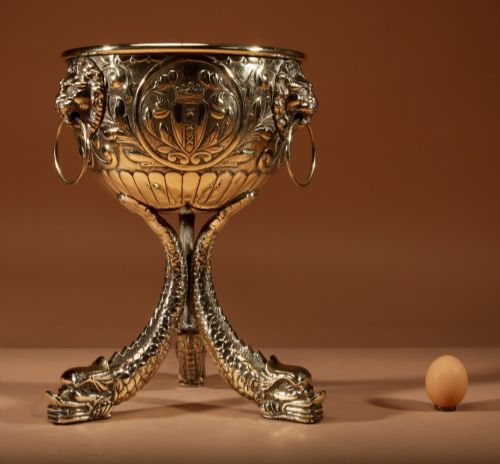


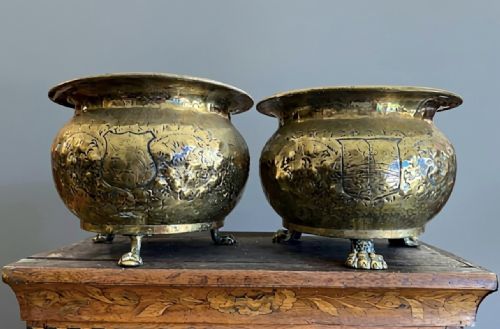


Repousse Brass Planter
These repousse brass planter pieces bring metallic warmth and textured relief to plant displays, offering robust vessels for interior green spaces.
Repousse Brass Planter
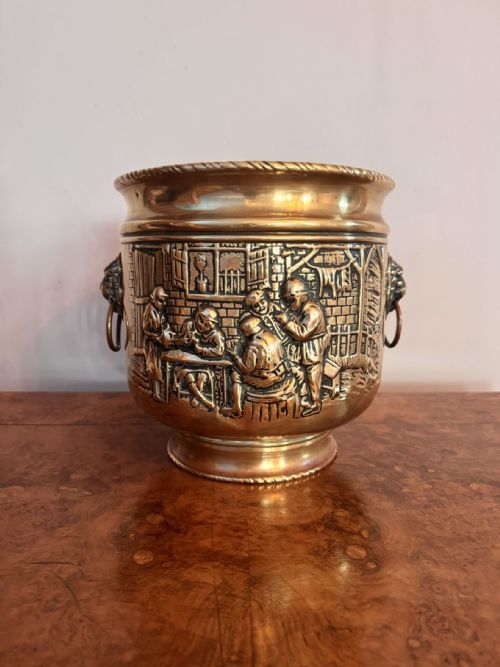
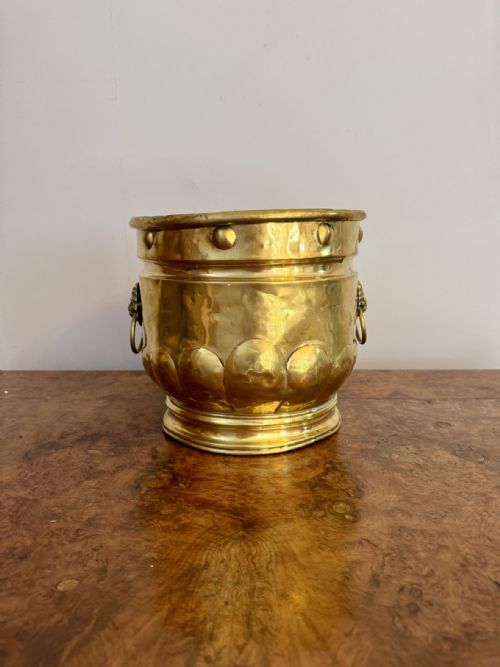
A repousse brass planter forms a decorative housing for potted vegetation, utilising hammered surface relief to catch the light. The items here span various historic eras, providing options for traditional and eclectic interiors.
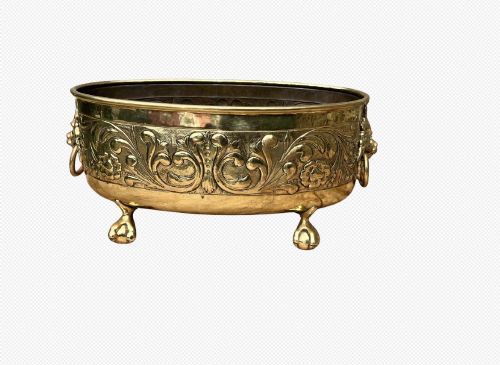
The objects present in forms such as jardinieres, troughs, and plant stands, frequently accompanied by metal liners like zinc. Origins and design influences range from the nineteenth century through to specific stylistic revivals.
Buyers encounter distinct period aesthetics, including Gothic Revival, French Empire, Art Nouveau, and Arts and Crafts pieces. These functional vessels combine structural utility with ornamental metalwork.
Construction and materials
Makers utilised brass sheeting as the primary medium, hammering designs from the reverse side to create raised surface patterns. This repousse technique required considerable skill to achieve even relief without weakening the metal.
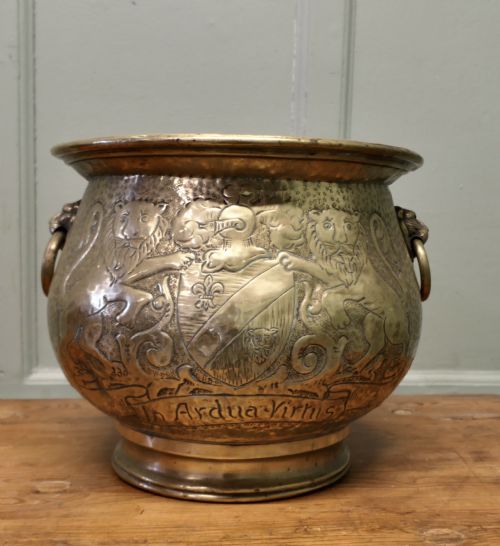
Internal components frequently incorporate zinc linings to protect the outer brass structure from moisture damage during plant maintenance. Certain iterations include integrated stands or applied decorative elements such as lion mask handles and heraldic shields.
Repousse Brass Planter Retail Price Guide 2026
Typical asking prices for repousse brass planter among the pieces listed under this phrase on Sellingantiques today, from the lower quarter to the upper quarter. They describe what is for sale here now, not the wider market.
Some planters wear their gardening history proudly, carrying the quiet ghosts of nineteenth-century ferns deep within their zinc linings.
Evaluating the standard
Quality rests upon the depth and crispness of the hammered relief work, distinguishing hand-finished items from simpler pressings. The weight of the metal and the integrity of the joins dictate structural longevity.
The presence of original fittings, stands, and protective internal linings elevates a piece's historical completeness. Surface patination reflects the age and history of the metal, contributing to its visual character.
The Repousse Brass Planter Glossary
- Repousse
- A metalworking technique where the artisan hammers the design from the reverse side to create a raised image on the front. This method gives decorative metalwork its distinctive three-dimensional texture.
- Jardiniere
- An ornamental pot or stand designed to hold plants or flowers indoors. These vessels often feature decorative handles or footed bases.
- Arts and Crafts
- A design movement prioritising traditional craftsmanship and simple forms over mass production. Pieces from this style emphasise honest materials and visible construction.
- Gothic Revival
- An architectural and decorative style drawing inspiration from medieval forms, pointed arches, and heraldic motifs. This aesthetic appears in ecclesiastical and secular metalwork.
- Patina
- The natural surface alteration and coloration developed by brass over decades of exposure to air and handling. Collectors value an undisturbed patination for its authenticity.
Repousse Brass Planter: Frequently Asked Questions
How do I care for a brass planter?
Maintain the metal by dusting gently with a soft cloth and avoiding harsh chemical cleaners that strip the historic surface. Use a waterproof inner pot to prevent standing water from accumulating against the metal or lining.
Allow the natural patination to develop over time without aggressive polishing. Protecting the base from scratching helps preserve the integrity of the historic vessel.
Were these planters meant for indoor use?
These decorative vessels served primarily as indoor jardinieres to display potted plants within principal rooms. Their ornamental metalwork suited domestic reception spaces and conservatories.
Historical interiors utilised them to bring botanical elements indoors while concealing standard terracotta pots. The inclusion of zinc linings helped manage watering within domestic settings.
How do I identify a Victorian brass planter?
Victorian examples frequently incorporate revival styles such as Gothic motifs, Dutch influences, or classical details. Examine the construction methods, handle attachments, and overall weight of the brass sheeting.
Stylistic markers and manufacturing techniques align with nineteenth-century workshops. Comparing decorative elements with documented period forms assists in accurate dating.
What is the purpose of the zinc liner?
Zinc liners provided a waterproof barrier to protect the outer decorative brass structure from soil moisture and water damage. Many surviving troughs and jardinieres retain these functional internal components.
Maintenance of live plants required frequent watering, making a protective metal insert essential. The presence of a matching liner adds to the completeness of the piece.