




Antique Dutch Bucket
An antique dutch bucket brings centuries of hearthside craftsmanship and rich timber into your home, serving as a decorative and functional vessel.
Antique Dutch Bucket
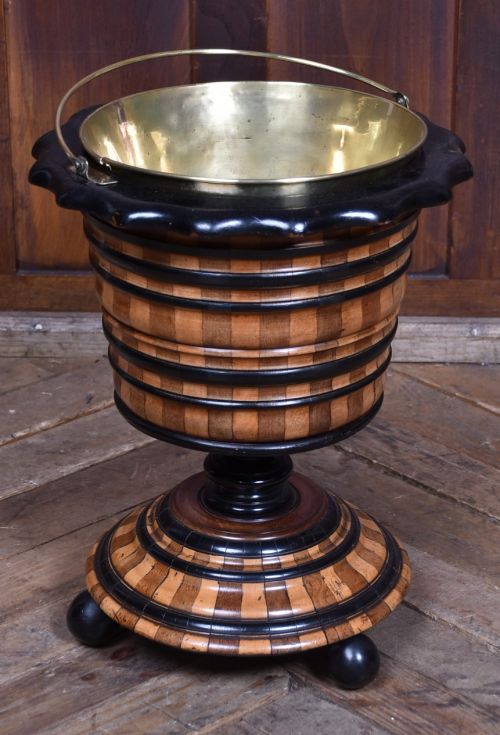
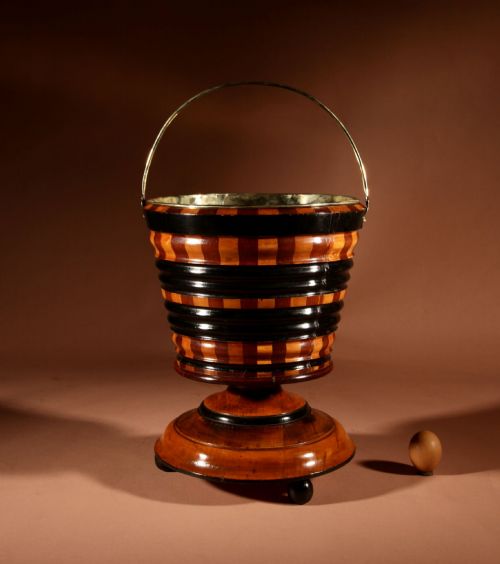
When you search for an antique dutch bucket, you encounter a diverse range of coopered vessels spanning several centuries. These pieces function variously as peat buckets, log baskets, jardiniere planters, wine coolers, and tea stoves.
The selection on this page relies heavily on nineteenth-century pieces alongside eighteenth-century examples. You will frequently find coopered wooden bodies bound in brass, as well as entirely metal constructions.
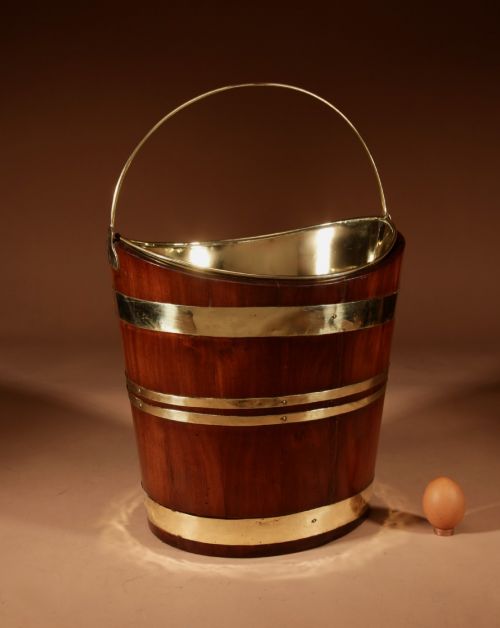
Forms range from boat-shaped schuitje vessels to cylindrical barrels and lidded waste bins. They draw upon styles including Georgian, Victorian, Arts and Crafts, and Dutch Empire.
How they were made
Maker's workshops employed traditional cooperage techniques to construct the wooden bodies from staves of mahogany, oak, walnut, fruitwood, teak, and ebonised wood. These staves were tightly fitted and secured with heavy brass bands, studs, and swing handles.
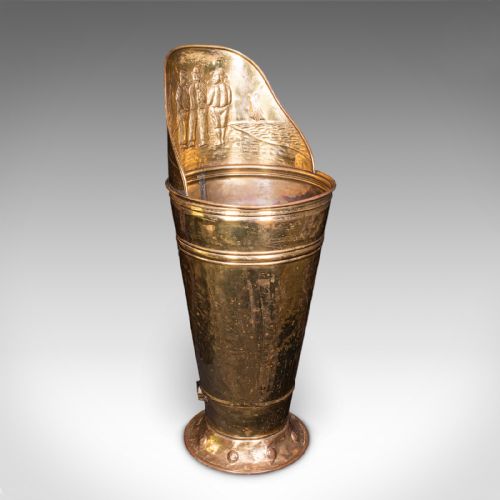
Metal versions make extensive use of beaten or seamed sheet brass and copper, sometimes decorated with repoussé tavern scenes or embossed detailing. Liners made of brass frequently accompanied wooden tea stoves and jardiniere buckets to hold heat or moisture safely.
Some sturdy nineteenth-century tea stoves doubled as quiet foot warmers for chilly winter evenings while keeping the kettle ready.
What varies in quality
Quality reveals itself in the crispness of the cooperage and the weight of the chosen metals. Superior examples feature well-figured timber staves bound by substantial hand-beaten brass rather than thin plated sheets.
The refinement of decorative elements, such as turned teak details, seamed construction, and original brass liners, distinguishes standard utility items from fine country house pieces.
The Antique Dutch Bucket Glossary
- Coopered
- Built from curved wooden staves joined edge to edge and bound with metal hoops, much like a barrel. This method gave vessels the structural strength required for holding heavy peat, coal, or water.
- Teestoof
- A traditional Dutch foot warmer or tea stove designed to hold hot embers inside a metal liner. These small lidded buckets often featured perforated lids or brass liners.
- Schuitje
- A boat-shaped vessel form utilised for peat buckets and jardiniere planters. The distinctive curved hull shape appeared frequently in nineteenth-century Dutch mahogany pieces.
- Jardiniere
- An ornamental pot or stand designed to hold growing plants or floral arrangements. In these listings, they share construction methods with coal and peat buckets.
- Repoussé
- A metalworking technique where the artist hammers the design from the reverse side to form raised patterns. This method appears on brass coal buckets depicting tavern scenes.
Antique Dutch Bucket: Frequently Asked Questions
What were antique dutch buckets used for?
These vessels served various utilitarian purposes around the historic hearth and home. They functioned as coal bins, ash buckets, peat stores, wine coolers, and foot warmers.
Over time, many of these durable containers transitioned into decorative items used as planters, umbrella stands, or log baskets.
How do I tell an 18th-century bucket from a Victorian one?
Dating relies heavily on observing the timber species, construction handwork, and prevailing styles. Eighteenth-century examples often display early seamed brass work and heavier hand-forging.
Victorian and later nineteenth-century pieces frequently embrace revival styles, utilising mahogany, walnut, and ebonised wood alongside machine-rolled brass bands.
Can I use an antique wooden bucket for plants?
Many wooden pieces feature internal brass liners originally intended for holding heat or water. These liners make contemporary use as planters practical.
If a liner is missing, placing a modern plastic pot inside protects the historic coopered timber from moisture damage.
What is the difference between a peat bucket and a coal bucket?
Peat buckets generally required lighter coopered wooden construction with close-fitting lids or tea stove liners to retain warmth. Coal and ash buckets leaned towards robust metal fabrication or heavy brass binding to withstand dense fuel.
Both types shared decorative domestic spaces, leading to considerable crossover in their modern naming.