
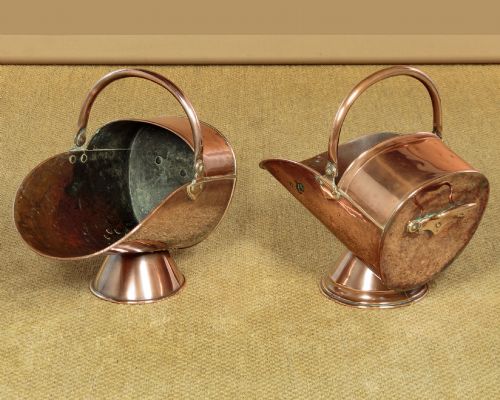
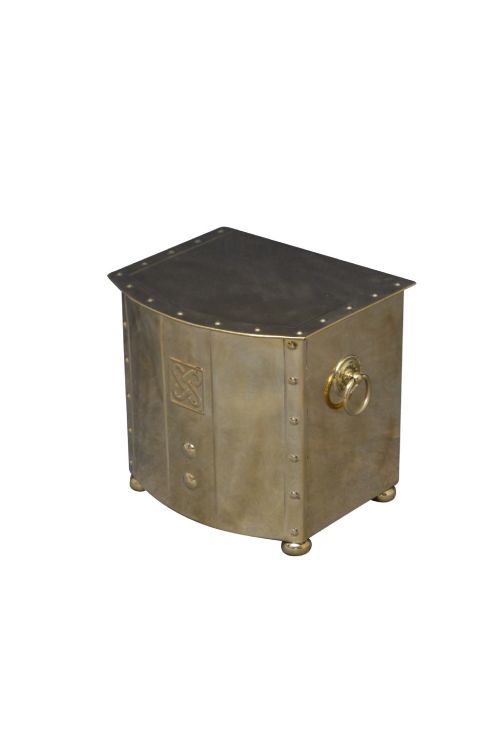


Brass Bucket with Handle
A brass bucket with handle brings solid metal warmth to a hearth or hallway, serving fireside or planting duties with utility and presence.
Brass Bucket with Handle
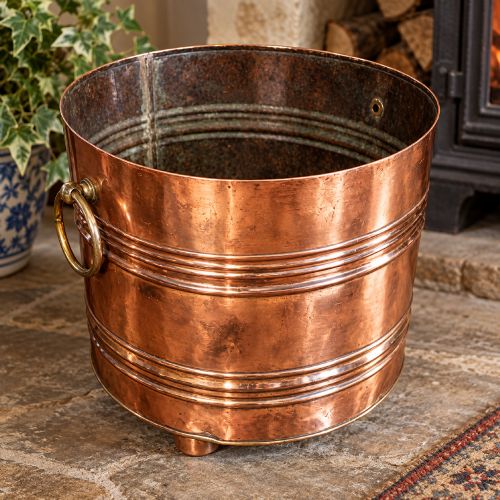
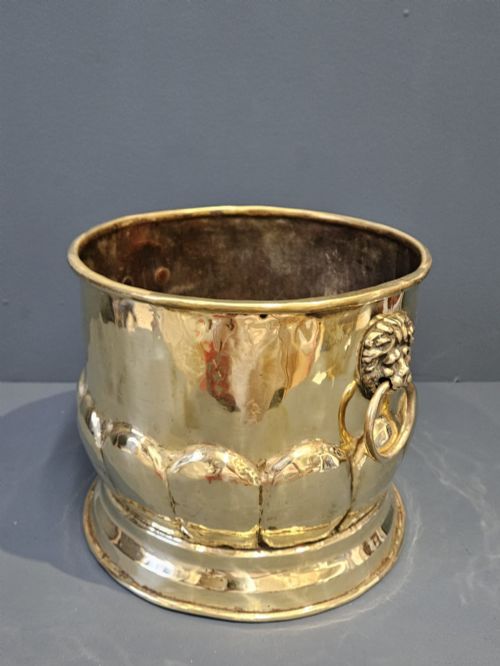
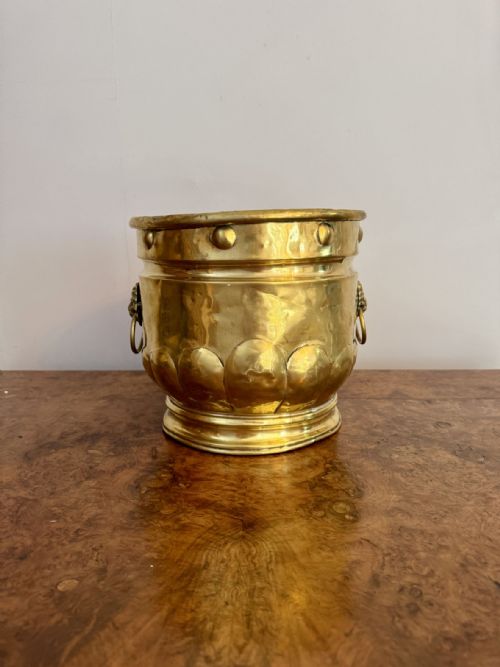
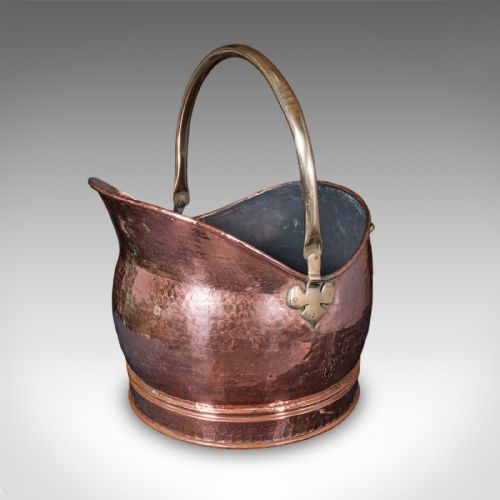
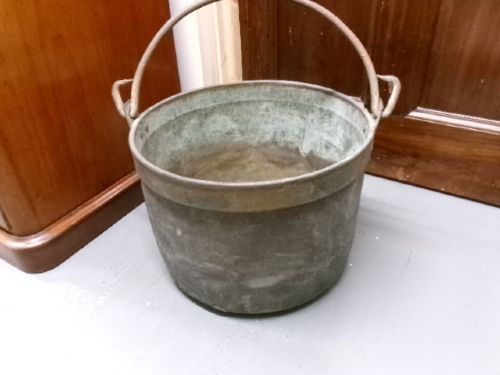
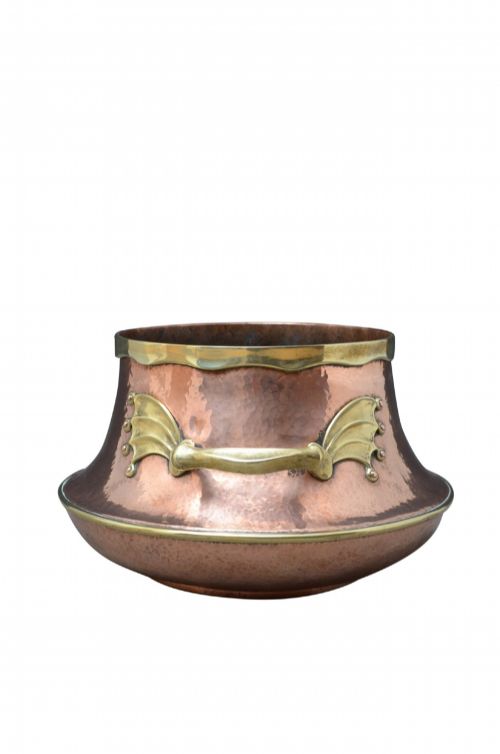
When you search for a brass bucket with handle, you meet sturdy vessels designed for fireside service, fuel storage, or plant display. The selection spans utilitarian coal scuttles and log bins alongside decorative planters and jardiniere vessels.
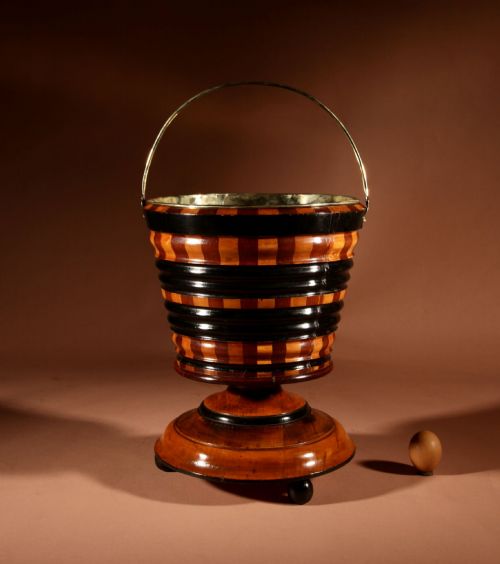
Victorian examples dominate the offerings, appearing alongside Georgian pieces and later 20th-century items from the 1920s and 1930s. Forms vary from simple metal buckets to coopered timber vessels bound in brass and fitted with drop handles.
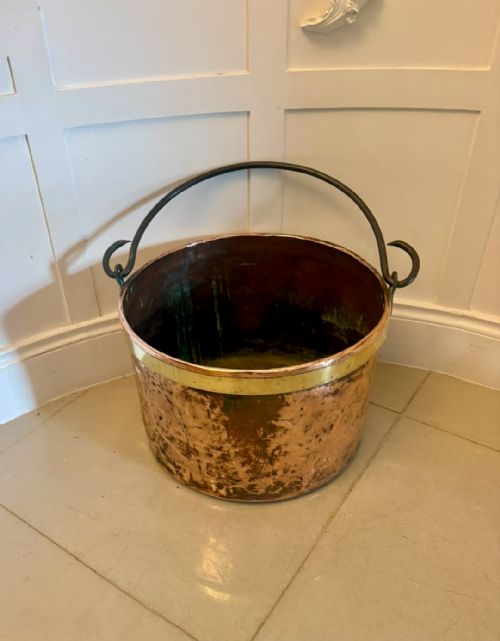
Many serve multiple domestic purposes, transitioning easily from holding coal by the hearth to housing large interior plants. Copper, mahogany, and oak frequently combine with brass to create these functional household containers.
How they were made
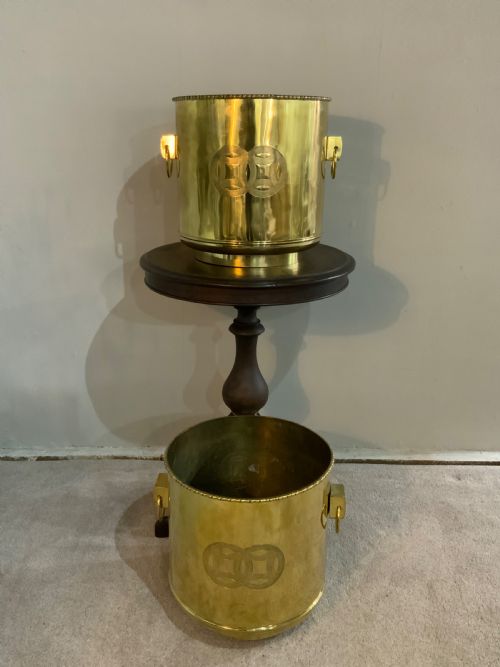
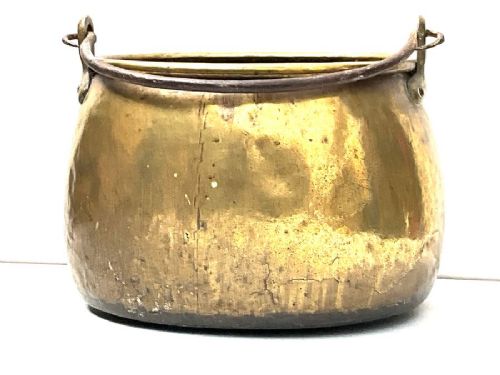
Makers utilised sheet brass and copper, often joining the metal plates with visible rivets or smooth seams to form durable cylindrical and helmet shapes. Heavy cast brass mounts, lion-mask rings, and swing handles were securely attached to bear the weight of fuel or water.
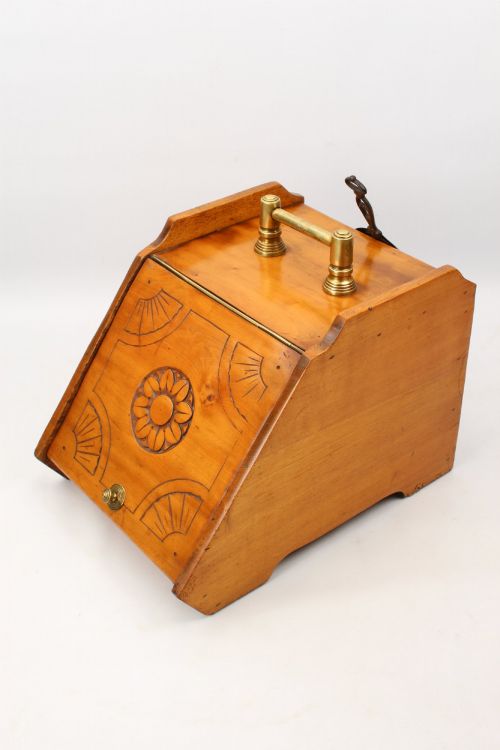
Coopered versions required skilled woodworking, binding staves of oak or mahogany with tight brass bands to create watertight or structurally sound buckets. Carved wooden fronts, gilt bronze mounts, and cut glass also appear on specific decorative forms from the Victorian and Georgian periods.
Listings feature items spanning the Georgian, Victorian, and early 20th-century periods, constructed from brass, copper, oak, mahogany, and cut glass.
What varies in quality
The gauge of the metal and the robustness of the handle attachments set the standard for daily utility. Thicker brass or copper sheets resist denting, while securely mounted drop handles ensure the vessel remains stable when loaded with logs or coal.
Refinement in surface finish and decorative detail distinguishes standard utilitarian containers from finer display pieces. Crisp casting on lion-mask mounts, neat coopered timber construction, and well-executed chasing elevate the visual weight of the object.
The Brass Bucket with Handle Glossary
- Jardiniere
- An ornamental pot or stand for holding plants or flowers. These items often feature heavy brass or copper construction designed for interior display.
- Purdonium
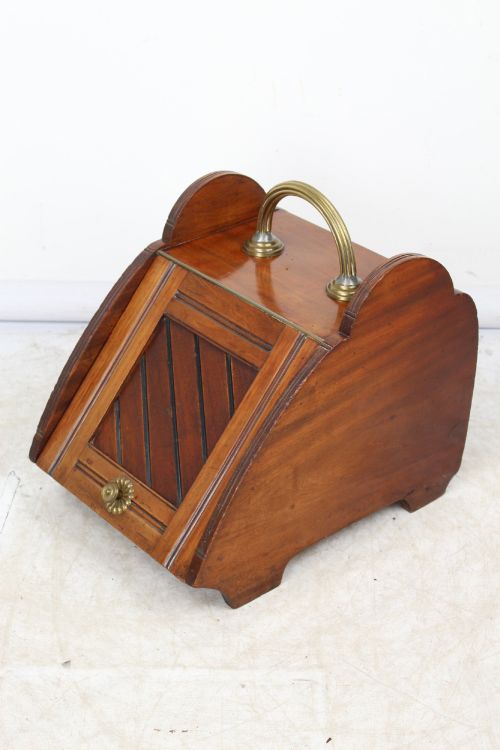
- A specialised coal box or scuttle, typically Victorian in origin, featuring a sloping front and a fitted interior liner. They often incorporate a dedicated compartment for a small shovel.
- Coopered
- Built using wooden staves assembled side by side and bound by metal hoops, much like a traditional barrel. This technique was frequently utilised for oak and mahogany log or peat buckets.
- Trench art
- Decorative or utilitarian objects fashioned by soldiers and civilians from war debris, such as shell cases. Pieces from the early 20th century occasionally incorporate marked brass and armorial crests.
- Armorial crest
- A heraldic design displayed on metalware or woodwork to denote family lineage or institutional affiliation. Such crests appear on specific fire buckets and vessels.
Brass Bucket with Handle: Frequently Asked Questions
What were brass buckets used for?
These vessels primarily served heavy domestic duties around the hearth, carrying coal, logs, or peat to keep domestic fires burning.
They also functioned as decorative jardiniere planters, champagne coolers, and general storage containers within period homes.
How do I clean a brass bucket?
Maintenance depends on the desired finish, as many owners prefer to preserve the aged patina built up over decades of domestic use.
Gentle washing with warm soapy water removes accumulated dust and dirt without stripping the historic character of the metal.
Are these buckets watertight?
Solid metal vessels and coopered timber buckets lined with metal are generally capable of holding water for plant displays or cooling bottles.
Older joints or timber staves can dry out over time, so checking the interior condition is sensible before filling them with liquid.
How do I date a brass bucket?
Dating relies on observing construction methods, material combinations, and stylistic details that align with periods like the Georgian era or Victorian times.
Hand-riveted seams, specific wood choices like mahogany, and cast brass handle mounts provide strong clues to the decade of manufacture.