
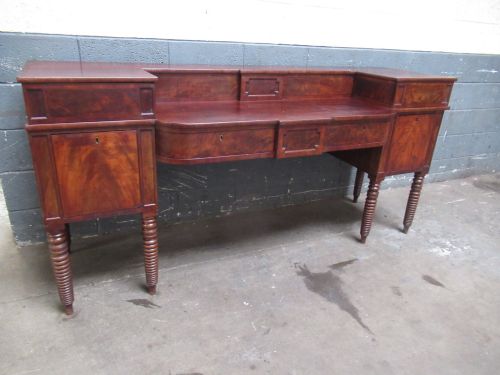
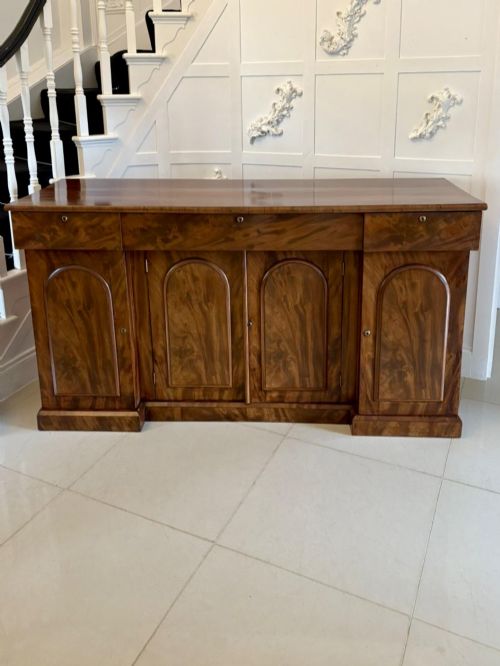
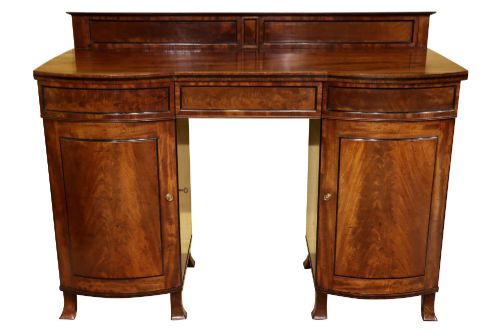
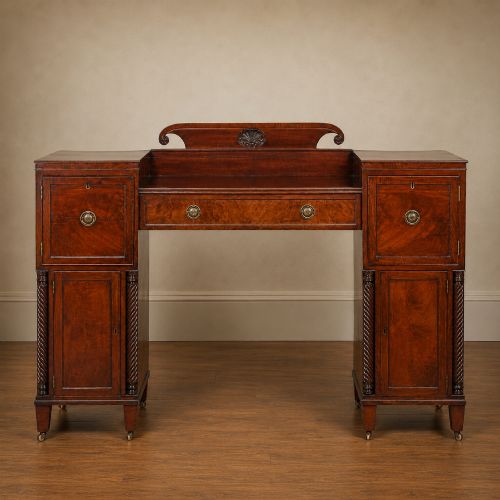

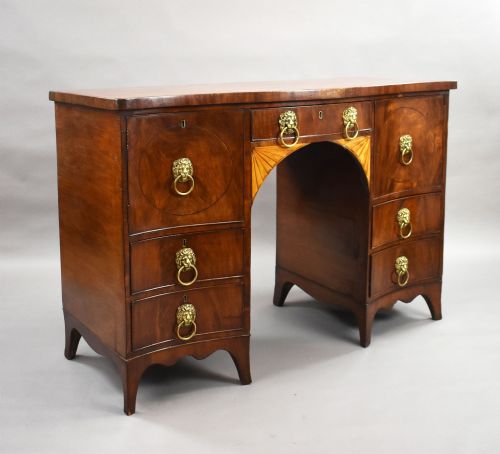
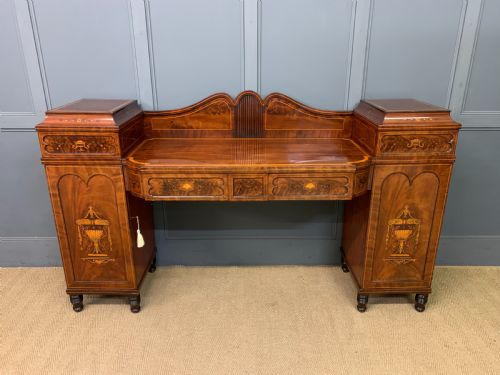

Mahogany Pedestal Server
Mahogany pedestal server designs are robust dining room pieces built to organise service, holding heavy silver and linen while anchoring a formal interior.
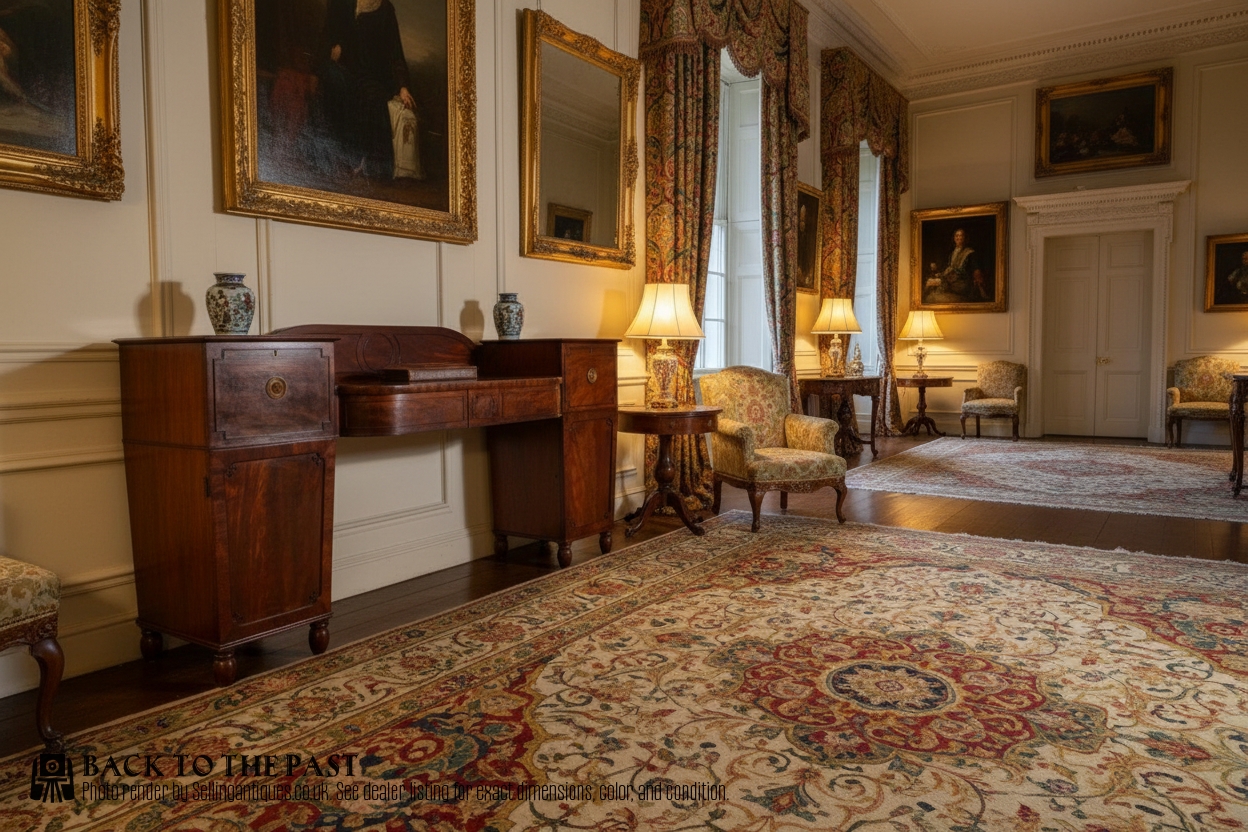
Mahogany Pedestal Server
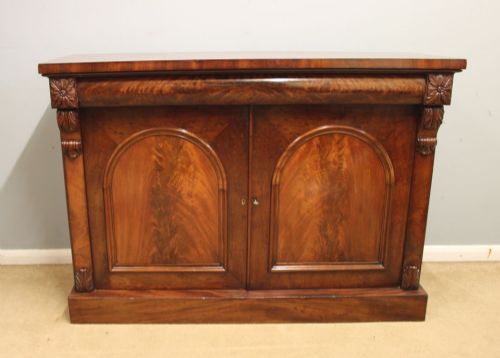
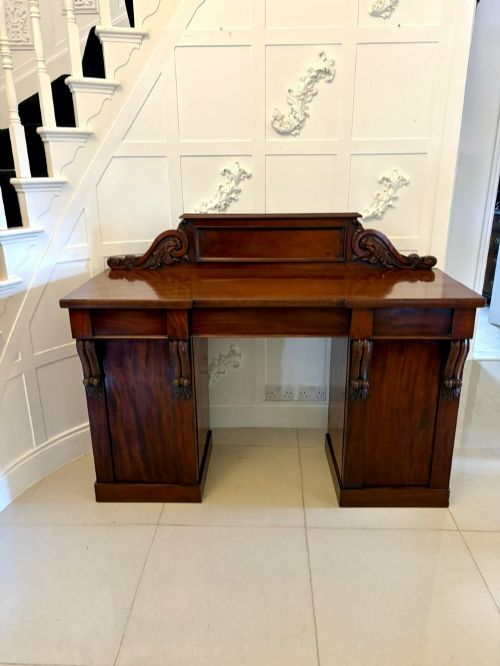
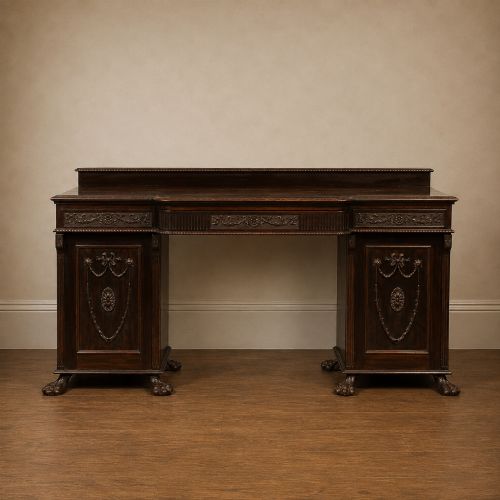
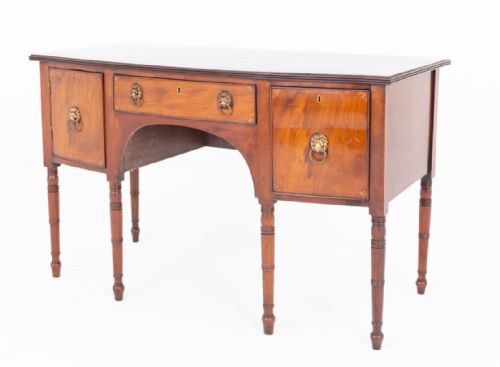
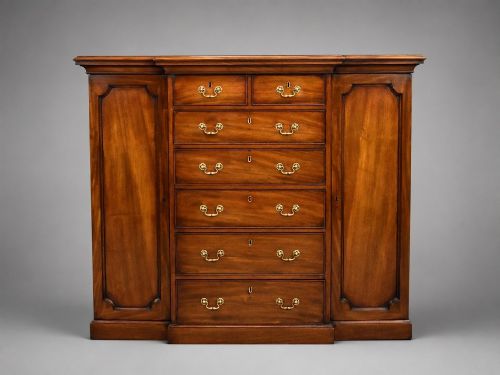
A mahogany pedestal server is a substantial dining room furnishing designed for storage and display, appearing primarily in Georgian, Regency and Victorian variations across these listings. The form typically combines a central sideboard or board with flanking pedestals, serving as a focal point in period dining spaces.
Buyers will encounter pedestal servers alongside related sideboards, chiffoniers and dumb waiters, spanning eras from the late eighteenth century through the nineteenth century. These pieces reflect shifting domestic needs, moving from grand Georgian dining rooms to more varied Victorian interiors.
How they were made
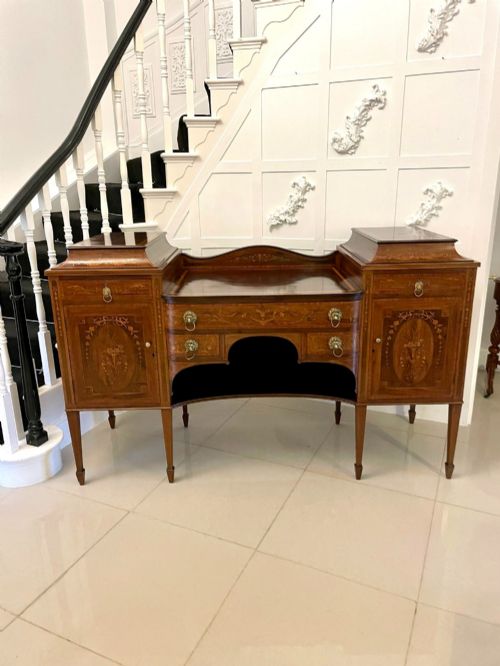
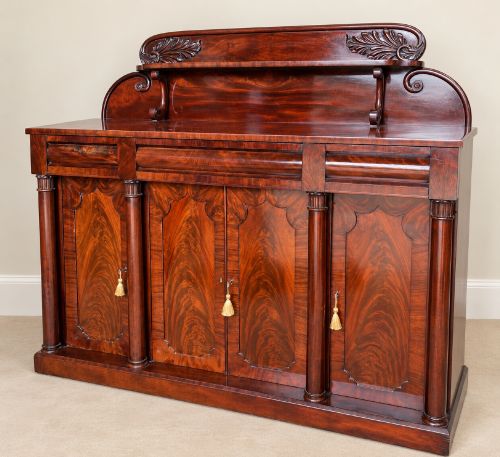
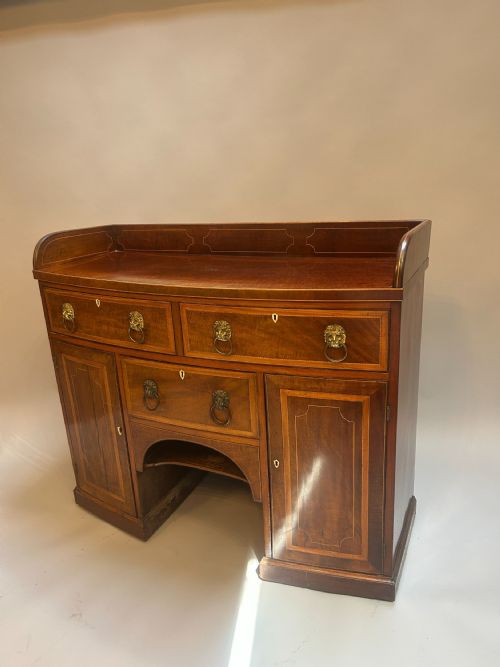
Craftsmen built these servers using solid mahogany and flame mahogany veneer applied to sturdy carcases, often highlighting the timber's natural grain. Details like boxwood and satinwood inlay added linear contrast to the dark wood.
Metalwork played a functional and decorative role, with brass hardware and galleries incorporated into specific pieces. Carved wooden elements, paw feet and mirror backs appear on later or more elaborate examples.
Some revolving dumb waiters let you pass the port without leaving your chair.
What varies in quality
The selection of timber dictates much of the visual impact, with figured and flame mahogany veneers showing deeper grain patterns than plain stock. Mastery of cabinetmaking appears in the crispness of inlaid boxwood and satinwood details rather than mere decoration.
Proportion and architectural presence separate standard items from superior examples. Pieces that maintain balanced scale across pedestals and central sections demonstrate greater design ambition.
Hewetsons London·Gillows
The Mahogany Pedestal Server Glossary
- Pedestal sideboard
- A large dining room furnishing featuring a central section flanked by two structural pedestals, often housing cupboards or drawers.
- Flame mahogany veneer
- A sliced timber finish revealing a distinct fire-like pattern in the grain, prized for decorative cabinet fronts.
- Dumb waiter
- A tiered revolving stand or set of shelves used for holding dishes near a dining table without servant attendance.
- Inlay
- A technique where contrasting woods like boxwood or satinwood are set flush into the primary mahogany surface to form patterns.
- Brass gallery
- A decorative metal rail mounted along the upper rear edge of a sideboard to prevent serving dishes from sliding off.
Mahogany Pedestal Server: Frequently Asked Questions
What is a pedestal server?
A pedestal server is a heavy dining room cabinet featuring distinct side columns or pedestals flanking a central board, designed for holding serving dishes.
These pieces emerged in formal dining spaces to assist with heavy service before the widespread use of fitted sideboards.
How do I date a mahogany server?
Dating relies on stylistic shifts, moving from clean Georgian proportions and satinwood inlay to heavier carved Victorian forms and later revivals.
Materials also help, as early pieces use solid timbers while later Victorian examples often employ rich flame mahogany veneers.
Where were servers placed?
Servers stood against dining room walls to hold heavy silver, linen and dishes during large meals.
They functioned as auxiliary stations for the butler or dining staff to manage the flow of courses.
Are pedestal servers practical today?
These servers provide deep cupboards and drawers suited for modern storage of dining linen and tableware.
Their robust timber construction allows them to serve as functional sideboards in contemporary dining rooms.