
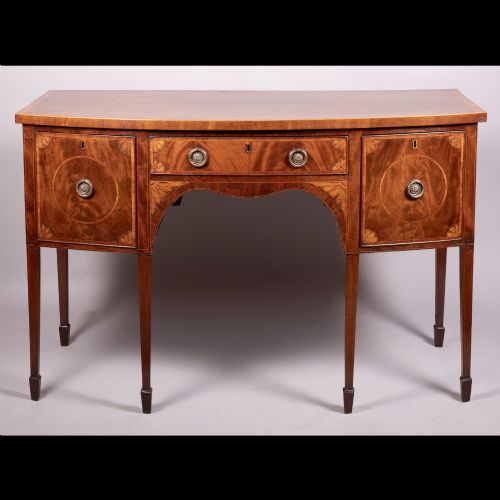


Rich Brown Server
A rich brown server is a substantial wooden dining room piece designed for holding dishes, and these practical boards bring warmth to any interior.
Rich Brown Server
A rich brown server encompasses a variety of dining room furniture including sideboards, serving tables, and chiffoniers. These items primarily date from the Georgian, Regency, and Victorian periods.
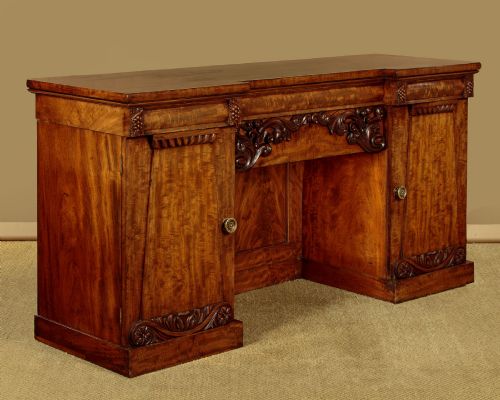
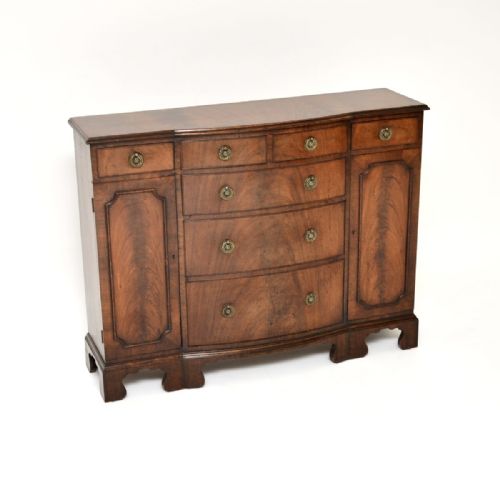
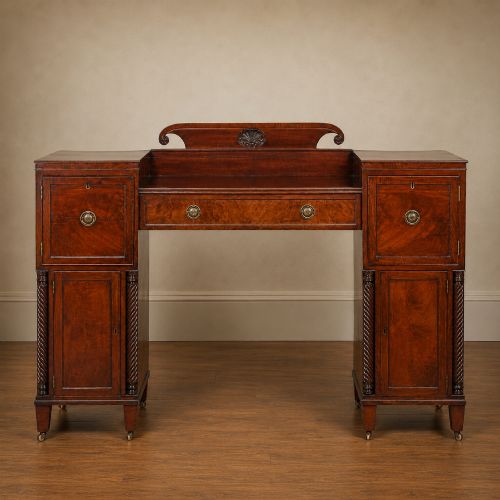
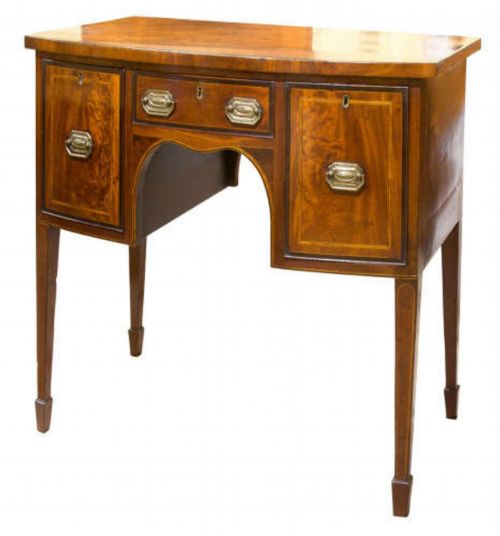
The most common version met on this page is the mahogany sideboard or serving table, often featuring pedestal bases, bow-fronts, or breakfront designs. Oak dresser bases and walnut variations also appear among the offerings.
How they were made
Cabinet makers utilised solid timber alongside flame mahogany veneer and burr walnut, creating rich brown surfaces with deep natural grain patterns. Boxwood and purpleheart banding often provided contrasting stringing details.
Brass fittings such as handles, drawer pulls, and gallery rails supplemented the structural woodwork. Joinery methods relied on traditional cabinet-making techniques suited to heavy hardwoods.
Listings feature mahogany, oak, and walnut across Georgian, Regency, and Victorian periods.
What varies in quality
The selection of timber grain significantly separates the standard pieces from the superior examples. Figured, flame, and plum pudding mahogany veneers demand greater skill in matching and application than plain timber.
Proportion and execution of carved details dictate overall refinement. Pieces possessing exceptionally small dimensions or sophisticated serpentine and breakfront shapes demonstrate higher levels of workshop capability.
Gillow·Holland and Sons
The Rich Brown Server Glossary
- Breakfront
- A piece of furniture with a central section that projects forward from the flanking outer sections. This architectural form creates depth and shadow on large sideboards.
- Bow-front
- A convex, curved front on a cabinet or sideboard. This shape softens the rectangular profile of dining room furniture.
- Chiffonier
- A compact sideboard or low cabinet typically fitted with shelves and doors below. They gained popularity during the Victorian era for smaller dining or reception rooms.
- Pedestal sideboard
- A design featuring two distinct pedestals or cupboards flanking a central recess or drawer. This imposing form became prominent during the Regency period.
- Veneer
- A thin layer of figured wood applied over a secondary timber base. This technique allows makers to display striking grain patterns economically.
Rich Brown Server: Frequently Asked Questions
Where were servers placed in a dining room?
These pieces traditionally stood against a dining room wall to hold platters, serving dishes, and silverware during meals.
Servants used the surface to prepare plates before carrying them to the main dining table.
How do I identify a Regency server?
Regency pieces often display classical architectural influences, including brass lion paw feet, reeded columns, and brass inlay.
Mahogany timbers from this era exhibit deep, dark red-brown tones with minimal ornamentation.
What is the difference between a sideboard and a serving table?
Serving tables are generally open-legged console tables utilised strictly for laying out food and drink during gatherings.
Sideboards incorporate enclosed cupboards, cellarette drawers for bottles, and shelving beneath the top surface.
How do I care for mahogany surfaces?
Maintain the timber by applying traditional beeswax periodically to nourish the grain and preserve the rich brown finish.
Avoid placing these items in direct sunlight or near heat sources to prevent the veneer from drying out.