
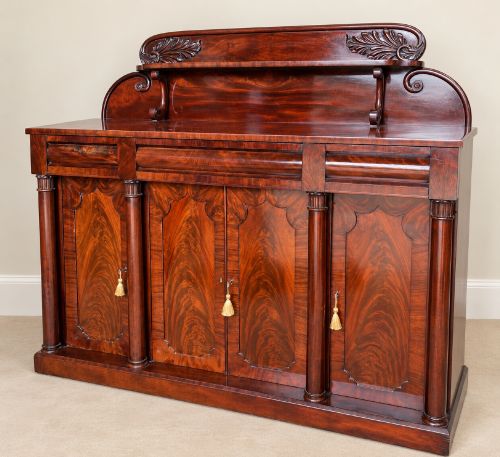
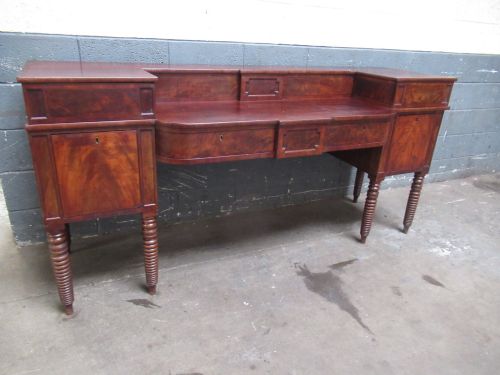
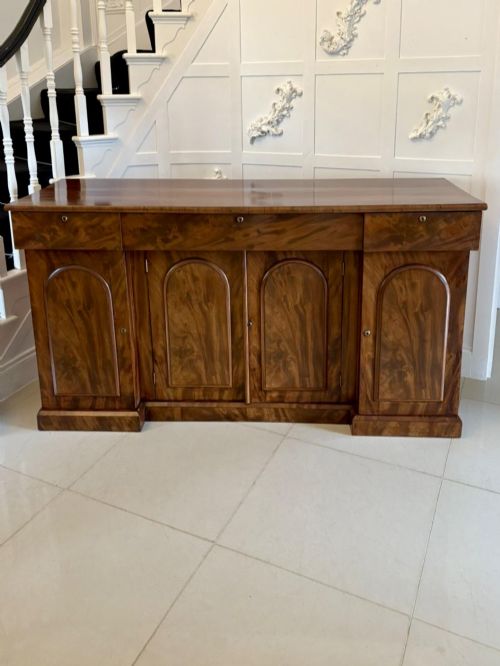
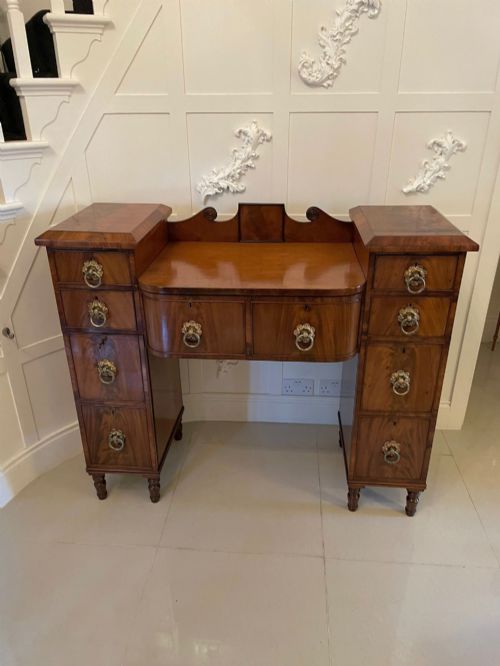
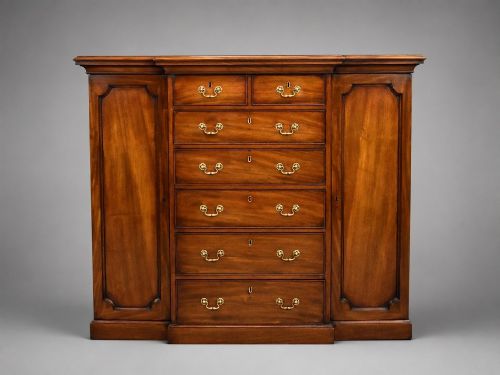

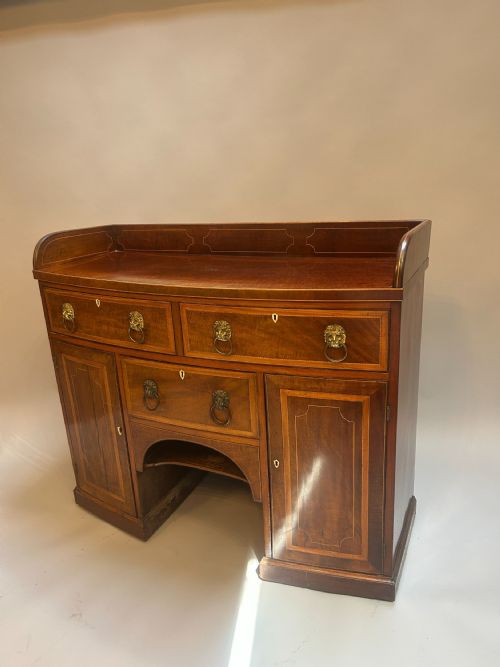
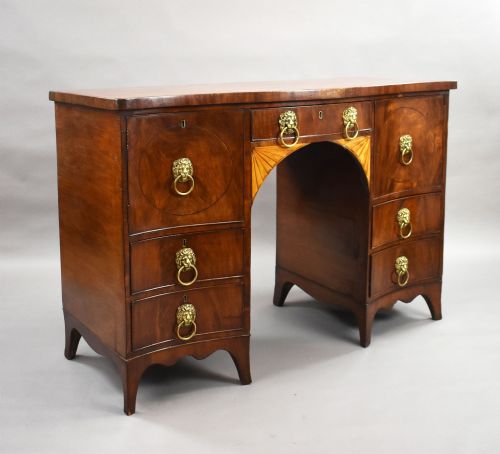
Mahogany Pedestal Credenza
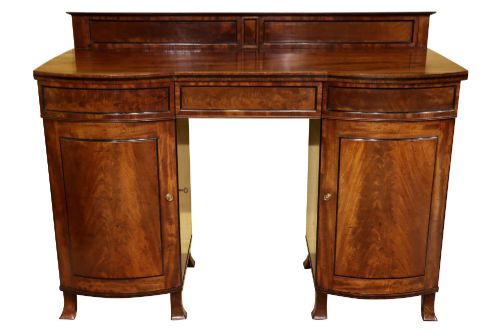
A mahogany pedestal credenza combines architectural pedestals with ample storage, offering a commanding formal presence for a dining room or hall.
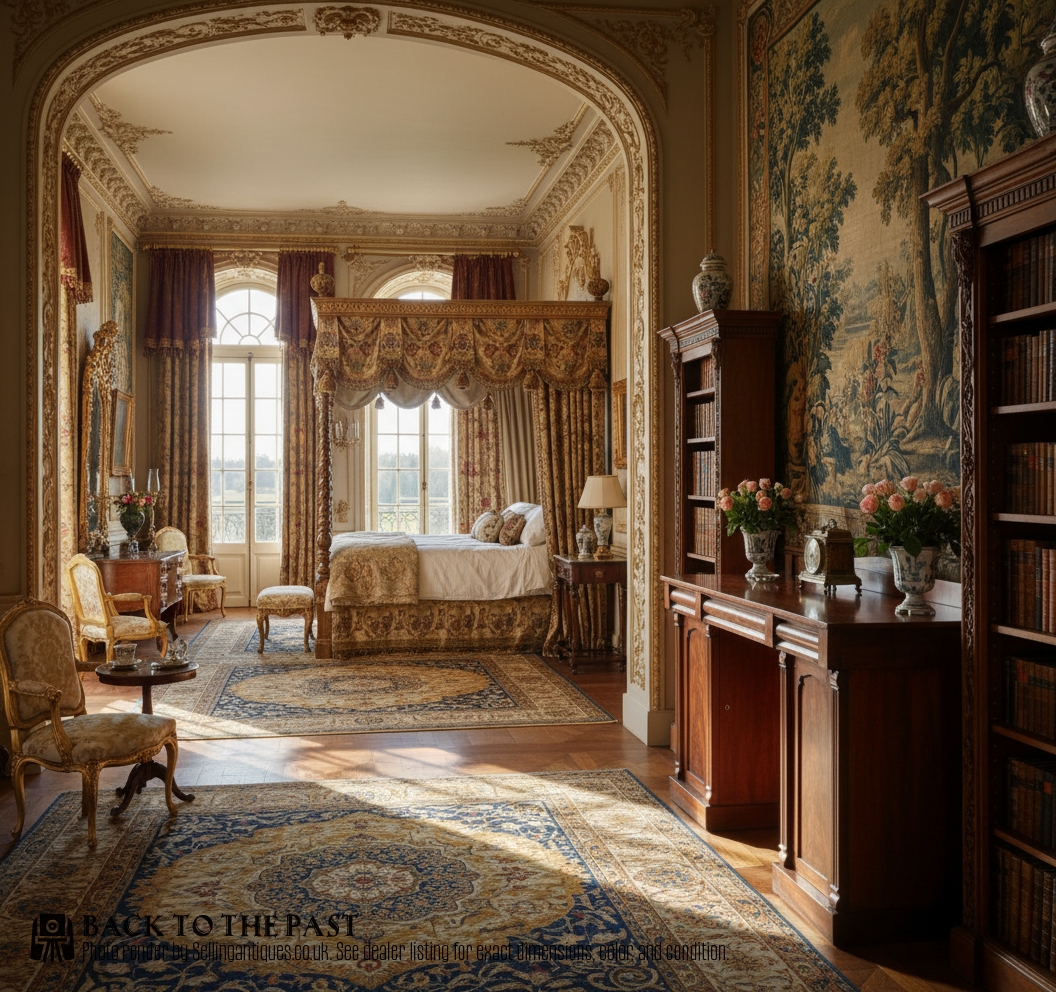
Mahogany Pedestal Credenza
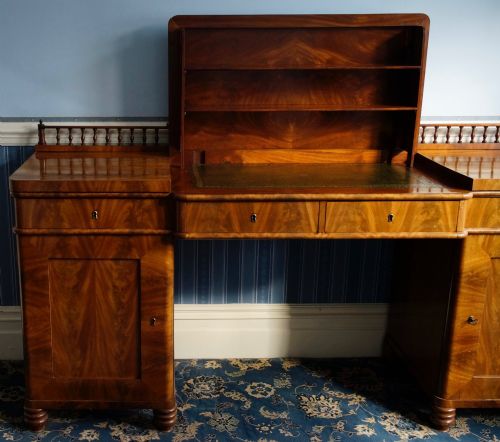
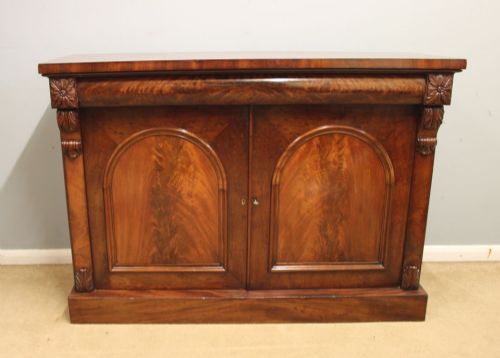
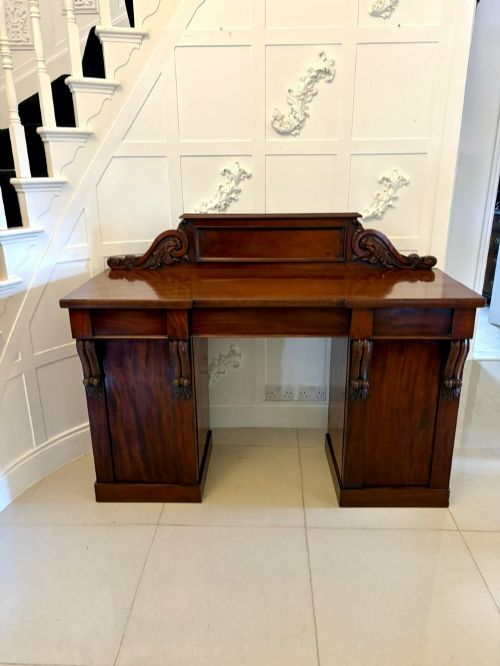
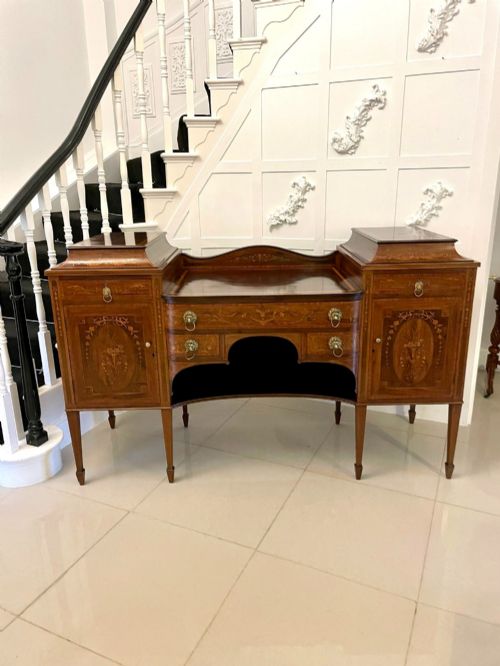
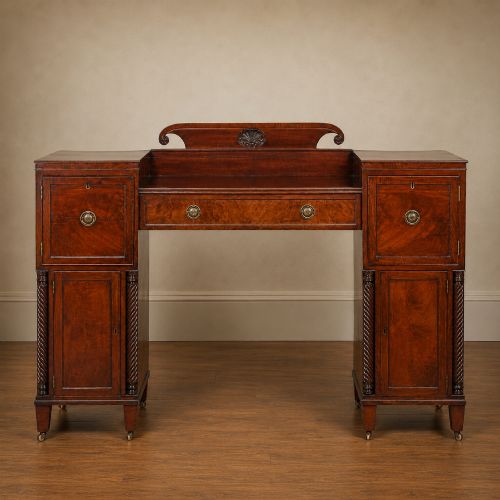
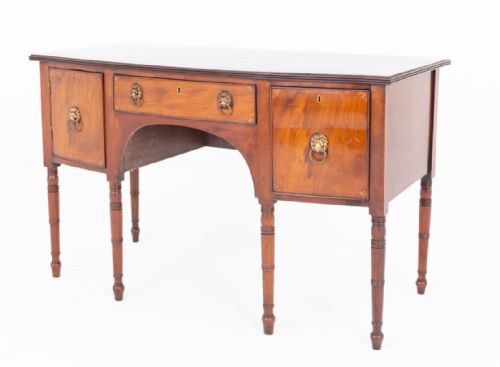
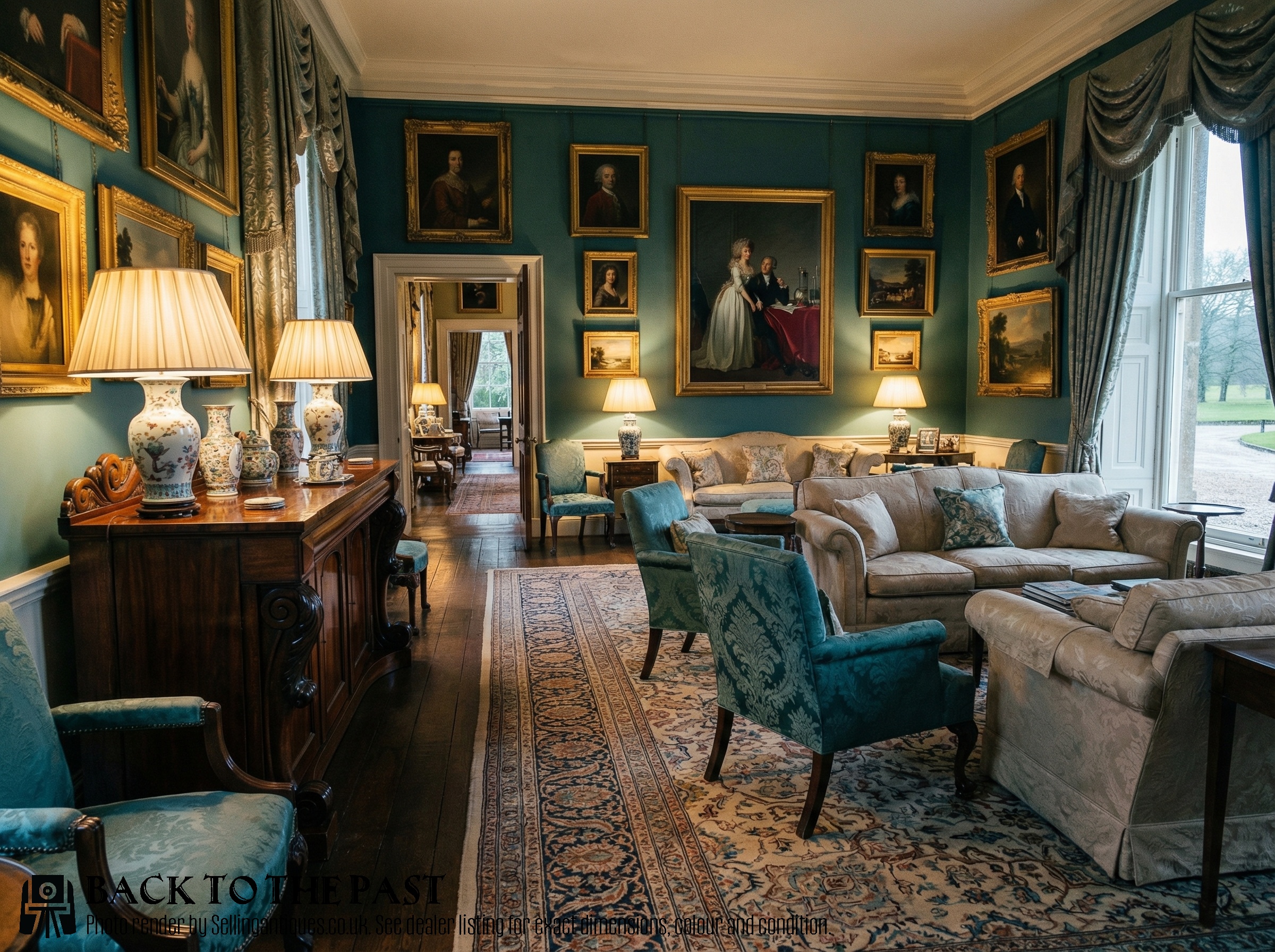
A mahogany pedestal credenza is a substantial storage piece built around flanking end pedestals connected by a central recess, frequently grouped among sideboards and servers in the listings. These items appear across Georgian, Regency, William IV, and Victorian periods, often taking the form of large breakfront configurations.
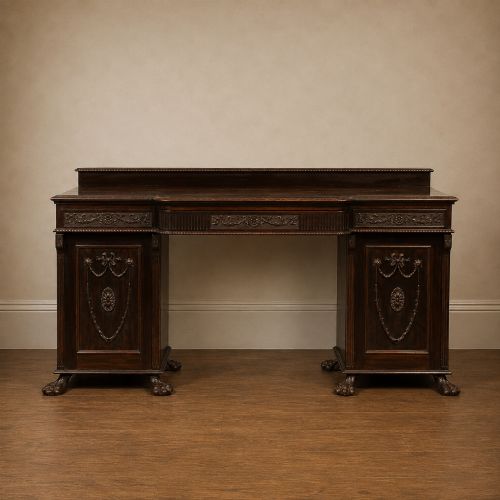
Makers and cabinetmakers built these forms to anchor large dining spaces, utilising rich timbers like flame mahogany veneer paired with satinwood and boxwood inlay. The selection on this page ranges from early nineteenth-century Scottish designs to ornate mid-Victorian carved iterations.
The phrase itself bridges several overlapping antique categories, including pedestals, sideboards, and chiffoniers, all sharing the same heavy timber construction. Buyers meeting these pieces today encounter formats that vary from bow-front carcases to straight breakfront proportions.
Materials and construction
Cabinetmakers relied on solid mahogany and flame mahogany veneer laid over secondary timbers, accentuating the grain patterns on the primary doors and drawer fronts. Inlaid examples incorporate contrasting lines of satinwood and boxwood to define geometric panels and borders.
Structural hardware relied on cast brass, seen in handles, feet, and occasional gallery rails mounted to the rear surface. Carved decorative elements such as paw feet, scrolling consoles, and mirror backs required skilled hand-chiselling directly into the dense mahogany substrate.
Materials recorded across the inventory include flame mahogany veneer, solid mahogany, satinwood, boxwood, and cast brass hardware.
Distinctions in craftsmanship
The hierarchy of quality rests primarily on the choice of timber figure, where highly figured flame mahogany veneer distinguishes superior workshop production from plain stock. Finer examples also exhibit crisper hand-carved mouldings and more intricate marquetry inlay rather than simpler veneered borders.
Construction integrity separates master workshops from provincial work, evident in the tightness of drawer dovetails and the seamless matching of timber grains across multiple doors. Credenzas bearing signed attributions or documented maker provenance consistently represent the upper tier of the market.
Hewetsons London·Gillows
The Mahogany Pedestal Credenza Glossary
- Credenza
- A sideboard or low cabinet for dining rooms, typically featuring enclosed cupboards or pedestals rather than open shelving.
- Pedestal
- An architectural supporting base or cupboard column, forming the substantial flanking ends of large formal sideboards.
- Flame mahogany veneer
- A highly figured slice of mahogany timber displaying a distinctive flickering or feather-like grain pattern, prized for decorative surfaces.
- Breakfront
- A furniture facade where the central section projects forward from the flanking pedestals or cupboards.
- Marquetry
- Decorative veneer work arranged in pictorial or geometric patterns using various coloured woods.
Mahogany Pedestal Credenza: Frequently Asked Questions
How do I date a mahogany pedestal credenza?
Dating relies on observing structural proportions, secondary timbers, and decorative vocabularies associated with specific design periods. Georgian and Regency pieces favour architectural restraint and brass galleries, whereas Victorian examples introduce heavier carved details and mirror backs.
Hardware fixings, dovetailing techniques, and veneer thicknesses also offer reliable clues to age. Comparing the specific carved motifs against documented period pattern books helps narrow the decade of manufacture.
Where should I place a pedestal credenza?
These large storage pieces suit principal dining rooms, wide hallways, or spacious living areas where their length and depth can be fully appreciated. Because they project significantly from the wall, measuring floor clearance is essential before installation.
Keep them away from direct sunlight and strong heat sources to protect the mahogany veneer from drying and splitting. Sufficient surrounding space allows the flanking pedestals and inlaid details to form a proper focal point.
What is the difference between a credenza and a sideboard?
While both terms describe long dining room storage furniture, credenzas traditionally emphasise enclosed cabinet space or heavy pedestals. Sideboards often incorporate a wider mix of shallow cutlery drawers and open serving surfaces alongside cupboards.
Over the nineteenth century, these distinctions blurred as cabinetmakers adopted various regional and stylistic titles for similar case furniture. The core function of storing dining silver and linen remained consistent across both forms.