
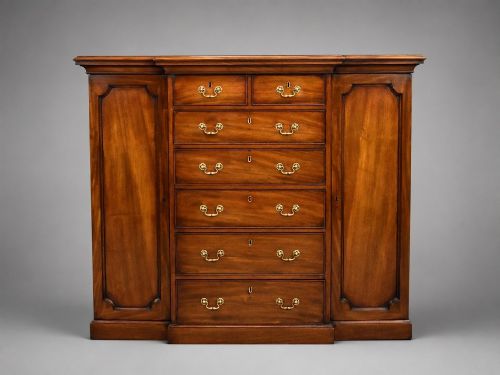

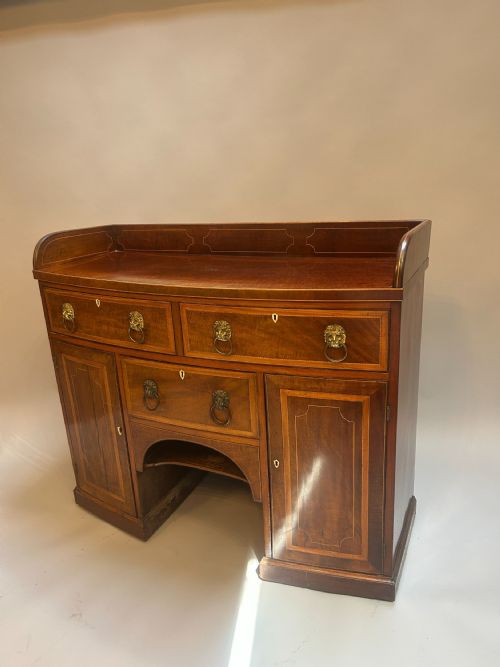
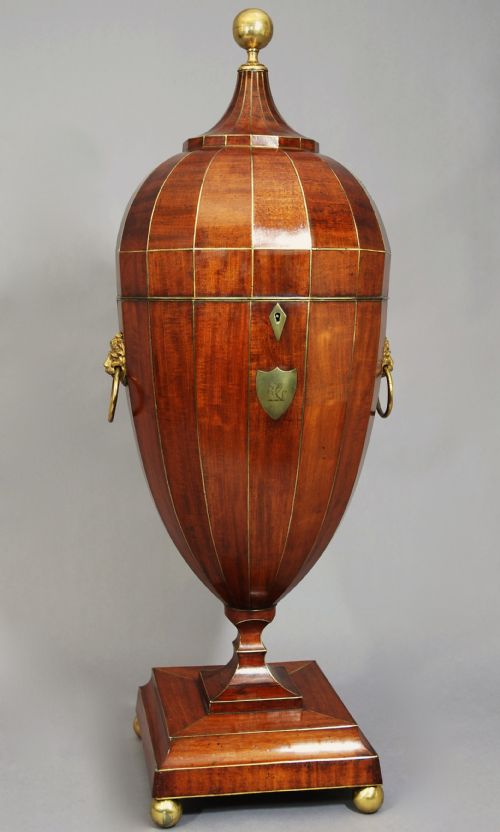
Pedestal Dining Sideboard
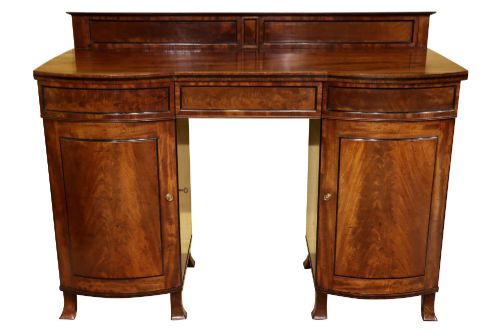
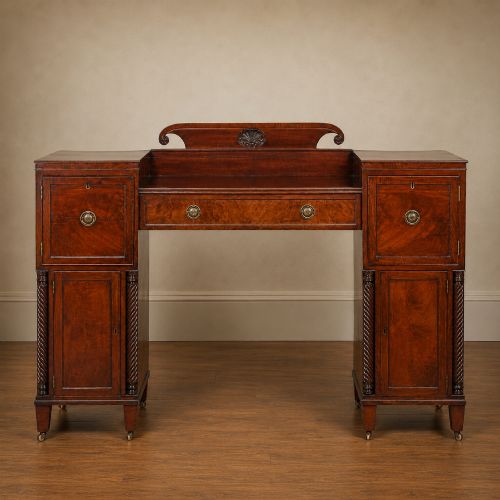
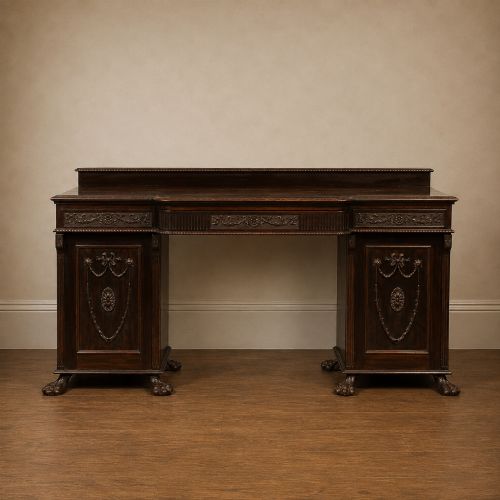
A pedestal dining sideboard is a substantial dining room server designed to hold silver and linen, offering a commanding focal point for formal interiors.
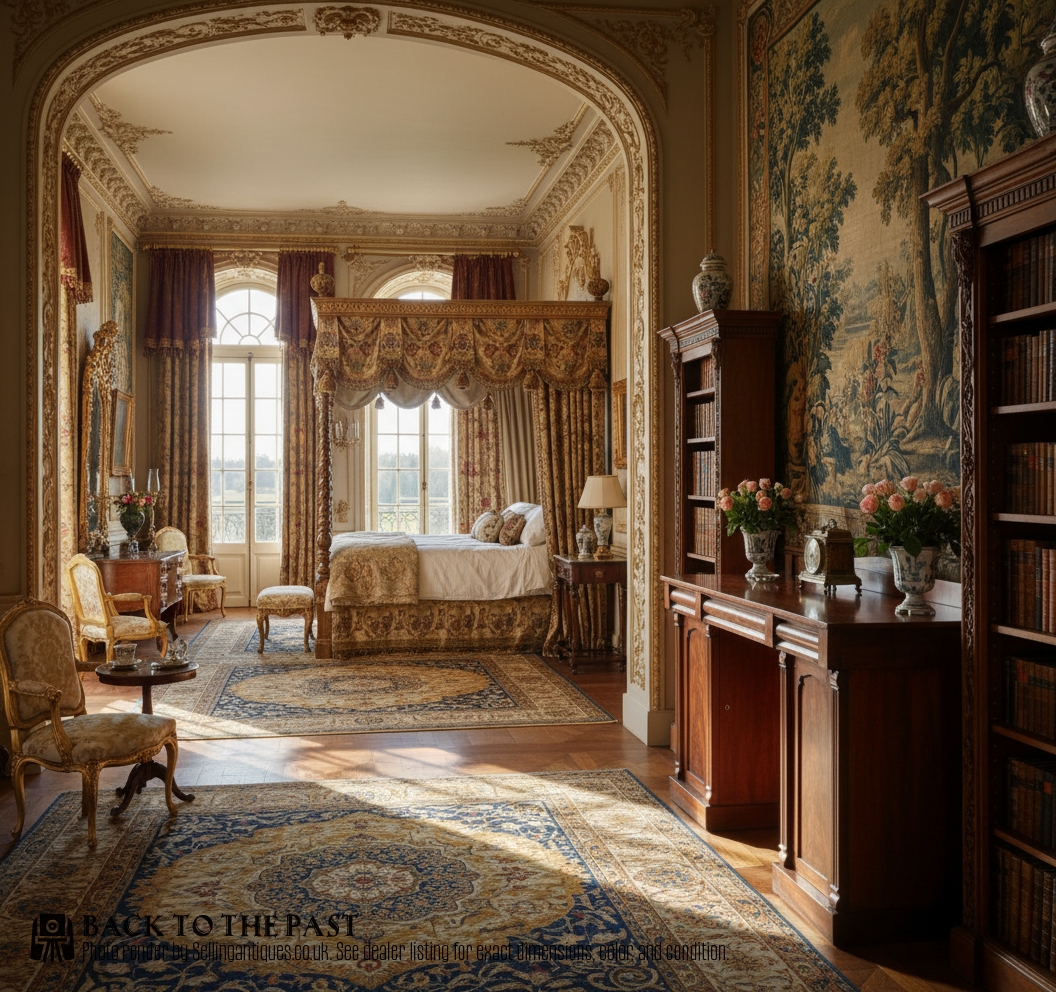
Pedestal Dining Sideboard
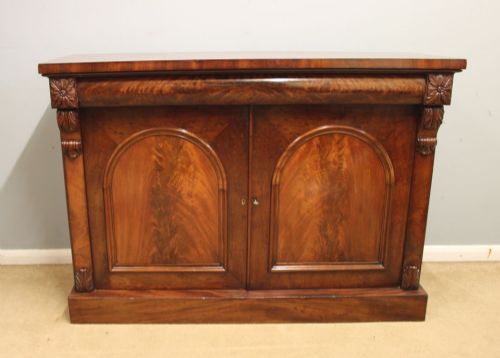
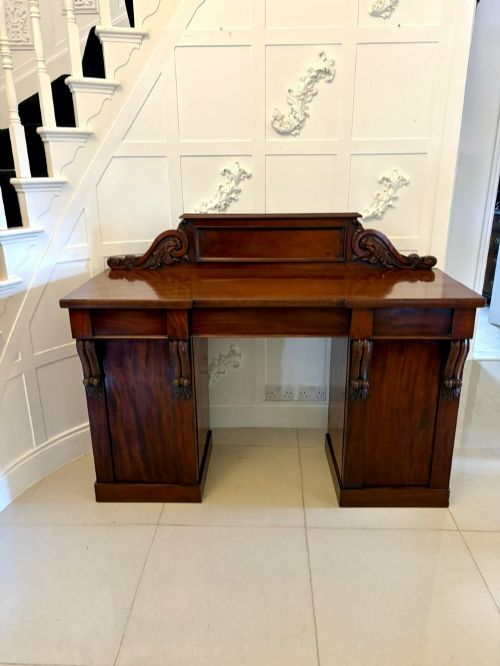
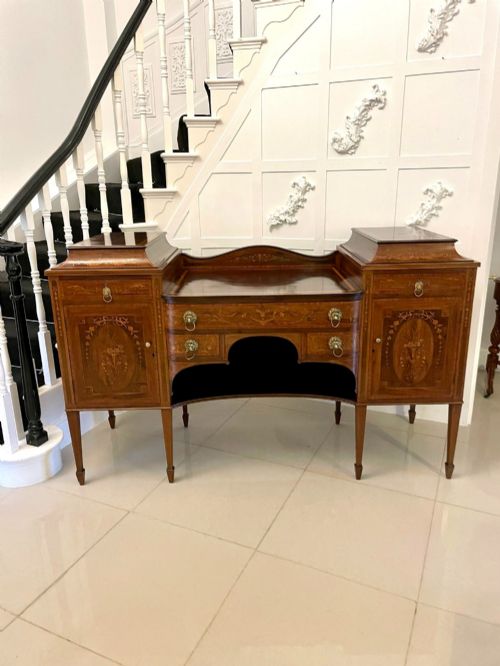
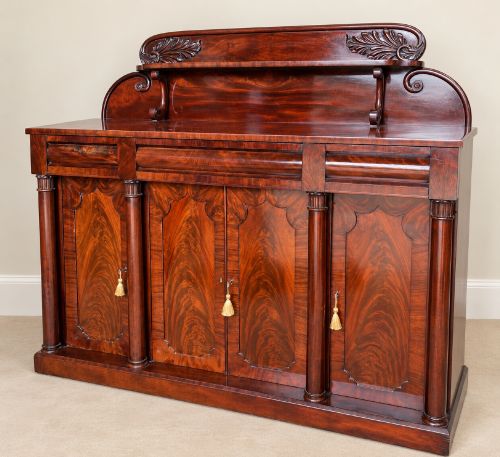
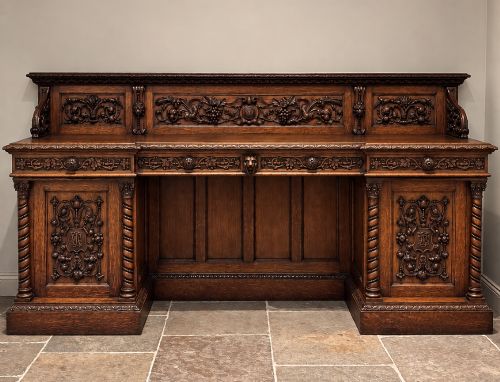
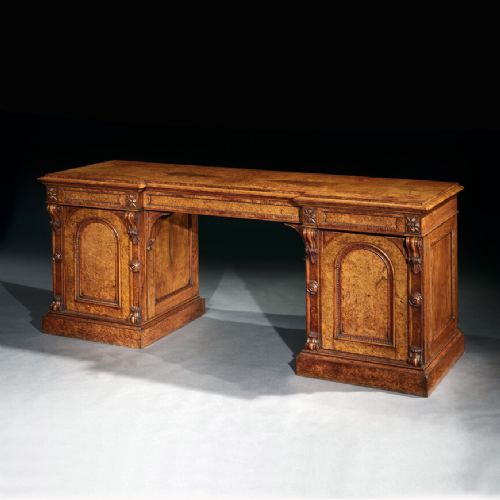
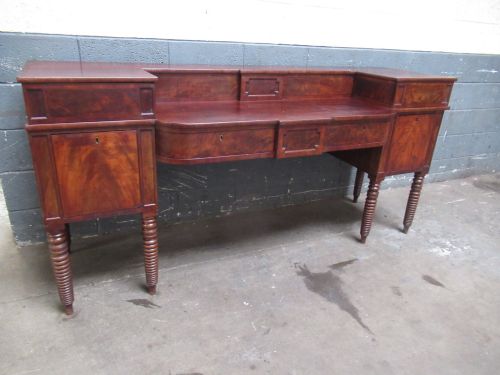
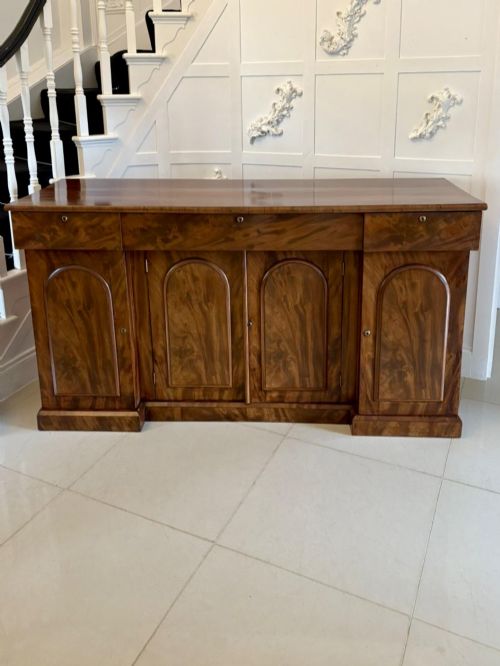
A pedestal dining sideboard combines a central serving surface with flanking cupboard pedestals, originating primarily from the Georgian, Regency and Victorian periods. These grand items were built to anchor large dining rooms and assist in the service of elaborate meals.
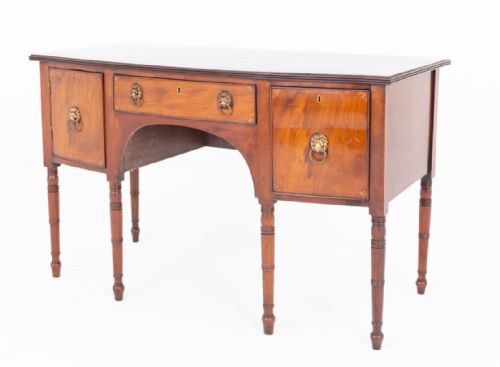
Alongside standard pedestal configurations, the selection includes related dining room forms such as bow front servers, breakfront cabinets and companion cutlery urns. These variants share the heavy timber construction and architectural presence typical of nineteenth-century dining furniture.
Materials and Construction
Cabinet makers relied heavily on solid mahogany and figured mahogany veneers, selecting timber with deep grain patterns to catch the light on principal surfaces. Secondary woods such as oak appear in internal linings and drawer construction, providing structural stability.
Decorative detailing was achieved through boxwood stringing, marquetry inlay, and carved ornamentation executed directly into the timber. Hardware components like brass rails, galleries and handles were cast and fitted to complement the dark wood tones.
Some sideboards hide pull-out wine bins lined with lead to keep bottles cool.
Assessing Quality and Execution
The standard of a pedestal dining sideboard rests primarily on the selection of the timber veneers and the crispness of any carved detailing. Pieces utilising highly figured flame mahogany or intricate marquetry display a superior level of ambition from the workshop.
Construction methods also dictate quality, visible in the tight tolerances of drawer dovetails, the integration of brass galleries, and the overall rigidity of the heavy pedestal bases. Superior examples maintain balanced proportions despite their massive scale.
Hewetsons London·Gillows·Epstein
The Pedestal Dining Sideboard Glossary
- Pedestal sideboard
- A dining room cabinet featuring two structural pedestals flanking a central table or recess. This layout creates a balanced architectural facade.
- Flame mahogany
- A distinctive wood veneer showing a flickering, flame-like grain pattern. Cabinet makers reserved this timber for drawer fronts and prominent panels.
- Brass gallery
- A metal rail mounted on the upper rear surface of a sideboard. It prevented serving dishes and glassware from sliding off during use.
- Cutlery urn
- A tall, vase-shaped wooden vessel placed on or beside a sideboard. These containers held flatware and matched the primary dining furniture.
- Marquetry
- Decorative patterns formed by fitting together contrasting veneer pieces. Craftsmen used this technique to create floral or geometric motifs.
Pedestal Dining Sideboard: Frequently Asked Questions
What is a pedestal dining sideboard used for?
These large pieces served as practical storage and staging areas in formal dining rooms during the Georgian and Victorian eras. They held heavy tableware, serving dishes, linens, and silver.
The top surface acted as a buffet for resting dishes during long meals before service to guests. Flanking pedestals often contained specialised compartments for bottles or warming plates.
How do I date a pedestal dining sideboard?
Dating relies on observing stylistic markers, wood choices, and construction techniques specific to periods like Regency or Victorian. Earlier pieces often display cleaner architectural lines and brass galleries.
Later Victorian interpretations tend to incorporate heavier carved ornamentation, mirror backs, or darker oak construction. Comparing the secondary woods inside drawers also aids in determining the exact era of manufacture.
Are these sideboards suitable for modern dining rooms?
These sideboards provide exceptional storage capacity and a striking focal point in spacious modern dining spaces. Their robust proportions require adequate floor space and high ceilings to look properly proportioned.
Living with them involves appreciating their substantial weight and utilising the deep interior cupboards for modern glassware and tableware. They integrate well into traditional interiors or act as a contrasting anchor in contemporary rooms.