

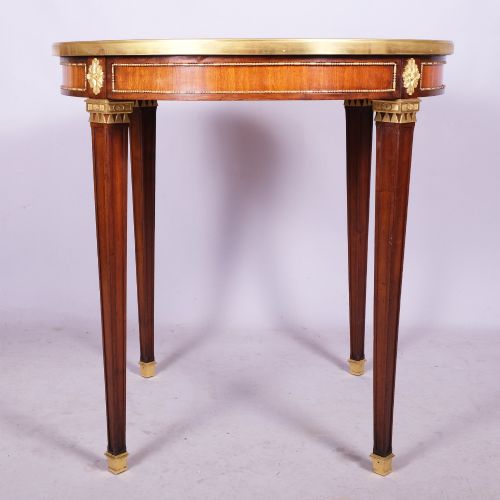
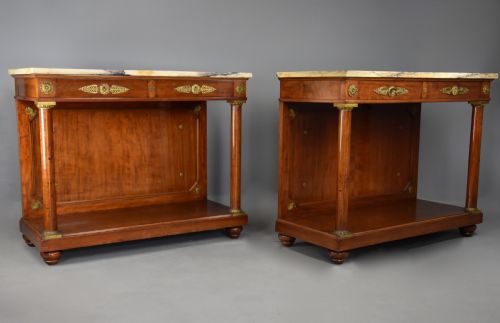
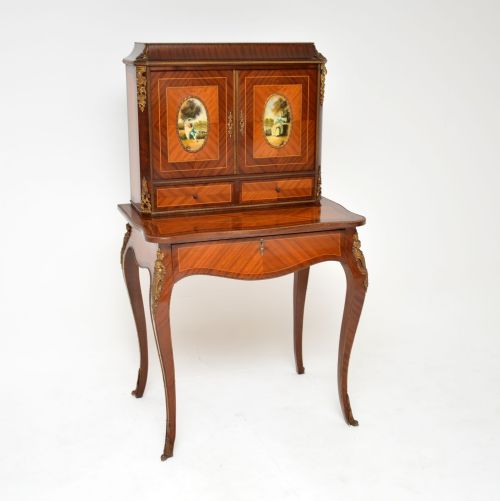
Mahogany Mounted Bronze
Mahogany mounted bronze pieces combine dense tropical timber with cast metallic ornamentation, bringing together two distinct decorative traditions into unified furniture forms.
Mahogany Mounted Bronze
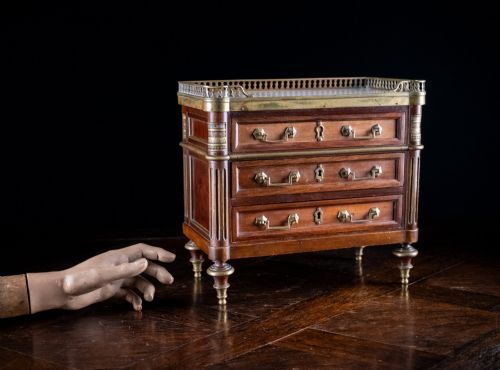
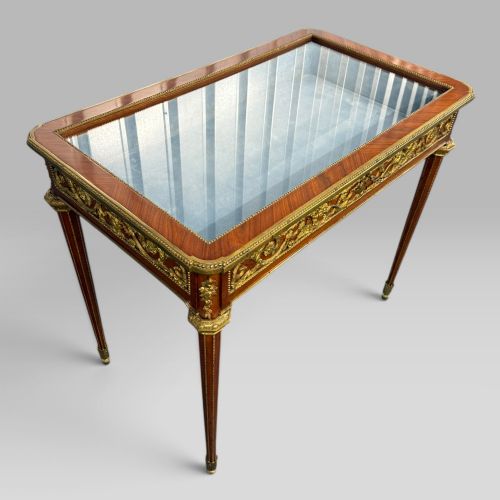
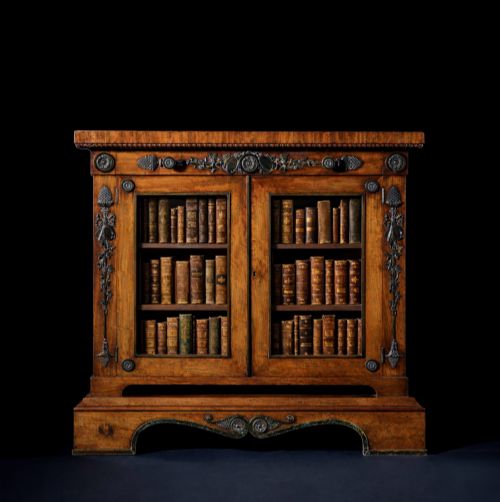
When you search for mahogany mounted bronze, you encounter furniture built from dark timber and embellished with metallic elements such as ormolu, gilt bronze, and brass. These works span the nineteenth century, the Edwardian period, and the 1930s, originating largely from French workshops and English makers.
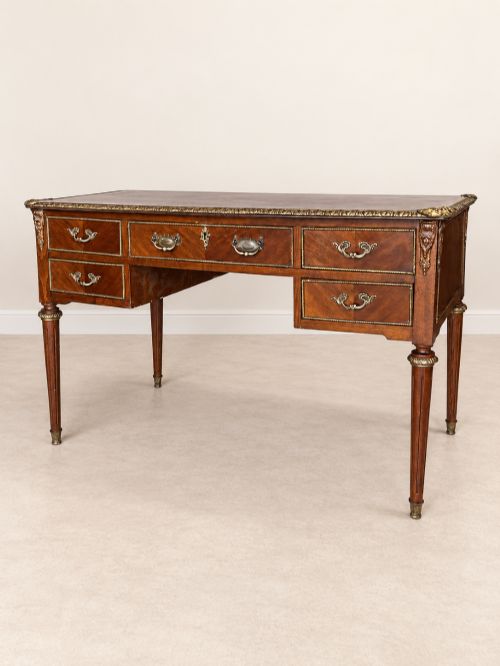
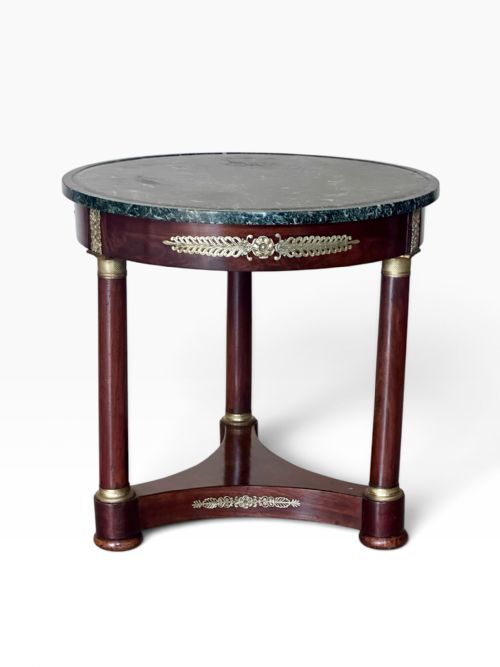
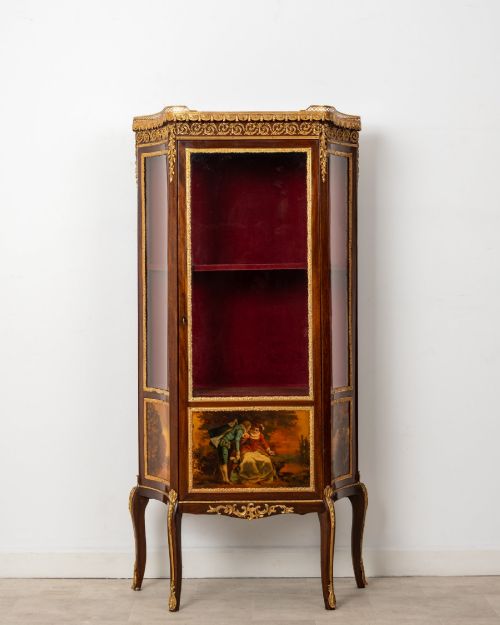
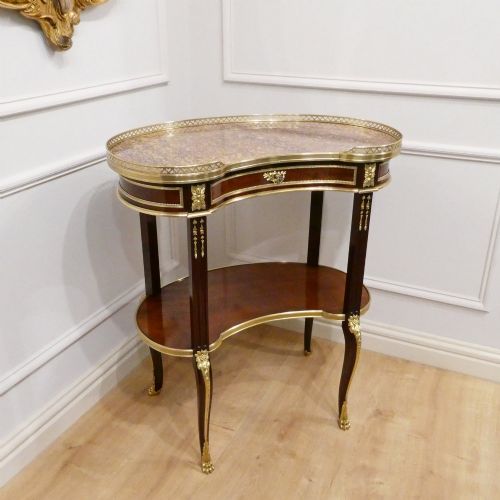
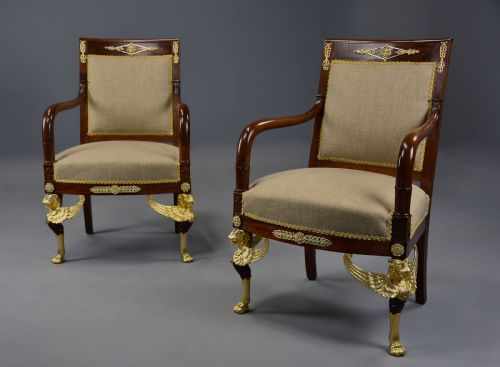
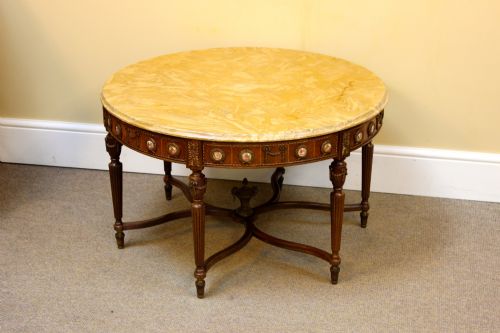
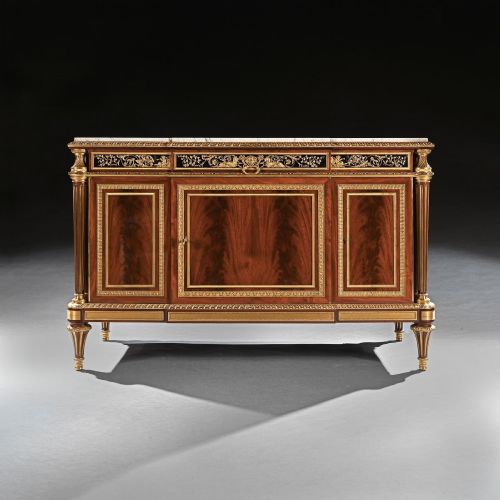
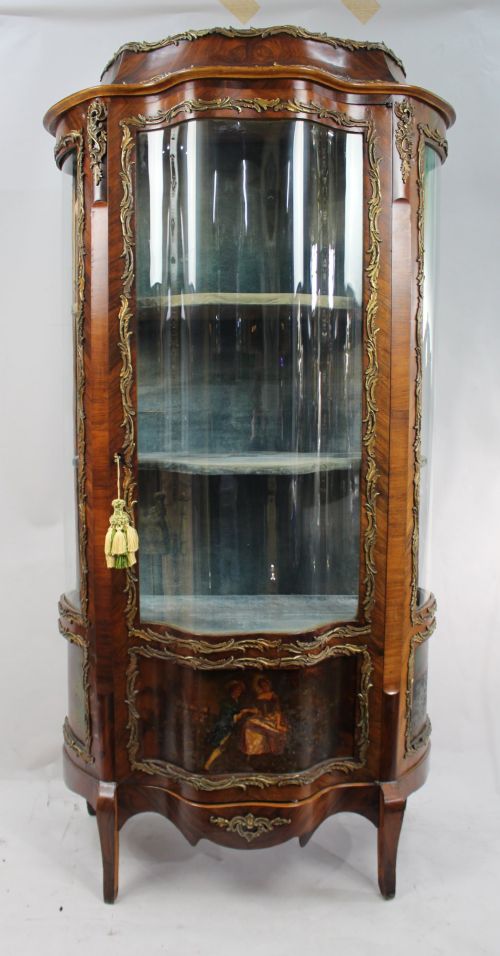
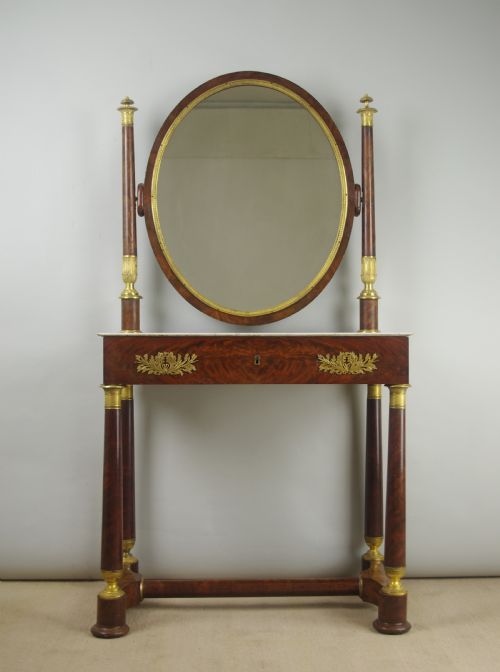
The selection on this page consists predominantly of tables, desks, cabinets, and seating. Centre tables, gueridons, side tables, and bureau plat writing desks appear frequently, alongside display vitrines, commodes, and seating bearing the influence of the French Empire and Louis XVI styles.
You also find larger bedroom pieces, including wardrobes, armoires, and beds, alongside smaller occasional items like two-tier étagères and foot stools. Many incorporate inset marble tops and glazed panels, connecting the rich timber carcase directly to neoclassical design motifs.
How they were made
Cabinetmakers constructed the foundational carcases from solid mahogany or applied veneers over secondary woods, occasionally incorporating satinwood or parquetry details. Timber surfaces received precise polishing to highlight the dark grain patterns of the wood.
Foundry workers cast the bronze and brass mounts separately, often utilising fire gilding or ormolu techniques to impart a bright gold-coloured finish. Artisans then chased the metal surfaces by hand to sharpen details before fixing the mounts onto the mahogany frames with screws or pins.
Early nineteenth-century foot stools arrive with scroll tops and brass detailing, built for resting tired feet after long parlour assemblies.
What varies in quality
The precision of the bronze casting and the depth of the subsequent hand-chasing determine the visual impact of the metalwork. Superior mounts display crisp leafwork, animal paws, or classical figures with distinct contours, whereas weaker examples appear soft and flat.
Cabinetwork quality rests on the selection of the mahogany veneer and the structural joinery of the carcase. Pieces with well-matched wood grain, stable marble tops, and maker stamps or attribution to notable workshops demonstrate higher levels of original craftsmanship.
Maison Millet·François Linke·Edwards and Roberts·Henry Dasson·Krieger Paris·Fournier
The Mahogany Mounted Bronze Glossary
- Ormolu
- Gilded bronze applied as an ornamental mount on furniture. The term derives from the French for ground gold.
- Bureau plat
- A freestanding writing table fitted with drawers and a leather or wood top. These desks often feature extensive bronze mounts around the apron.
- Gueridon
- A small circular table supported by a central pillar or multiple legs. They frequently appear with marble tops and bronze galleries.
- Vernis Martin
- A decorative lacquer finish developed in France, mimicking Japanese lacquer. It appears on the panels of display cabinets and vitrines.
- Fauteuil
- An open armchair with upholstered armrests. French examples from the nineteenth century often display carved mahogany frames with gilt metal mounts.
Mahogany Mounted Bronze: Frequently Asked Questions
What is mahogany mounted bronze furniture?
These pieces combine dark mahogany woodwork with cast bronze, ormolu, or brass ornamentation. They include tables, desks, and cabinets produced mainly during the nineteenth and early twentieth centuries.
Craftsmen applied the metallic mounts to accent the structural lines of the furniture. The style draws heavily on French neoclassical designs from the Empire and Louis XVI periods.
Where were these pieces made?
The majority of the items originate from workshops in France, particularly Paris, where cabinetmakers collaborated with bronze founders. English makers also produced similar pieces influenced by Regency and neoclassical aesthetics.
Many workshops stamped their finished furniture on the wood carcase or bronze mounts. Surviving marks connect pieces to notable makers like François Linke, Maison Millet, and Krieger.
How do I identify the period?
Dating relies on the specific revival style, construction methods, and material combinations used in the piece. Mid-nineteenth century works often follow strict French Empire proportions, while Edwardian and later items adapt these forms with lighter timber tones.
Detailing such as plum pudding mahogany veneer, specific bronze mount patterns, and integrated marble slabs offer further chronological clues. Comparative study with design books helps narrow down the decade of production.
How do I care for mahogany and bronze?
Maintain the mahogany timber with appropriate furniture waxes applied sparingly to preserve the polished surface. Avoid placing pieces in direct sunlight or near heat sources to prevent wood movement.
Dust the bronze mounts with a soft dry cloth, avoiding abrasive cleaners that might strip the original gilding or lacquer. Marble tops require simple wiping with a damp cloth to remove everyday marks.