
Mahogany Inlay Desk
When you search for a mahogany inlay desk, you are looking at workspace furniture defined by warm timber and delicate contrasting details.
Mahogany Inlay Desk
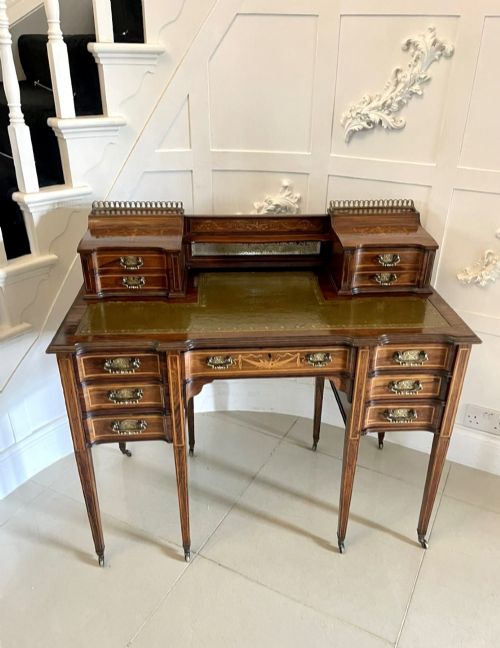
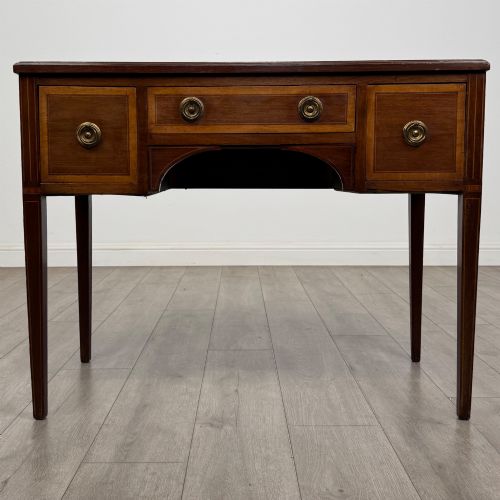
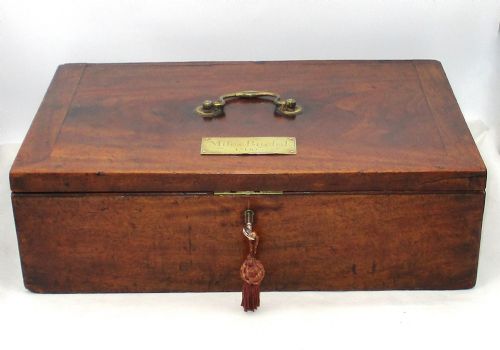
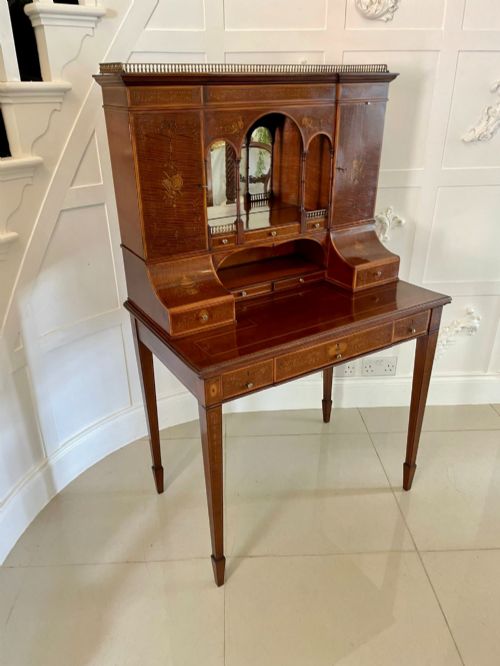
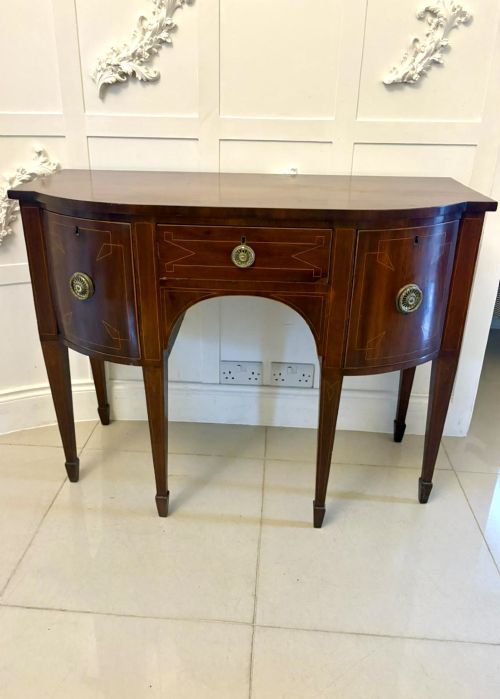
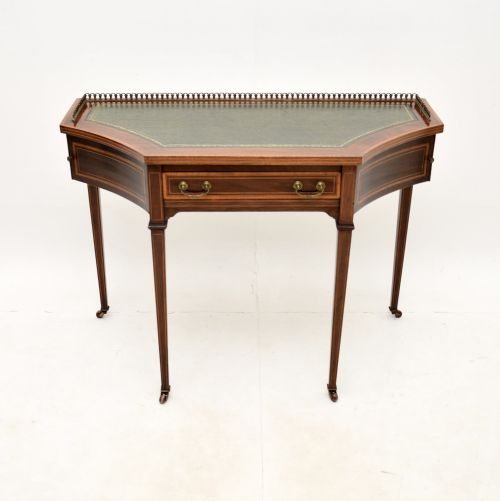
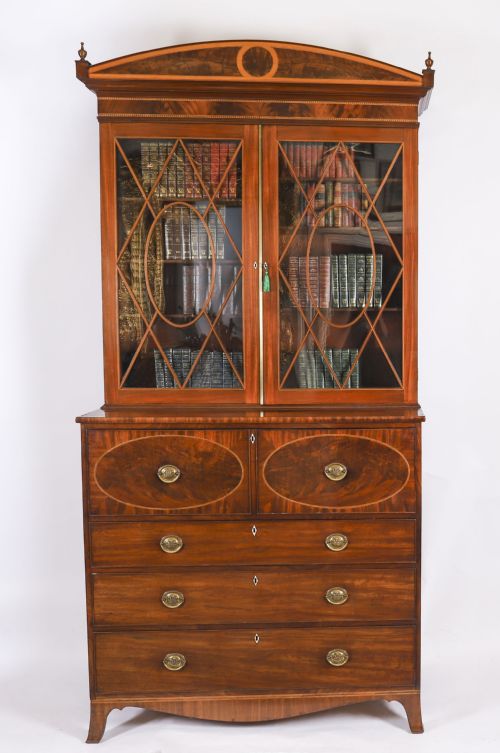
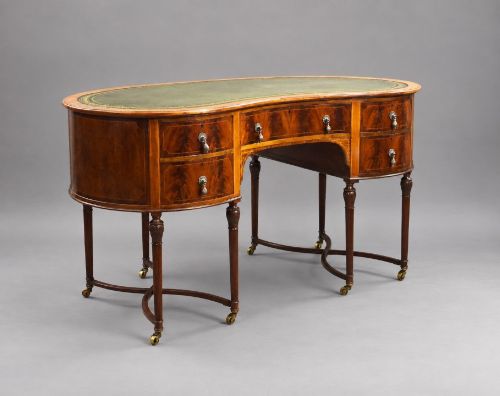
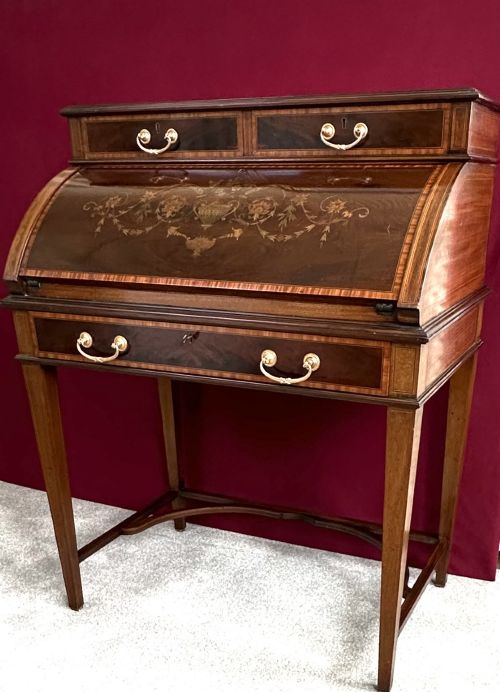
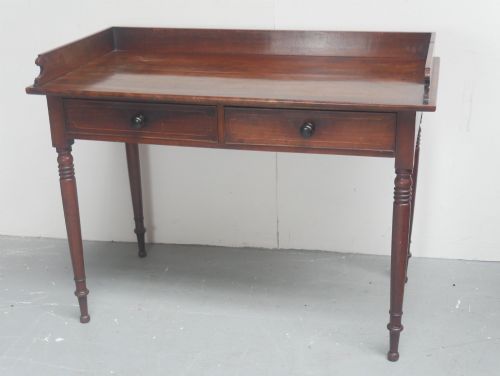
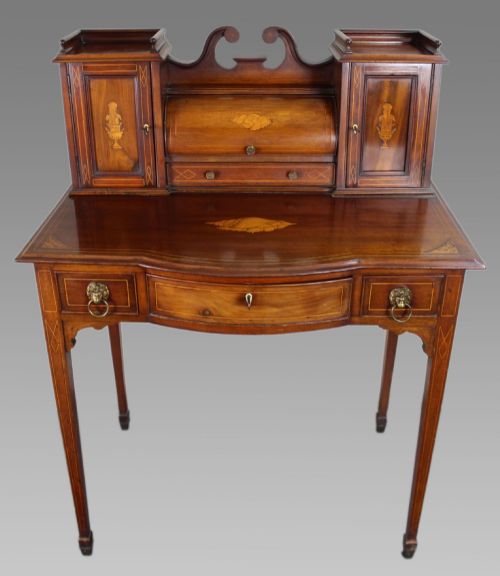
A mahogany inlay desk brings together functional writing surfaces and decorative craftsmanship from several distinct eras. Buyers exploring this category encounter pieces ranging from clean-lined Georgian writing tables to elaborate Edwardian kidney-shaped desks.
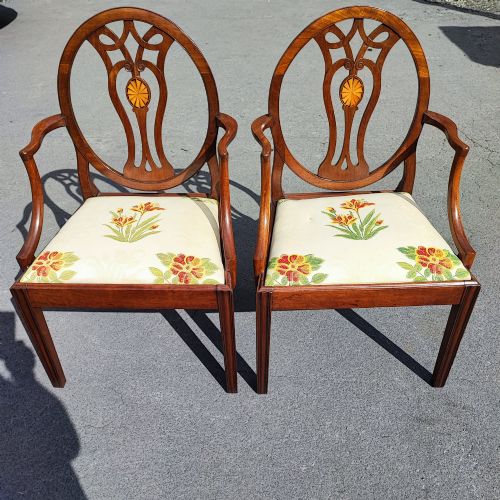
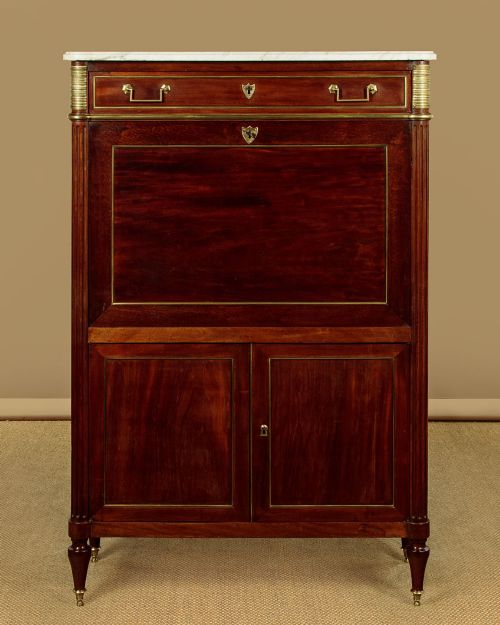
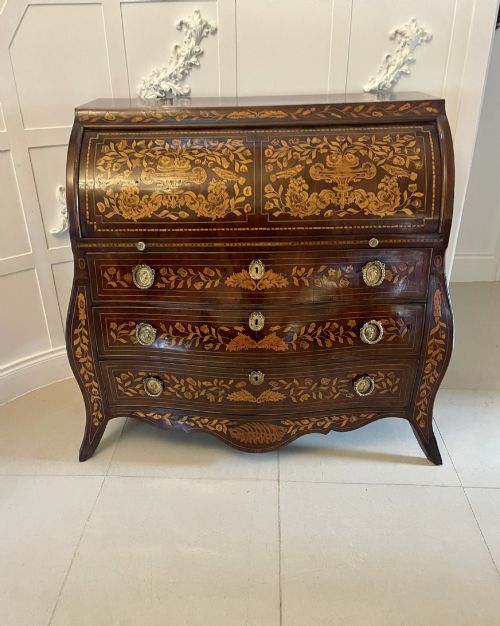
The selection on this page leans heavily toward Edwardian and 19th-century interpretations, alongside earlier George III examples. Alongside standard writing tables, you will find cylinder bureaus, pedestal desks, and tambour desks sharing the same fundamental material vocabulary.
How they were made
Cabinet makers relied on solid mahogany and figured flame mahogany veneers laid over secondary timbers to construct the primary bodies. Boxwood, satinwood, and ebony were shaped into fine lines and floral motifs, then embedded directly into the wood surfaces.
Brass fittings, leather writing inserts, and occasional glass elements completed the construction of these desks. The precision of the joinery and the neatness of the contrasting inlay work determined how well the piece held together over generations.
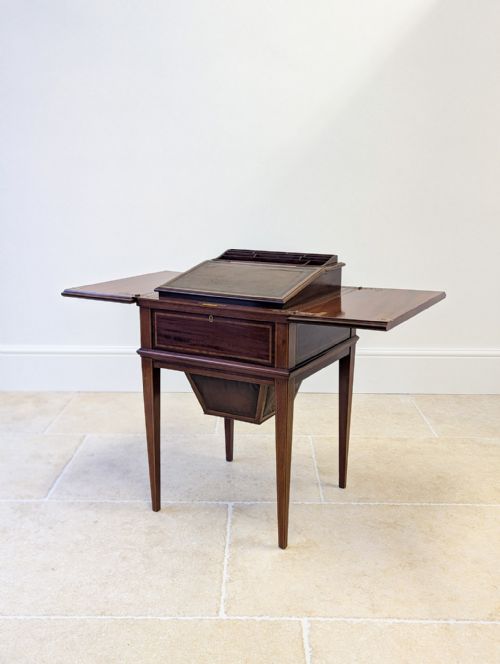
Some Edwardian desks were cleverly built to transform, hiding writing surfaces inside unsuspecting side tables.
What varies in quality
The distinction between ordinary and exceptional pieces rests primarily on the choice of timber and the ambition of the design. Figured flame mahogany paired with crisp, intricate marquetry displays a level of artistry that straightforward utility pieces lack.
Proportion and execution define the higher tier of the range. Desks bearing the marks of known makers or featuring complex forms like cylinder rolls and tambour shutters show a superior command of workshop techniques.
Edwards & Roberts·Maple & Co. London
The Mahogany Inlay Desk Glossary
- Inlay
- A technique where contrasting materials are set into recesses flush with the wood surface. This adds geometric or pictorial decoration to the primary timber.
- Flame mahogany
- A highly figured wood grain pattern resembling flickering flames. It was selected for prominent drawer fronts and desk tops.
- Marquetry
- Elaborate veneer patterns forming pictorial designs using various coloured woods. It appears on the most decorative writing surfaces.
- Tambour
- A sliding door made of narrow strips of wood glued to a fabric backing. It allows a desk to conceal its inner compartments cleanly.
- Secretaire
- A cabinet or bookcase incorporating a pull-down writing flap to reveal small drawers and pigeonholes. It combines storage with a compact writing space.
Mahogany Inlay Desk: Frequently Asked Questions
What is a tambour desk?
A tambour desk uses a flexible slatted wooden shutter that rolls back to reveal the writing surface and inner compartments. This mechanism allowed makers to enclose the workspace without needing swinging doors.
Such designs became popular for their compact footprint and tidy appearance when closed. They frequently incorporate fine mahogany veneers and contrasting string inlay.
How do I identify a Georgian desk?
Georgian desks date from the 18th and early 19th centuries, characterised by restrained proportions and solid proportions. They often feature clean lines, bracket feet, and subtle boxwood stringing rather than heavy ornamentation.
Examining the secondary timbers inside the drawers helps confirm the period. Hand-cut dovetails and older construction methods point directly to these earlier manufacturing dates.
Where were pedestal desks placed?
Pedestal desks were traditionally built to stand freestanding in the middle of a library or study. Because all sides received finished treatment, they could sit away from walls.
Earlier examples often featured leather-lined tops for writing comfort. The twin pedestals below provided substantial storage in the form of stacked drawers.
How do Edwardian desks differ from Victorian ones?
Edwardian desks tend to feature lighter proportions and a revival of Sheraton and Georgian design motifs. Makers during this period often utilised satinwood banding and kidney shapes.
Victorian desks generally presented a heavier, more robust construction with darker mahogany tones. They prioritized solid utility and traditional pedestal or Davenport forms.