


Edwardian Satinwood Writing Table
When you search for an edwardian satinwood writing table, you look at light timbers, fine inlay and compact writing surfaces made around the turn of the twentieth century.
Edwardian Satinwood Writing Table
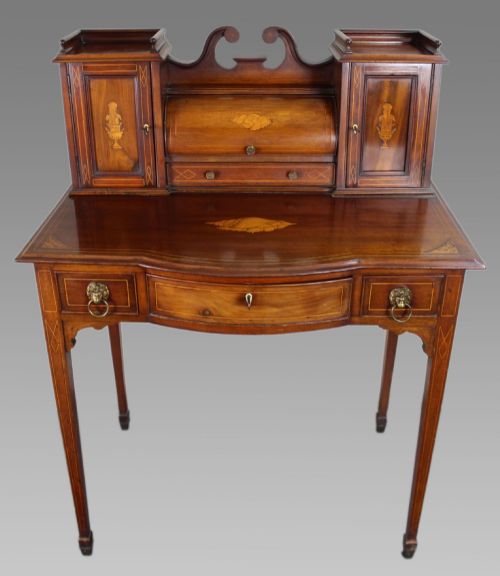
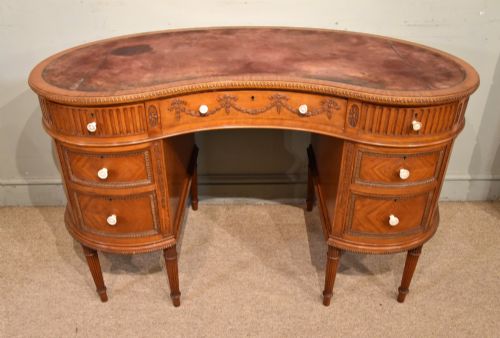
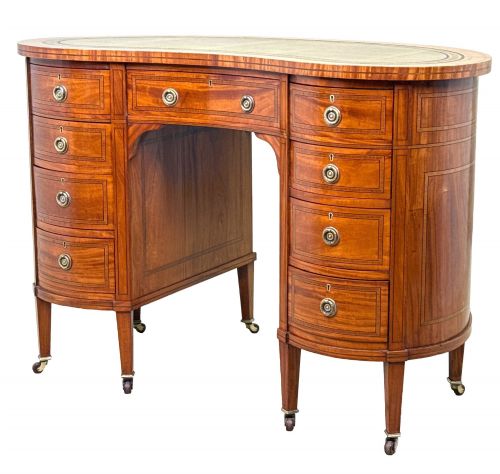
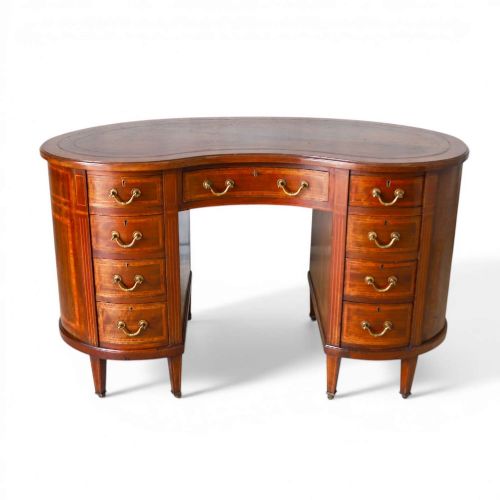
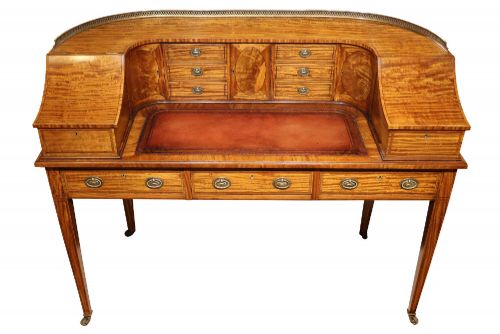
An edwardian satinwood writing table brings together the refined aesthetic of the late nineteenth and early twentieth centuries, appearing most frequently in compact ladies' formats, kidney shapes and grander Carlton House designs. These pieces date predominantly from the Edwardian era and the late Victorian period, drawing heavily on Sheraton Revival taste.
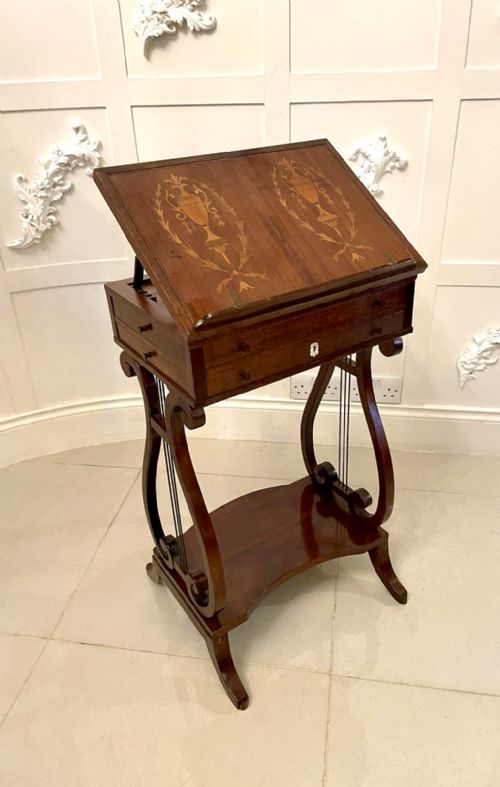
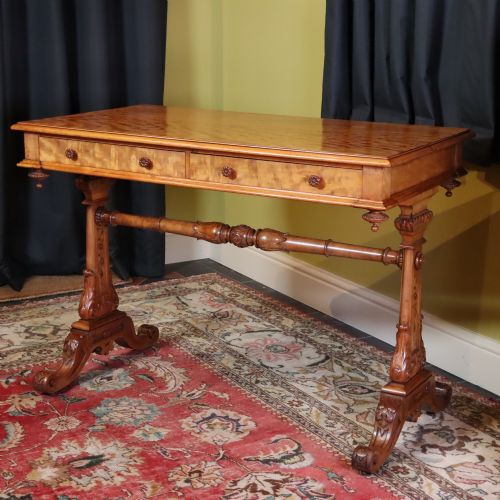
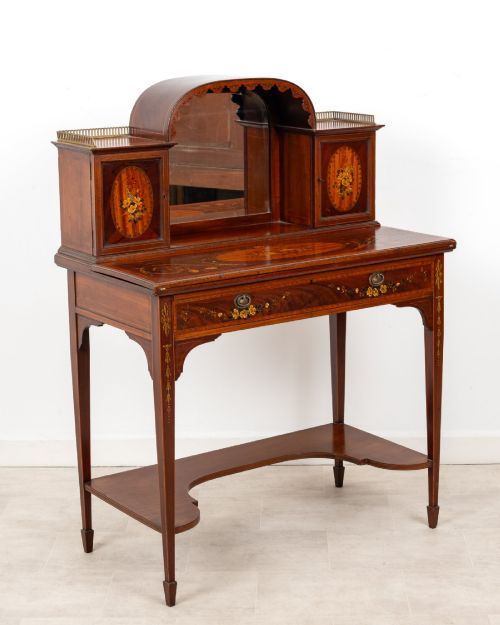
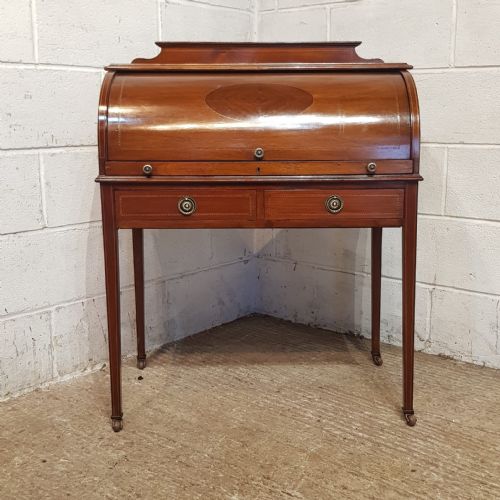
The assortment on offer spans simple side tables adapted for writing, elegant cylinder desks, and elaborate pieces featuring hand-painted decorations and mirrored superstructures. Buyers searching for an edwardian satinwood writing table encounter both freestanding library pieces and smaller boudoir writing desks designed for domestic correspondence.
Materials and construction
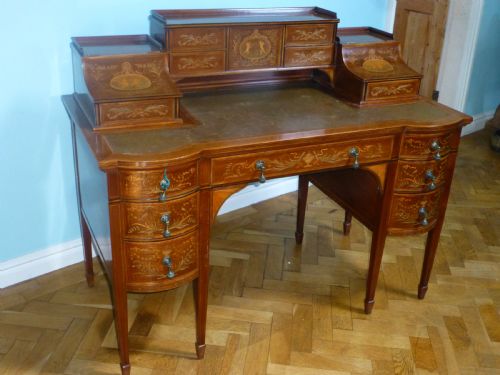
Makers built these desks using foundational carcases of mahogany or walnut, overlaid with figured satinwood veneers and detailed with contrasting crossbanding in ebony, boxwood and rosewood. This combination allowed workshops to achieve striking geometric and floral marquetry patterns across flat and curved surfaces.
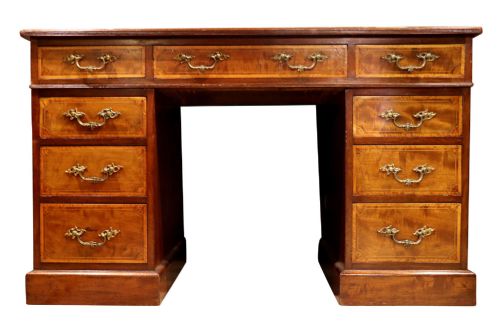
Hardware played an integral part in the construction, featuring cast brass handles, hinges and gallery rails, while writing surfaces relied on inset panels of tooled leather. Joinery adhered to traditional cabinet-making standards, accommodating complex forms such as barrel fronts and kidney shapes.
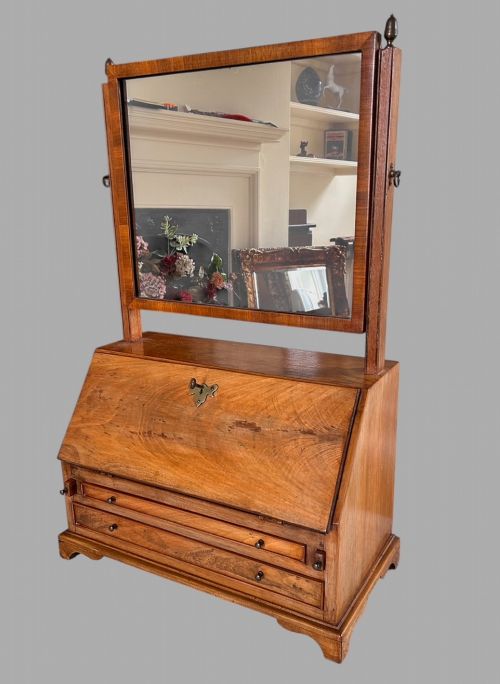
Some ladies desks arrived with concealed compartments for secret correspondence and miniature dressing mirrors.
Distinctions in craftsmanship
Quality reveals itself in the choice of veneers and the precision of the marquetry inlay, where superior examples display dense, natural figuring in the satinwood and tightly fitted contrasting stringing. Lesser pieces rely on simpler painted decoration or mechanical printing rather than hand-cut wood veneers.
The sophistication of the internal fittings and the integrity of the structural carcase further separate standard production from master workshops. Finer desks incorporate functioning tambour shutters, original brassware and complex superstructure drawers executed with seamless movement.
Edwards & Roberts·Maple & Co·James Shoolbred
The Edwardian Satinwood Writing Table Glossary
- Satinwood
- A lustrous tropical timber prized for its pale, golden colour and reflective grain. It serves as the primary veneer surface on many desks from the Sheraton Revival period.
- Carlton House desk
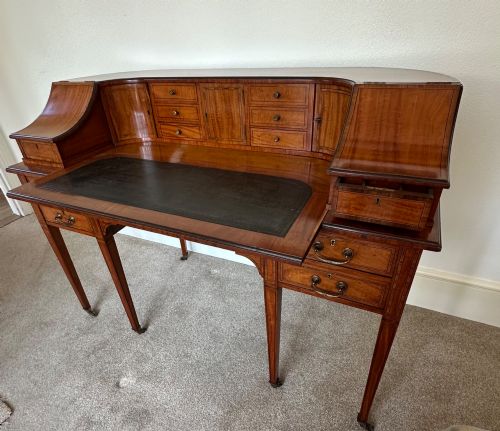
- A form of writing table featuring a curved superstructure of small drawers and compartments arranged in a horseshoe shape around the rear of the writing surface.
- Marquetry
- The art of forming decorative patterns by fitting together contrasting veneer slices into a wooden ground. This technique creates the floral and ribbon motifs seen on refined tables.
- Crossbanding
- A border strip of veneer laid around the perimeter of a tabletop so that the grain runs at right angles to the central panel. It frames the satinwood field.
- Bonheur du jour
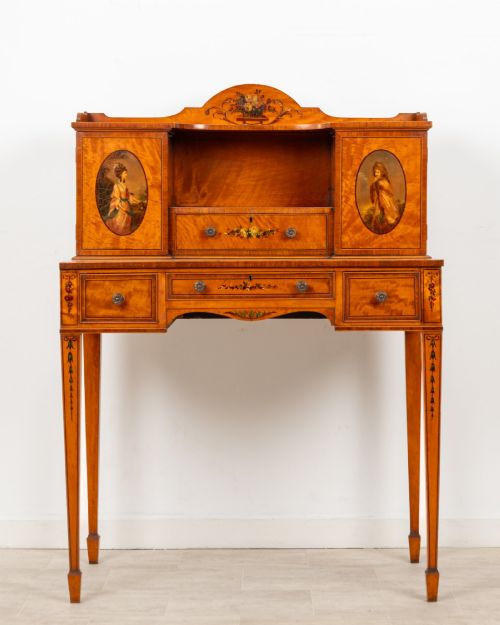
- A small, light lady's writing desk with a set of drawers or shelves on the top. The term translates from French as day's happiness.
Edwardian Satinwood Writing Table: Frequently Asked Questions
What is a Carlton House desk?
A Carlton House desk is a distinctive writing table featuring a curved superstructure of small drawers and pigeonholes that wrap around the back and sides of the leather-lined writing surface.
Originating in the late eighteenth century, this form reappeared in high-end Edwardian workshops as a complex piece for formal correspondence.
How do I identify a kidney shaped desk?
A kidney shaped desk has a concave curve at the front designed to fit closely against the user, paired with a convex back that allows the piece to stand freely in a room.
These tables often feature satinwood veneers and intricate stringing that emphasise their curved outlines.
Were these desks used for daily writing?
These pieces served as private desks in drawing rooms, boudoirs and bedrooms for writing letters, managing household accounts and keeping journals.
Their compact proportions reflected the domestic habits of the period, offering dedicated compartments for stationery without dominating the room.
How do I care for satinwood surfaces?
Satinwood furniture requires protection from direct sunlight to preserve its pale golden colour and prevent the timber from darkening or drying out.
Maintenance involves occasional dusting with a soft cloth and avoiding modern silicone-based polishes that can damage antique veneer finishes.