
Cylinder Top Writing Desk
A cylinder top writing desk conceals its working surface beneath a rolling wooden shutter, offering a refined workspace for private correspondence.
Cylinder Top Writing Desk
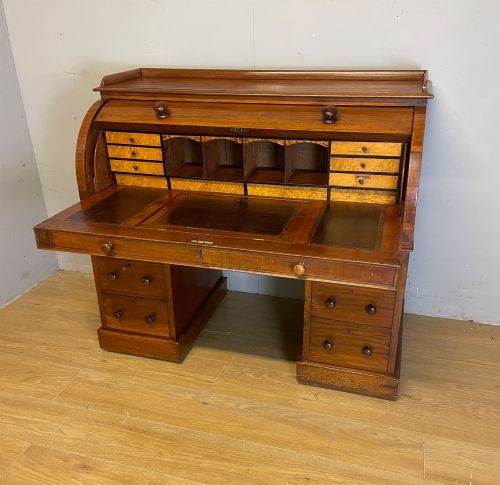
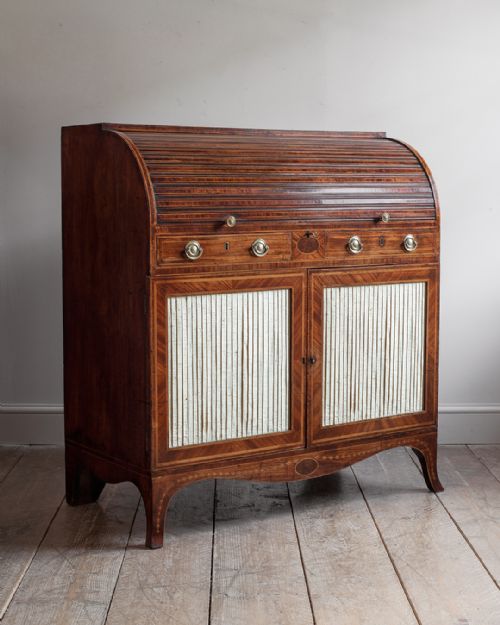
A cylinder top writing desk conceals its working surface beneath a curving wooden shutter that rolls back to reveal fitted interior drawers and pigeonholes. When you search for cylinder top writing desk, you encounter pieces spanning from the eighteenth century through the Edwardian period, executed in Georgian, Victorian, and revivalist tastes.
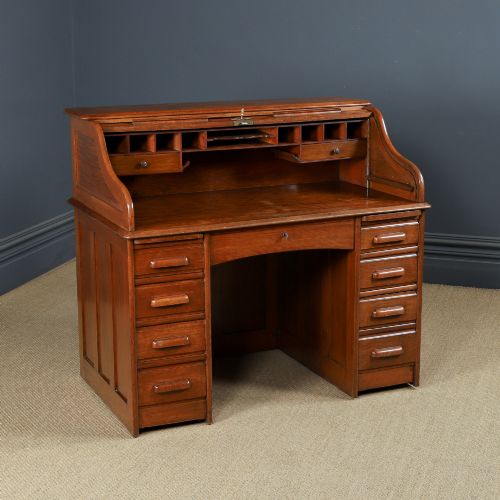
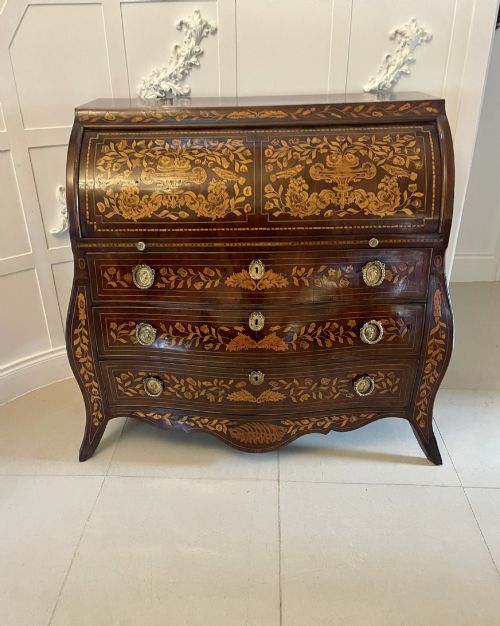
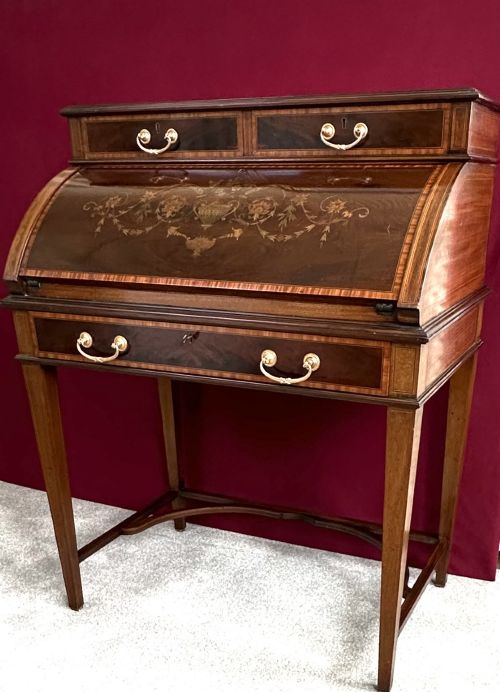
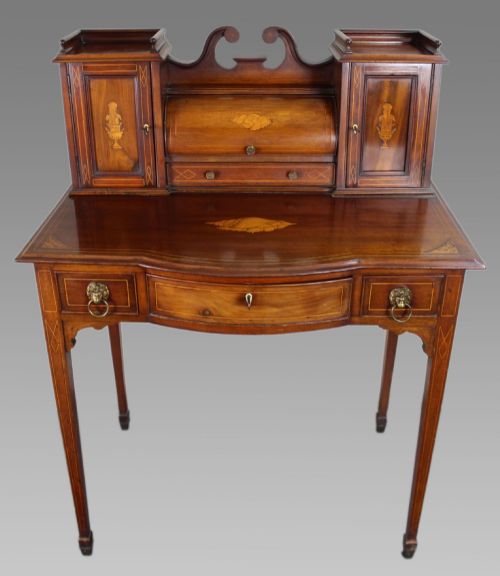
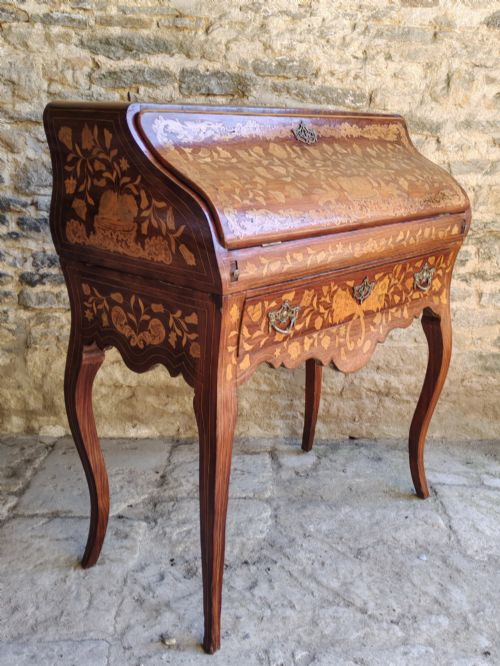
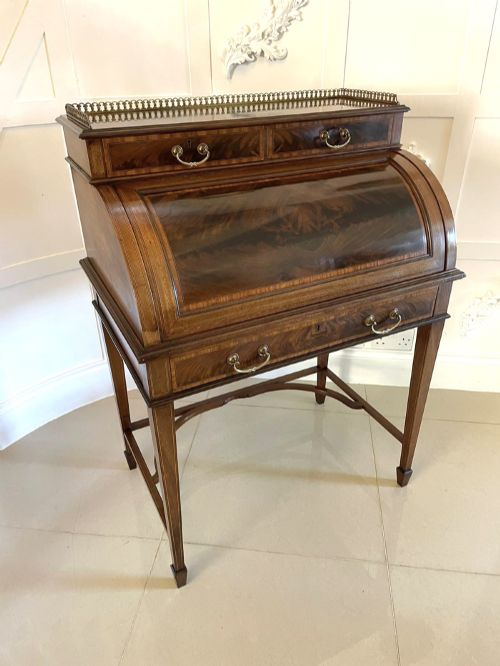
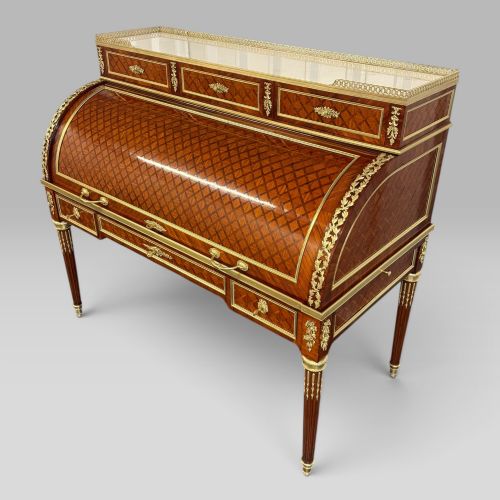
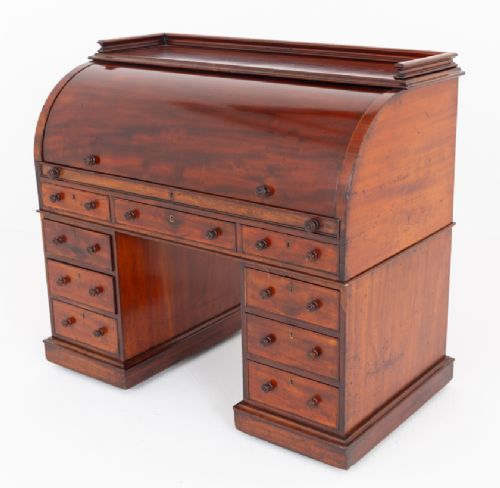
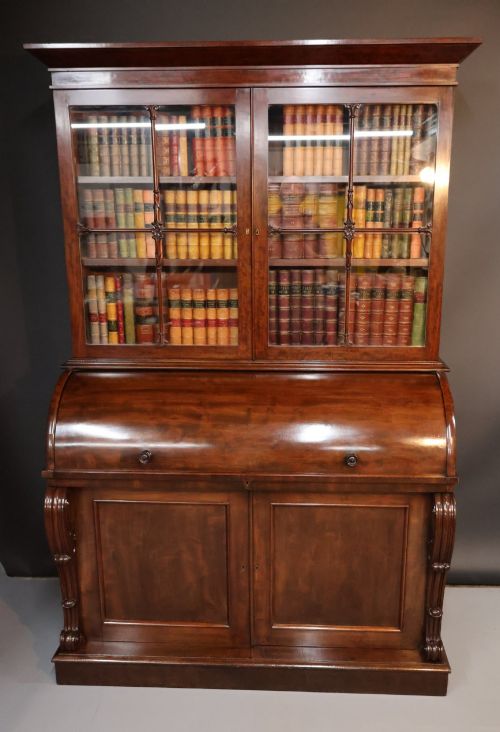
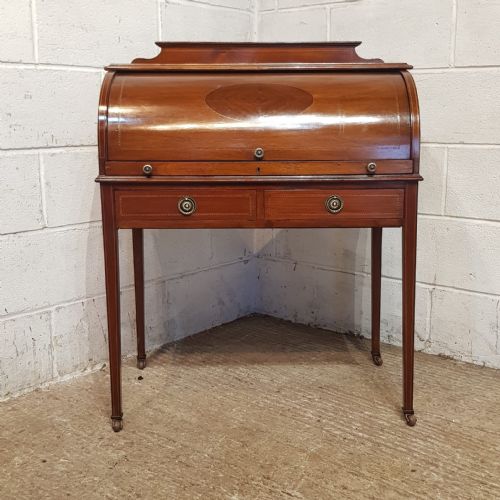
The most common examples on this page are Edwardian satinwood and mahogany ladies desks alongside nineteenth-century pedestals and freestanding bureau bookcases. Makers adapted the form from English Georgian elegance to French Louis XVI style and Dutch marquetry, resulting in both compact writing tables and substantial office furniture.
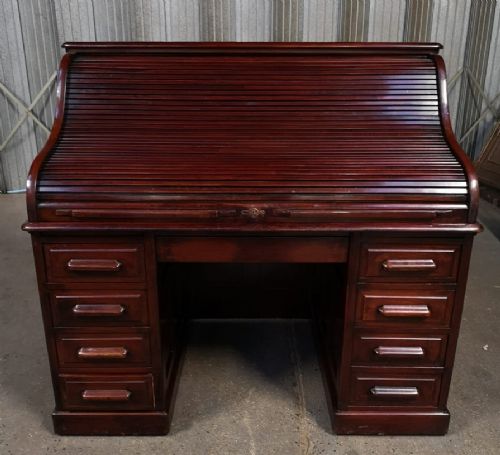
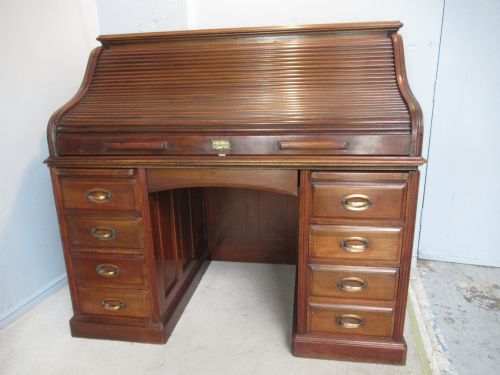
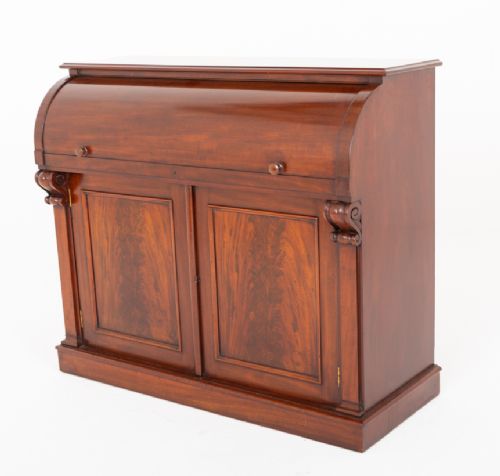
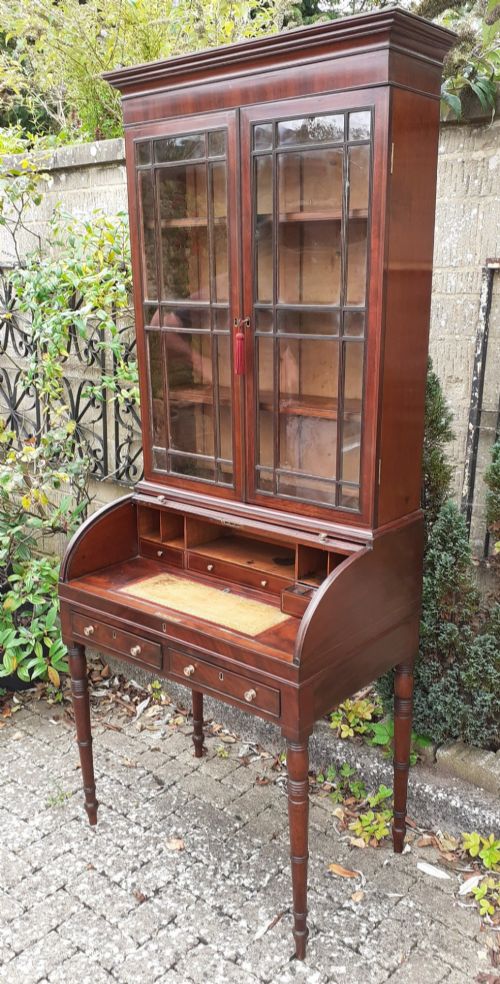
Surviving formats range from small freestanding writing desks to large twin pedestal office models and bureau bookcases fitted with upper shelving. These pieces bridge the gap between architectural cabinetry and practical writing furniture.
Materials and Construction
Makers constructed the primary carcass in mahogany, walnut, oak, or satinwood, often applying delicate floral marquetry, parquetry, or contrasting stringing in lighter fruitwoods. The characteristic rolling cylinder requires precise slatted construction, known as tambour when individual wooden strips are glued to a fabric backing.
Interiors frequently incorporate fitted small drawers, pigeonholes, and a leather-lined writing slide that pulls forward for use. Brass ring handles, ormolu mounts, and ebony inlay provide structural and decorative accents across various periods.
Listings feature mahogany, satinwood, walnut, and oak examples spanning the eighteenth, nineteenth, and early twentieth centuries.
Craftsmanship and Proportion
Quality rests in the smooth operation of the rolling cylinder and the precision of the internal pigeonholes and small drawers. Superior examples display carefully chosen flame mahogany, symmetrical satinwood veneers, and crisp floral marquetry rather than printed or painted substitutes.
Construction details such as dovetailed drawer linings, original brass hardware, and the integration of secondary timbers distinguish finer workshop output from later mass production.
Maple & Co. London·Tudor & Burrey Shrewsbury·Edwards & Roberts·Ray & Miles of Liverpool
The Cylinder Top Writing Desk Glossary
- Cylinder
- A curved wooden shutter that rolls back in a track to cover the writing surface and interior compartments. This mechanical roll top protects the desk contents from dust and prying eyes.
- Tambour
- A flexible shutter made of narrow vertical strips of wood glued to canvas or leather backing. It allows the wooden top to follow a curved track.
- Marquetry
- Decorative veneer patterns formed by fitting together small pieces of different coloured woods, ivory, or metal. Craftsmen use this technique to create floral or geometric scenes on drawer fronts and cylinder lids.
- Secretaire
- A piece of furniture designed for writing, typically featuring a drop-front or cylinder lid that conceals a fitted interior. These compartments store stationery, inkwells, and correspondence.
- Ormolu
- Gilt bronze mounts applied to furniture for decoration, commonly found on French revival pieces. The technique involves coating bronze in a mixture of mercury and gold leaf.
Cylinder Top Writing Desk: Frequently Asked Questions
How does a cylinder top desk work?
The curved wooden shutter slides along a recessed track in the desk sides, often connected to an internal mechanism that automatically extends or retracts the writing slide.
When pushed upward or backward, the cylinder disappears into the body of the desk, granting full access to the inkwells, pigeonholes, and small inner drawers.
What is the difference between a roll top and a cylinder top?
A cylinder top uses a solid curved wooden shutter that moves smoothly in a precise semi-circular track, usually found on finer Georgian and Victorian pieces.
A roll top typically employs a tambour shutter made of many narrow slats, which is more commonly associated with heavy oak office desks from the Edwardian era.
How do I care for the leather writing surface?
Keep the leather insert clean by dusting it gently with a dry cloth and avoiding excessive moisture or harsh chemical cleaners.
Condition the leather occasionally with a specialised neutral wax or balm to prevent cracking and maintain a supple writing texture.
Were these desks made for home or office use?
Examples vary from small satinwood ladies desks designed for private correspondence in a drawing room to large mahogany pedestal desks built for commercial offices.
Their enclosed design allowed owners to lock away confidential paperwork and correspondence when not actively writing.