

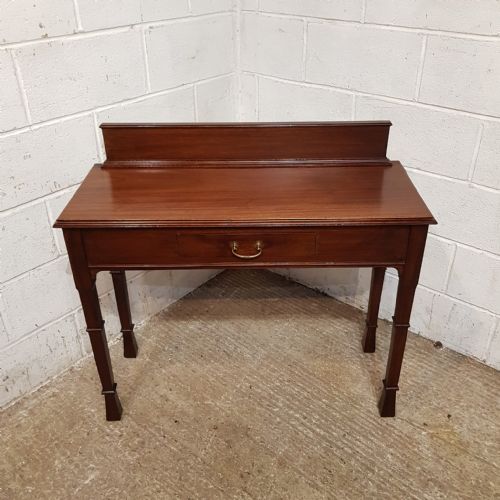
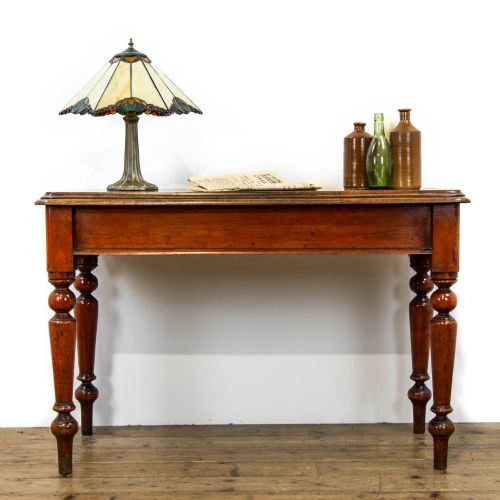
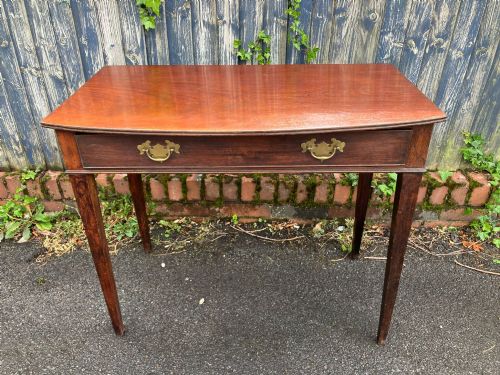
Mahogany Hallway Console Table
A mahogany hallway console table brings deep timber grain and formal grace to an entrance, offering a steady surface for daily correspondence or a single lamp.
Mahogany Hallway Console Table
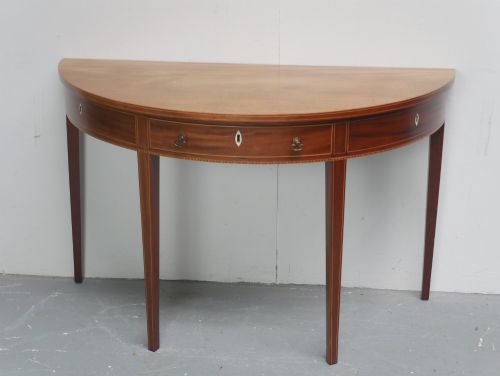
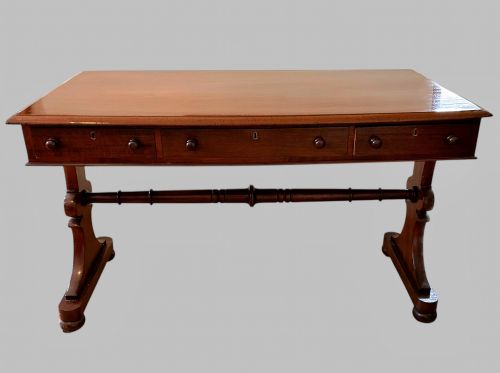
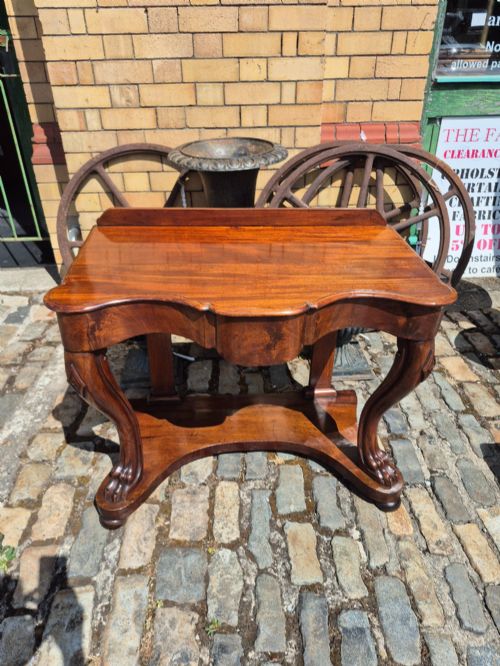
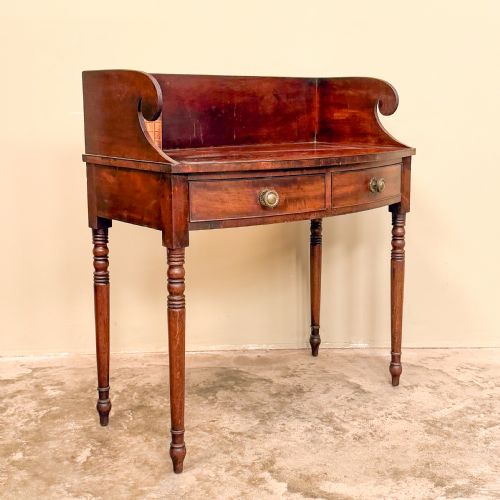
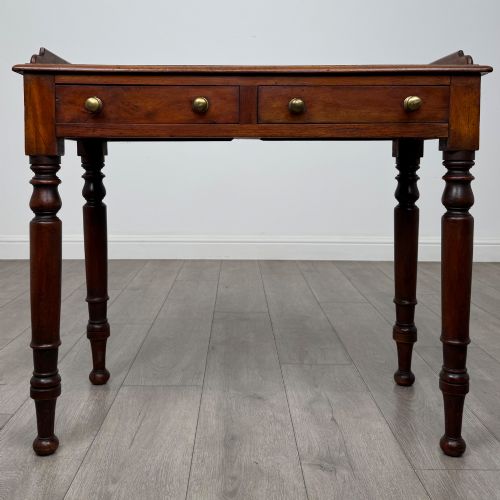
A mahogany hallway console table is a slim surface designed to sit against an interior wall without blocking passage. The examples on this page span the Georgian, Regency, and Victorian eras, alongside Edwardian and later twentieth-century interpretations.
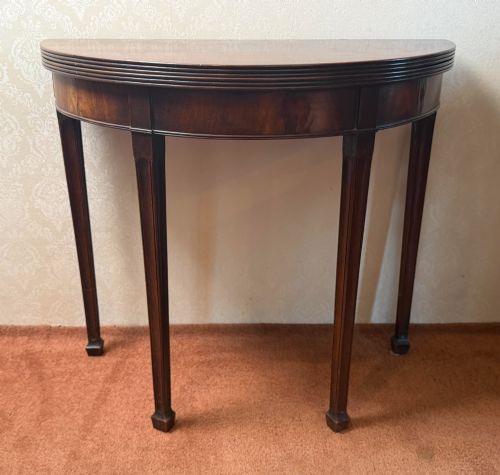
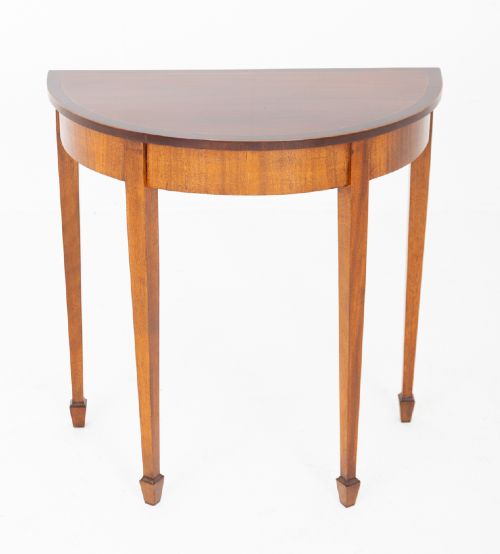
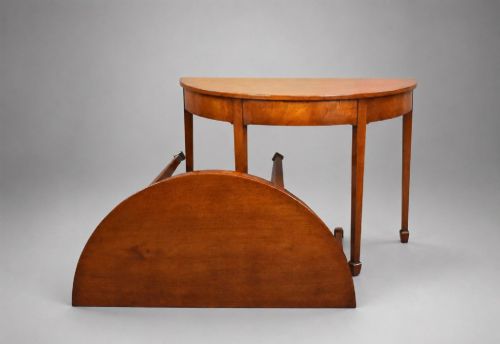
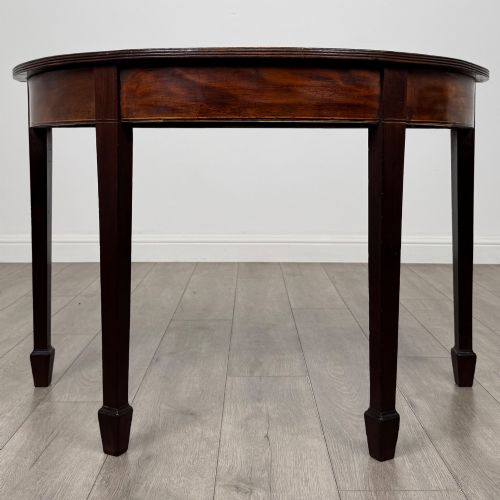
The form frequently appears as a demi-lune or half-moon shape, built to tuck neatly into narrow spaces, though rectangular and bow-front variants also occur. Makers historically adapted writing tables, tea tables, and serving tables to serve this narrow wall-mounted function.
Originating largely from English and French workshops, these pieces often incorporate functional drawers or folding tops. They rely on the rich reddish-brown tones of the timber to anchor an entrance hall.
How they were made
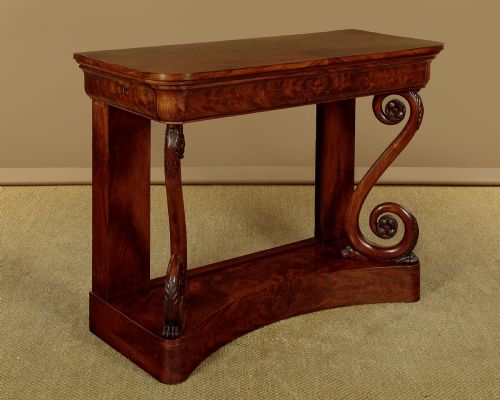
Cabinetmakers constructed the main framework and legs in solid mahogany, frequently selecting flame mahogany veneer for tabletops to create striking, figured grain patterns. These wooden structures were often enhanced with contrasting satinwood or boxwood inlay.
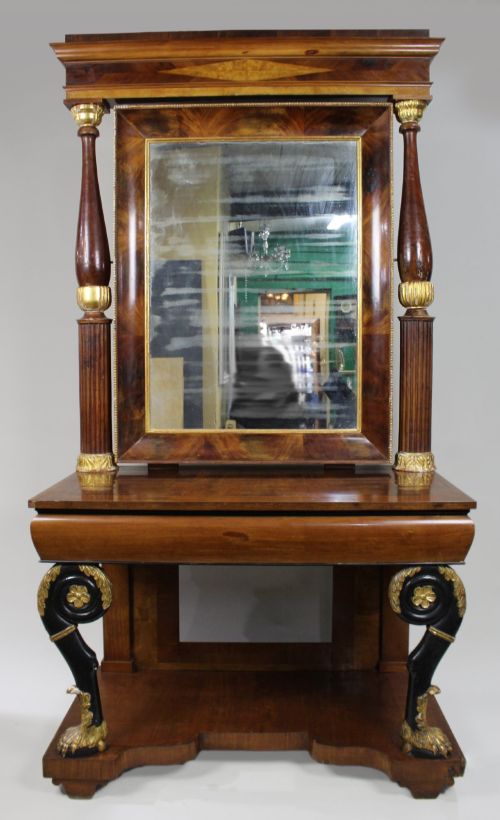
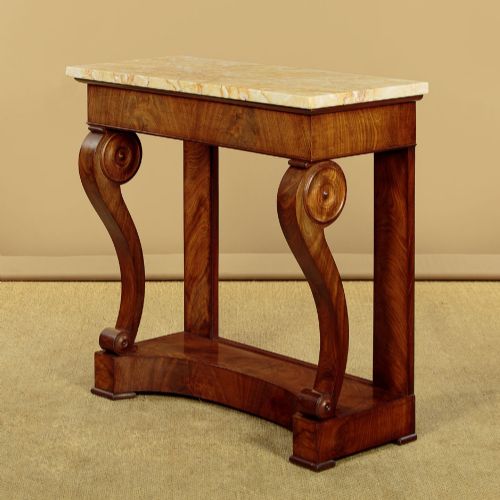
Many examples incorporate fitted marble slabs inset into the timber top, particularly in nineteenth-century French and neoclassical designs, providing a cool and durable working surface. Gilt bronze mounts and brass details appear alongside parcel gilding to accent the timber.
Joinery relied on traditional techniques such as mortise and tenon frames, with hand-cut dovetails securing the interior drawer boxes where drawers are present.
The listings on this page include tables featuring marble, glass, and brass components alongside solid mahogany and flame mahogany veneer.
What varies in quality
The standard of a mahogany hallway console table rests on the selection of the timber veneer and the precision of any inlaid decoration. Highly figured flame mahogany and crisp, balanced boxwood or satinwood stringing mark out pieces produced by skilled cabinetmakers.
Structural harmony also dictates value, seen in the clean sweep of a demi-lune curve or the crispness of carved details like reeding and parcel gilding. Heavy, clumsy proportions or poorly matched veneer panels place a piece lower down the scale.
Krieger Paris·Druce and Co
The Mahogany Hallway Console Table Glossary
- Demi-Lune
- A half-moon shape used for tables designed to stand flat against a wall. This profile became especially popular during the Georgian and Regency periods.
- Flame Mahogany
- A wood veneer cut from the fork of the mahogany tree where the branch meets the trunk. It creates a distinctive, flickering flame pattern across the surface.
- Parcel Gilt
- A decorative technique where specific carved details or mouldings are partially gilded with gold leaf while the rest of the wood remains exposed.
- Satinwood Inlay
- Contrasting light-coloured wood inserted into recesses cut into the darker mahogany surface. This technique creates geometric borders and delicate floral motifs.
- Serving Table
- A large side table traditionally used in dining rooms for holding dishes. Many surviving examples now function as console tables in hallways.
Mahogany Hallway Console Table: Frequently Asked Questions
Where should I place a console table?
These tables suit narrow entrance halls, corridors, and landings where floor space is limited. Their shallow depth allows them to sit flat against a wall without obstructing movement.
They also function well in living rooms beneath a mirror or window, providing a convenient display surface for lamps and small objects.
Can I use a tea table as a console?
Many antique tea tables share the compact dimensions and folding top mechanisms found on tables used in hallways. Eighteenth and nineteenth-century examples often transition easily into this role.
Their narrow profile when closed makes them practical alternatives to purpose-built console furniture.
How do I care for mahogany veneer?
Keep mahogany furniture away from direct sunlight and strong heat sources to prevent the wood and underlying glue from drying out. Dust regularly with a soft, dry cloth.
Apply a traditional beeswax polish occasionally to nourish the timber and maintain the natural lustre of the polished surface.
What is a marble top table used for?
Marble-topped tables provide a durable, cool surface that resists staining from damp objects or flower vases. Nineteenth-century French and English makers favoured this combination for practical utility in hallways.
They require minimal maintenance beyond wiping with a damp cloth and mild soap.