



Mahogany Glazed Corner Cupboard
A mahogany glazed corner cupboard tucks neatly into a neglected angle, holding silver behind glass while lifting a room's corners with rich timber.
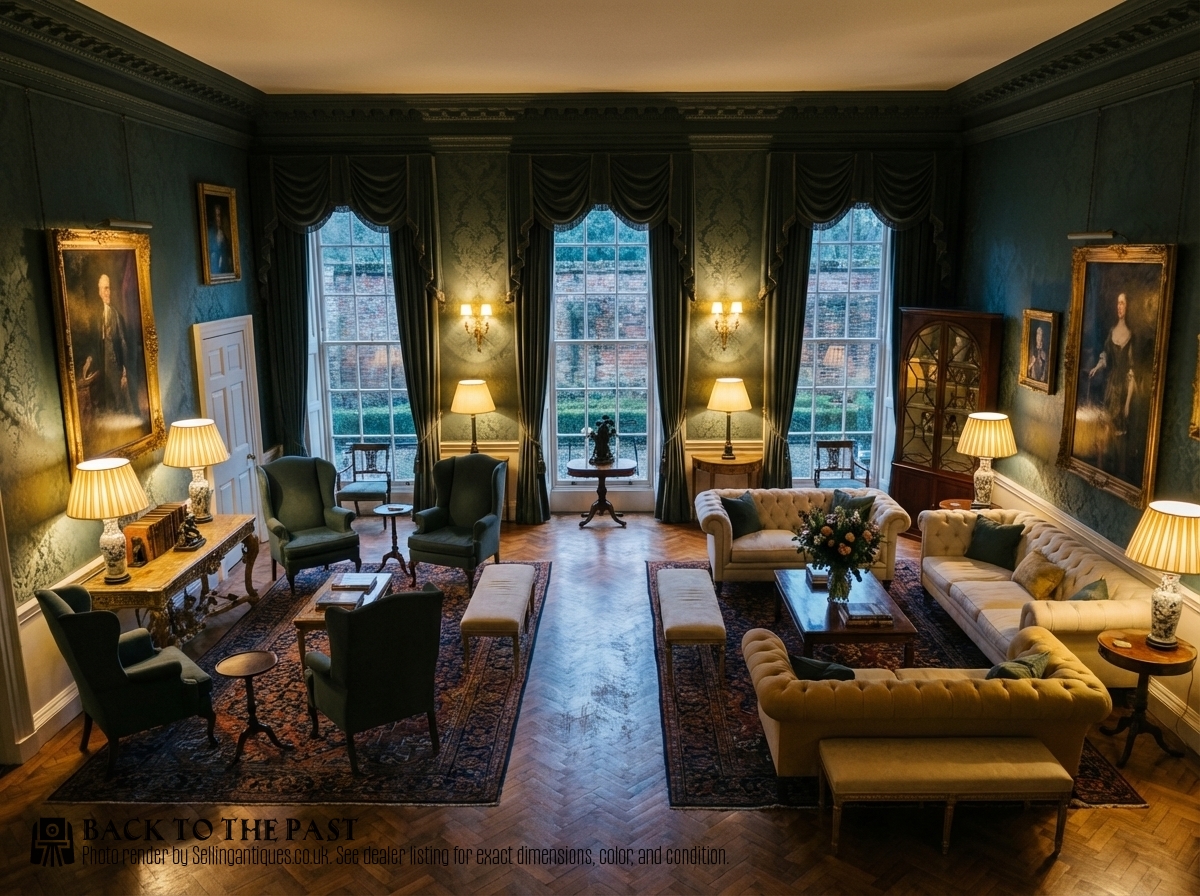
Mahogany Glazed Corner Cupboard
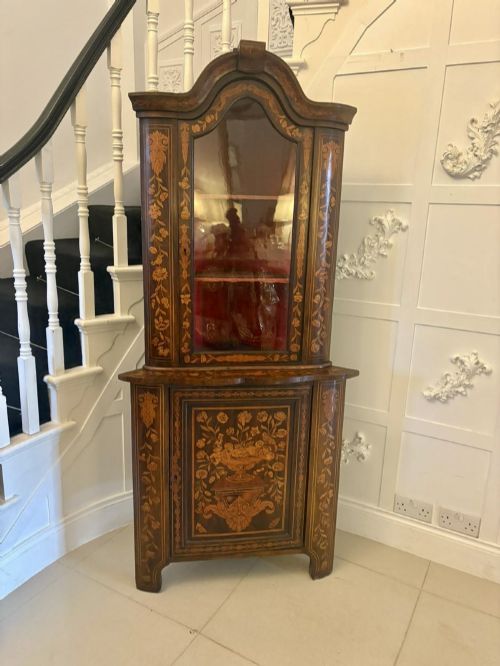
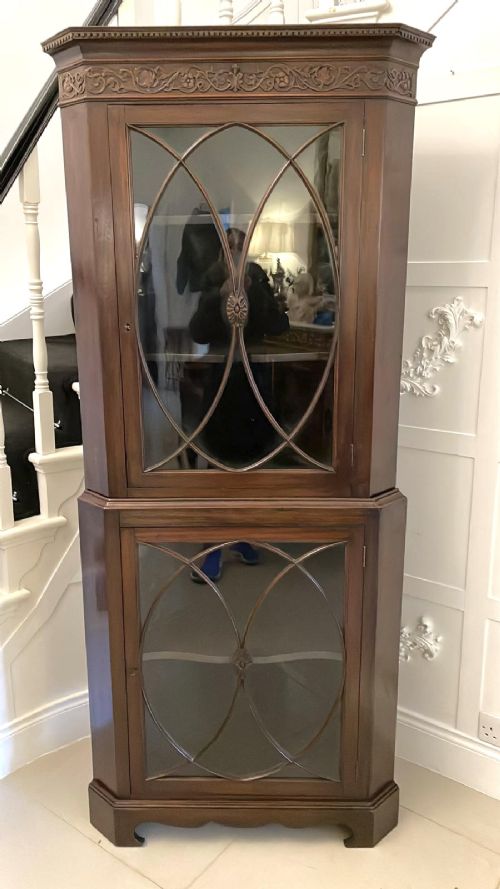
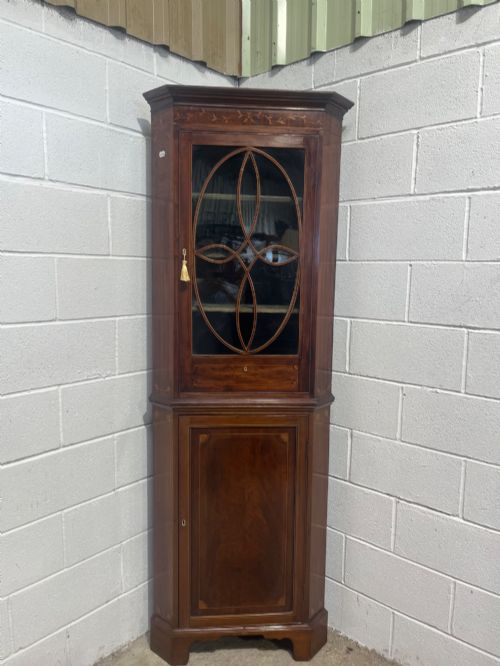
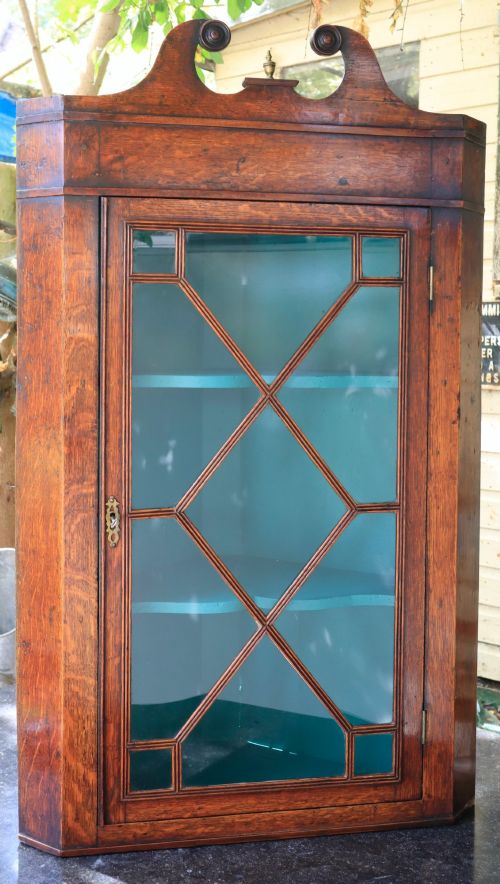
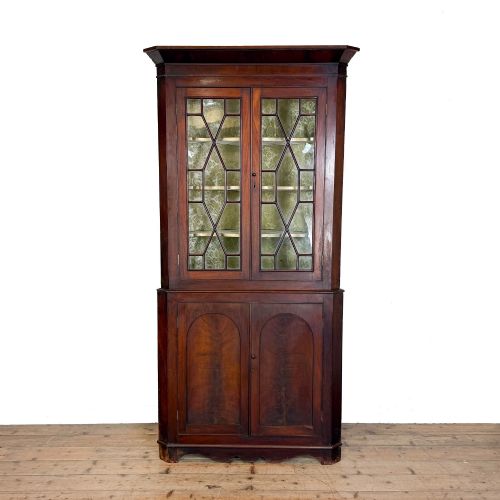
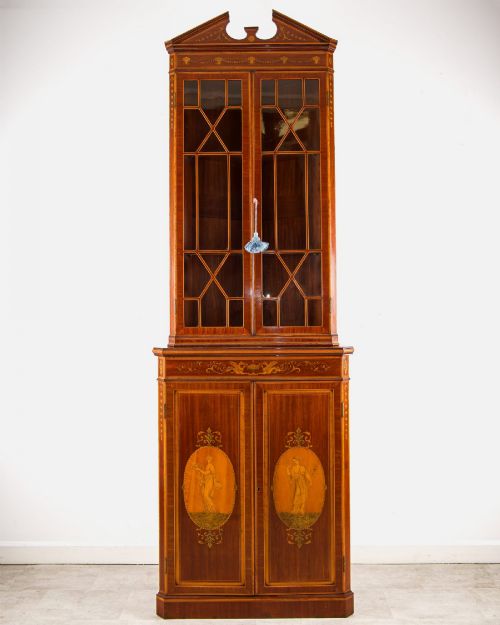
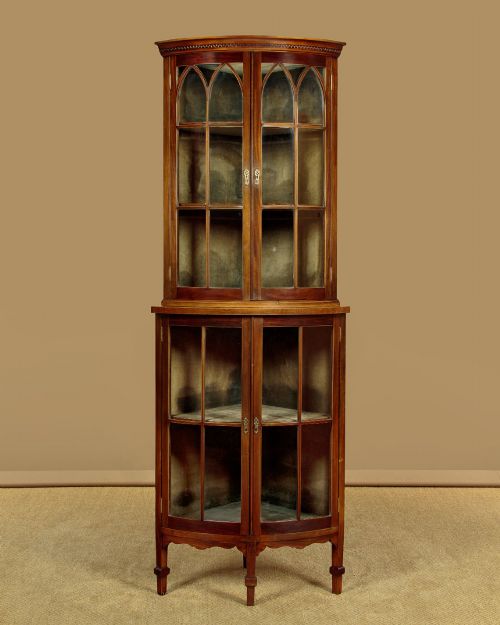
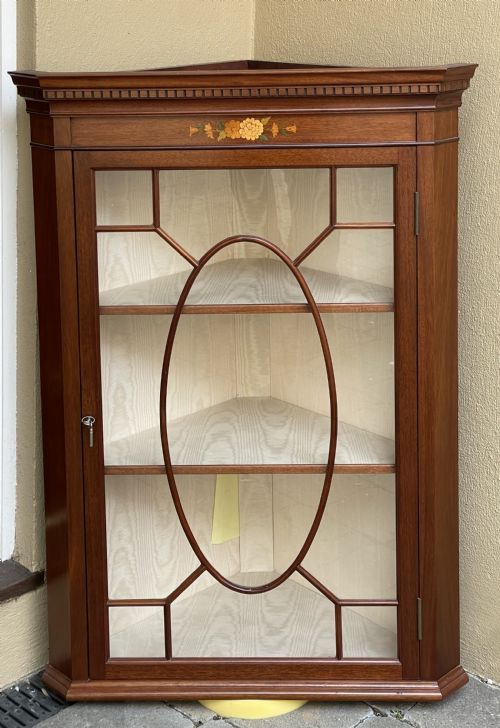
A mahogany glazed corner cupboard solves the problem of dead space in a room while displaying treasured objects behind glass panels. These architectural pieces range from compact wall-hanging cabinets to substantial floor-standing double-height units and two-part floor cabinets.
The pieces on this page span the Georgian and Victorian eras through the Edwardian period and into the early twentieth century. Styles stretch from restrained George III and Regency designs to ornate Sheraton Revival, Dutch Baroque Revival, and Edwardian inlay.
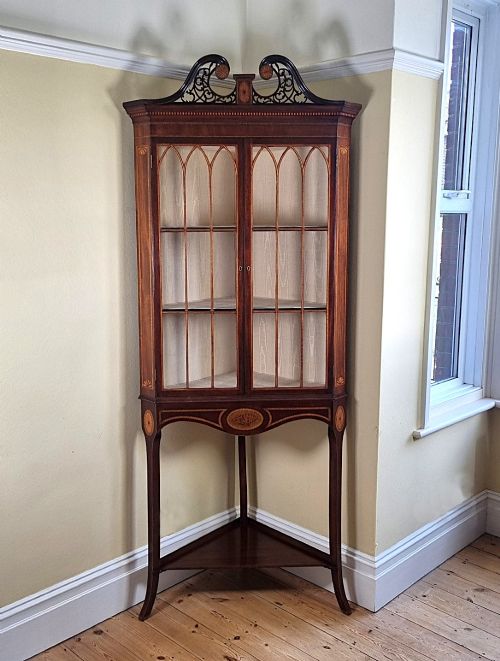
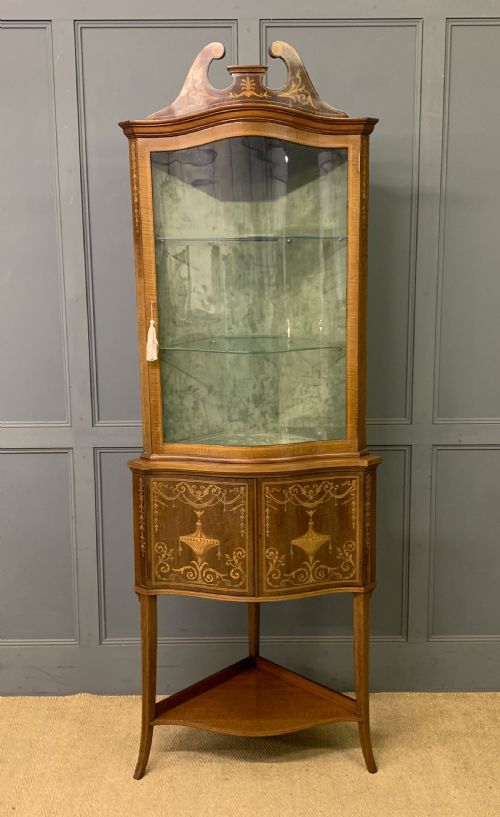
Forms vary from simple single-door cupboards to bow-fronted and serpentine cases, some sitting on stands or bracket feet. They appear in English, Scottish, Danish, and French interpretations.
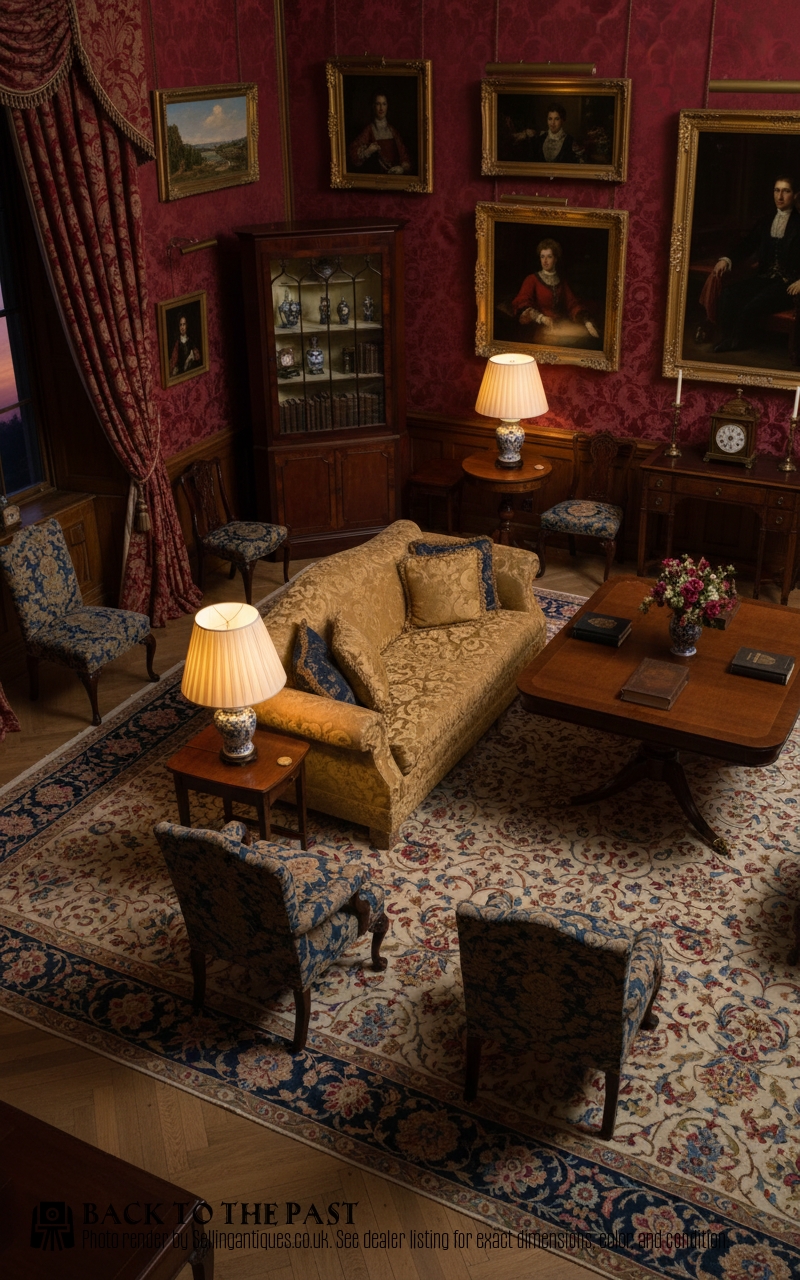
How they were made
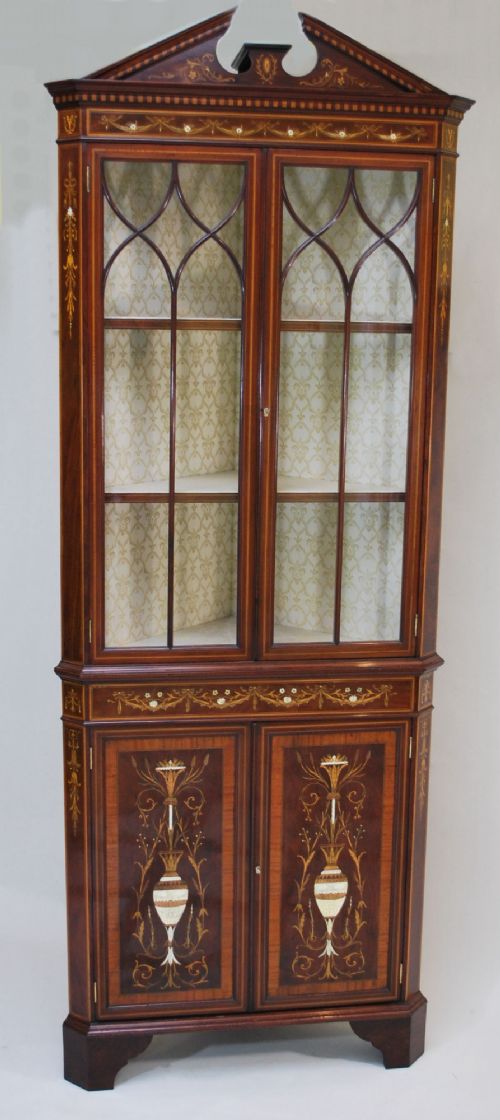
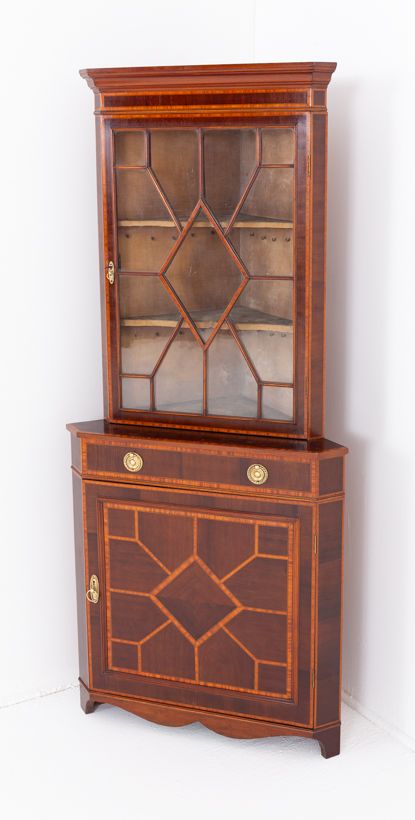
Cabinet makers built these frames primarily from solid mahogany and wood veneers, frequently incorporating secondary timbers like oak. Carpenters enhanced surfaces using decorative satinwood inlay, marquetry, and cross-banded veneers.
Glazing takes the form of multi-paned glass doors held together by slender wooden glazing bars, often shaped in delicate astragal patterns. Brass hardware including hinges, drawer pulls, and locking mechanisms completes the functional construction.
Materials span solid mahogany, oak, and walnut, embellished with satinwood inlay, fabric linings, and brass hardware.
What varies in quality
Construction methods and decorative restraint separate standard examples from finer work. Superior pieces display crisp, intricate satinwood inlay and perfectly fitted astragal glazing bars rather than heavy, plain framing.
Goodhall Lamb and Heighway
The Mahogany Glazed Corner Cupboard Glossary
- Astragal glazing
- A method where thin wooden bars divide a glass door into multiple smaller panes. These delicate mouldings provide structural support while creating a lighter, more decorative visual grid.
- Bow front
- A cabinet front that curves outward in a convex arc. This shape softens the sharp angles typical of corner furniture.
- Cross-banding
- A decorative border of veneer laid around the perimeter of a panel so the grain runs perpendicular to the central wood. It frames the surface with a contrasting directional pattern.
- Marquetry
- An elaborate technique of inlaying thin slices of varied wood veneers and other materials to form pictorial designs. Artisans cut and fit these pieces together before applying them to the cabinet surface.
- Serpentine
- A curved furniture front featuring a concave centre flanked by convex ends, resembling a gentle wave. This undulating profile demands high skill from the woodworker.
Mahogany Glazed Corner Cupboard: Frequently Asked Questions
How do I hang a wall cabinet?
Wall-hanging corner cupboards require secure fixing directly into structural wall studs or masonry using appropriate heavy-duty brackets. Because these heavy timber and glass units bear considerable weight when loaded with ceramics, professional installation is strongly recommended.
Ensure the cabinet height allows comfortable access to the interior shelves while keeping the piece balanced within the corner. The internal layout often includes fixed wooden shelves meant for lighter display items.
How do I tell Georgian from Edwardian?
Georgian pieces generally date from the eighteenth and early nineteenth centuries, displaying architectural proportions, mahogany solids, and restrained classical lines. They rely on the natural grain of the wood and subtle mouldings for their decorative impact.
Edwardian items date from around 1900 and frequently revive earlier styles with the addition of intricate satinwood inlay, marquetry, and lighter frames. These later cabinets often bear brighter, highly polished finishes reflecting twentieth-century tastes.
Where should I place a corner cupboard?
These cabinets fit directly into the ninety-degree angle of a room, turning unused architectural dead space into a focal point. They anchor empty wall junctions in dining rooms, hallways, or living spaces.
Floor-standing models anchor the lower portion of the room, while hanging units float above side tables or seating. Position them away from direct sunlight and strong heat sources to protect the mahogany finish and old glass.