
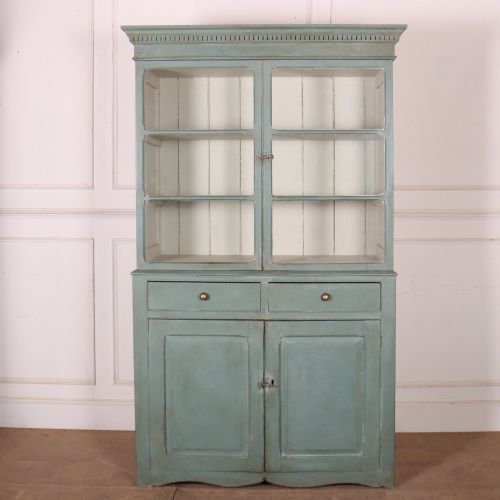
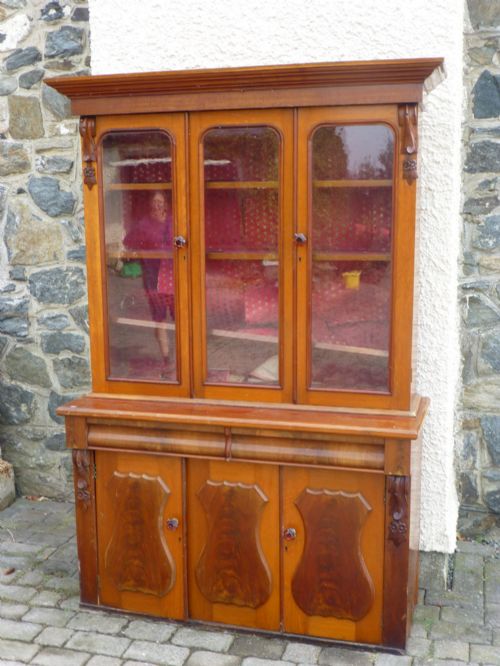

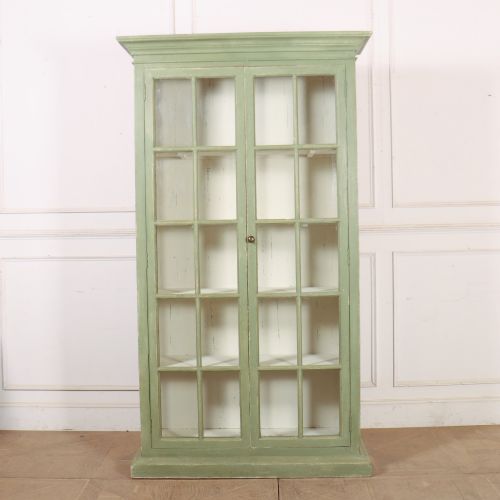


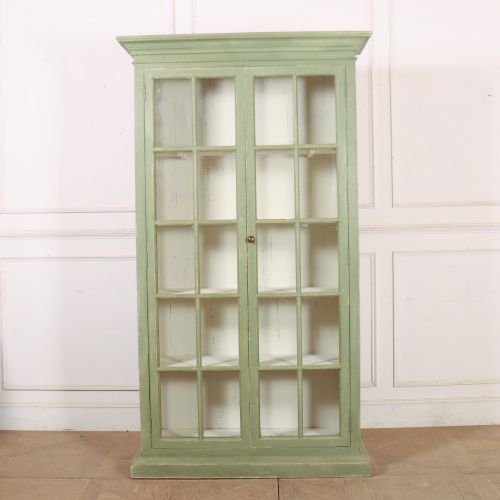


Country House Display Cabinet
A country house display cabinet brings practical storage and glass-fronted visibility to domestic spaces using traditional timbers.
Country House Display Cabinet
When you search for a country house display cabinet, you examine furniture designed to store and exhibit household goods in domestic interiors. These pieces combine closed lower cupboards with upper glass doors, bookcases, or open shelving. The selections on this page span the eighteenth, nineteenth, and early twentieth centuries, drawing on English, Irish, Scottish, and Welsh regional traditions.
The forms vary widely to suit different rooms and storage needs. You find tall library bookcases, corner cupboards designed for awkward spaces, kitchen dressers with glazed upper sections, and two-part gun cabinets. Styles range from plain vernacular pine and oak to formal Georgian mahogany and painted finishes.
Most examples originate from provincial workshops rather than metropolitan cabinet makers. They reflect local timber choices and regional joinery methods, resulting in sturdy, functional furniture built for daily family use. The primary function remains the exhibition of books, china, and curated collections behind glass or within open frames.
What varies in quality
Quality rests primarily on the choice of timber and the sophistication of the joinery. Superior examples utilise dense, well-figured oak or premium mahogany with tight dovetailing and precise internal fitting. Poorer or more utilitarian pieces rely on softer pine or mixed woods with simpler, heavier construction.
Proportion and surface preservation also separate standard examples from exceptional ones. Pieces retaining original historic paint or untouched patinated wood finishes command greater interest than those stripped down or heavily reworked over generations.
Some nineteenth-century gun cabinets occasionally double up as refined bookcases when the gun racks are removed.
The Country House Display Cabinet Glossary
- Breakfront
- A piece of furniture where the central section projects forward from the flanking outer sections. This architectural arrangement adds depth and visual interest to large bookcases and dressers.
- Astragal
- A narrow wooden moulding used to hold glass panes within a door frame. Fine astragals divide glazed doors into smaller geometric or arched panes.
- Vernacular
- Furniture made by local regional craftsmen using traditional local styles and materials rather than following metropolitan academic designs. These pieces often display unique structural quirks.
- Dovetail
- A joinery technique formed by interlocking wedge-shaped fingers, used primarily in drawer construction. Hand-cut dovetails indicate older, pre-industrial cabinetmaking.
- Escutcheon
- A flat plate of brass surrounding a keyhole to protect the surrounding wood from wear. They are often decorative elements on cabinet doors and drawers.
Country House Display Cabinet: Frequently Asked Questions
What is a country house display cabinet?
It is a large storage piece featuring glass doors or open shelves designed to house books, ceramics, and ornaments in domestic rooms.
These cabinets combine utility and display, emerging from regional workshops across Britain and Ireland during the eighteenth and nineteenth centuries.
How do I date an antique cabinet?
Dating relies on examining timber species, construction methods like hand-cut dovetails, and stylistic markers such as Gothic tracery or Georgian proportions.
Hardware styles, glass types, and signs of wear also help determine whether a piece originates from the eighteenth, nineteenth, or early twentieth century.
Are these cabinets made of solid wood?
The majority of pieces from these periods utilise solid timbers such as oak, mahogany, pine, and elm for their main structures.
Regional makers selected locally available woods, meaning carcases, shelves, and backboards were built entirely from timber rather than modern manufactured boards.
How do I care for a painted cabinet?
Historic painted surfaces require gentle dusting with a dry microfibre cloth and protection from direct sunlight and extreme humidity fluctuations.
Avoid using modern chemical polishes or water on historic paint finishes to preserve the original pigment and surface integrity.