

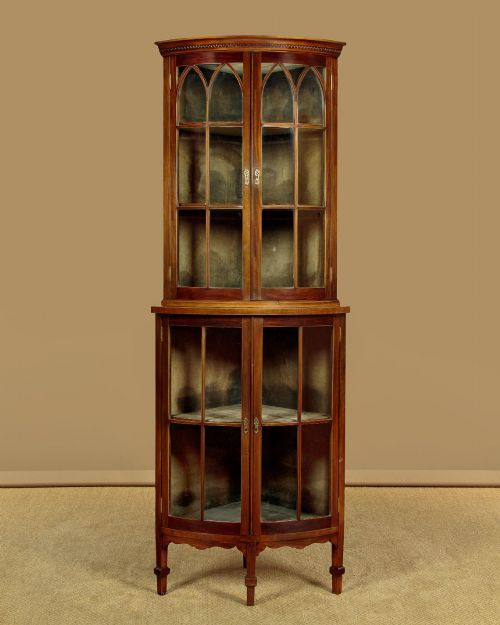


Vintage Glass Front Corner Cabinet
These vintage glass front corner cabinets fit neatly into awkward spaces while displaying your collection behind glass.
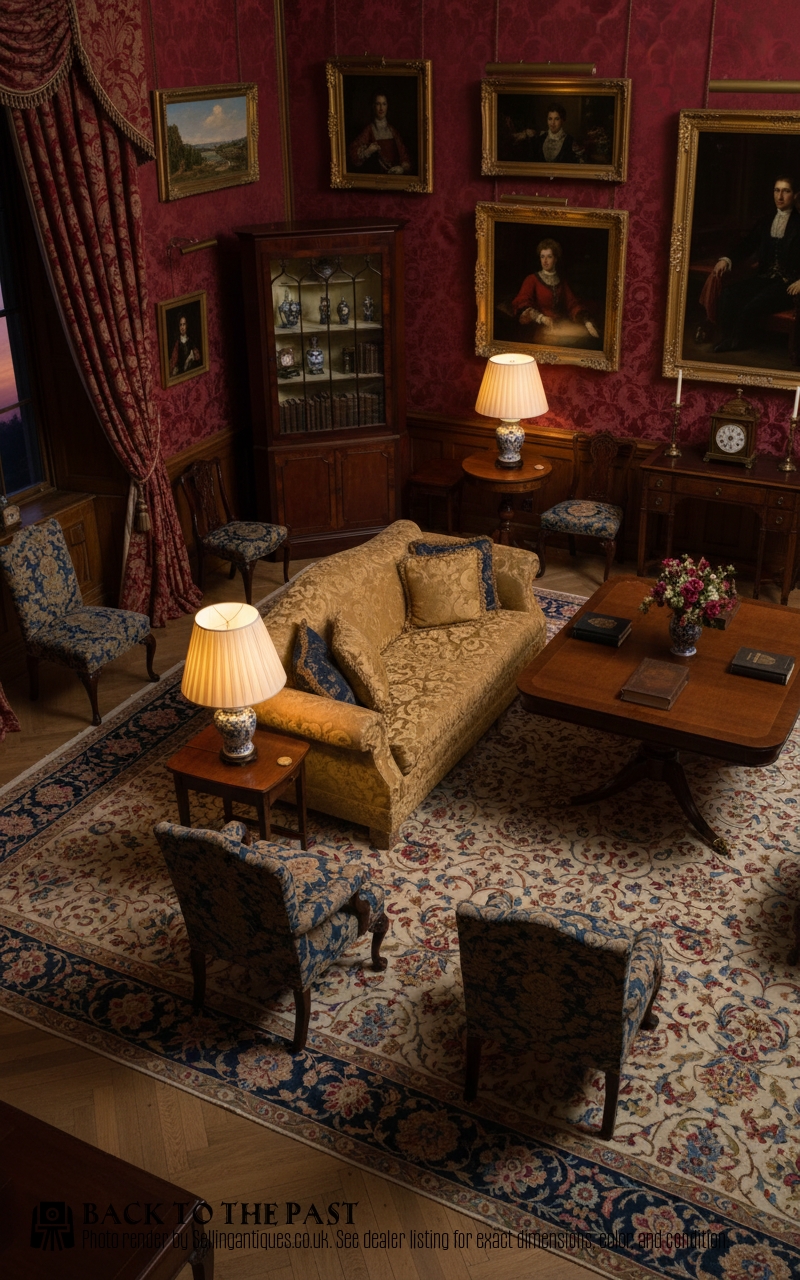
Vintage Glass Front Corner Cabinet
A vintage glass front corner cabinet is designed specifically to utilise the awkward angles of a room while providing display space for cherished items behind a glazed door. These pieces span several distinct periods including the Edwardian era, the nineteen-thirties, and the nineteenth century.
The most common form you will encounter on this page is the freestanding mahogany corner cupboard, frequently detailed with satinwood inlay or brass mounts. You will also find standing double-height configurations and serpentine-shaped fronts among the selections.
Makers and workshops of the past constructed these items in various styles ranging from Edwardian Revival and Arts and Crafts to Art Deco. Each piece reflects the domestic storage needs and aesthetic preferences of its specific period.
Materials and construction
Timber selection forms the foundation of these pieces, with mahogany dominating the inventory alongside oak, ebonised wood, and satinwood. Craftsmen often enhanced mahogany surfaces with delicate satinwood inlay or intricate marquetry to catch the eye.
Glass panels are set into doors to protect the contents while maintaining visibility from across the room. Brass hardware, including hinges and mounts, provides functional support and structural contrast to the dark woods.
Vintage Glass Front Corner Cabinet Retail Price Guide 2026
Typical asking prices for vintage glass front corner cabinet among the pieces listed under this phrase on Sellingantiques today, from the lower quarter to the upper quarter. They describe what is for sale here now, not the wider market.
Rumour has it that nineteenth-century corner cupboards were originally designed to hide away spare tea caddies and prevent midnight kitchen raids.
Assessing quality and finish
The division between standard and superior pieces rests upon the precision of the cabinetmaker's joinery and the complexity of the timber work. Elaborate marquetry inlay and serpentine fronts elevate a piece far beyond a simple utilitarian storage cupboard.
Finer examples demonstrate careful grain matching across the panels and superior brass hardware that has aged naturally over the decades. The integrity of the glass glazing bars and the weight of the timber indicate the original workshop's standard.
Edwards And Roberts
The Vintage Glass Front Corner Cabinet Glossary
- Bow front
- A convex curved cabinet front that projects outwards, popular in various twentieth-century designs. This shape softens the hard angles usually associated with corner furniture.
- Marquetry
- The art of applying pieces of veneer to a structure to form decorative patterns and pictures. Craftsmen utilise different coloured woods to create contrast.
- Serpentine
- A shaped furniture front featuring a concave centre flanked by two convex ends, resembling a snake's movement. This undulating line requires advanced woodworking skill.
- Ebonised
- Wood treated with a dark finish to imitate the appearance of expensive ebony. This technique gained particular favour during the early twentieth century.
- Glazing bars
- The wooden or metal strips that hold the individual panes of glass within a door. Slender bars denote finer craftsmanship than thick, heavy alternatives.
Vintage Glass Front Corner Cabinet: Frequently Asked Questions
What rooms suit a corner cabinet best?
These cabinets work exceptionally well in dining rooms, living areas, or hallways where wall space is at a premium. By tucking into a corner, they utilise dead space effectively without obstructing movement through the room.
Their glass doors allow you to display china, books, or collections while keeping dust away from your items.
How do I date an Edwardian cabinet?
Edwardian pieces often feature lighter mahogany timbers combined with satinwood stringing or classical inlay motifs. The construction methods bridge traditional nineteenth-century cabinet making and twentieth-century production.
Examining the interior linings, drawer dovetails, and backboards helps confirm the period of manufacture.
Are these cabinets freestanding or wall mounted?
The examples on this page are standing corner cupboards designed to rest directly on the floor. Many feature substantial plinths or bracket feet to ensure stability in the corner.
Double-height variations provide additional storage capacity in both upper and lower sections.
How should I clean the mahogany wood?
Dust the timber regularly with a soft, dry cloth to prevent a buildup of particles on the polished surface. Avoid modern silicone sprays, which can penetrate the finish and damage the patina over time.
Applying a traditional beeswax periodically nourishes the wood and maintains a gentle, natural lustre.