

Mahogany Flap Table
When you search for a mahogany flap table, you are looking at drop-leaf designs intended to save space and serve multiple domestic uses across centuries.

Mahogany Flap Table
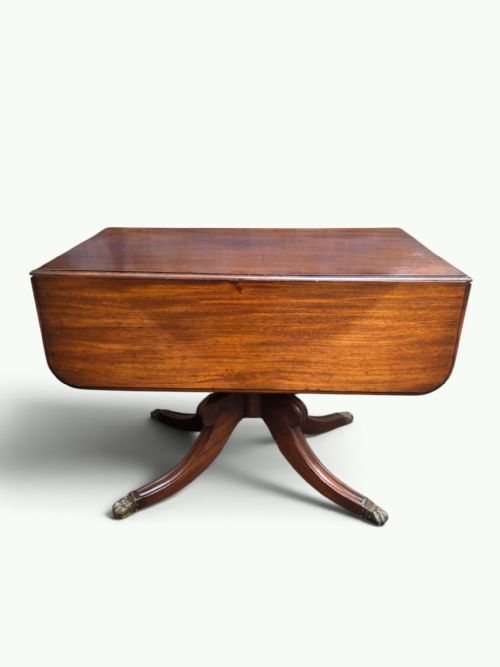
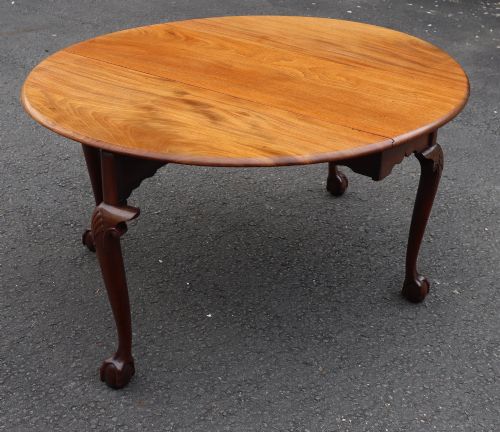
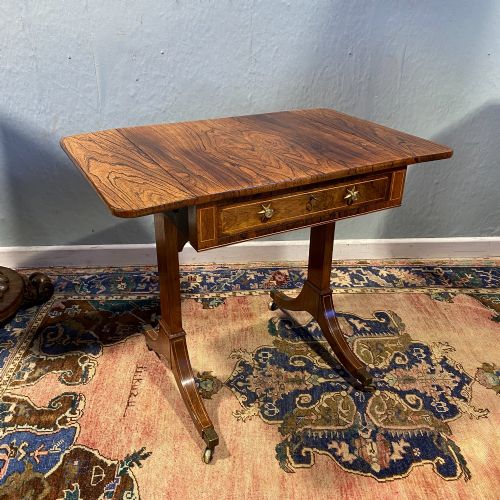
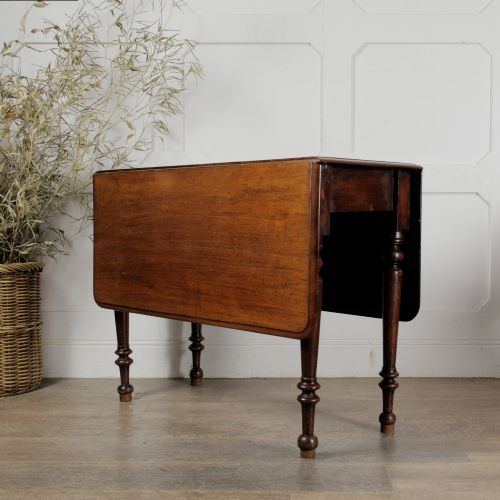
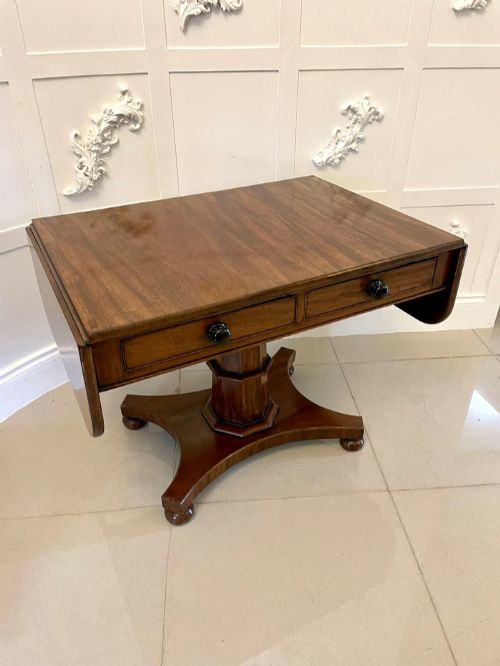
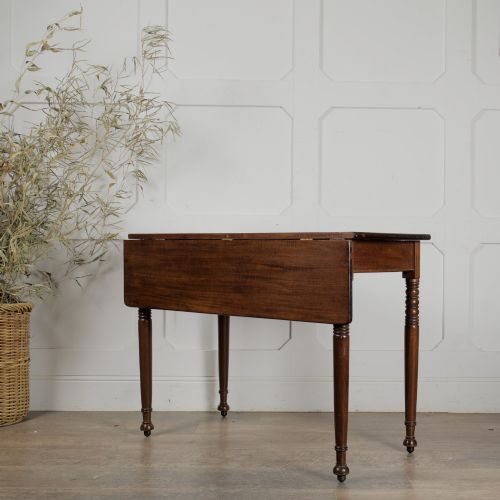
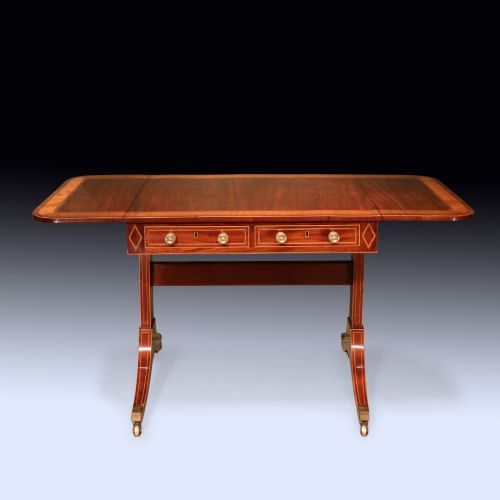
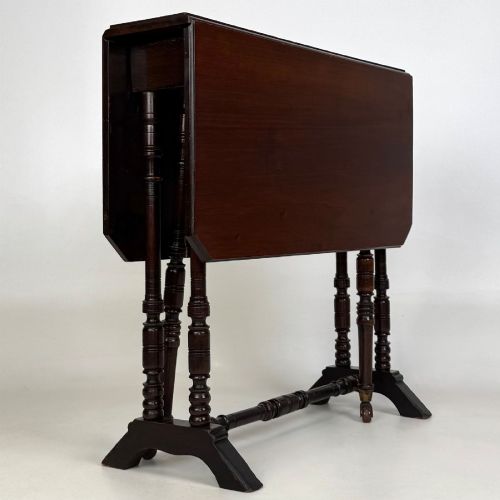
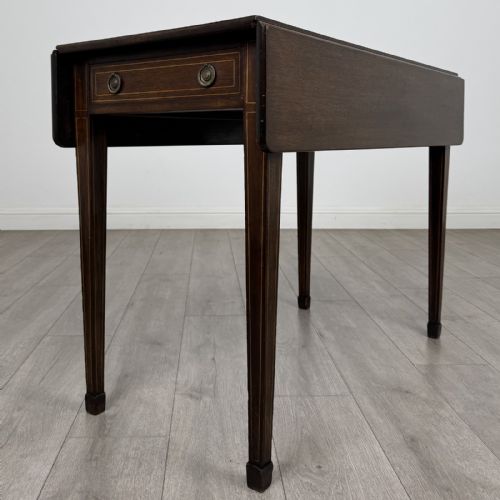
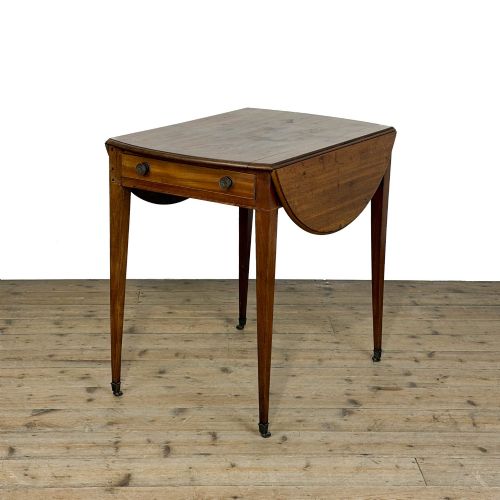
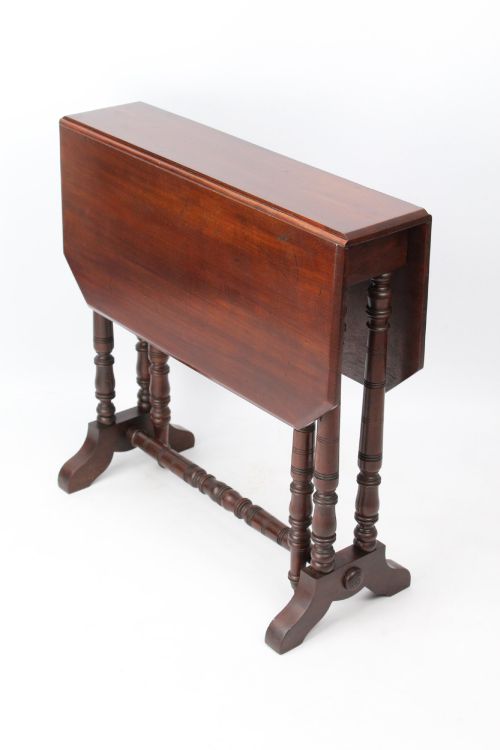
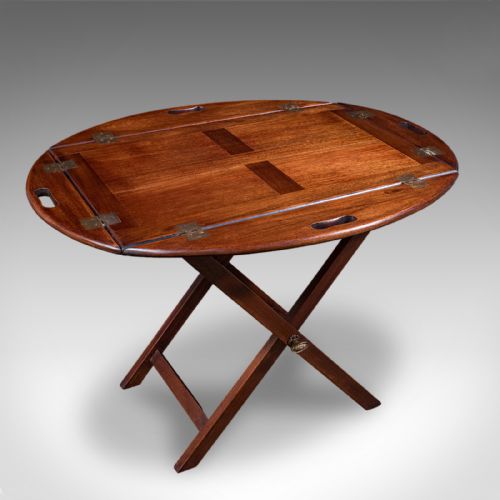
A mahogany flap table is a drop-leaf design that expands from a compact footprint into a surface suitable for dining, writing, or serving. The form encompasses Pembroke tables, Sutherland tables, sofa tables, and large dining tables spanning the Georgian, Regency, and Victorian periods.
Evidence shows examples originating from the 18th century through the Edwardian era, incorporating styles such as George III, Regency, and William IV. Makers and craftsmen adapted the flap mechanism for work tables, lamp stands, and library tables.
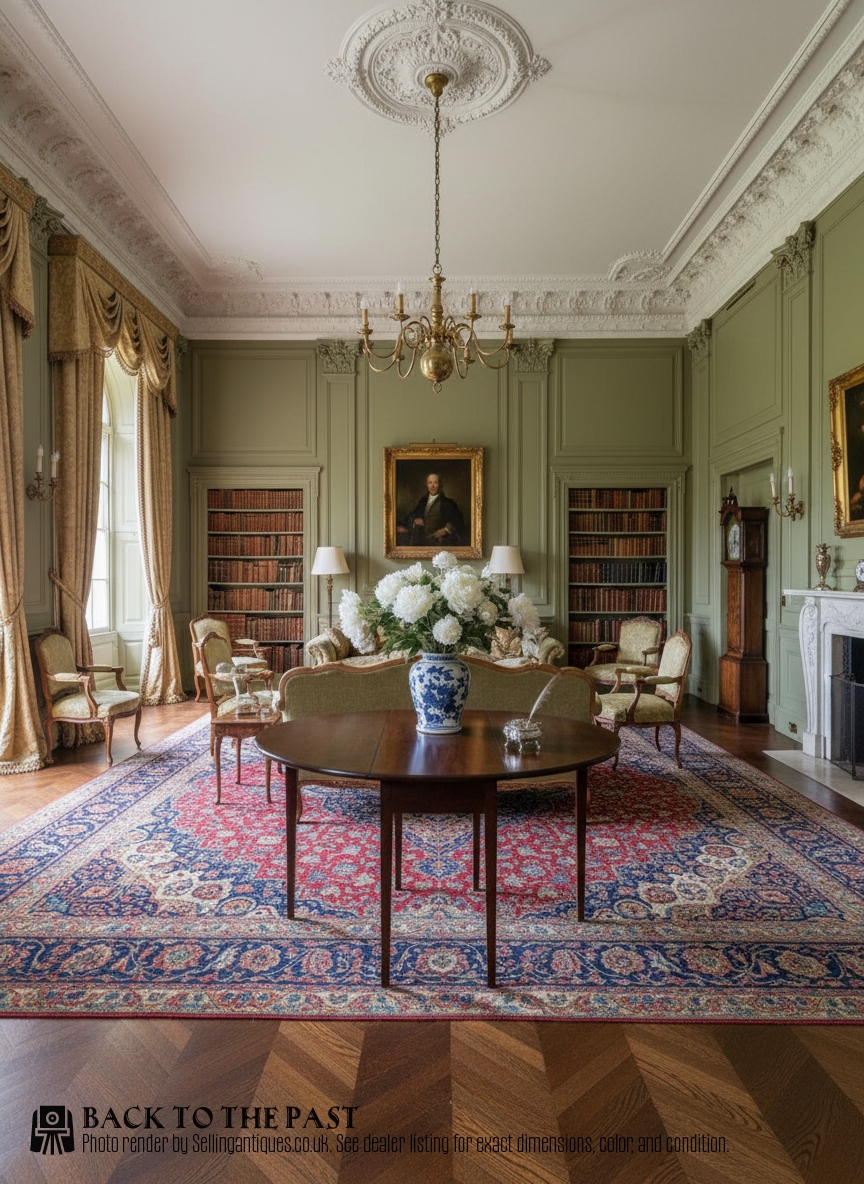
How they were made
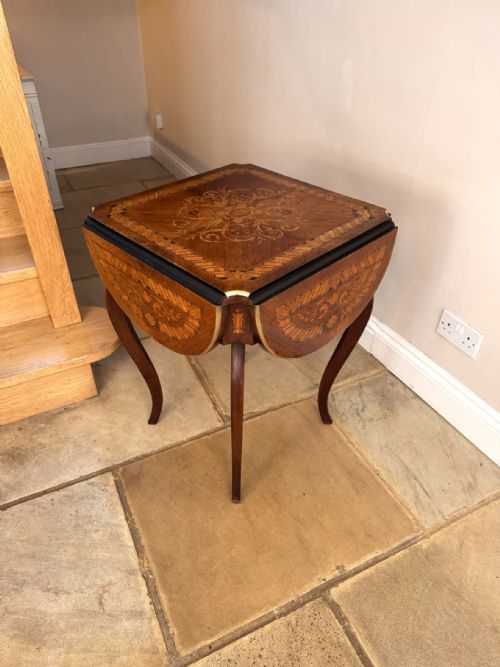
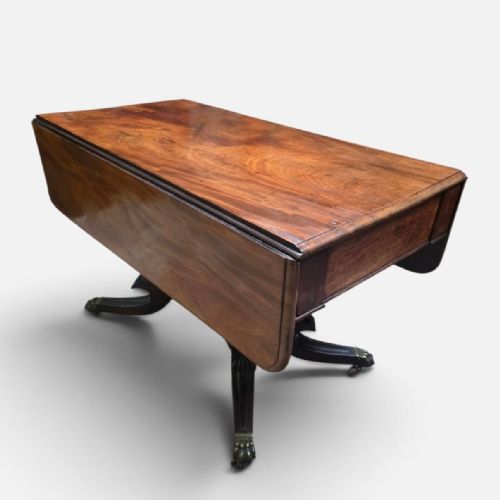
Makers utilised solid mahogany and Cuban mahogany, often selecting figured timber or flame mahogany veneers for top surfaces. Secondary woods support internal drawer construction, while satinwood, rosewood, and ebony provide contrasting crossbanding and stringing.
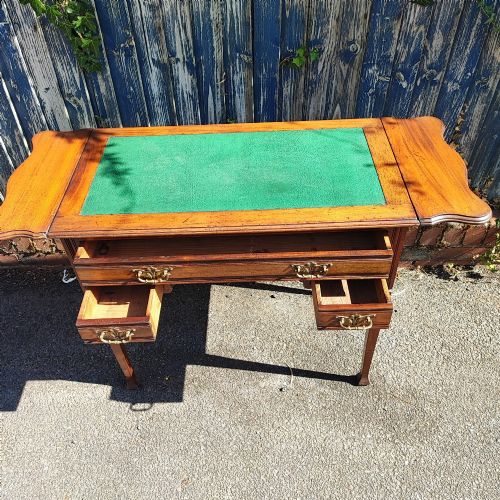
Structural elements include brass castors on legs, iron hinges for drop leaves, and occasional leather inserts for writing surfaces. Joinery relies on traditional methods to stabilise the hinged flaps and support the weight of extended leaves.
Mahogany Flap Table Retail Price Guide 2026
Typical asking prices for mahogany flap table among the pieces listed under this phrase on Sellingantiques today, from the lower quarter to the upper quarter. They describe what is for sale here now, not the wider market.
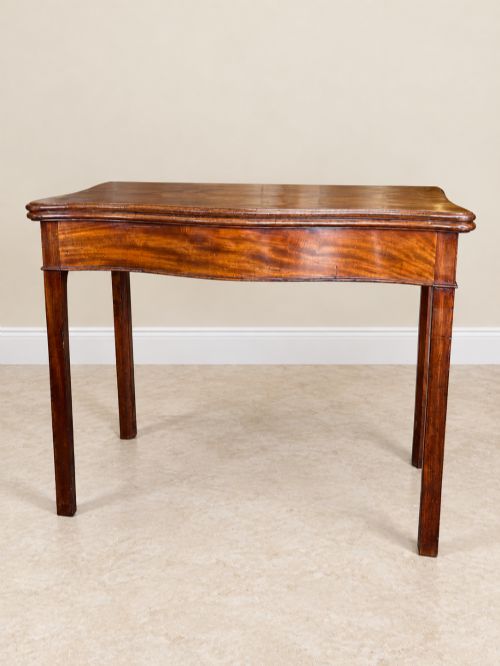
One unusual George III survival is a patience table designed specifically for solitary card games.
What varies in quality
Quality depends on the selection of timber, visible in the grain pattern of figured or Cuban mahogany across the main leaves. Finer examples display precise wood inlay, stringing, and well-matched veneers rather than plain surfaces.
Construction standards appear in the stability of the drop-flap mechanism, the integration of original brass castors, and the proportion of the legs, whether cabriole with claw-and-ball feet or tapered George III supports.

James Mein Kelso
The Mahogany Flap Table Glossary
- Pembroke table
- A small rectangular table with two hinged drop flaps on opposite sides, usually equipped with a drawer.
- Sutherland table
- A narrow table with particularly slender drop flaps that fold down almost vertically on either side of a central gateleg structure.
- Sofa table
- A long, narrow table designed to stand in front of a sofa, featuring drop flaps on the two long sides and often double pedestals.
- Gateleg table
- A table with legs that swing out on hinged pivots to support the drop leaves when raised.
- Crossbanding
- A strip of veneer applied to the border of a table top with the grain running perpendicular to the centre panel.
Mahogany Flap Table: Frequently Asked Questions
What is a mahogany flap table used for?
These pieces function as versatile surface furniture that adapts to different room layouts. Drop leaves allow the furniture to sit flat against a wall when not in use.
Opened leaves transform the compact stand into a dining surface, writing desk, or serving table. Historical variations include specialised work tables and lamp stands.
How do I tell a Georgian table from a Victorian one?
Georgian examples often display lighter proportions, cuban mahogany timbers, and characteristic leg styles such as cabriole with claw-and-ball feet or tapered supports. Inlay work during this era frequently utilises subtle stringing.
Victorian pieces tend to feature heavier construction, darker finishes, and distinct hardware like original brass castors. Sutherland tables and certain work table forms appear more frequently in later 19th-century listings.
How do the drop leaves stay up?
Hinged flaps rely on pivoting wooden brackets, known as fly brackets or rule joints, which swing outward from the frame. When positioned beneath the leaf, these supports bear the downward weight.
Gateleg variants utilise swinging legs that rotate outward from a central pivot. This physical barrier locks beneath the extended leaf to prevent collapse.
Where should I place a flap table in my home?
These tables fit well in hallways, living rooms, or dining spaces where floor area changes throughout the day. Dropping both leaves creates a narrow console or side table.
Fully extending the leaves provides adequate surface area for dining or display purposes. Their compact closed footprint suits smaller rooms without dominating the space.