
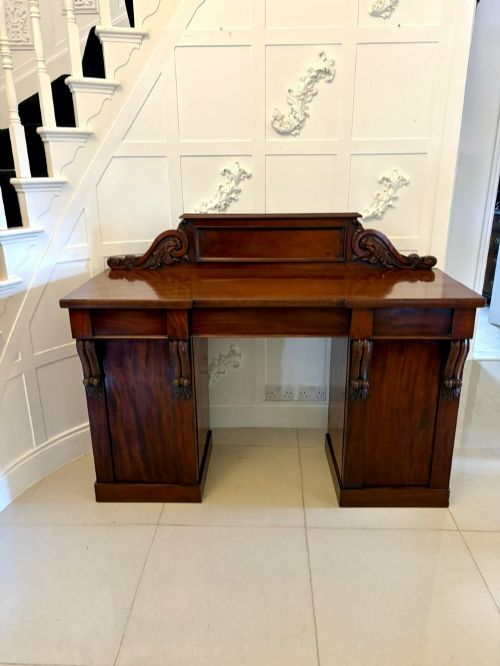
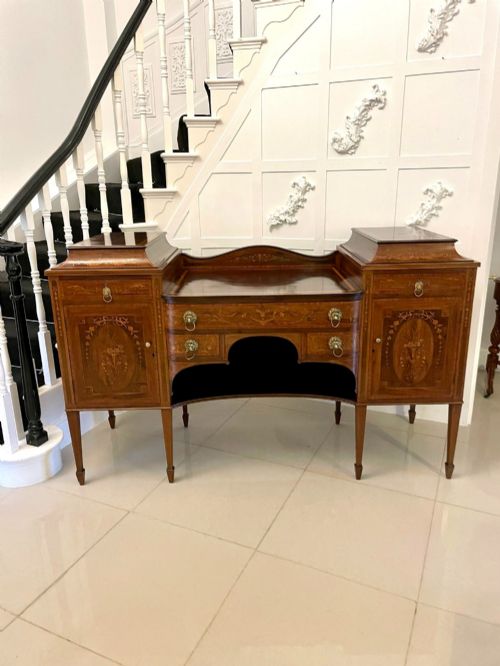
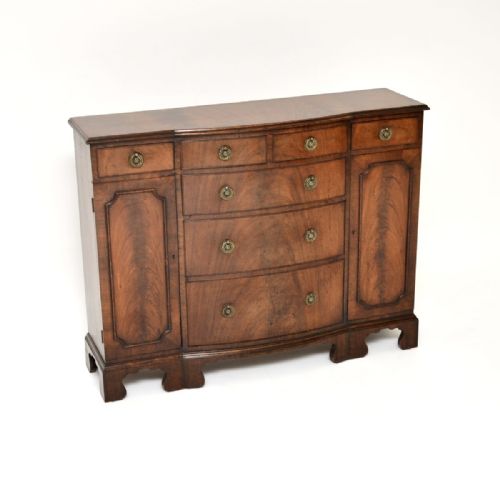
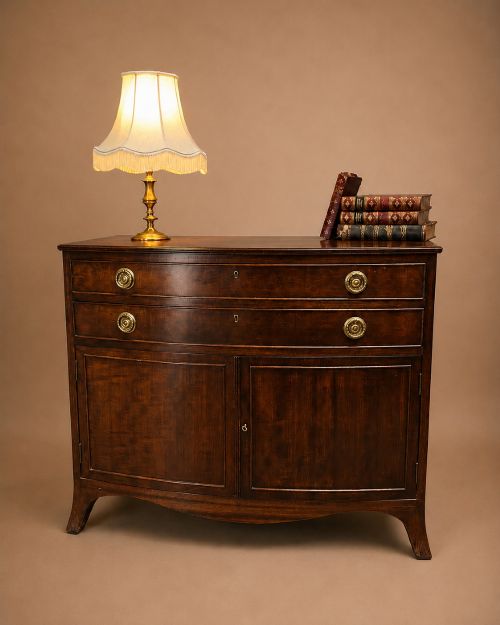
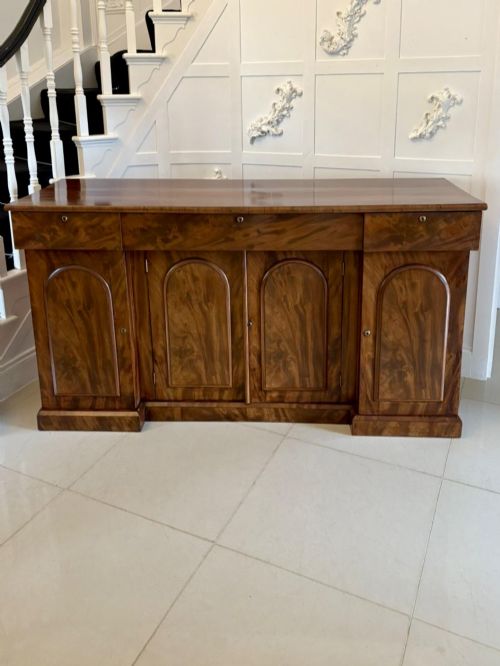
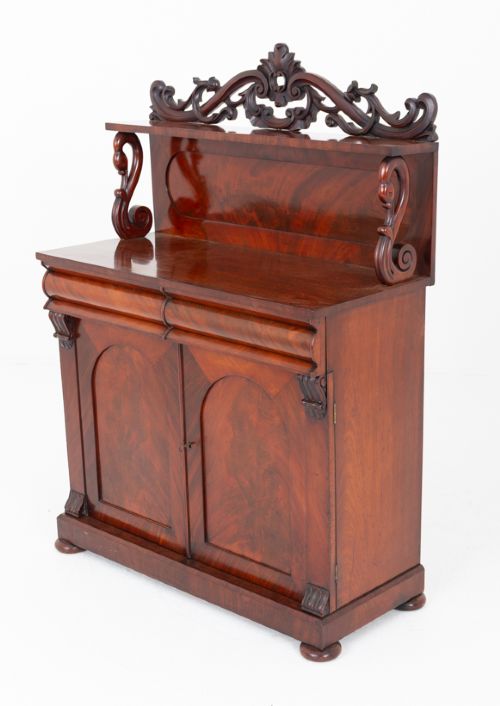
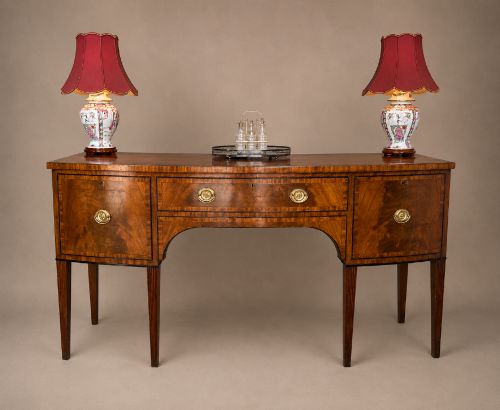
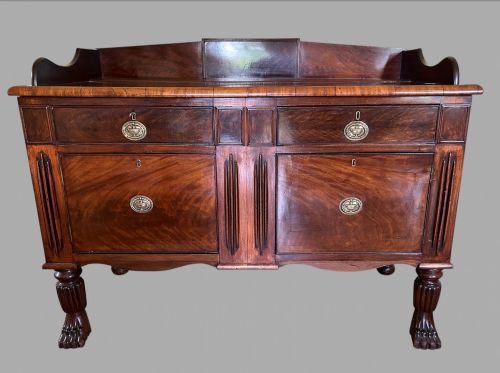
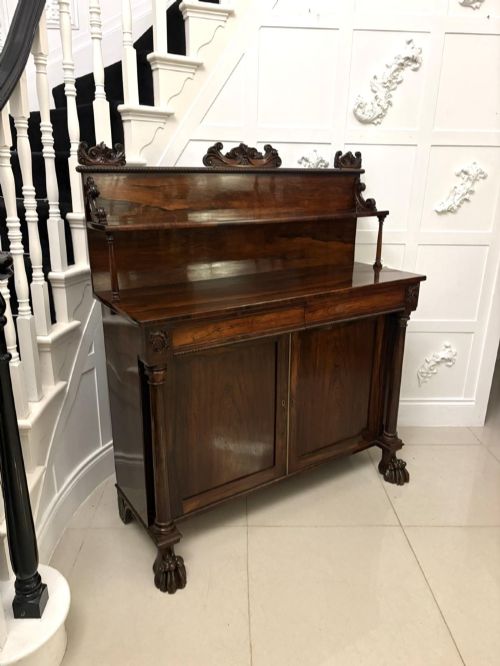
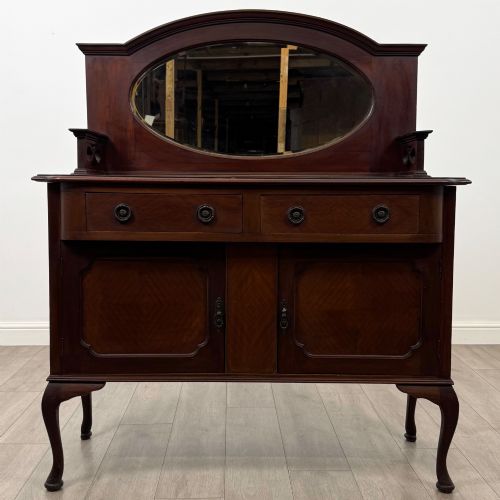
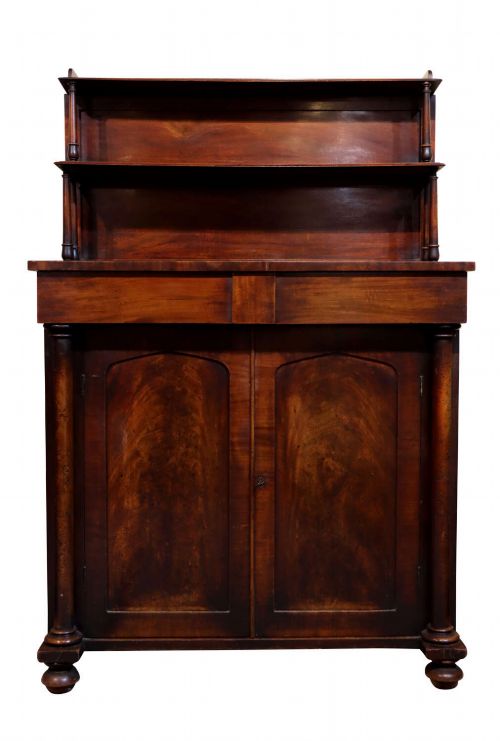
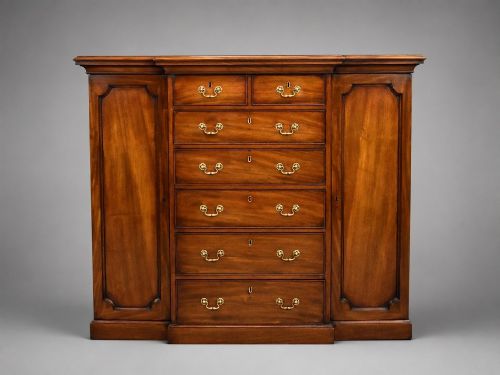
Mahogany Dining Room Cabinet
A mahogany dining room cabinet provides essential storage and a commanding presence, combining practical utility with rich timber grain.
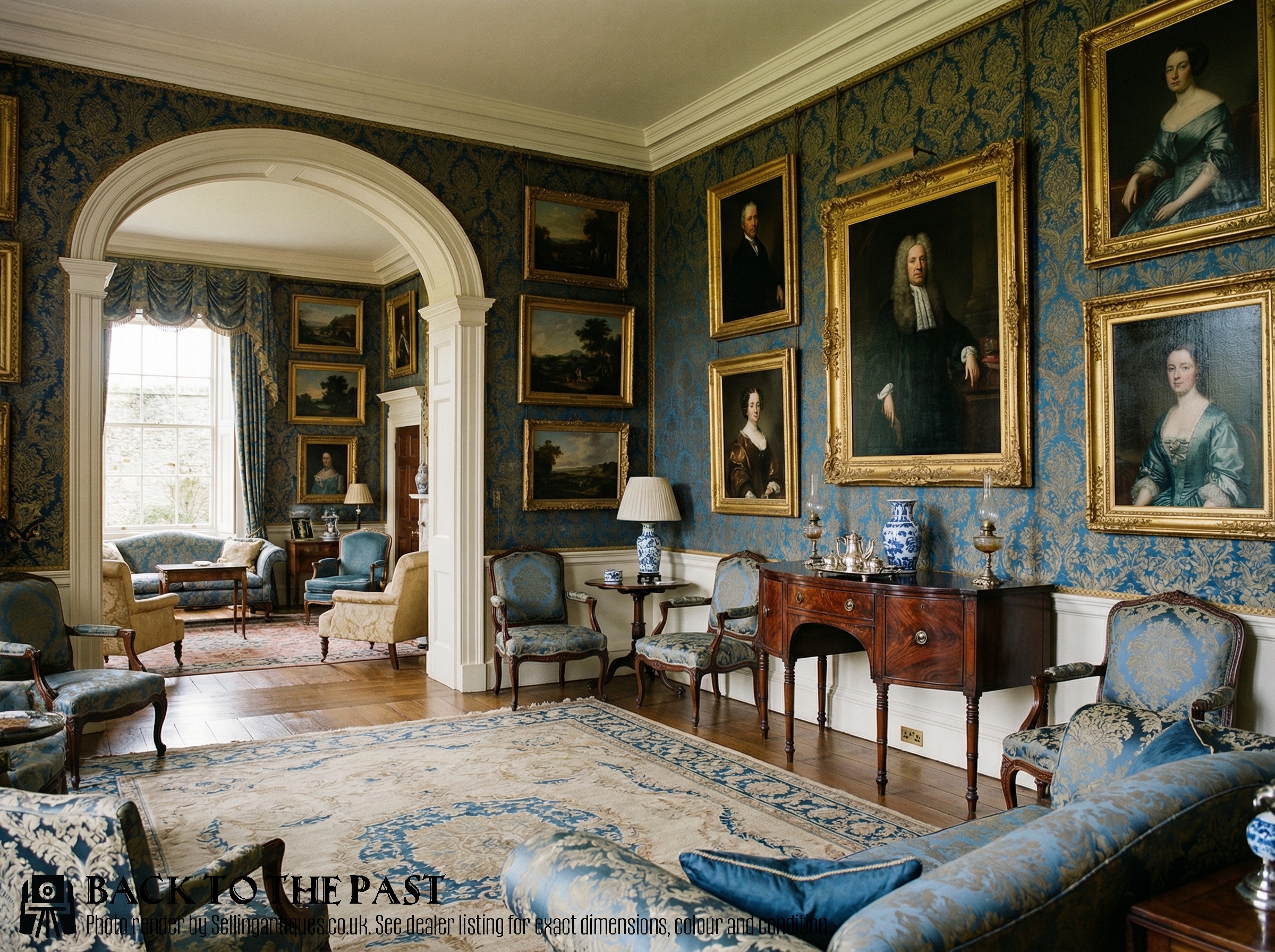
Mahogany Dining Room Cabinet
A mahogany dining room cabinet encompasses a variety of large serving and storage furniture designed to organise dining spaces, featuring prominently in Georgian, Regency, Victorian, and Edwardian homes.
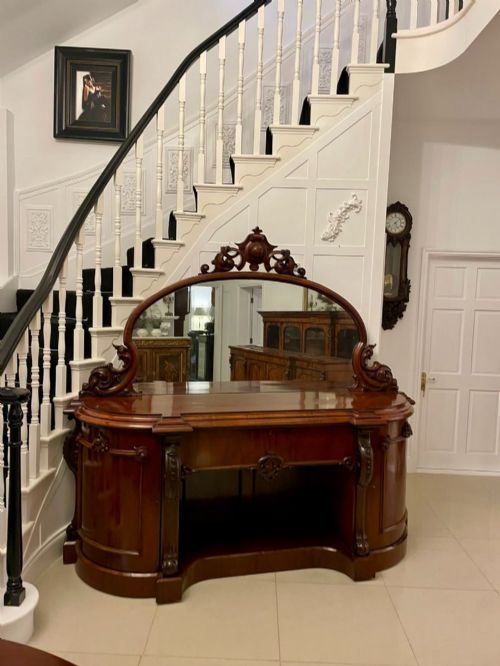
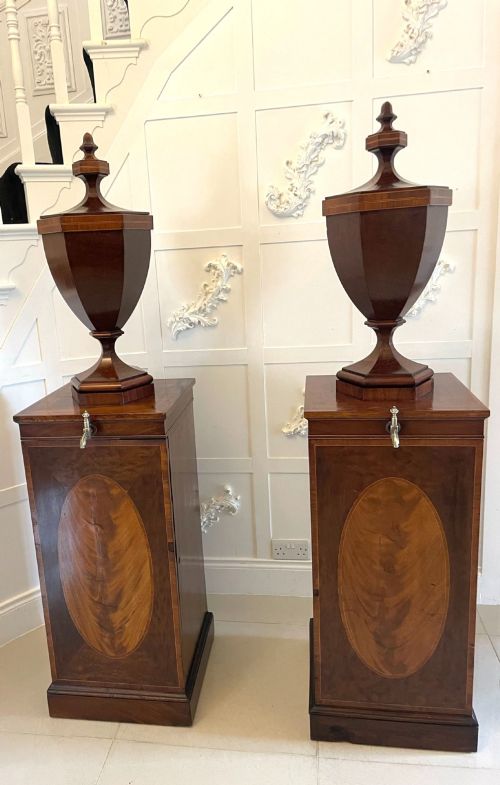
The items found within this classification range from substantial breakfront sideboards and carved mirror-back chiffoniers to bowfront cupboards and wine urns on pedestals.
Victorian and Edwardian sideboards appear most frequently on this page, often displaying figured or flame mahogany veneers alongside inlaid boxwood and satinwood details.
How they were made
Cabinet makers utilised solid mahogany and applied flame mahogany or figured veneer over secondary woods to create deep, patterned surfaces on drawer fronts and doors.
Detailing was achieved through contrasting boxwood and satinwood inlay, alongside intricate hand-carved elements particularly prevalent on Victorian and William IV examples.
Hardware typically included cast brass handles and fixtures, while glass doors occasionally featured on upper display sections of related cupboards and dressers.
Mahogany Dining Room Cabinet Retail Price Guide 2026
Typical asking prices for mahogany dining room cabinet among the pieces listed under this phrase on Sellingantiques today, from the lower quarter to the upper quarter. They describe what is for sale here now, not the wider market.
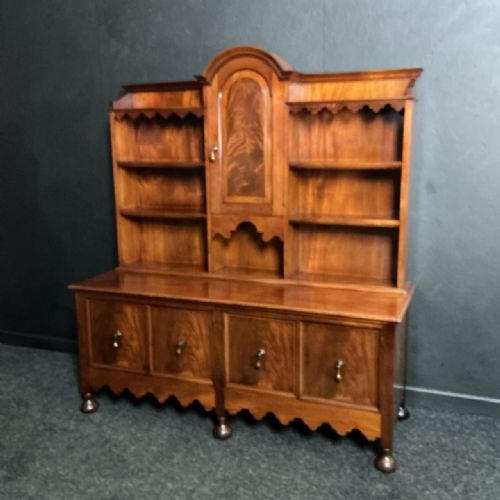
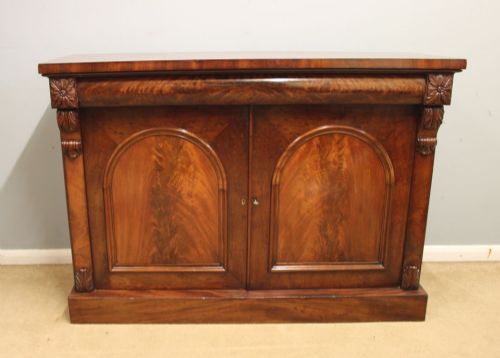
Object forms on this page include chiffoniers, dressers, wine urns on pedestals, and breakfront sideboards.
What varies in quality
Quality rests significantly on the selection of timber, where tightly figured flame mahogany or well-matched veneers elevate a piece far above plain stock.
The crispness of hand-carving and the precision of inlaid boxwood and satinwood geometric or floral patterns demonstrate the maker's skill and time invested.
Structural integrity, original brass hardware, and the preservation of polished finishes distinguish superior regional or London workshop production from standard utility furniture.
Hewetsons London·M. D. Miller & Sons Nottingham
The Mahogany Dining Room Cabinet Glossary
- Sideboard
- A large dining room cabinet or server used for storing cutlery and serving food. These forms dominate the current selection.
- Chiffonier
- A compact sideboard or low cabinet, often equipped with shelves or a mirror superstructure. They gained popularity during the Victorian period.
- Flame mahogany
- A highly decorative wood veneer characterised by a flamelike pattern. Cabinet makers reserved this timber for principal display surfaces.
- Bowfront
- A convex curved front contour typical of many Regency and Edwardian cabinets. This shape softens the profile of large dining furniture.
- Inlay
- The technique of embedding contrasting woods such as boxwood and satinwood into the primary mahogany surface. This creates decorative borders and motifs.
Mahogany Dining Room Cabinet: Frequently Asked Questions
What rooms suit a mahogany dining room cabinet?
These cabinets work well in traditional dining rooms, hallways, and spacious living areas where substantial storage and display surfaces are required. Their deep timber tones anchor a room's decorative scheme.
Larger breakfront and mirror-back pieces need adequate wall space and ceiling height to sit comfortably without dominating smaller architectural interiors.
How do I distinguish Victorian from Georgian pieces?
Georgian pieces often display restrained elegance with straight lines or gentle bowfronts, relying on fine proportions and subtle veneer work. Victorian examples frequently feature heavier carvings, darker finishes, and architectural mirror backs.
Edwardian furniture revives earlier Sheraton styles, introducing lighter satinwood inlay and a more delicate aesthetic to the traditional sideboard form.
How were these cabinets used historically?
Dining room cabinets served primarily to store porcelain, silver cutlery, and linen close to the table during formal meals. The top surface acted as a staging area for serving dishes and wine.
Wine urns and pedestals paired with sideboards specifically held decanters and chilled water during grand 18th and 19th-century dinner parties.