
Mahogany Bowfront Credenza
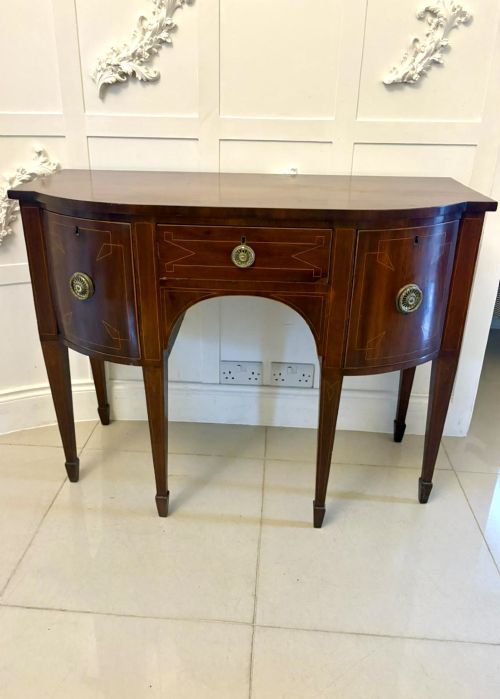
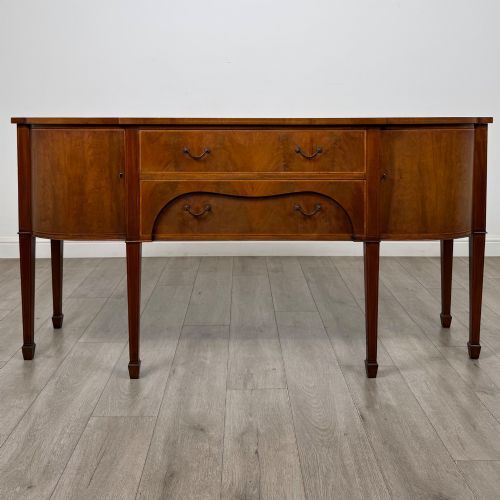
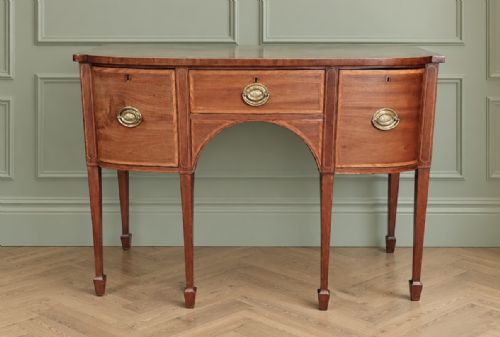
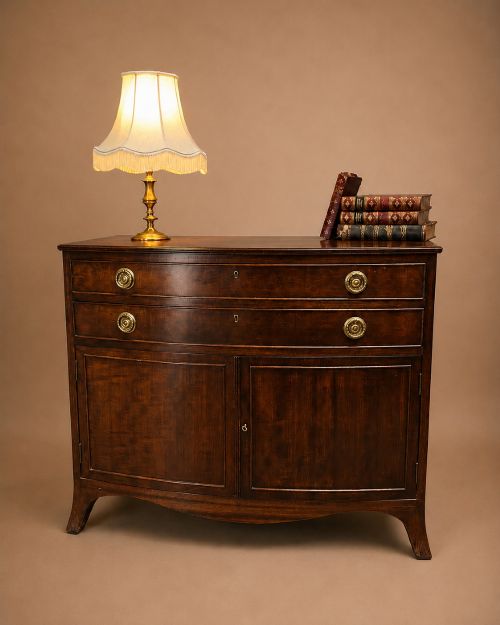
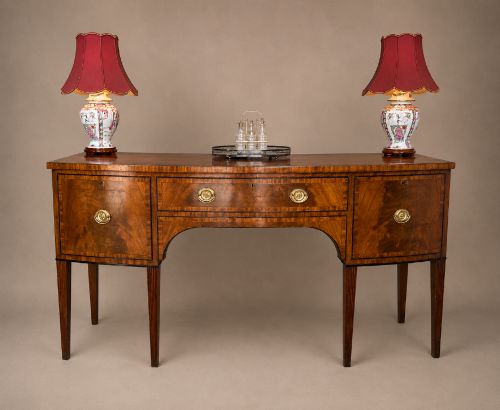
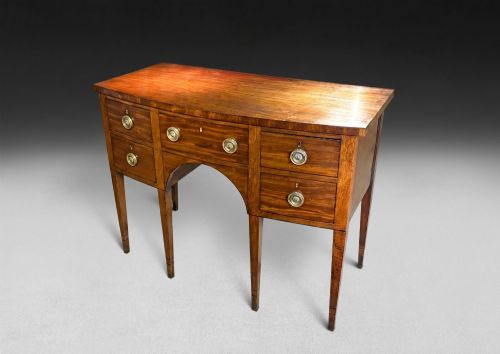
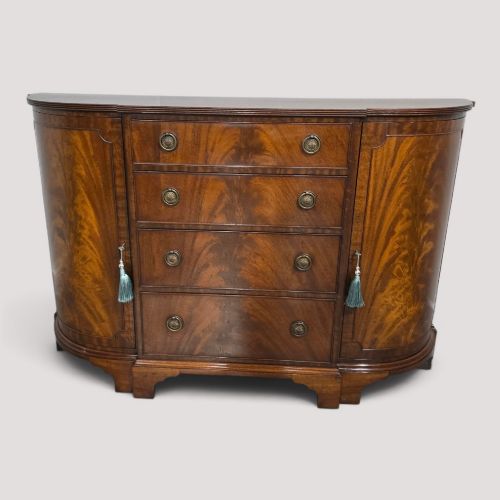
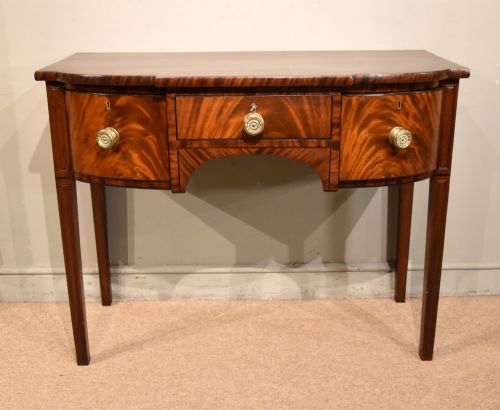
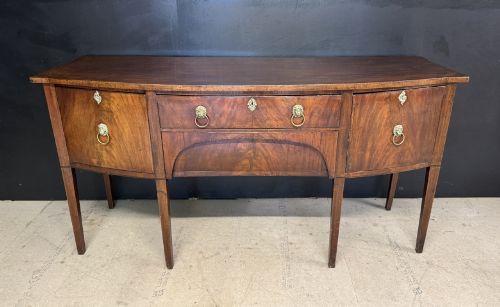
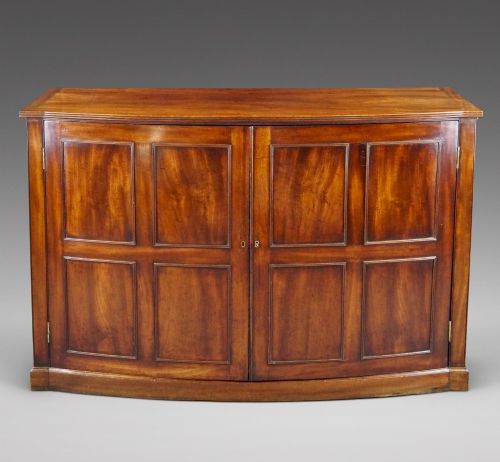
A mahogany bowfront credenza offers generous dining room storage with the graceful, curved line of the Georgian and Regency periods.
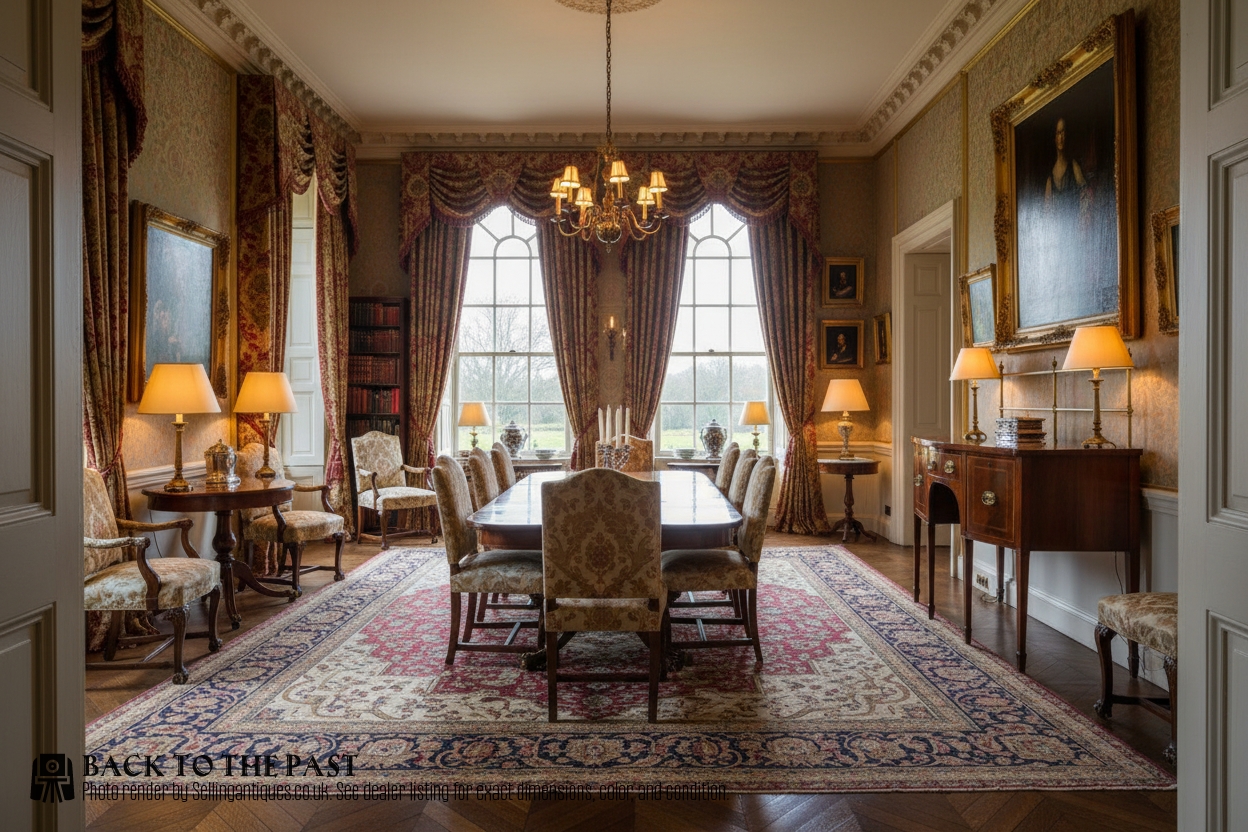
Mahogany Bowfront Credenza
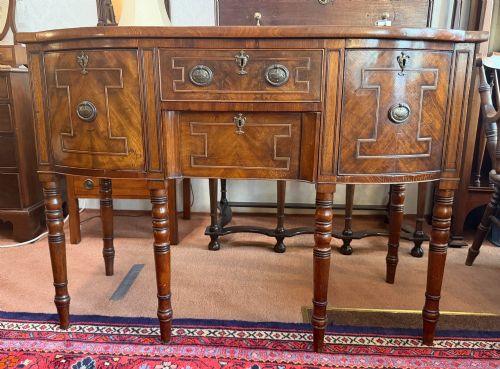
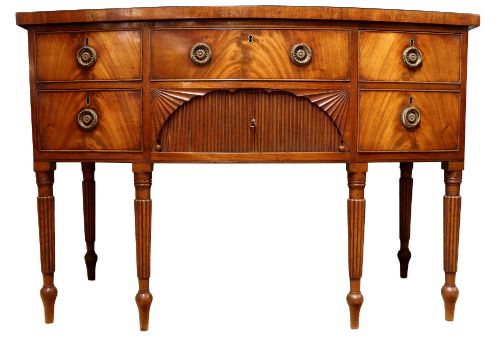
A mahogany bowfront credenza combines the practical storage of a sideboard, buffet, or cupboard with a gently curved front that softens the room. These pieces span the eighteenth, nineteenth, and early twentieth centuries, drawing on Georgian, Regency, Edwardian, and revival designs.
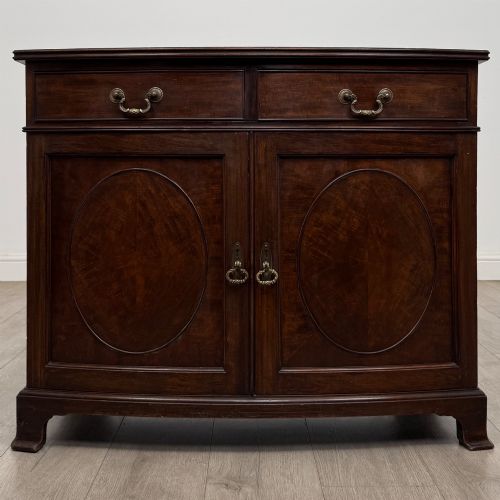
The versions most common here range from compact eighteenth-century George III examples to grand nineteenth-century Regency pieces and later Edwardian Sheraton Revival interpretations. They serve primarily as dining room server cabinets or side storage units, utilising cupboards and drawers to conceal tableware.
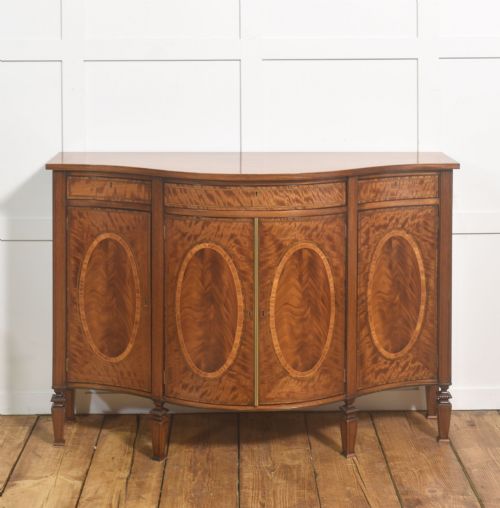
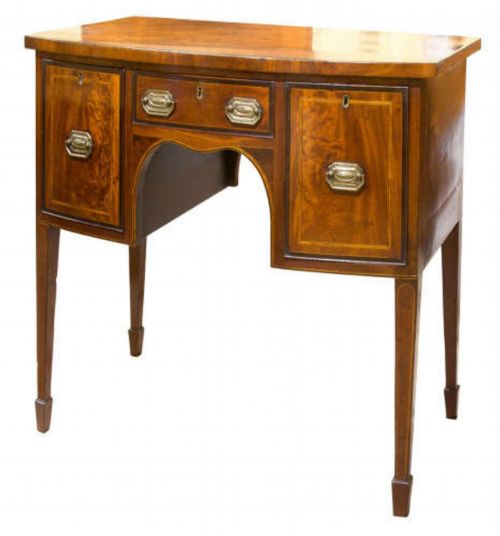
Makers and cabinetmakers of these periods utilised the curved silhouette to display rich wood grains, often adding contrasting stringing and banding to highlight the arched outline. Whether designated as sideboards, buffets, or side cabinets, these pieces anchor a room with substantial presence and refined proportions.
Materials and construction methods
Cabinetmakers built these pieces using solid mahogany and flame mahogany veneer, often selecting specific cuts of wood to create striking grain patterns across the curved doors and drawer fronts. Secondary timbers provided internal framing, while precise joinery ensured the curved frames remained stable over centuries.
Surface decoration relied heavily on contrasting woods and metals, incorporating satinwood, boxwood, and purpleheart inlays or crossbanding. Brass handles, escutcheons, and occasional gallery rails completed the construction, adding functional detail to the polished mahogany surfaces.
Many small George III models were specifically built narrow enough to squeeze past tight eighteenth-century hallway doors without taking off the handles.
Factors that separate examples
Quality in a mahogany bowfront credenza rests on the selection of the timber and the precision of the cabinetwork, particularly around the difficult curved front. Superior examples display symmetrical flame mahogany veneers and crisp, tightly fitted boxwood or satinwood inlay that follows the sweep of the wood without distortion.
The depth of colour, the patination built up through years of polishing, and the originality of the brass hardware distinguish finer pieces from standard production. Later revival versions vary depending on whether the maker adhered strictly to eighteenth-century proportions and hand-finishing techniques.
The Mahogany Bowfront Credenza Glossary
- Bowfront
- A convex curved front that projects outward in an arc, softening the linear geometry of dining room furniture. This shape requires advanced cabinetmaking skill to bend and veneer accurately.
- Crossbanding
- A narrow strip of veneer applied around the border of a drawer front or tabletop so that the grain runs perpendicular to the main panel. It provides a neat framing effect, often seen in contrasting lighter woods.
- Inlay
- A technique where pieces of contrasting wood, such as satinwood or boxwood, are set flush into the mahogany surface to form geometric patterns or decorative lines. Stringing is a very fine version of this work.
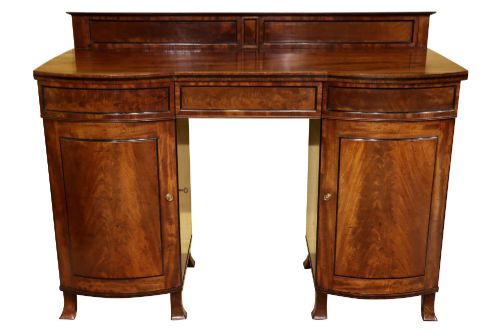
- Pedestal sideboard
- A form featuring distinct pedestal cabinets at either end joined by a central table section, typical of the Regency period. These structures offer specialised storage configurations.
- Sheraton Revival
- A late nineteenth and early twentieth-century style inspired by the neoclassical designs of Thomas Sheraton. Pieces from this era often feature delicate marquetry, satinwood banding, and light proportions.
Mahogany Bowfront Credenza: Frequently Asked Questions
Where did people place a mahogany bowfront credenza?
These pieces typically stood against the dining room wall, positioned to serve food and hold silver, linen, and glassware during meals.
In larger houses, they functioned alongside dining tables as primary server units, while smaller examples fit easily into hallways and drawing rooms for general storage.
How do I distinguish an eighteenth-century piece from a later revival?
Eighteenth-century examples display natural patination, hand-cut dovetails inside the drawers, and subtle signs of age in the timber and secondary woods.
Revival pieces from the Edwardian era often feature brighter, more uniform factory finishes, lighter internal carcases, and machine-cut construction details.
What is the difference between a credenza and a sideboard?
While the terms often overlap in modern usage, traditional sideboards focus specifically on dining room service with fitted drawers and cupboards.
Credenzas traditionally incorporate low storage cupboards and often lack the raised backboards or specific cutlery drawers found on formal sideboards.
How should I care for the mahogany finish?
Keep the wood away from direct sunlight and strong heat sources to prevent the mahogany and its delicate veneer work from drying out or fading.
Apply traditional beeswax periodically and buff gently with a soft cloth to maintain the natural lustre without building up heavy chemical layers.