

Mahogany and Satinwood Table
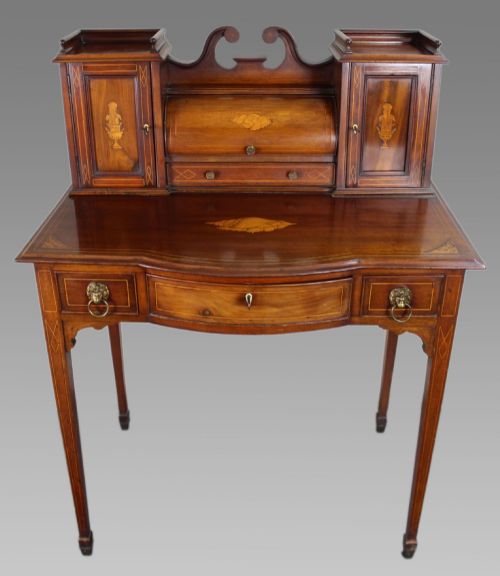
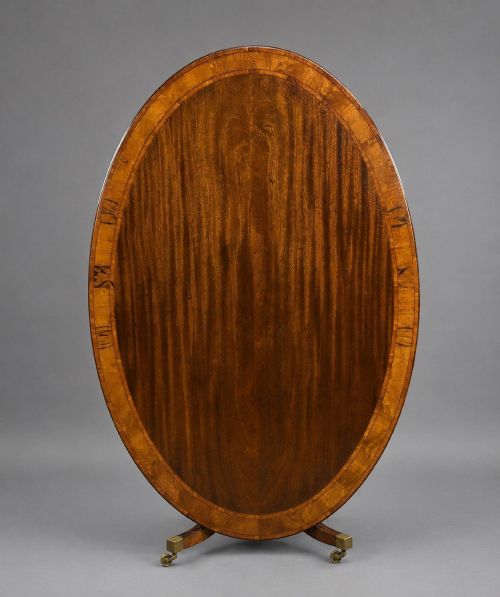
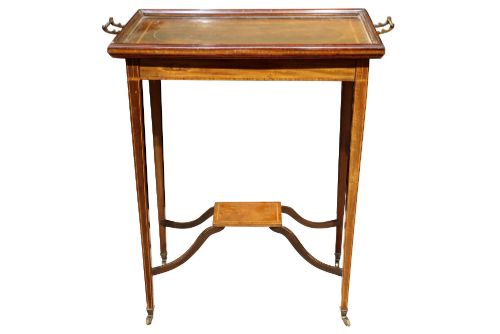
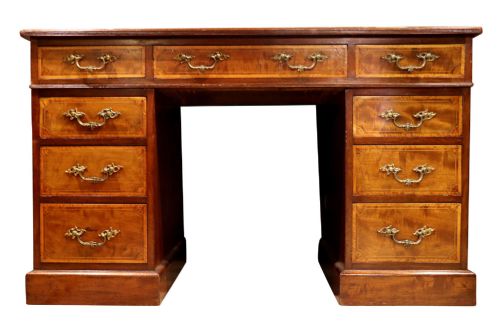
A mahogany and satinwood table pairs a dark, rich timber ground with bright, contrasting golden inlay, offering both functional surface area and decorative refinement.
Mahogany and Satinwood Table
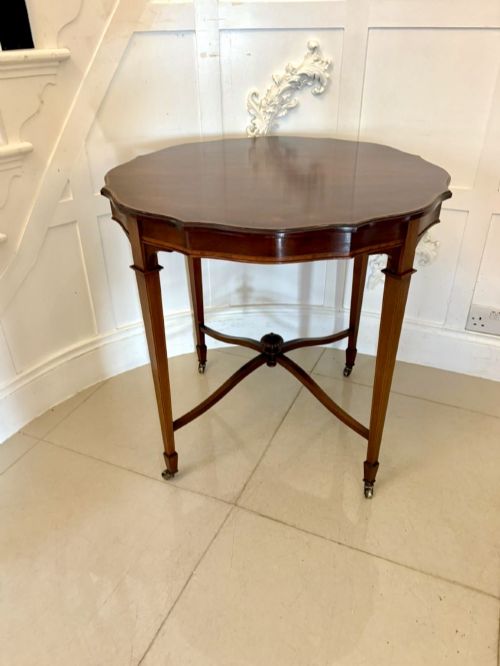
A mahogany and satinwood table encompasses a wide variety of domestic forms, ranging from late eighteenth-century card and Pembroke tables to Edwardian occasional pieces, nests of tables, and writing desks.
The material combination appears frequently on pieces produced during the Georgian, Regency, and Edwardian eras, with the Sheraton Revival movement popularising delicate satinwood banding on deep brown mahogany carcases.
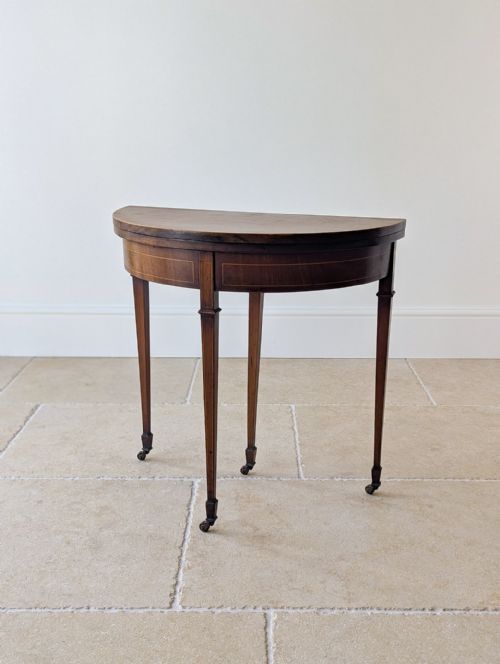
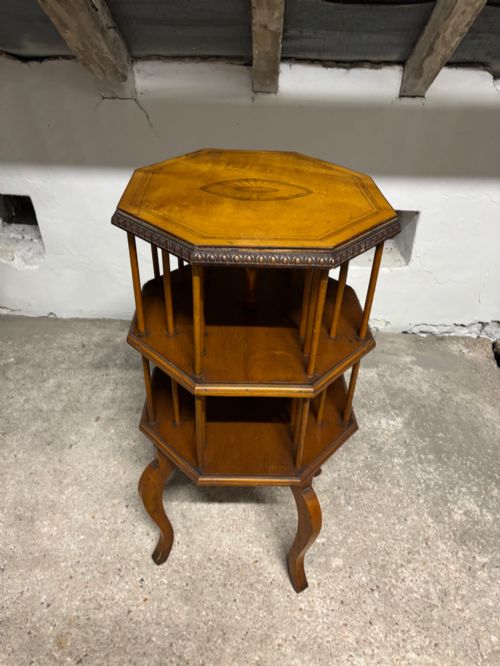
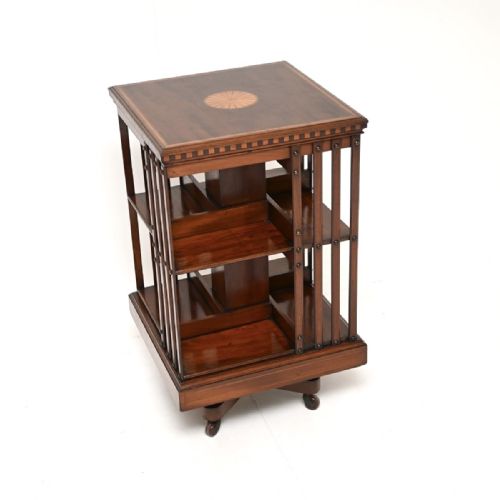
Buyers seeking this phrase encounter versatile items designed for specific domestic functions, such as demi-lune console tables, revolving bookcases, and lamp tables intended to sit beside seating.
Materials and Technique
Cabinet makers constructed the primary structure from solid mahogany or utilised mahogany veneers over secondary timbers, providing a stable and dark ground for decorative work.
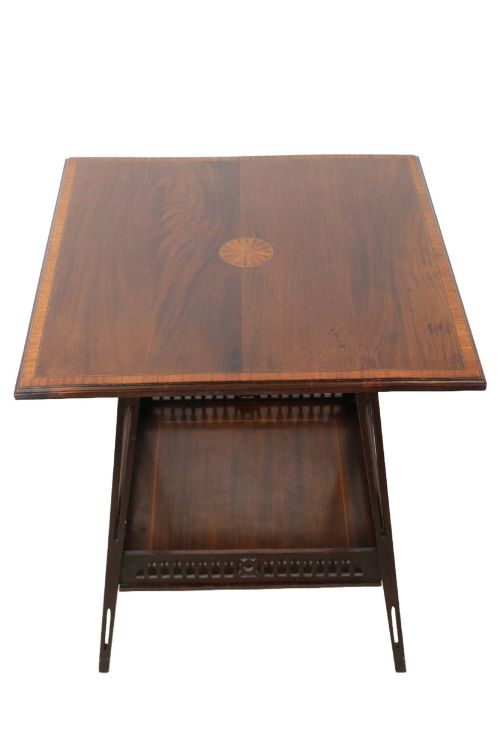
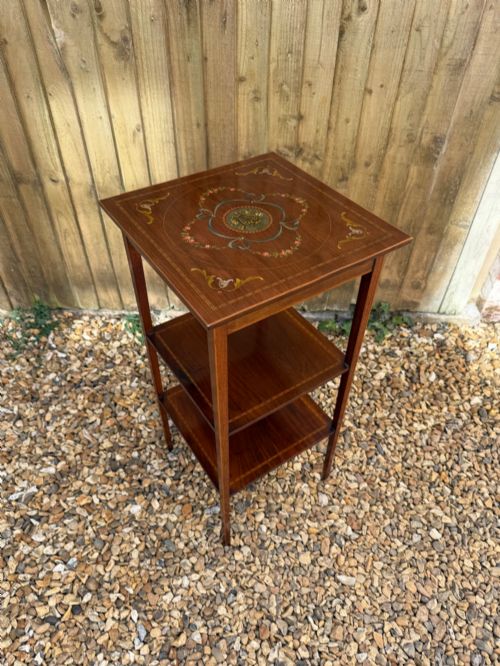
Satinwood and boxwood were applied as stringing, banding, and pictorial inlay, creating crisp linear borders and contrasting pale panels that catch the light.
Additional elements such as brass handles, leather writing inserts, and occasional painted details completed the construction of finer items.
Surprise drinks cabinets lurk within Edwardian frames, hiding liquid hospitality behind polite library facades.
Standards of Execution
The precision of the inlay work separates standard production from exceptional pieces, where tight joints in the satinwood banding and delicate hand-cut stringing demonstrate superior craftsmanship.
Timber selection governs visual depth, with figured mahogany grain and carefully matched satinwood veneers creating a more harmonious surface than plain or poorly matched boards.
The integrity of original mounts, handles, and secondary woods preserves the authenticity and visual balance of the piece over centuries of use.
Trevor Page & Co·Edwards & Roberts·Thomas Shearer·Ambrose Heal
The Mahogany and Satinwood Table Glossary
- Crossbanding
- A strip of veneer applied to the border of a table top so that the grain runs perpendicular to the main panel. This technique frames the primary timber and adds a decorative geometric border.
- Satinwood
- A hard, durable timber native to Ceylon and the West Indies, valued for its lustrous golden-yellow sheen and smooth grain. It provides sharp contrast against darker woods like mahogany.
- Stringing
- A narrow line of contrasting inlay used to outline table tops, drawer fronts, and legs. It is typically embedded into a shallow channel cut into the primary wood.
- Demilune
- Half-moon shaped, frequently used to describe console and card tables designed to stand flat against a wall. These pieces often feature folding tops supported by a swinging rear leg.
- Pembroke table
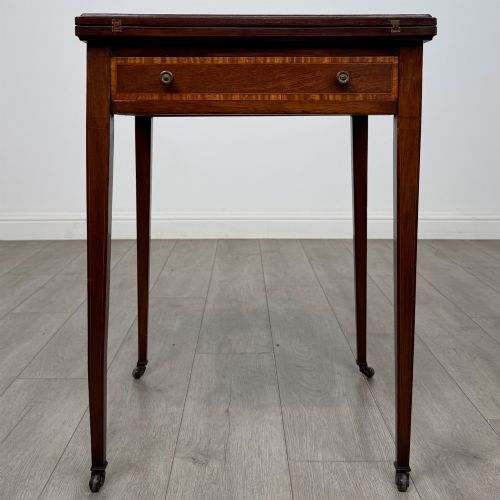
- A small, drop-leaf table with hinged flaps on either side, introduced in the eighteenth century. They frequently feature a single drawer and tapered legs mounted on castors.
Mahogany and Satinwood Table: Frequently Asked Questions
How do I care for satinwood inlay?
Keep wooden furniture away from direct sunlight and excessive heat sources to prevent the pale satinwood veneers from darkening unevenly or drying out. Regular dusting with a soft, dry cloth maintains the surface.
Apply a microcrystalline wax periodically to nourish the timber and protect the polished finish without building up heavy residues.
Were these tables used for dining?
Most mahogany and satinwood tables serve as occasional, card, writing, or side tables rather than primary dining surfaces. Forms such as Pembroke and demi-lune tables offer flexible surface space for smaller rooms.
Larger dining tables appearing in these styles are often later Sheraton Revival interpretations rather than eighteenth-century originals.
How do I distinguish Georgian from Edwardian pieces?
Georgian pieces from the eighteenth century generally display heavier structural timbers, hand-cut joinery, and simpler, structurally integrated stringing. The surfaces show the warm patina accumulated over extensive historical use.
Edwardian items often reflect the Sheraton Revival style with lighter construction, machine-cut veneers, and occasionally brighter painted highlights or more elaborate crossbanding.
What is a quartetto nest of tables?
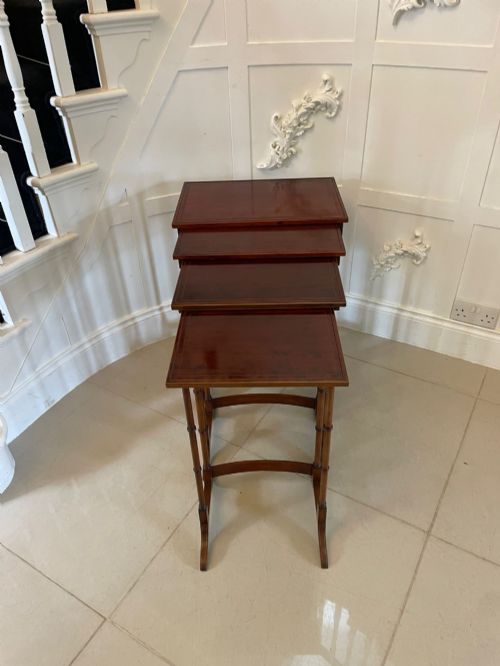
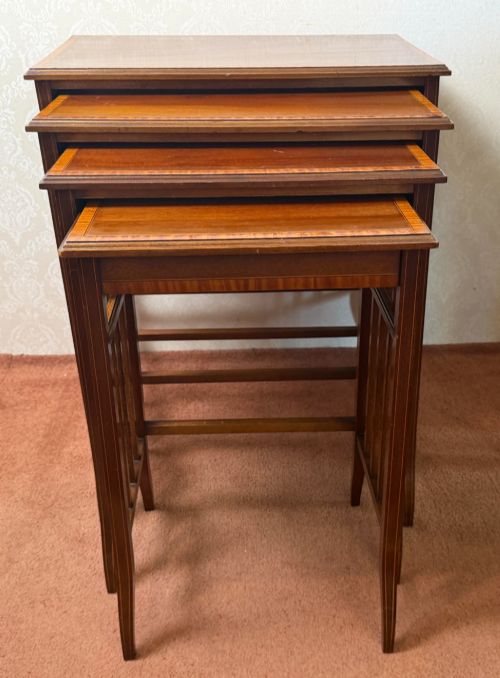
A quartetto nest consists of four graduated tables designed to slide neatly beneath one another when not in use. They became particularly popular during the Edwardian period as versatile furniture for entertaining.
Individual tables within the set typically feature slender square tapered legs and satinwood banded tops for decorative impact.