




Bedroom Occasional Table
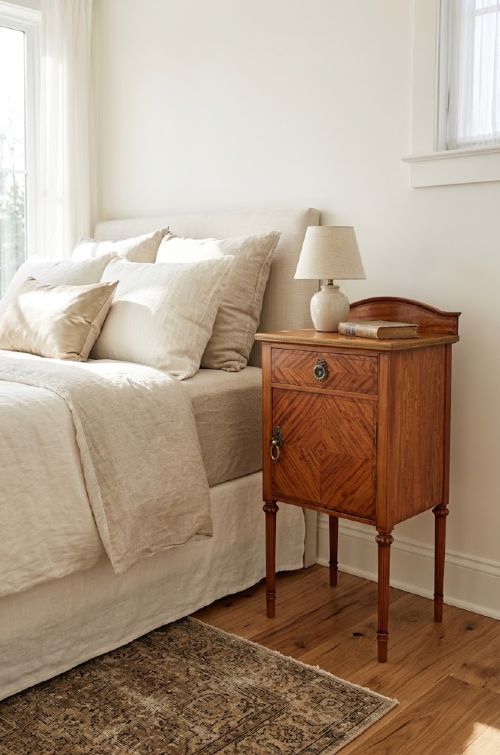
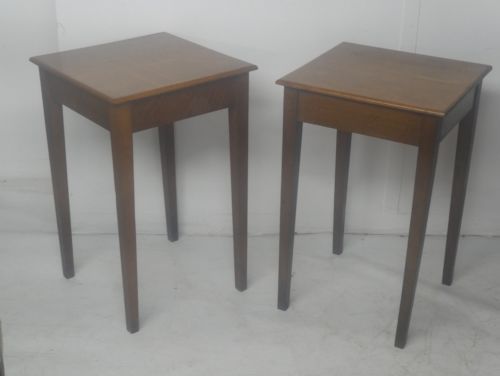
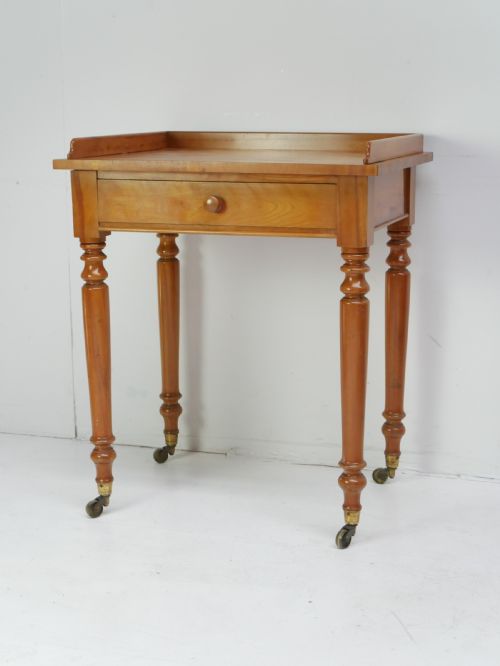
These bedroom occasional table pieces offer compact surfaces for private quarters, spanning various centuries and timbers.
Bedroom Occasional Table
Makers adapted these small-scale items for domestic utility, encompassing Georgian designs and Regency formats alongside Scottish oak lamp tables and painted country house pieces. These tables serve adjacent to beds or seating areas, fulfilling functional requirements with minimal footprint.
How they were made
Cabinetmakers constructed these pieces primarily using dense hardwoods like mahogany, walnut, and oak, often incorporating satinwood for lighter decorative finishes. Brass inlay and painted wood details frequently embellish the surfaces of Regency and Georgian examples.
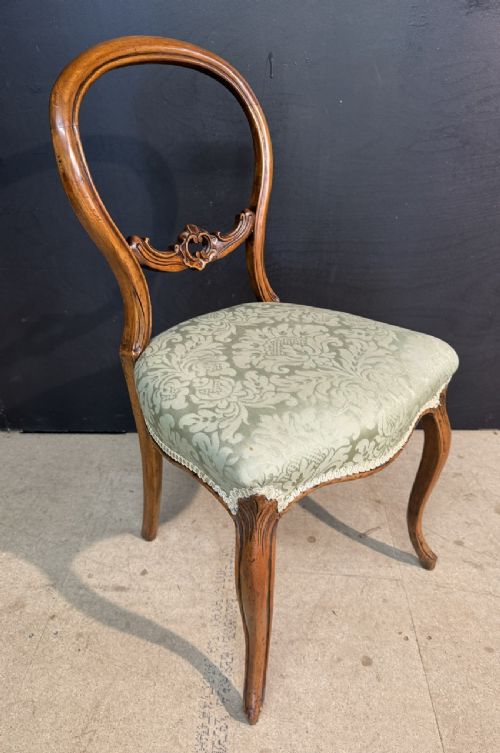
Joinery techniques reflect traditional workshop practices of the nineteenth and twentieth centuries, uniting solid timbers with structural framing suitable for domestic use. Upholstered elements on associated seating incorporate damask and fabric coverings.
Several bedroom occasional table listings double as seating, proving that nineteenth-century artisans believed chairs should also wear hats.
What varies in quality
The degree of refinement in timber selection and secondary wood usage distinguishes finer examples, alongside the precision of brass inlay work and cabinet joinery. Pieces displaying thoughtful proportions and deliberate stylistic details command greater attention from buyers.
Condition and originality of surface finishes dictate the standing of individual tables, as does the integrity of structural elements across Edwardian and earlier periods.
Gillows Design
The Bedroom Occasional Table Glossary
- Nightstand
- A small low table positioned beside a bed for holding immediate necessities. These items frequently incorporate cupboards or small drawers.
- Satinwood
- A durable hardwood yielding a lustrous golden finish, frequently utilised in Edwardian pieces for decorative banding and veneers.
- Work table
- A specialised occasional table fitted with compartments or storage for needlework and small personal items. These pieces often feature drop leaves or fitted interiors.
- Regency
- A stylistic period spanning the early nineteenth century defined by classical restraint and archaeological influence. Pieces from this era often incorporate brass inlay and dark mahogany timbers.
Bedroom Occasional Table: Frequently Asked Questions
What is a bedroom occasional table?
A bedroom occasional table is a small surface piece designed for private quarters, functioning as a bedside table, nightstand, or lamp table.
These items provide compact utility and appear across several periods including the Georgian, Regency, and Edwardian eras.
How were these tables used?
They served primarily beside beds or seating areas to hold lamps, reading materials, and personal items within domestic chambers.
Work tables additionally provided specialised storage for sewing and small domestic tasks.
What woods were used?
Cabinetmakers predominantly utilised mahogany, walnut, and oak for their structural stability and rich grain patterns.
Satinwood and painted finishes appear frequently in later Edwardian and decorative pieces.
How do I identify a Regency table?
Regency tables typically display classical proportions, dark mahogany timbers, and occasionally precise brass inlay work.
Design influences draw upon classical antiquity and the specific workshop traditions of the early nineteenth century.