
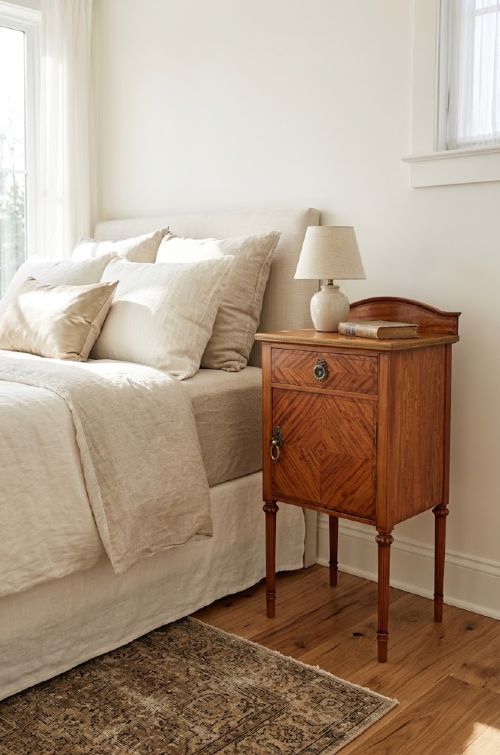


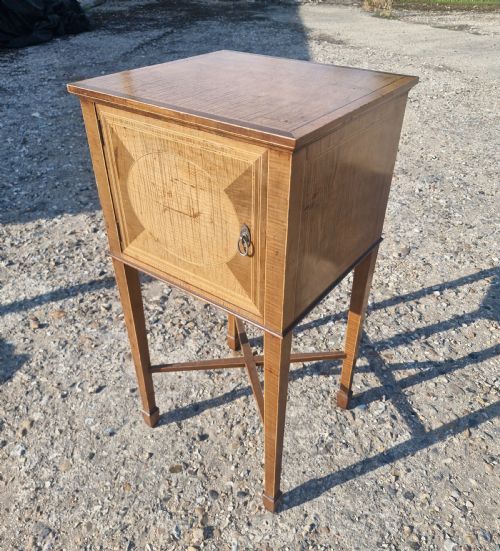
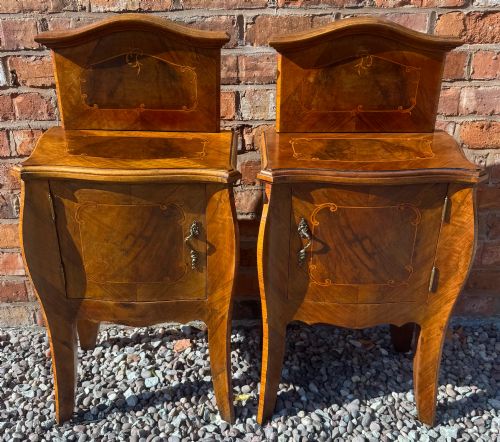
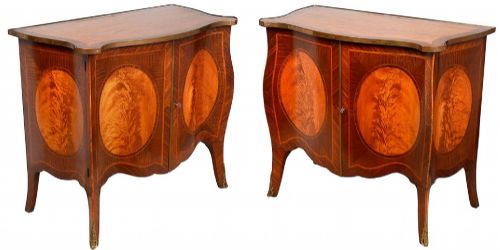


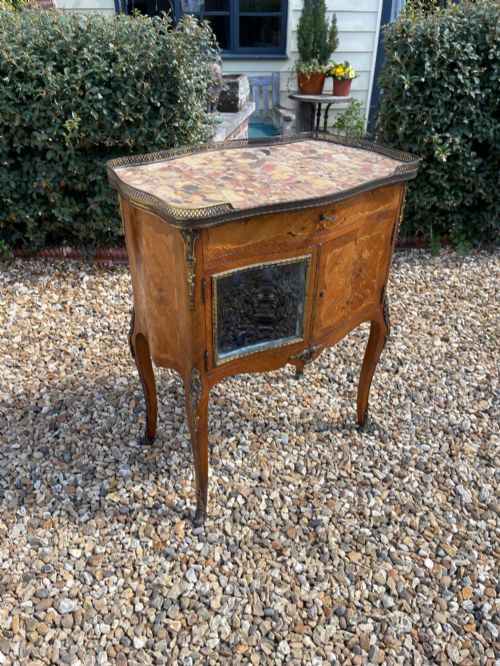

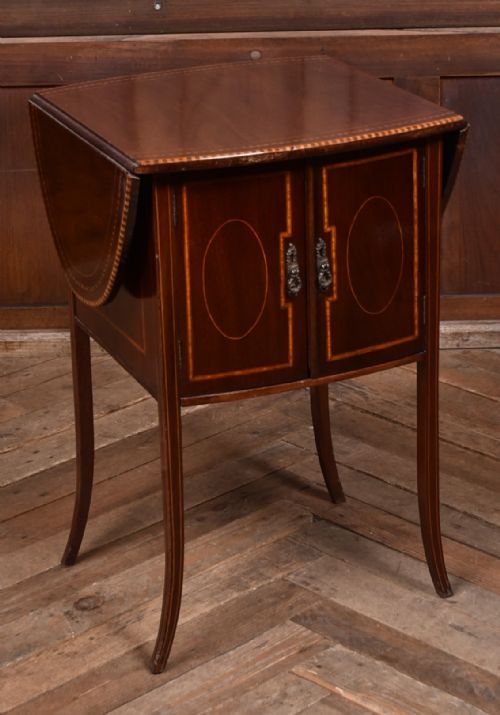

Satinwood Bedside Cupboard
A satinwood bedside cupboard brings warm timber grain and refined joinery directly to the bedside.
Satinwood Bedside Cupboard
A satinwood bedside cupboard sits beside the bed to house nighttime necessities within a compact footprint. These pieces emerge predominantly from the Edwardian era and the nineteenth century, taking the form of bedside cabinets, commodes, and pedestal cupboards.
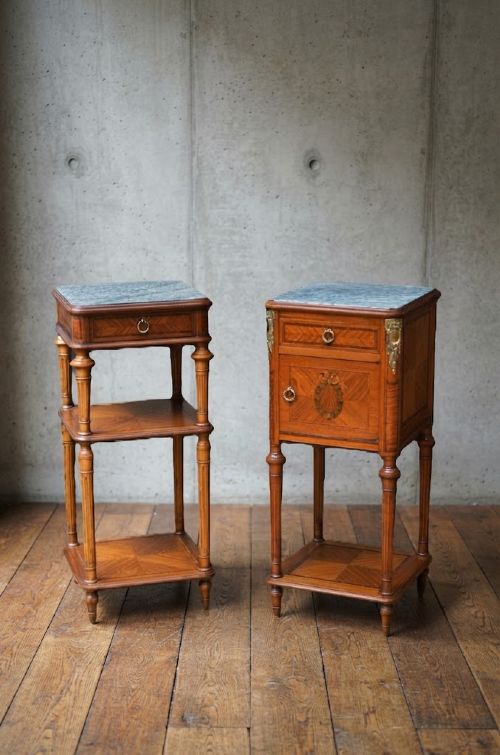
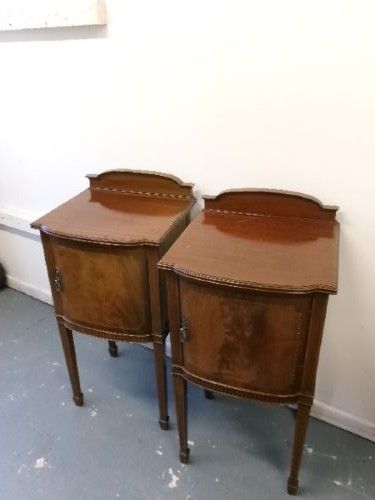
Makers often fashioned these items in pairs, though single examples frequently appear. The profiles range from straight-fronted boxes to serpentine, bowfront, and marble-topped variations influenced by Sheraton Revival and Art Deco designs.
Materials and Construction
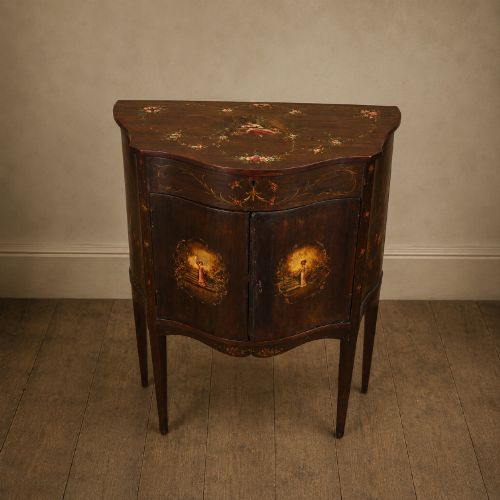
Craftsmen utilised smooth satinwood veneers over sturdy carcases of mahogany or pine, frequently banding the surfaces with contrasting boxwood and rosewood stringing. Marquetry inlay and hand-painted details frequently embellish the doors and panels.
Structural elements incorporate brass hardware, marble tops, and occasionally Bakelite or Sevres porcelain plaques. Workshops combined these decorative elements with precise dovetailing on internal drawers.
The inventory spans the Victorian and Edwardian eras through to Art Deco designs of the nineteen-thirties, using satinwood alongside mahogany, walnut, and marble.
Assessing the Standard
Quality rests upon the crispness of the timber inlay and the subtlety of the grain figure across the satinwood panels. Superior examples display seamless veneer matching and finely executed hand-painted motifs rather than mechanical transfers.
The integrity of the structural joinery and the retention of original brass fittings elevate certain cabinets above standard utility pieces. Depth of colour and preservation of the original polished surface dictate the overall distinction of the piece.
Morant And Co·Betty Joel·Maple And Co·Gillows·Howard And Sons
The Satinwood Bedside Cupboard Glossary
- Satinwood
- A lustrous tropical hardwood prized for its golden, reflective sheen. It forms the primary decorative veneer on late nineteenth and early twentieth century bedroom furniture.
- Marquetry
- The art of applying pieces of veneer to a structural structure to form decorative patterns. Craftsmen utilised contrasting timbers like boxwood and rosewood to achieve pictorial designs.
- Commode
- A low cabinet with doors or drawers, frequently adapted for bedside use. In older periods, these units housed chamber pots.
- Sheraton Revival
- A late nineteenth and early twentieth century design movement inspired by the lighter classical furniture of the eighteenth century. Pieces from this revival feature delicate legs, satinwood veneers, and precise stringing.
Satinwood Bedside Cupboard: Frequently Asked Questions
How do I date a satinwood bedside cupboard?
Examine the secondary timbers inside the drawers and the style of the exterior veneer. Edwardian pieces often incorporate lighter mahogany carcases with delicate boxwood stringing.
Construction methods such as hand-cut dovetails help distinguish nineteenth-century examples from later twentieth-century reproductions.
Were these cabinets originally made in pairs?
Makers produced both single units and matched pairs for twin bedrooms. Pairs are particularly common in Edwardian and Art Deco designs.
Single cabinets frequently turn up as individual survivals from larger bedroom suites.
How do I care for satinwood veneer?
Keep the timber away from direct sunlight and excessive heat sources to prevent the veneer from lifting. Apply a quality microcrystalline wax occasionally to protect the polished surface.
Avoid using liquid polishes or damp cloths that might penetrate old joints.
What is a pot cupboard?
A pot cupboard is a historic term for a small bedside cabinet designed to conceal a chamber pot. They typically feature an internal shelf and a hinged door.
Today, collectors utilise these compact spaces to store books and small items.