


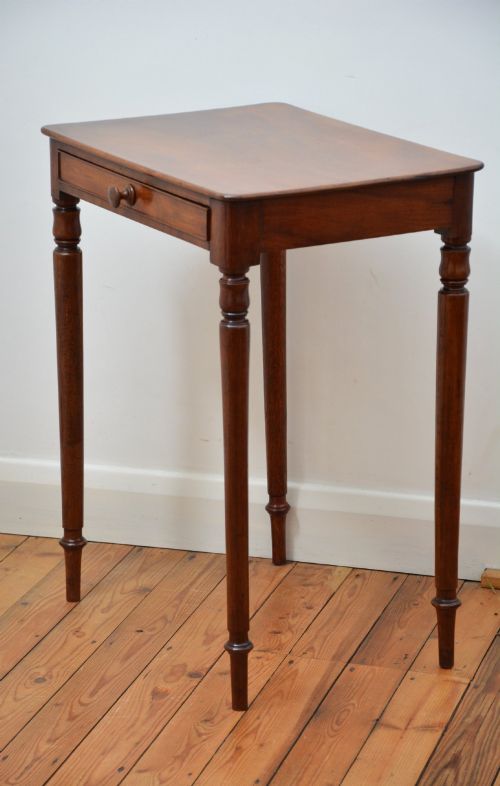

Georgian Bedside Pedestal
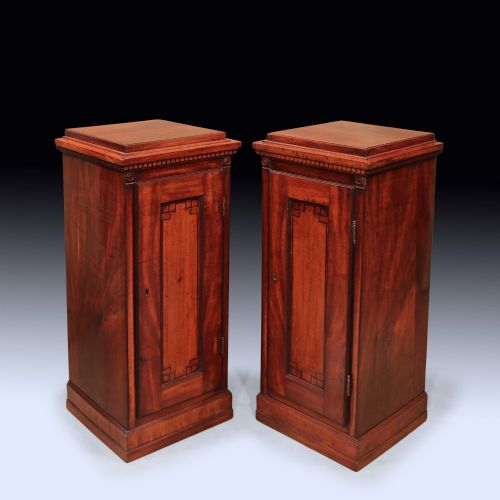
A georgian bedside pedestal offers practical bedside storage with classical proportions, built to hold chamber items discretely.
Georgian Bedside Pedestal
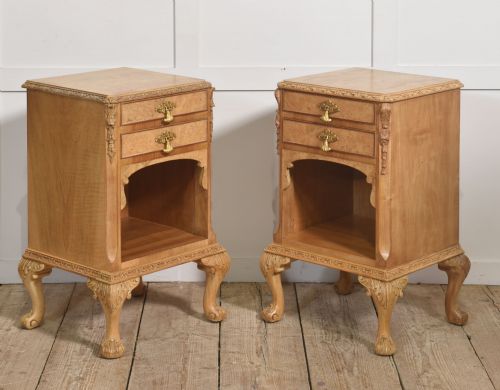
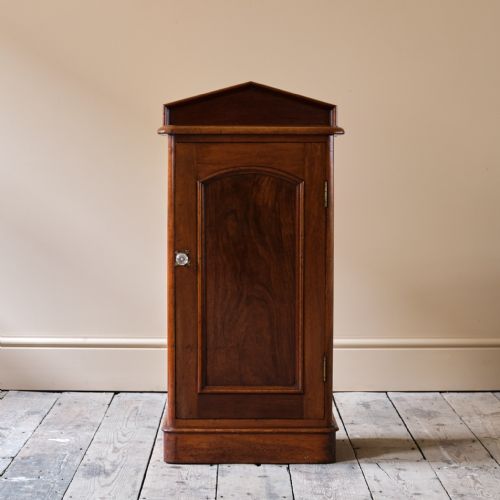
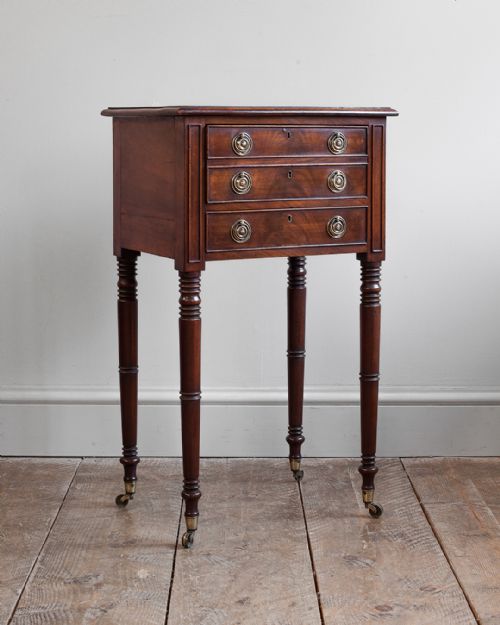
A georgian bedside pedestal takes the form of a small cupboard, table or cabinet designed to stand beside a bed for night-time convenience. These items appear across periods including the eighteenth century, nineteenth century and later revival phases, spanning object types from pot cupboards to small chests of drawers.
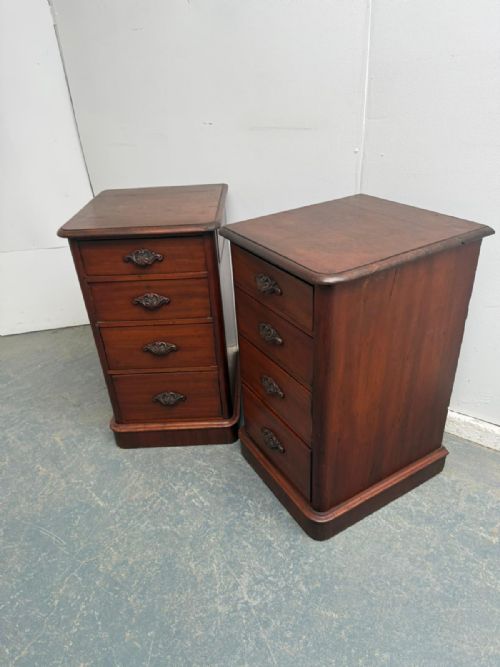
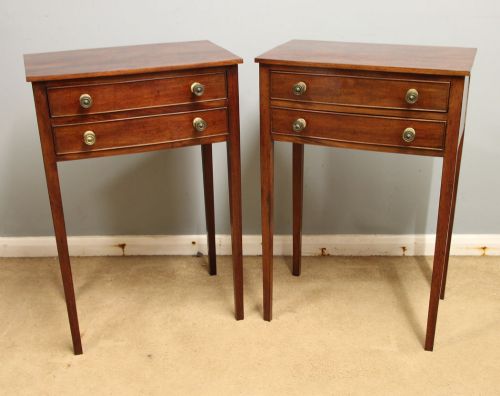
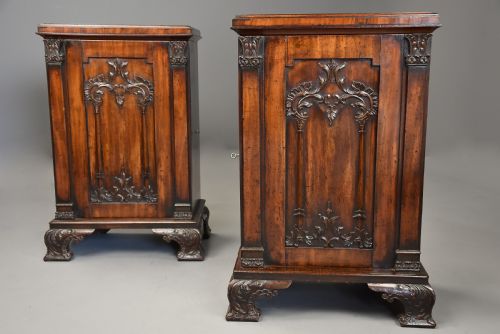
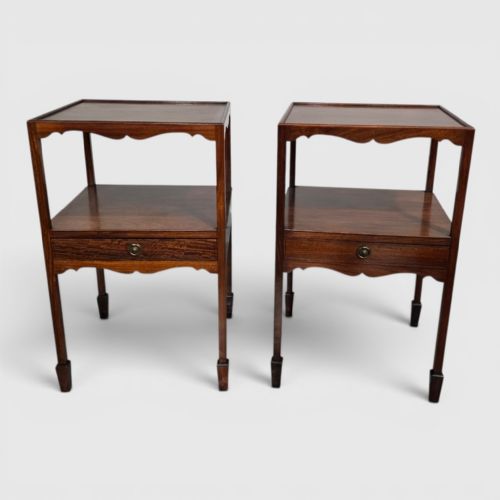
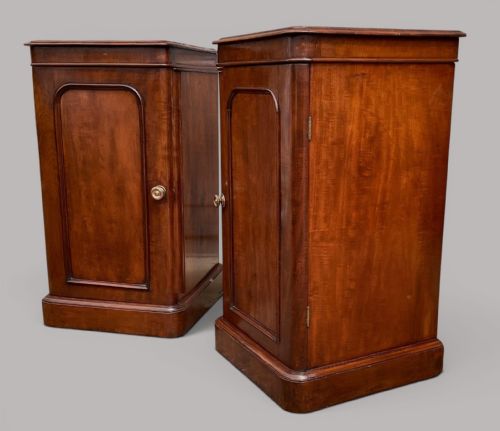
The most common formats on this page include mahogany bedside cabinets, pedestal cupboards and small side tables. Makers and craftsmen produced these in single pieces and matched pairs, utilising timber varieties suited to domestic chambers.
How they were made
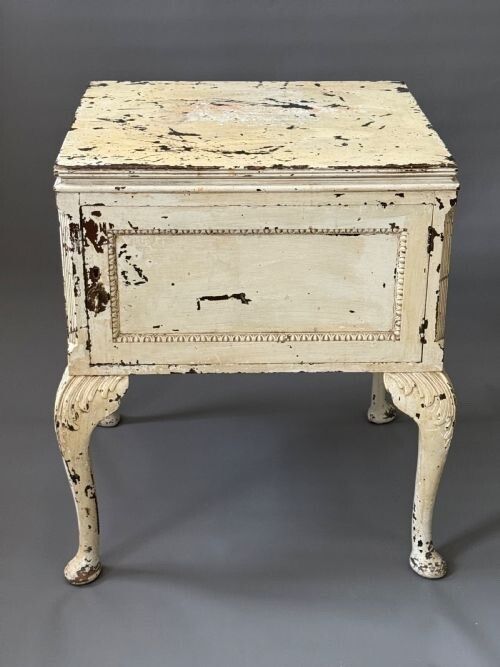
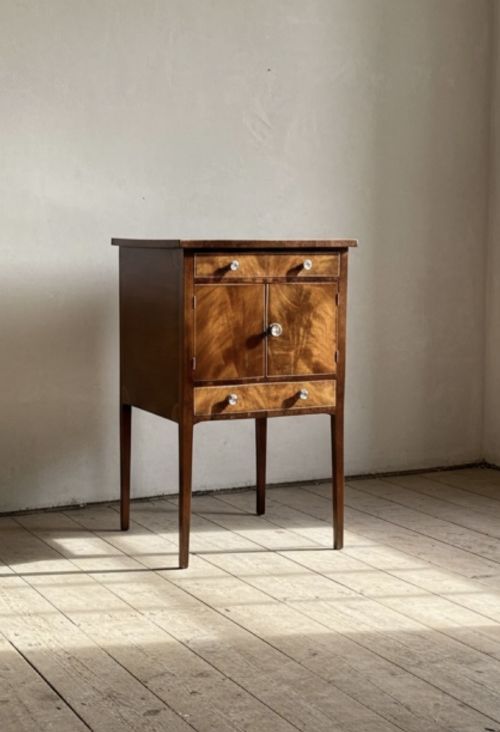
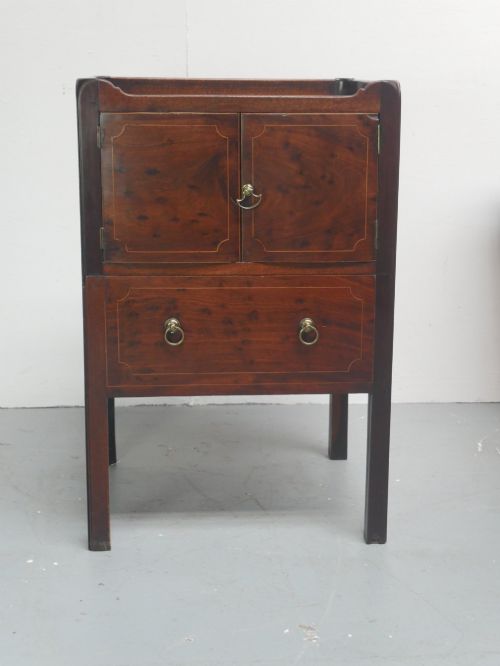
Cabinet makers relied principally upon solid mahogany and flame mahogany veneers, often enhanced with satinwood inlay and brass hardware. Hand-painted detailing and tray tops also appear on select specimens, showing surface decoration alongside structural joinery.
Construction methods involved box and pedestal forms enclosing cupboard space or drawers, standing on narrow legs or flush plinths. Timber selection focused on figuring and grain pattern to give visual depth to small cabinet surfaces.
Several items double as shoe cabinets, proving that early storage solutions were just as versatile as modern ones.
What varies in quality
Quality rests upon the choice of timber figure, such as the richness of flame mahogany and the crispness of satinwood inlay. Finer cabinets display harmonious proportions and balanced grain alignment across doors and drawer fronts.
Execution of detail, from brass fittings to hand-painted motifs and moulded tray tops, separates standard utility items from more ambitious cabinet work. The integrity of the original construction and timber surfaces dictates the standing of each piece.
Holland and Sons
The Georgian Bedside Pedestal Glossary
- Pedestal cabinet
- A freestanding vertical storage unit with a single door enclosing shelving or a chamber pot space. These pieces provide compact storage with a small floor footprint.
- Flame mahogany
- Timber sliced from the fork of the mahogany tree to create a distinctive flickering flame pattern. Cabinet makers prized this veneer for principal display surfaces.
- Tray top
- A raised gallery edge surrounding the upper surface of a small table or cabinet to prevent items rolling off. This feature is particularly valued on eighteenth century bedside cupboards.
- Pot cupboard
- A enclosed bedside cabinet originally designed to house a chamber pot. They frequently feature panelled doors and internal shelving.
- Satinwood inlay
- Contrasting pale timber inserted into darker wood surfaces in geometric or floral patterns. This decorative technique defines Sheraton Revival and late Georgian pieces.
Georgian Bedside Pedestal: Frequently Asked Questions
What is a georgian bedside pedestal?
A georgian bedside pedestal is a compact cabinet or cupboard designed for bedroom use, providing discreet storage beside a bed.
These pieces range from simple pot cupboards to refined tray top tables and drawer units.
How were bedside cupboards used?
Bedside cupboards originally served to house chamber pots, wash basins or night-time necessities out of sight.
Over time their function shifted toward general bedside storage for books, lamps and personal items.
What woods are most common?
Mahogany is the dominant timber across these listings, appearing in solid form and as flame mahogany veneer.
Secondary woods and decorative accents include satinwood, walnut and brass hardware.
Are matched pairs available?
Many listings comprise pairs of cabinets, ranging from contemporary matches to identical period pieces.
Single bedside tables and cabinets also appear frequently alongside these pairs.