
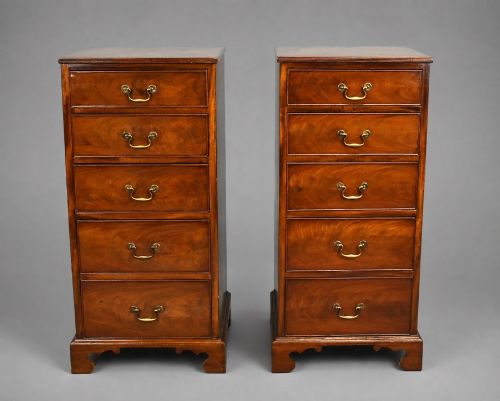
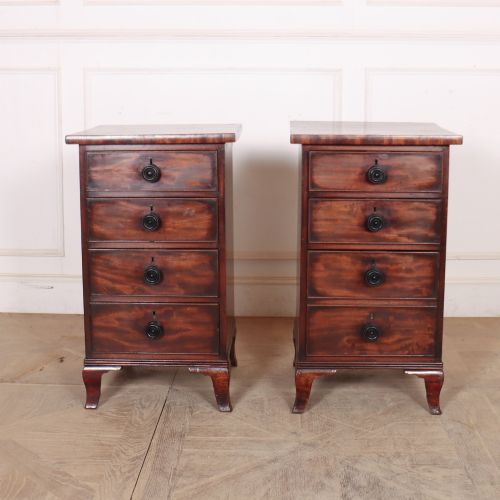
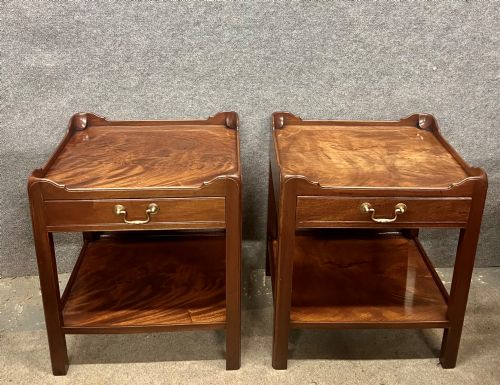
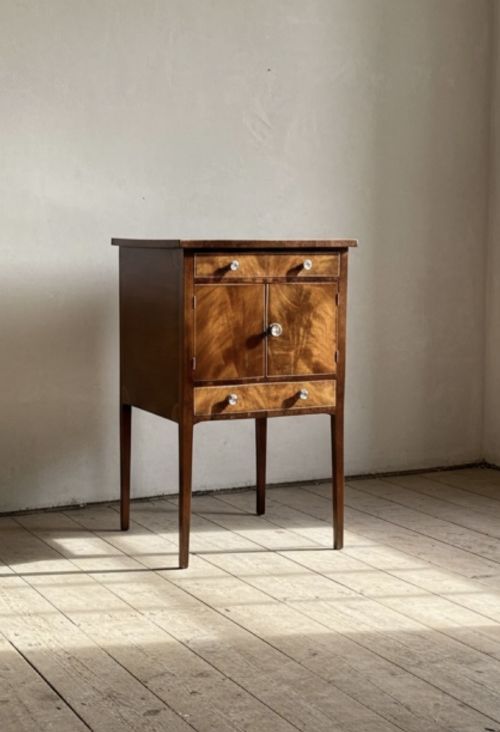
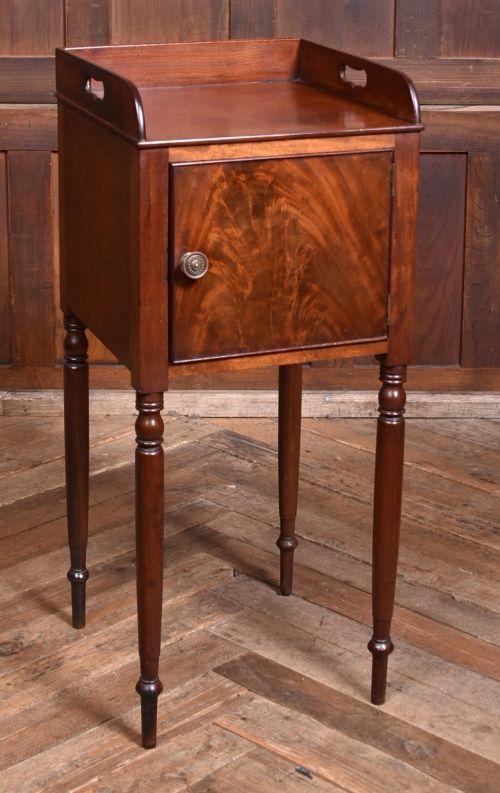
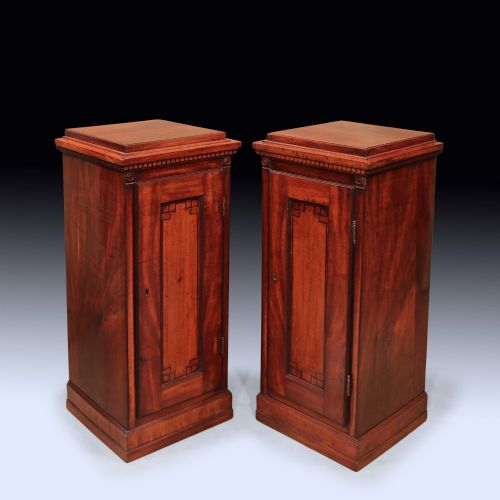
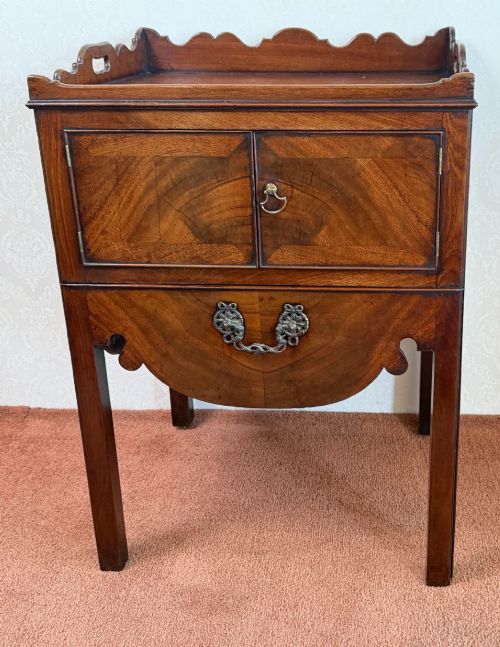
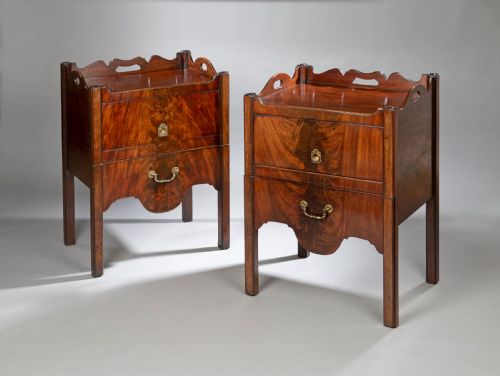

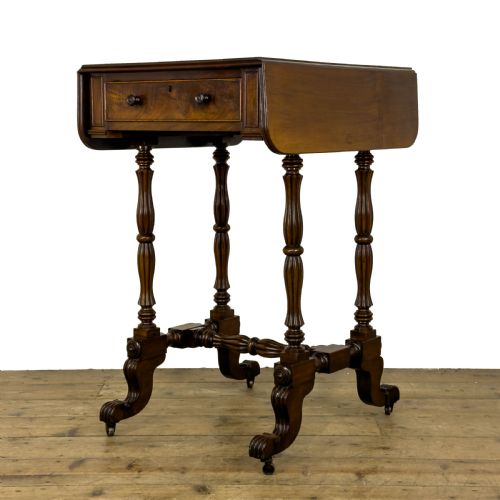
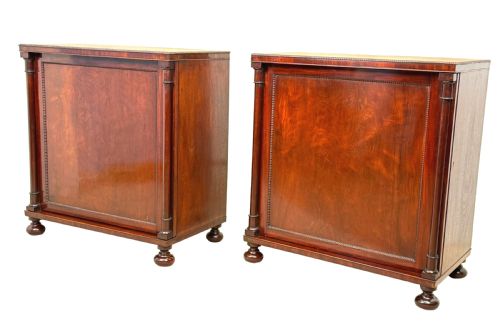

Flame Mahogany Nightstand
A flame mahogany nightstand brings remarkable timber grain and practical storage directly to the bedside.
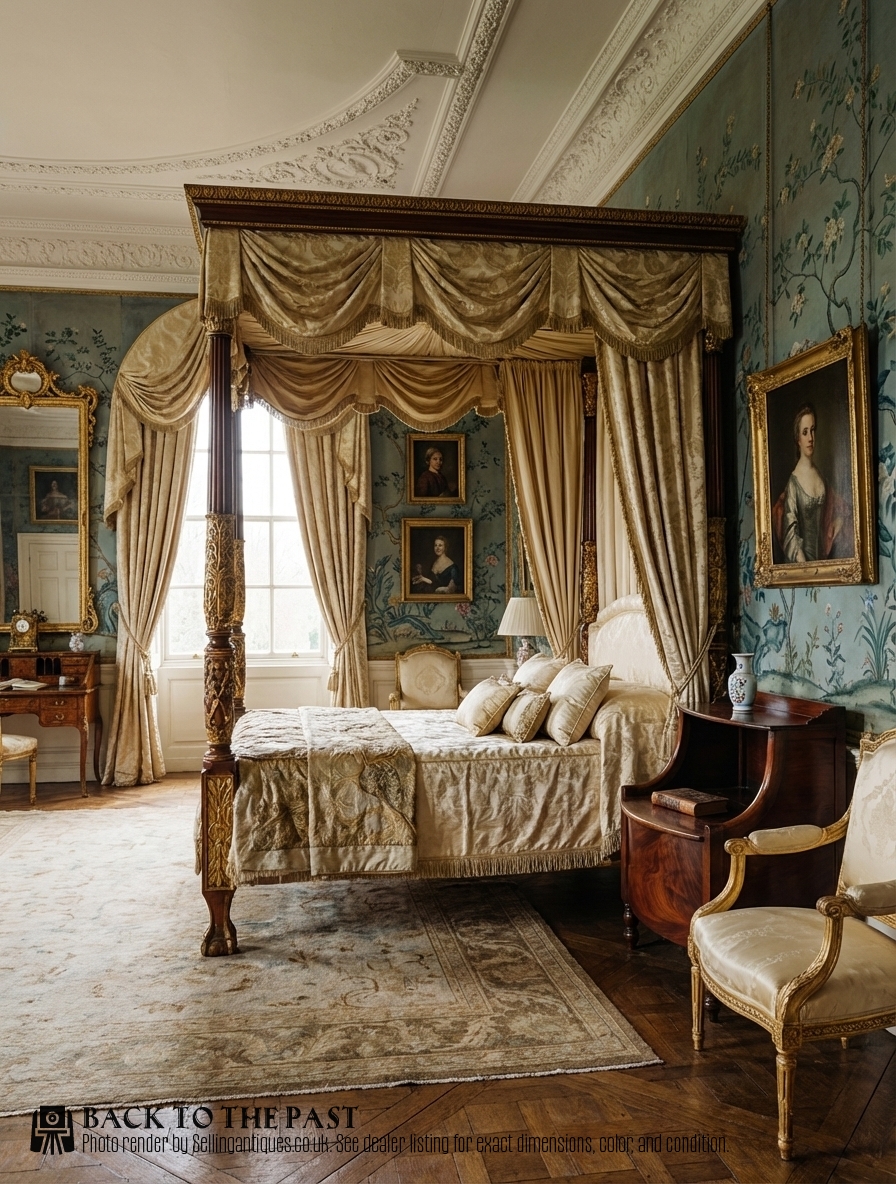
What these flame mahogany nightstands are
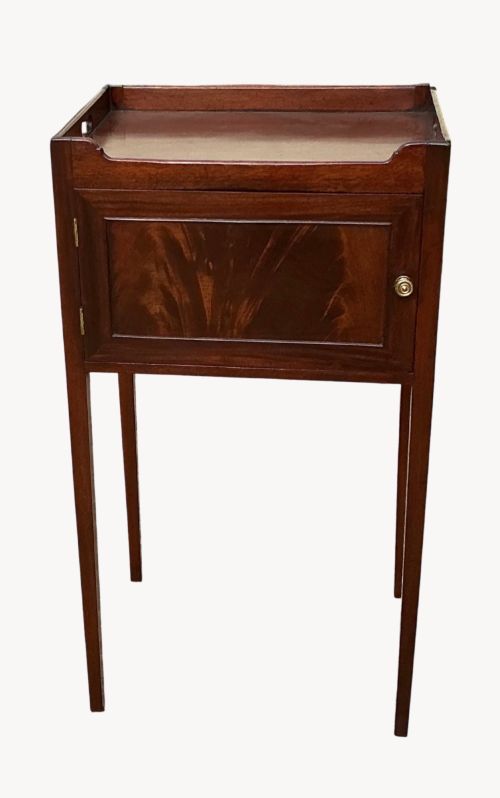
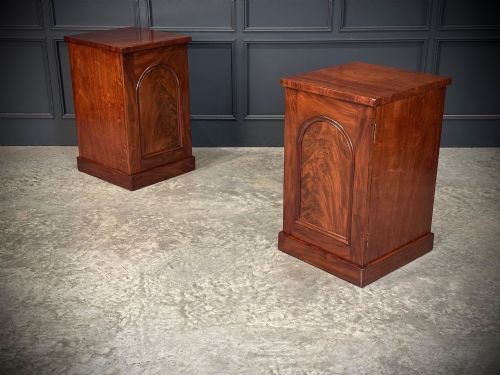
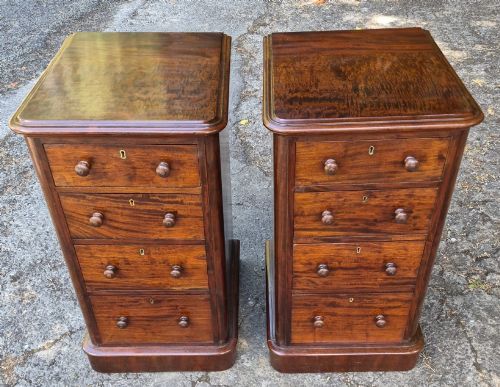
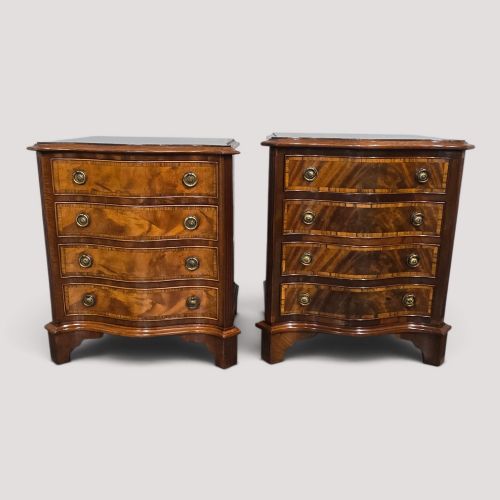
A flame mahogany nightstand represents a compact bedside cabinet or table designed for private chambers, utilising rich timber figures. When searching for a flame mahogany nightstand, buyers encounter forms ranging from cylindrical cupboards to pedestal units and tray top pot cupboards. The selection spans the 19th century, Georgian, Regency, and Victorian eras, along with later Queen Anne revival pieces and French interpretations.
The objects frequently appear under alternative historic names such as bedside cabinets, pot cupboards, bedside chests, and commodes. Surviving examples demonstrate how cabinetmakers adapted these small storage pieces to serve changing domestic requirements across different decades. The pieces on offer combine functional enclosed storage with decorative wood surfaces suited for principal bedrooms.
Victorian and 19th-century specimens form the core of what appears, often featuring panelled doors enclosing interior shelving. Regency variants introduce distinct architectural silhouettes, while Georgian predecessors establish the tradition of enclosed bedside storage. Every piece relies on the characteristic figured grain to create visual impact within a bedroom scheme.
How they were made
These items rely on solid mahogany and pine construction overlaid with flame mahogany veneer to achieve their distinctive patterned surfaces. Cabinetmakers selected timber cuts from branch forks where the grain curls into flame-like ripples, laying the veneers carefully across drawer fronts and cupboard doors. Secondary timbers such as pine appear in internal carcases, drawer linings, and structural framing.
Metal elements including brass fittings, handles, and hinges provide functional accents and structural support on doors and drawers. Traditional joinery techniques secure the frames, while skilled polishers built up smooth finishes to accentuate the natural chatoyancy of the timber. Each cabinet reflects the hand methods of period workshops working with imported tropical hardwoods.
Retail Price Guide 2026
Typical UK retail prices for flame mahogany nightstand, calculated from the Sellingantiques database of over a million retail prices indexed since 2003. This retail price guide relies exclusively on Sellingantiques data; no external sources or auction records are used, so the figures do not describe the wider market.
The listings show pieces spanning the Georgian, Regency, and Victorian periods, constructed from mahogany, flame mahogany veneer, brass, and pine.
What varies in quality
The visual strength of the flame veneer sets the standard for these cabinets, distinguishing striking grain patterns from plainer timber surfaces. Superior examples display symmetrical veneer matching across doors and drawer fronts, whereas simpler pieces show random grain arrangement. The choice of secondary woods and the refinement of internal fittings also indicate the maker's original investment of time and cost.
Proportion and silhouette separate standard bedside utility from more ambitious cabinetmaking. Pieces incorporating architectural mouldings, turned columns, or cylindrical forms demonstrate greater joinery ambition than basic rectangular boxes. The integration of brass hardware and the precision of the door closures further define the tier of craftsmanship.
The Flame Mahogany Nightstand Glossary
- Flame mahogany
- A veneer cut from the point where a branch joins the trunk, producing a rippling, flame-like pattern. This decorative figuring forms the primary visual draw of the furniture.
- Pot cupboard
- A historic term for a small bedside cabinet originally constructed to enclose a chamber pot. These pieces frequently feature a single door and an internal shelf.
- Regency
- A British design period spanning the early 19th century characterised by classical restraint and architectural influences. Furniture from this era often exhibits clean lines and bold timber selection.
- Tray top
- A raised rim surrounding the upper surface of a small table or cabinet designed to prevent items from rolling off. This feature appears on several bedside formats.
- Commode
- A term historically applied to enclosed furniture providing storage, which in bedroom contexts often denotes a bedside cabinet with internal compartment space.
Frequently Asked Questions
How were these nightstands used historically?
Historically, these cabinets stood beside beds to hold chamber pots, night lights, and personal items out of sight. The enclosed door kept bedroom essentials tidy within a compact footprint.
Over time, their function evolved into general bedside storage for books, clocks, and lamps while retaining their traditional enclosed format.
How do I identify a Regency nightstand?
Regency nightstands display the classical restraint, architectural lines, and bold mahogany figuring characteristic of early 19th-century British design. They often utilise cylindrical bodies or distinct structural proportions.
Comparing the silhouette and hardware to standard Victorian or Georgian examples helps clarify the specific period of manufacture.
Can I mix these with modern furniture?
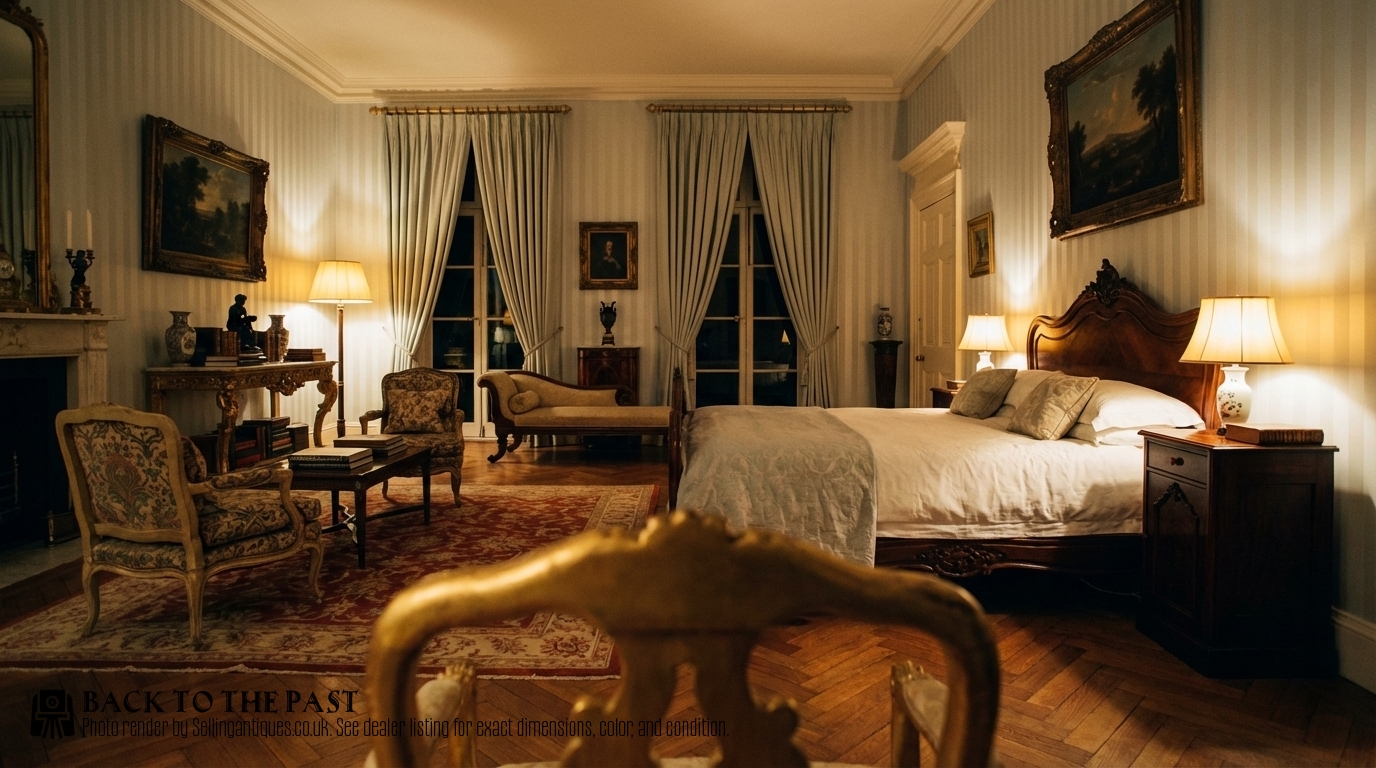
These compact cabinets integrate easily into contemporary interiors by providing textural contrast against plain walls and modern textiles. Their warm timber tones and figured grain add historic character to minimalist spaces.
Placing one beside a contemporary bed introduces functional surface space and enclosed storage without dominating the room.