
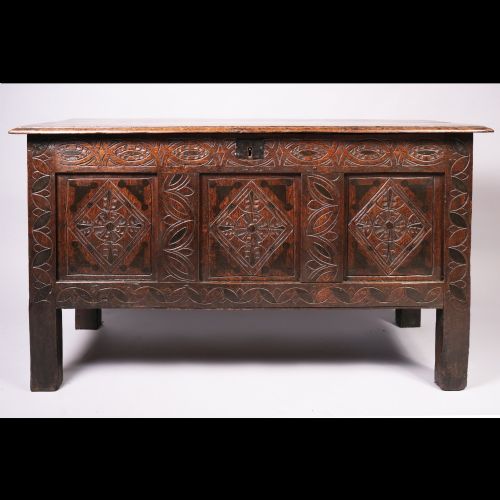


Lozenge Carved Chest
When you search for a lozenge carved chest, you are looking at sturdy wooden storage pieces built to hold household goods.
Lozenge Carved Chest
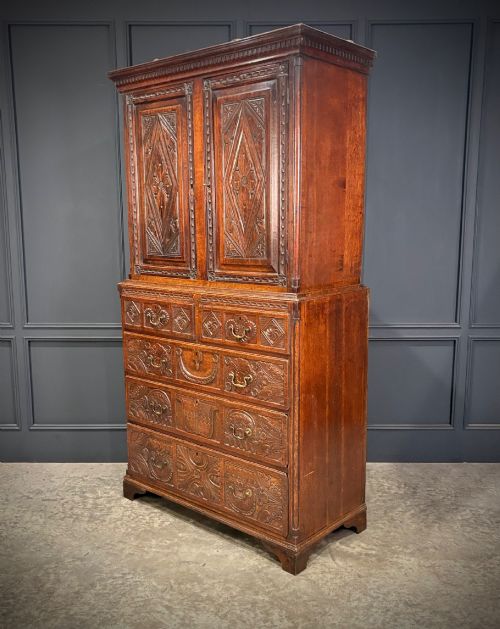
A lozenge carved chest sits among a tradition of storage furniture designed to hold textiles, valuables, and household goods. These pieces appear mainly as coffers and blanket chests, alongside variations like housekeepers cupboards.
The examples gathered here span several centuries, reaching back to the sixteenth century and moving through the seventeenth and eighteenth centuries, with occasional revival pieces from the nineteenth century. Most items originate from English or Welsh workshops, showing regional variations in their construction and carving.
Buyers will encounter simpler constructions such as five plank chests alongside more elaborate panelled fronts. Many pieces display geometric panel decoration, while others rely on plain timber surfaces or supplementary inlay work.
Materials and construction
Oak dominates the selection, shaped into heavy panels and structural planks using traditional joinery methods. Cabinet makers utilised walnut and ebonised wood for specific pieces, applying dark finishes to alter the natural tone of the timber.
Iron and brass hardware frequently secure the lids and hinges, providing functional reinforcement to the corners and locking points. Carvers worked directly into the wooden panels by hand, cutting geometric lozenge patterns and linear borders into the grain.
Current listings feature oak as the primary material, alongside walnut and ebonised wood across the centuries.
Variations in quality
The distinction between standard and superior pieces rests on the depth and precision of the timber carving. Hand-cut geometric patterns show varying levels of skill, with crisper lines and balanced proportions marking out finer workmanship.
The integrity of the original wood panels and the survival of early brass or iron fittings influence the character of each piece. Later additions or replaced structural elements shift a chest away from its original period state.
The Lozenge Carved Chest Glossary
- Coffer
- A heavy wooden box with a hinged lid used historically for storage. These items served as secure containers for valuables before fitted wardrobes became common.
- Lozenge
- A diamond-shaped geometric motif used widely in period wood carving. Carvers arranged these shapes across panels to create symmetrical surface decoration.
- Panel
- A flat piece of timber fitted within a grooved frame to prevent warping. This construction method allowed wooden furniture to expand and contract with environmental changes.
- Five plank chest
- A primitive box construction joined directly at the edges with pegged boards. This form represents an early and straightforward method of making storage chests.
Lozenge Carved Chest: Frequently Asked Questions
What is a lozenge carved chest used for?
These pieces functioned historically as secure storage for household textiles, garments, and valuables. Their sturdy construction allowed them to double as seating benches within domestic spaces.
Today, they serve as practical storage furniture for blankets and living room items while adding period character to an interior.
How do I date an oak coffer?
Dating relies on examining the construction methods, such as hand-cut peg joints, panel thickness, and tool marks left by the maker. Regional styles and the specific type of geometric carving also provide clues to the century of origin.
Comparing the hardware, including iron hinges and locks, helps confirm whether the fittings match the period of the timber body.
How do I care for antique oak furniture?
Keep wooden pieces away from direct heat sources and sudden temperature shifts to prevent the oak panels from splitting. Applying a suitable wax polish periodically helps nourish the dry timber and maintain its surface finish.
Avoid using harsh chemical cleaners that can strip the historic patination accumulated on the wood over the centuries.